
Reviewed · HISTORICAL TOURS
Historical city tour in the African Quarter in Berlin
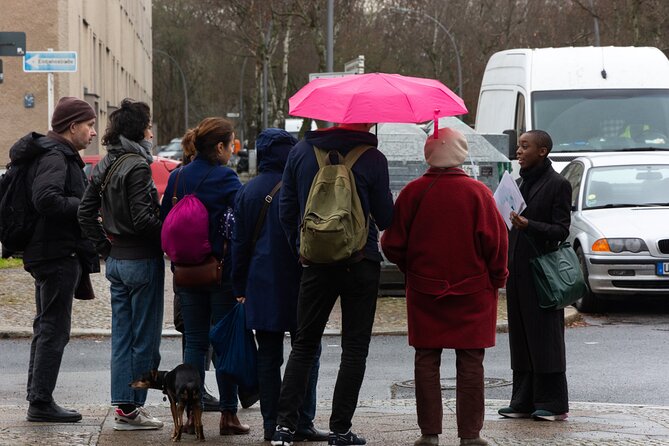
Berlin’s street signs can tell stories. This walking tour through the African Quarter turns that idea into a smart, thought-provoking route with real answers to uncomfortable questions. You’ll connect the dots between street names and the colonial era, from Germany’s link to Namibia to the 1884 debates that shaped how Europe talked about Africa.
What I like most is the focus on specific street locations and the way the tour uses short, targeted stops, so the information doesn’t blur together. I also appreciate the small-group size, capped at 20 travelers, which helps you hear explanations clearly as you’re walking. One thing to consider: this experience depends on good weather, so plan for a date change or refund if Berlin decides to rain on your parade.
In This Review
- Key Highlights You Will Actually Feel on the Walk
- Why Berlin’s African Quarter Feels Different From Other City Tours
- The 2-Hour Walk: Small Group, Clear Rhythm, Real Footwork
- Entering the Colonial-Era Story Through Street Names
- Stop 1: Swakopmunder Straße and Germany’s Namibia Connection
- Stop 2: Anna-Mungunda-Allee, Petersallee, and the Fight Over Names
- Stop 3: Manga-Bell-Platz and Gustav Nachtigal’s Role in Public Memory
- Stop 4: Kongostraße, the 1884 Congo Conference, and Why Africa Was Missing
- Price and Value: What $33.57 Buys You in Real Time
- Getting There: Meeting Point, Ending Point, and How to Plan Your Time
- Who This Tour Is Best For
- A Reality Check: The Main Tradeoffs Before You Book
- Should You Book This African Quarter Walking Tour?
- FAQ
- How long is the African Quarter historical city tour?
- What does the tour cost, and what do I get after booking?
- When should I book?
- How many stops are included?
- Where do I meet, and where does the tour end?
- What is the group size limit?
- Is it refundable if plans change, and what happens with bad weather?
- Is the tour suitable for everyone and can I bring a service animal?
Key Highlights You Will Actually Feel on the Walk
- A compact 2-hour route built around named streets that you can spot and remember
- 22 streets in the African Quarter with names tied to African countries, European cities, and colonial figures
- Colonial-era questions you can’t google fast, like what Germany’s Namibia link meant
- Anna-Mungunda-Allee and the naming debate, including whether a street should change names
- Manga-Bell-Platz and Gustav Nachtigal, centered on who he was and why a square bears his name
- Kongostraße and the 1884 Congo Conference, including why no African delegates were present
Why Berlin’s African Quarter Feels Different From Other City Tours
Berlin has plenty of historical tours, but this one plays a different game. Instead of focusing only on dates, buildings, or monuments, it uses something you see every day without thinking: street names. In the African Quarter, those names act like breadcrumbs. They point toward connections between Germany and Africa during the colonial period, plus the European choices that were made with little input from African voices.
The area itself is an “area monument” made up of 22 streets. That matters, because it frames the neighborhood as a whole, not just a handful of stops. The tour’s premise is simple: if street names reflect power and politics, then reading them closely becomes a way to understand history more honestly. You’re not just learning facts. You’re learning how language, commemoration, and public space can carry ideology forward.
And there’s a practical upside. Because this route is built from a few focused street stops, you don’t need to be a colonial-history expert. The tour is set up to guide your attention, ask the key questions out loud, and explain the background along the way.
More History Tours in Berlin
- Berlin: Natural History Museum Entrance Ticket
★ 4.6 · 3,382 reviews - Berlin: 3-Hour World Heritage Cruise to Potsdam
★ 4.5 · 1,569 reviews - Berlin: History of the Third Reich Guided Walking Tour
★ 4.7 · 791 reviews
The 2-Hour Walk: Small Group, Clear Rhythm, Real Footwork
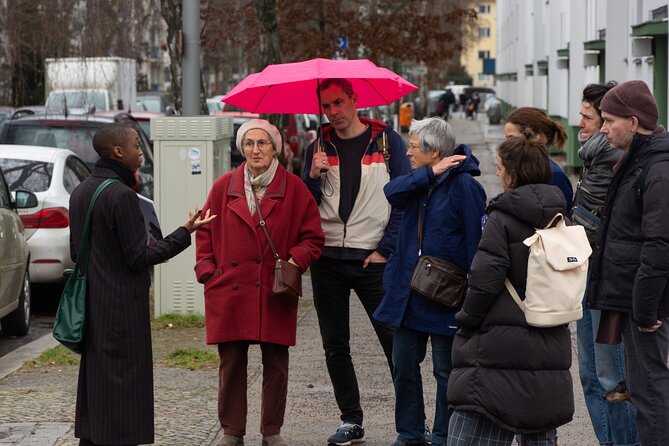
The experience runs for about 2 hours on foot. Expect a walking pace that fits most people, since the tour format uses short stops and quick context at each location. The group size is capped at 20, which is big enough to meet people but small enough that the guide can keep the pace readable.
You’ll also get a mobile ticket, which is handy. It means less time fussing at a desk and more time using your day in Berlin for, well, actually walking. The meeting and ending points are straightforward too: you start on Swakopmunder Str. and you finish in the Rehberge area (the tour lists an end near Rehberge).
Two tiny practical notes that can save you stress. First, since it’s weather-dependent, bring a rain layer even if the forecast looks friendly. Second, because you’re following a route with multiple street corners, wearing comfortable shoes isn’t optional.
Entering the Colonial-Era Story Through Street Names
The tour’s big idea is “change of perspective.” You’re guided from the north of Berlin into the African Quarter, where the street names create a map of colonial-era thinking. Some streets reference African countries and European cities, while others connect to former imperial commissars from Germany’s colonial period.
As you walk, the tone is not just academic. The questions are designed to make you pause and evaluate why these names exist where they do. For example, the tour doesn’t treat naming as neutral. It brings up the idea that public names can be contested, corrected, or rethought.
That question-style approach shows up at multiple stops, and it’s one reason this tour can work even if you normally skip lectures. Instead of bombarding you with long timelines, the guide turns each location into a prompt, like: What does a place name mean here? What role did Germany play somewhere specific? Who gets remembered, and who does not?
Stop 1: Swakopmunder Straße and Germany’s Namibia Connection
The walk begins at Swakopmunder Straße, and right away the tour asks a practical curiosity: what does Swakopmund have to do with Berlin? Swakopmund is tied to Germany’s involvement in Namibia, and the tour uses that link to explain the relationship between Germany and the African region during the colonial era.
What makes this stop useful for you is that it provides a key “anchor.” Once you understand the logic behind one street name, the rest of the route reads more clearly. You start spotting patterns in the way colonial connections are turned into geography in Germany, and why street naming became a kind of public record.
A potential drawback? Because this start is conceptual, you might feel a slow burn at the beginning if you came hoping for something purely visual, like big statues or famous buildings. But the tour’s structure is meant to get you thinking fast, and the rest of the stops build momentum.
A few more Berlin walks and trips to compare
- Berlin Historical Highlights Walking Tour
★ 4.9 · 657 reviews - Berlin: 1h Boutiquestyle-Cruise on the Historic HEMINGWAY
★ 4.6 · 563 reviews - Berlin Private Complete History All Day Walking Tour
★ 5.0 · 474 reviews - Berlin: Cold War Era History Guided Bike Tour
★ 4.8 · 413 reviews
Stop 2: Anna-Mungunda-Allee, Petersallee, and the Fight Over Names
Next comes Anna-Mungunda-Allee, another street that raises questions about how people and places are remembered. This stop focuses on naming, specifically calling out the idea that Petersallee is connected to someone named in the past.
The tour asks: after whom was Petersallee named? Then it pushes the bigger debate question: should the street be renamed, and if yes, why? The value here is that you get more than a “who was that person” trivia moment. You get a chance to understand how commemorative naming works, and how it can become politically and morally complicated over time.
If you’re the kind of traveler who loves public policy stories as much as museum stories, this stop will click. Street names are a form of everyday culture. They shape how residents and visitors absorb history without reading a book.
One consideration: naming debates can feel dense if you’re looking for only one clear conclusion. The tour is set up as an explanation, not a debate club. You’ll likely come away with a stronger sense of the issues, not a single neat answer for every listener.
Stop 3: Manga-Bell-Platz and Gustav Nachtigal’s Role in Public Memory
At Manga-Bell-Platz, the tour switches from the “naming debate” theme to a more direct historical remembrance question. It asks who Gustav Nachtigal was, and why the central square of the African Quarter was named after him.
This stop matters because it turns commemoration into a lens. You get to see how a prominent figure becomes part of the local map, and how that can affect public understanding of the colonial period. Even if you don’t know Nachtigal before you arrive, the tour gives you the reason a square like this would carry his name.
What I find especially practical for your travel mindset is this: by the time you reach this stop, you’re not just collecting facts. You’re building a mental model of how the neighborhood’s design choices reflect a particular historical viewpoint, and how that viewpoint is now being re-examined.
The potential downside is time and focus. This is still a two-hour walk, so each stop is short. If you’re the type who wants to linger, take photos, and read every plaque slowly, you may want to do a follow-up at your own pace after the tour ends.
Stop 4: Kongostraße, the 1884 Congo Conference, and Why Africa Was Missing
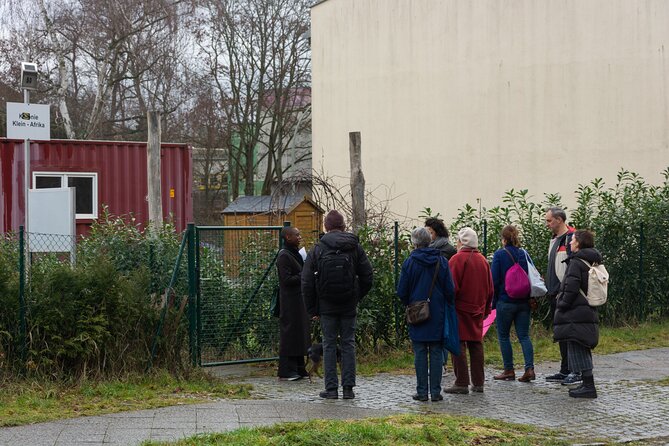
The final stop is Kongostraße, and it brings you to a big turning point question: what happened in Berlin in 1884? The tour points you toward the Congo Conference and asks why no one from Africa was present.
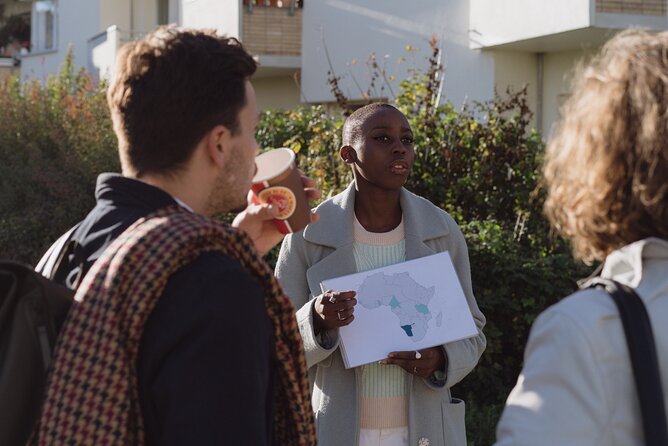
This is the stop where the tour’s perspective shift becomes clearest. The topic is not just “Europe talked about Africa.” It’s that the conversation happened in a room where African voices were absent, and that absence shaped decisions. The tour also mentions that you’ll see a map of Africa before and after the Berlin conference, which is a powerful way to make the consequences feel tangible.
If you want your travel to leave you with something you can explain to friends, this ending is a strong candidate. You’ll have a clear storyline: Berlin as a decision-making hub, Africa as the subject of negotiation, and the consequences that followed.
One thing to keep in mind: because maps and timelines can be visually dense, you’ll get the most out of this stop if you stay present. Don’t speed ahead to take the next photo. Pause and let the explanation connect the dots.
Price and Value: What $33.57 Buys You in Real Time
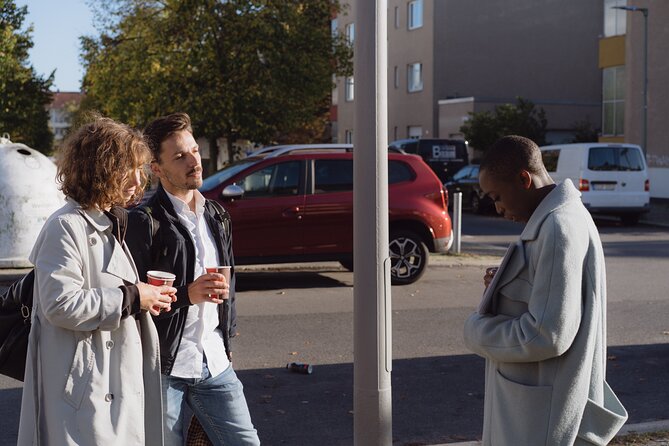
At $33.57 per person for about 2 hours, the cost sits in the “pay for quality guidance” zone. And what you get here is guidance with a specific, targeted focus. You are not paying for a generic overview of Berlin. You’re paying for someone to guide your attention through the African Quarter’s 22 street network and explain the colonial-era meaning behind those names.
The small group limit to 20 travelers is also part of the value equation. With fewer people, it’s easier to hear answers to the questions the guide keeps asking at each stop. The tour’s format is designed for clarity, not crowd chaos.
Another small value detail: the tour uses a mobile ticket, so the operational friction is low. It’s a small thing, but it matters when you’re trying to fit multiple activities into a Berlin day.
Getting There: Meeting Point, Ending Point, and How to Plan Your Time
You start at Swakopmunder Str. 44, 13351 Berlin. The tour ends near Rehberge 13349 Berlin. Because the tour starts and ends in different spots, you should plan your next stop with that in mind. Don’t schedule something that requires a hard sprint across the city immediately after.
The tour also notes it is near public transportation, which is helpful. You’ll likely find an easy way to reach the start, and you’ll have options to get moving after the walk ends.
In terms of travel rhythm, this kind of tour works best when you can leave a little time buffer. That’s especially true if you like to browse nearby streets and read plaques at your own pace once the guide has given you the context.
Who This Tour Is Best For
This tour fits best if you like history that has a living presence. Street names are not behind glass. They are out in the open, and they keep shaping what people notice every day.
You’ll probably enjoy it if you:
- want a focused walking tour rather than a long bus route
- care about how colonial history shows up in everyday public spaces
- like question-based storytelling, where each stop asks “why is this here?”
- want a different Berlin experience that goes beyond the usual landmark circuit
If your idea of a great city tour is only grand architecture and photo spots, you might find this a more thought-driven experience than a sightseeing hit. But if you’re open to learning through the street-level details, it can be one of the more memorable walks you do in Berlin.
A Reality Check: The Main Tradeoffs Before You Book
Here’s the honest balance. The tour’s strength is its structure: short stops, clear topics, and a storyline running from Namibia connections to the 1884 Congo Conference and why African delegates were absent.
The main tradeoff is depth versus time. At each stop, you get a snapshot rather than a full lecture. If you want to spend 20 to 30 minutes at each location, you’ll need to do your own reading afterward.
Also, weather matters. The tour explicitly requires good weather, so if Berlin is gray and rainy, be ready for a reschedule or refund option.
Should You Book This African Quarter Walking Tour?
I’d book it if you want a Berlin walk that actually changes how you read the city. The African Quarter is built from 22 streets with names tied to colonial-era thinking, and the tour turns those names into clear prompts and explanations at Swakopmunder Straße, Anna-Mungunda-Allee, Manga-Bell-Platz, and Kongostraße. It’s also a smart length, about 2 hours, and it’s priced at a level that feels reasonable for a guided, small-group experience.
Skip it only if you want a pure sightseeing tour with famous monuments every minute, or if you know you’ll hate weather-based plans. If you can handle a walking format and you want history connected to the street signs you’ll see long after the tour ends, this one is worth your time.
FAQ
How long is the African Quarter historical city tour?
It lasts about 2 hours.
What does the tour cost, and what do I get after booking?
The price is $33.57 per person. You get a mobile ticket, and you receive confirmation at booking time.
When should I book?
On average, this tour is booked about 21 days in advance.
How many stops are included?
The tour includes four stops: Swakopmunder Straße, Anna-Mungunda-Allee, Manga-Bell-Platz, and Kongostraße.
Where do I meet, and where does the tour end?
The start is Swakopmunder Str. 44, 13351 Berlin, and the tour ends near Rehberge 13349 Berlin.
What is the group size limit?
The tour has a maximum of 20 travelers.
Is it refundable if plans change, and what happens with bad weather?
You can cancel for a full refund up to 24 hours before the experience starts. The tour requires good weather, and if it’s canceled due to poor weather, you’ll be offered a different date or a full refund.
Is the tour suitable for everyone and can I bring a service animal?
Service animals are allowed. The tour notes that most travelers can participate and it is near public transportation.
Newest Berlin reviews on the site
- Your ticket to The Wall Museum Berlin★ 3.0 · 60 reviews
- Rickshaw Tours Berlin – Groups of up to 16 people with several rickshaws★ 4.0 · 97 reviews
- Love and War in Berlin: Self-Guided Story Puzzle Walk★ 5.0 · 7 reviews
- Warnemuende Shore Excursion: Berlin Private Sightseeing Tour from Rostock★ 5.0 · 4 reviews
- eSIM for Germany and 34 European Countries★ 4.5 · 16 reviews
- Walking on the Wall: 3-Hour Tour in Berlin★ 4.5 · 34 reviews
- Karl-Marx-Allee Tour: Life and Architecture in East Berlin★ 5.0 · 19 reviews
- Warnemuende Shore Excursion: Private Berlin Tour★ 4.5 · 27 reviews
Historical Tours, compared.
City History Canal Sightseeing Tour on a Motorboat
Read our review →
Browse the lists this tour appears in