
Reviewed · HISTORICAL TOURS
Historic center of Berlin – Tour in Italian
Berlin rewards people who slow down. This Italian-speaking small-group walking tour strings together the city’s biggest chapters, from Potsdamer Platz to the Holocaust Memorial, with an expert guide who keeps the story clear. I like the emotional honesty at memorial stops and the way the route links Cold War landmarks you can actually see, not just read about.
One thing to consider: the walking is steady and the topics get heavy. If you prefer lighter city sightseeing, you may find the Nazi and Holocaust stops intense, even though the guide treats them with care.
You’ll start at Potsdamer Platz 10 (near the S/U-Bahn) and finish near Pergamon Museum. The tour runs about 3 hours 30 minutes, in a group capped at 28, and you get a mobile ticket. It operates in all weather, so wear layers and comfortable shoes.
In This Review
- Quick Takeaways
- Why an Italian Wall-to-parliament walk makes Berlin click
- Potsdamer Platz start: find the blue bicycle and get your bearings fast
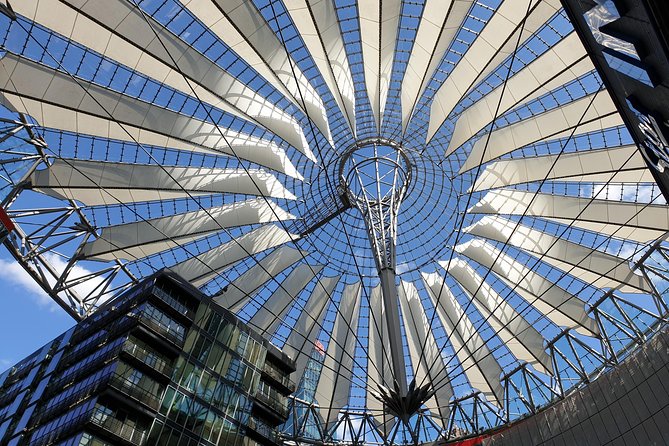
- Sony Center: when WWII leftovers become part of the city
- Topography of Terror: where the Nazi apparatus is remembered
- Checkpoint Charlie: the Cold War at its most tense point
- Nazi aviation ministry, Goering’s offices, and the building’s second life
- Fuhrerbunker: standing at the edge of Hitler’s final days
- Holocaust Memorial: the emotional center of the route
- Reichstag outside only, but with a useful path to the dome
- Brandenburg Gate and Unter den Linden: reunification meets the long view
- Bebelplatz and the book burning memorial: propaganda turned into a permanent warning
- Humboldt University and Neue Wache: education and the cost of war
- Berliner Dom and Museum Island: finishing near major treasures
- Price and value: why this $27.91 walk can be a smart buy
- Who should book this tour, and who might prefer something else
- Should you book this Italian Historic Center of Berlin tour?
- FAQ
- Is the tour in Italian?
- How long is the tour?
- Where does the tour start and what do I look for?
- Where does the tour end?
- Is this a small group tour?
- Do I need to buy separate tickets for the stops?
- What’s included in the price?
- Does it run in bad weather?
- Is there free cancellation?
Quick Takeaways
- Italian-speaking guide, real storytelling: explanations in Italian that connect each landmark to the larger turning points of Berlin.
- A “greatest hits” route without the museum pressure: you cover major sites in one walk, with most stops accessible outside and admission-free.
- Cold War clarity at iconic spots: Checkpoint Charlie and a preserved Wall segment help you visualize how division worked.
- Memorial stops handled thoughtfully: Topography of Terror, the Holocaust Memorial, and Neue Wache are moments where the pace should slow.
- Finish near Museum Island: you wrap up in the same area as Pergamon Museum, so you can keep exploring right away.
Why an Italian Wall-to-parliament walk makes Berlin click
Berlin can feel like a collage: empires, ruins, ideologies, reinvention. This tour helps you understand the order. Instead of random photo stops, you follow a line of cause and effect, from WWII destruction to Cold War division and on to reunification symbols like the Brandenburg Gate.
I also love that the guide work is practical. You don’t just hear facts. You get cues for what to look for as you walk, like how buildings were repurposed across regimes. And because the guide is Italian-speaking, the explanations land more naturally than with a standard audio app.
The tour leans heavily on outdoor landmarks and memorial sites. That can be a plus, because you see how history sits in the modern city. The tradeoff is that you’ll be outside for most of the experience, so rain, wind, or cold can affect how comfortable you are.
More History Tours in Berlin
- Berlin: Natural History Museum Entrance Ticket
★ 4.6 · 3,382 reviews - Berlin: 3-Hour World Heritage Cruise to Potsdam
★ 4.5 · 1,569 reviews - Berlin: History of the Third Reich Guided Walking Tour
★ 4.7 · 791 reviews
Potsdamer Platz start: find the blue bicycle and get your bearings fast
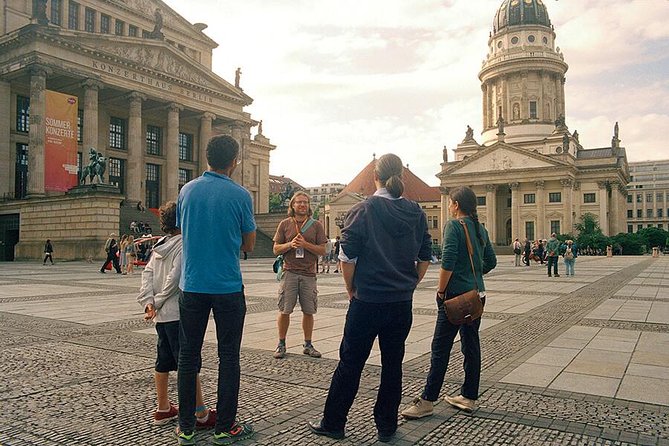
The meeting point is Potsdamer Platz 10, close to the S/U-Bahn Potsdamer Platz station. To recognize the group, look for the blue bicycle linked to Vive Berlin Tours, plus the logo flag.
Potsdamer Platz is a smart starting anchor. It’s famous and also modern, so it gives you an immediate contrast point. The guide sets the tone by explaining how Berlin changed dramatically over time, which matters later when you reach areas tied to Nazi power, Cold War boundaries, and postwar rebuilding.
This first stretch is short, but it does the most important job: it frames the whole walk. You’re not just touring famous names. You’re learning the themes that connect them.
Sony Center: when WWII leftovers become part of the city
Next you head into the Sony Center area. Here, one of the most interesting ideas is preservation through design. You’ll see how remnants from the pre-war square that was destroyed during WWII were kept and blended into the contemporary architecture.
This is a good moment in the tour because it changes the mood slightly. The history is still there, but you can physically see how Berlin chose to carry scars forward rather than erase them. It’s also a reminder that “rebuilding” has different meanings depending on who has power and what they want the city to communicate.
If you’re the kind of visitor who likes visual clues, this stop plays well. You’ll likely start noticing how architecture can tell multiple stories at once.
Topography of Terror: where the Nazi apparatus is remembered
Then comes Topography of Terror, one of the tour’s most significant segments. The guide helps you understand how Nazi dictatorship is remembered today, specifically at the locations tied to Gestapo and SS headquarters.
You also get a broader view from the area: you can see nearby buildings associated with the era, including the former Nazi aviation ministry and the Martin Gropius Bau museum. Most strikingly, you can also spot an original segment of the Berlin Wall from here.
Two practical reasons this stop is valuable. First, it grounds the conversation in places, not slogans. Second, it trains your eye to look for what Berlin displays openly today, because the city has made choices about memorialization.
A few more Berlin walks and trips to compare
- Berlin Historical Highlights Walking Tour
★ 4.9 · 657 reviews - Berlin: 1h Boutiquestyle-Cruise on the Historic HEMINGWAY
★ 4.6 · 563 reviews - Berlin Private Complete History All Day Walking Tour
★ 5.0 · 474 reviews - Berlin: Cold War Era History Guided Bike Tour
★ 4.8 · 413 reviews
Checkpoint Charlie: the Cold War at its most tense point
At Checkpoint Charlie, the guide talks about why this location became such a hot spot during the Cold War. It’s the kind of place that can feel like a movie set if you don’t get context, so this stop works best because you’re not just taking photos, you’re hearing what the Berlin Wall construction meant for everyday life.
Checkpoint Charlie is also a useful hinge between two eras. You’re moving from the Nazi regime’s structures and aftermath into the system of control and separation that came later. After this stop, landmarks like the Brandenburg Gate start to feel less symbolic and more like milestones in a single long transition.
This segment is brief, but it’s memorable. The guide’s job is to help you “read” the surrounding area, and that makes the walk more than a list.
Nazi aviation ministry, Goering’s offices, and the building’s second life
You continue to the Aviation Ministry of Berlin, a huge, imposing complex. The guide explains that it was built by the Nazi dictatorship to house the Ministry of Aviation offices led by Hermann Goering.
Then the story flips to the Cold War period, when the same building became the “home of the ministries” for the communist dictatorship. Today, it’s used by the Federal Republic of Germany. The building becomes a case study in how regimes reuse power structures, not just governments.
I like this stop because it shows continuity where you might expect only rupture. Berlin isn’t only about eras replacing each other. It’s also about older shapes getting reused under new rules.
Fuhrerbunker: standing at the edge of Hitler’s final days
At the Fuhrerbunker area, the guide points to the place where the bunker was, and where Hitler spent his last days. The emphasis here is on meaning and memory: what this location represents and why it exists in the form you can see today.
This is another intense stop. The guide’s tone matters because the goal isn’t shock. It’s understanding how Berlin holds the physical remnants of catastrophic decisions.
If you’re visiting with kids, this may be a tough stop. Even when explained carefully, the topic is not light. For adults, it often lands as one of the most sobering parts of the tour, right alongside the memorial sections.
Holocaust Memorial: the emotional center of the route
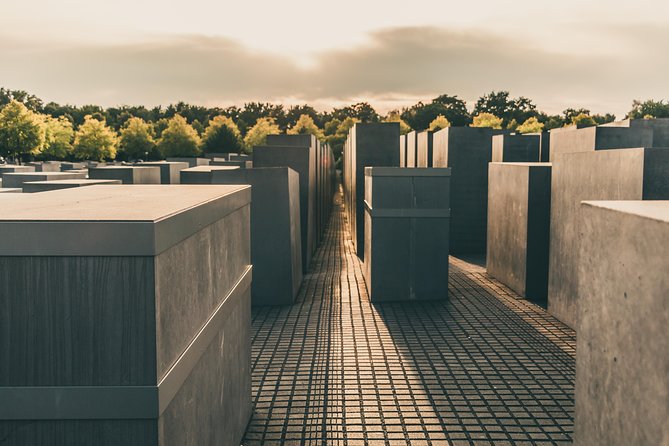
Next is the Holocaust Memorial, Memorial to the Murdered Jews of Europe. The guide tells stories meant to make the place feel specific and human, and the site is treated as a moment of quiet reflection.
This is likely the emotional peak of the whole walk. It’s also where the tour earns trust, because you can tell the guide is aiming for respect, not performance. The guide’s commentary helps connect the memorial to the broader theme of state-driven crime and deliberate dehumanization.
Practical note: even though the stop time is short, plan to spend extra seconds looking before you move on. The geometry of the memorial can make you feel like you’re stepping into another space, and rushing it reduces what you get out of it.
Reichstag outside only, but with a useful path to the dome
You then reach the Reichstag Building, seat of the German parliament. Here, you’ll see it from outside only. The guide explains how to book a visit to the dome, so you have a next step if you want the panoramic view later.
This is smart guiding. Many first-time Berlin visitors assume the “main government building” means you can go inside during the tour. You can’t here. But the guide still helps you plan correctly, so the outside view becomes a starting point instead of a disappointment.
If you want to add the Reichstag dome, do it after the walk. By the time you finish the tour, you’ll already understand what you’re looking at and why it matters.
Brandenburg Gate and Unter den Linden: reunification meets the long view
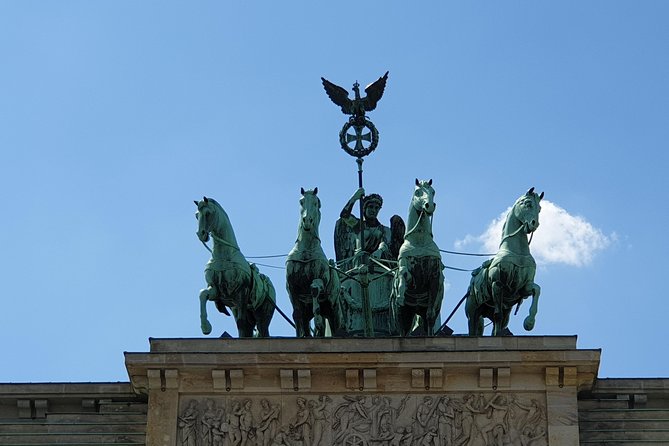
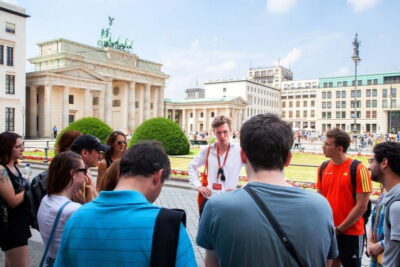
At the Brandenburg Gate, the guide tells the story of the landmark from symbol of a king’s strength to a Cold War icon, and finally to one of German reunification’s most recognizable symbols.
This section is one of the most photogenic parts of the route. But what makes it worth more than pictures is the timeline. Once you hear the transformation, the gate stops being just a postcard and becomes a visual summary of Berlin’s political pivot points.
Then you walk along Unter den Linden, the grand avenue once serving as the access road to the emperor’s palace. The guide helps you recognize different construction periods and the war wounds still visible in the cityscape.
I like this part because it’s where Berlin feels like a real capital. You’re not hiding the past in a museum. You’re walking through it.
Bebelplatz and the book burning memorial: propaganda turned into a permanent warning
At Bebelplatz, you learn about the burning of books during the Nazi dictatorship. You’ll also see how the square connects to major institutions nearby, including Humboldt University and the Catholic Cathedral.
From there, the tour focuses on the Book Burning Memorial at Bebelplatz. You get an explanation of how this monument remembers the propaganda action, and how the memorial places the lesson right in the middle of daily space rather than tucked away.
This stop is useful for understanding Berlin’s approach to accountability. Memorials here are not only about what happened, they’re also about how a society chose to control thought and culture.
Humboldt University and Neue Wache: education and the cost of war
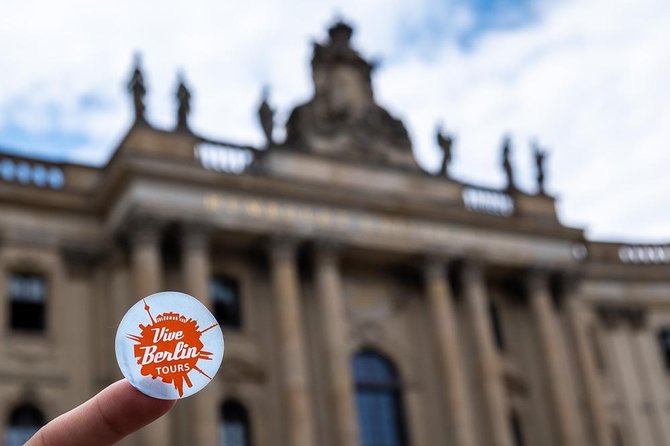
At Humboldt University (Humboldt Universitat), you’ll get history about the university and learn about famous students tied to its legacy. Even with only a short stop, this adds context for Berlin beyond politics and violence. It ties ideas, institutions, and influence to the city’s identity.
Then you reach Neue Wache, a memorial expressing rejection of war and its horrors. The guide describes the image of a mother crying her son, a soldier who fell in battle.
This is a heavy emotional note, but it’s also visually direct. The memorial makes “war’s price” impossible to abstract. It fits the tour’s tone shift from ideological power to human cost.
Berliner Dom and Museum Island: finishing near major treasures
The last stretch includes Berliner Dom. The guide explains that the emperor who had it built intended it to serve as a Lutheran equivalent to St. Peter’s, in terms of grandeur and importance.
You then move toward Museum Island, a UNESCO World Heritage Site. The guide finishes the walk in this area and provides directions for continuing your visit.
This ending is practical. The tour closes near Pergamon Museum, with the official end point at Bodestraße 1-3, 10178 Berlin. If you want to follow up with major museum time, you’re positioned well.
Even if museums are not your priority, Museum Island is a natural “next chapter” area. You’ll have learned to see the city as layered history, and now you can choose how deep you want to go.
Price and value: why this $27.91 walk can be a smart buy
At $27.91 per person for roughly 3.5 hours, the value is tied to concentration. You cover a long list of major landmarks, including the Brandenburg Gate, Checkpoint Charlie, Topography of Terror, and multiple memorial sites, all in one outing.
The tour also includes the core inputs that cost money when bought separately: a local guide and local taxes. Most stops are listed as admission-free in the context of the tour, so you are not paying extra entrance fees just to hear the story.
The main thing to know is that it’s not a museum ticket tour. You see key buildings and memorials, and you can plan optional add-ons later, like the Reichstag dome booking the guide explains.
Who should book this tour, and who might prefer something else
This is an excellent fit if you:
- want an Italian-speaking intro to Berlin’s modern history
- prefer walking to bouncing between bus stops
- want a coherent thread through WWII, the Cold War, and reunification symbols
- like guides who explain what you’re seeing, not just where to stand
You might choose a different option if you:
- dislike emotionally intense subjects like the Holocaust Memorial and Nazi-related sites
- need a very relaxed pace with minimal standing and walking
- already plan to spend most of your time inside museums and prefer fewer outdoor memorial stops
Should you book this Italian Historic Center of Berlin tour?
If you’re visiting Berlin for the first time or you want your history learning to feel organized, I think this tour is a strong bet. It’s priced reasonably for a half-day style experience, with a guide who can connect huge landmarks into a clear timeline. And because it ends near Pergamon Museum on Museum Island, you can turn the walk into a full day of exploring without extra guessing.
Just show up ready for walking and for serious moments. If you’re okay with that, you’ll likely leave with Berlin feeling less confusing and more human.
FAQ
Is the tour in Italian?
Yes. The guided walking tour includes an Italian-speaking guide.
How long is the tour?
It runs for about 3 hours 30 minutes.
Where does the tour start and what do I look for?
The meeting point is Potsdamer Platz 10, 10785 Berlin. Look for the blue bicycle with the Vive Berlin Tours logo near the S/U-Bahn Potsdamer Platz.
Where does the tour end?
The tour ends at Pergamon Museum, Bodestraße 1-3, 10178 Berlin.
Is this a small group tour?
Yes. The tour has a maximum of 28 travelers.
Do I need to buy separate tickets for the stops?
The tour description states admission is free for the stops listed. The Reichstag dome is not included, but the guide will explain how to book it.
What’s included in the price?
Local taxes and a local guide are included. Food and drinks, drinks, hotel pickup, and transportation to/from attractions are not included.
Does it run in bad weather?
Yes, it operates in all weather conditions, so dress appropriately.
Is there free cancellation?
Yes. You can cancel up to 24 hours in advance for a full refund. If you cancel less than 24 hours before the start time, the amount paid is not refunded.
Newest Berlin reviews on the site
- Your ticket to The Wall Museum Berlin★ 3.0 · 60 reviews
- Rickshaw Tours Berlin – Groups of up to 16 people with several rickshaws★ 4.0 · 97 reviews
- Love and War in Berlin: Self-Guided Story Puzzle Walk★ 5.0 · 7 reviews
- Warnemuende Shore Excursion: Berlin Private Sightseeing Tour from Rostock★ 5.0 · 4 reviews
- eSIM for Germany and 34 European Countries★ 4.5 · 16 reviews
- Walking on the Wall: 3-Hour Tour in Berlin★ 4.5 · 34 reviews
- Karl-Marx-Allee Tour: Life and Architecture in East Berlin★ 5.0 · 19 reviews
- Warnemuende Shore Excursion: Private Berlin Tour★ 4.5 · 27 reviews
Historical Tours, compared.
City History Canal Sightseeing Tour on a Motorboat
Read our review →
Browse the lists this tour appears in