
Reviewed · CITY TOURS
East Berlin: City of Shadows Walking Tour
Berlin hides its darkest corners in daylight. This East Berlin City of Shadows walking tour connects the Iron Curtain era to the real places you can still see today, with a historian guiding you through monuments, borders, and memories that sit in plain sight. I like how the route focuses on specific story sites, like the Palace of Tears, and I also like that it explains how buildings in modern Berlin link back to the Communist years.
One thing to think about is logistics. The tour includes public transport during longer stretches, and the transport ticket cost is not included in the $153 price, so you will want to plan for that extra spending.
In This Review
- Key highlights you should care about
- City of Shadows, East Berlin, what this tour is really about
- Meeting at Unter den Linden 42, then stepping into Brandenburg Gate history
- The former Soviet Embassy area and the first lesson about power
- Friedrichstrasse station and the Palace of Tears, where families got torn apart
- Walking the Berlin Wall memorial and the Death Strip reality
- Former Stasi headquarters, how surveillance was organized
- Alexanderplatz rebuilt in the 1960s, and why 1989 happened here
- Guides that make the story land, including Martin and Dan
- Price and planning for a smooth 3-hour route
- Who should book this East Berlin City of Shadows tour
- Should you book this tour of East Berlin’s City of Shadows?
Key highlights you should care about
- Historian guide, not a casual lecturer, with credentials that include professors, doctoral students, journalists, historians, art critics, or published authors
- Start near Unter den Linden 42, then ease into the story at Brandenburg Gate and the former Soviet Embassy area
- Friedrichstrasse and the Palace of Tears, where East Germany’s immigration rules turned goodbyes into an official ritual
- Berlin Wall memorial and the Death Strip, with escape stories attached to the exact idea of what that barrier meant
- Former Stasi headquarters, where you learn how the system of spying and surveillance was built
- Alexanderplatz rebuilt in the 1960s, tied directly to the 1989 mass demonstrations that ended Communist rule
City of Shadows, East Berlin, what this tour is really about
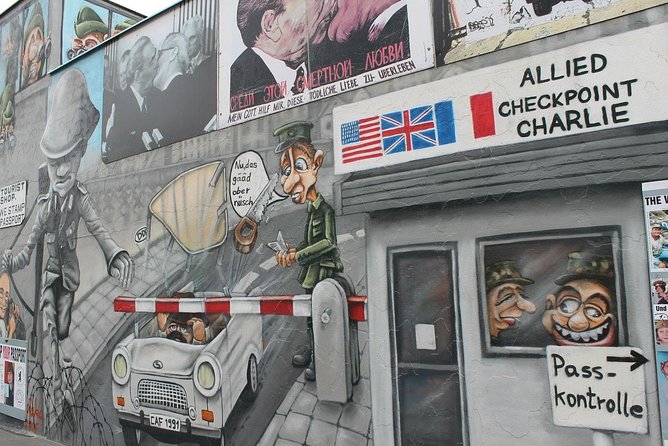
East Berlin can feel like a museum, but this tour treats it like a lived place. You are not just looking at old walls and dramatic memorial plaques. You are learning how rules, fear, and borders shaped everyday routines, from train stations to public squares.
The strongest part is the cause and effect. You watch how geography becomes policy, and policy becomes something you can recognize in the city’s layout. That is why the stops matter: they are not random photos. Each one is tied to a specific mechanism of control.
More Walking Tours in Berlin
- Discover Berlin Half-Day Walking Tour
★ 5.0 · 9,624 reviews - Berlin: Third Reich and Cold War 2 Hour Walking Tour
★ 4.9 · 6,830 reviews - Berlin: Discover Berlin Walking Tour
★ 4.9 · 5,998 reviews
Meeting at Unter den Linden 42, then stepping into Brandenburg Gate history
The tour meets at Unter den Linden 42. That location helps you get grounded fast because it puts you in the broader Berlin center before the story tightens into East Berlin’s boundary lines.
From there, the tour begins at Brandenburg Gate near the monument linked to the former Soviet Embassy. You will hear how World War II rubble helped create a bold statement of power, with Stalin’s ambition aimed at control over Berlin. It is a dramatic opening, but it is also practical, because it frames what comes next: the city was not just divided by ideology, it was forced into a controlled geography.
The former Soviet Embassy area and the first lesson about power
This early section is where the tour does its best job of setting context. Berlin’s post-war landscape is easy to romanticize, especially if you only see it through postcards. The tour pushes you to see the darker logic: how authority tries to project itself through stone, monuments, and street presence.
I like the way the tour keeps the story concrete. You look at the physical evidence around Brandenburg Gate, then you connect it to the political reality that produced it. That makes the rest of the walk more than a string of sad anecdotes.
Friedrichstrasse station and the Palace of Tears, where families got torn apart
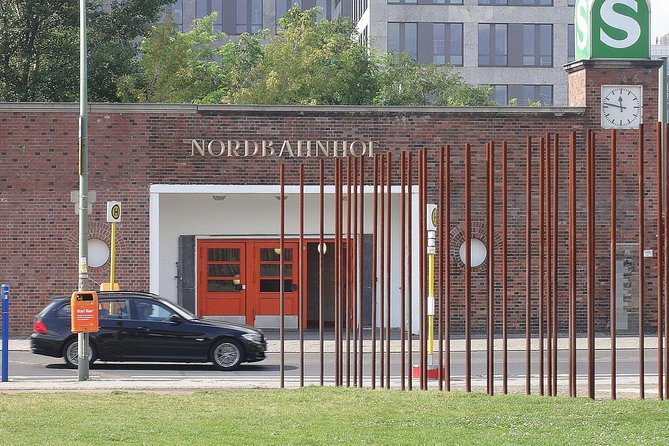
Next comes Friedrichstrasse train station, a key crossing point between East and West Berlin. The tour uses this location to explain what the border meant in human terms, not just political ones.
The stop that hits hardest is the Palace of Tears. This was an office where families said their sad goodbyes under East Germany’s ironfisted immigration rules. The name alone is heavy, but the guide’s job is to connect the concept to the process, so you understand why separation became bureaucratic, and why that turned ordinary life into a repeated stress.
What I think you will appreciate here is the emotional clarity. Instead of rushing through the tragedy, the tour slows down just enough to help you picture the moment people faced. It is a mournful stop, but it is also a turning point in your understanding of East Berlin.
Same city, a different way to spend the afternoon:
- Berlin: Reichstag, Dome and Government District Guided Tour
★ 4.7 · 18,288 reviews - Berlin: 1-Hour City Tour by Boat with Guaranteed Seating
★ 4.3 · 16,993 reviews - Berlin: TV Tower Standard Entrance Ticket
★ 4.4 · 15,883 reviews - Berlin: Boat Tour Along the River Spree
★ 4.4 · 11,252 reviews
Walking the Berlin Wall memorial and the Death Strip reality
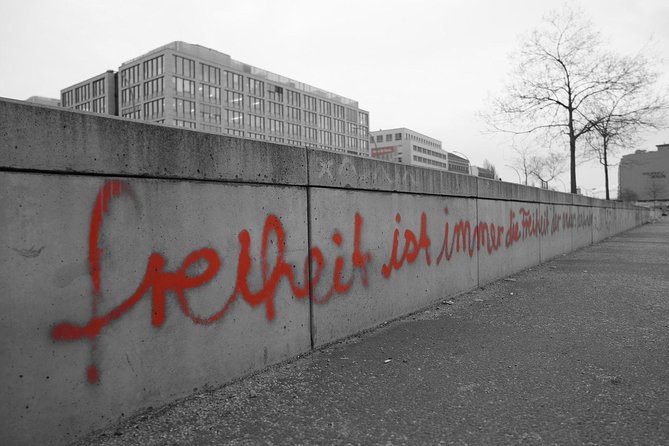
After Friedrichstrasse, the tour moves toward the Berlin Wall memorial and the idea of the Death Strip. This is where the tour stops being theoretical and becomes intensely specific.
You get stories about East Berliners whose attempts to escape led to their tragic deaths. The guide ties those stories to what the Wall and the border zone were designed to do. This is not only about barriers. It is about controlling movement, controlling information, and making risk feel unavoidable.
A memorial can sometimes feel like you are reading history at a distance. Here, because you are hearing linked stories, the space feels smaller and more immediate. The city around the memorial can look normal, which is precisely why this stop matters.
Former Stasi headquarters, how surveillance was organized
At the former Stasi headquarters, the tour shifts from visible barriers to invisible systems. You will learn how Eric Mielke led a massive network of spies and helped create innovative surveillance techniques.
That shift is important. Many people remember the Wall as the symbol. This tour reminds you that surveillance was the everyday companion. Even if you never saw a patrol, you lived with the possibility that someone might be watching.
This segment also makes the modern city easier to read. Once you understand how information gathering worked, you notice how public life can be shaped by what people believe others know. That is a useful mental lens for Berlin as a whole, not only for the East Berlin sites on this walk.
Alexanderplatz rebuilt in the 1960s, and why 1989 happened here
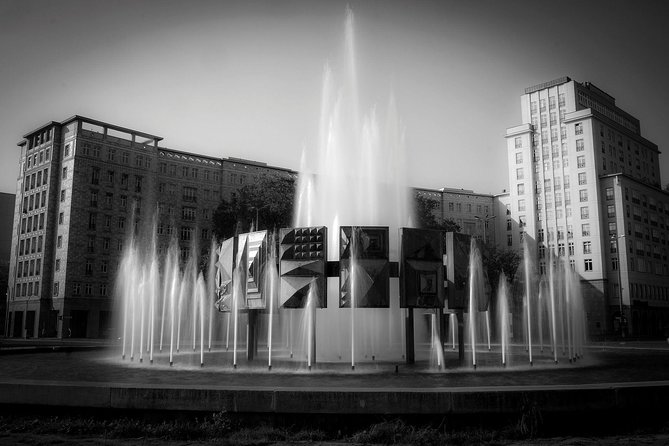
The final major stop is Alexanderplatz, the center of public life in East Berlin. You will learn that it was rebuilt in the 1960s, and that it became a symbol of East German pride.
Then the tour brings you to 1989. Alexanderplatz was one of the settings for the mass demonstrations that led to the regime’s downfall, ending 40 years of Communist rule. This is where the tour balances weight with momentum, because you see how a controlled public space can still become a stage for collective change.
If you only know Alexanderplatz as a transit hub or a skyline stop, you will likely leave with a different picture. It becomes a place where political pressure became public pressure, and where the street did what institutions could not stop.
Guides that make the story land, including Martin and Dan
A big reason this tour earns strong marks is the caliber of its guides. The tour’s structure is built around live guidance in English, and the provider states that guides include academic and publishing professionals, such as professors, doctoral students, historians, journalists, art critics, and published authors.
In the feedback you can see that approach in action through named guides. People highlighted Martin for explaining hidden aspects of Berlin before 1990, and they also mentioned Mark as helpful during the tour. Another guide called Dan was praised for friendly, polite attention and for checking in to make sure participants were doing well, even on a cold afternoon.
That combination matters. When you are learning about harsh topics like borders, spying, and escape attempts, a guide has to control pace and tone. This tour seems built for that balance, and it shows in the comments about friendliness and clarity.
Price and planning for a smooth 3-hour route
At $153 per person for a 3-hour experience, you are paying for an expert historian guide and a tightly connected route across major East Berlin story sites. This is not a “see a few plaques” walk. The value comes from linking each location to the wider system that created it.
Two practical notes will help you enjoy it more:
First, plan for public transport during the tour. Distances between certain sites are long enough that you will need transit, and the ticket cost is not included in the tour price. Build in some extra money and time for that handoff.
Second, dress for street time. One of the feedback points specifically mentions a cold afternoon, and this makes sense because you will spend time outdoors between stops.
If you want a quick, low-effort history hit, you could do Berlin self-guided. But if you want the city’s dark logic explained in plain language, a guided format earns its keep.
Who should book this East Berlin City of Shadows tour
This is a strong fit if you care about the Cold War in a way that goes beyond the big dates. You will likely enjoy it most if you like learning how systems shape everyday life, from family separation at Friedrichstrasse to surveillance at the Stasi headquarters.
It is also a good choice if you already know some Berlin Wall basics but want the story anchored to place. The route hits key locations that make it easier to connect the map in your head with the reality on the ground.
Because the tour offers private or small groups, it can suit people who prefer more direct Q&A instead of feeling lost in a crowd. It is also a good option if you want your guide to slow down when something feels confusing or heavy.
Should you book this tour of East Berlin’s City of Shadows?
I think you should book it if you want a focused, story-driven walk through East Berlin with an expert historian leading the way. The combination of Palace of Tears, Berlin Wall memorial, former Stasi headquarters, and Alexanderplatz gives you a connected arc, from separation to surveillance to public uprising.
You might skip it if you hate the idea of additional costs for public transport or you only want a short, casual sightseeing stroll. But if you are the type who enjoys understanding how a city got the way it is, this tour is a smart use of your time.
If your plans are flexible, the tour’s free cancellation window (up to 24 hours in advance) makes it easier to hold your spot while you sort out the rest of your Berlin schedule.
Newest Berlin reviews on the site
- Jetbike Berlin fun bike beer bike★ 5.0 · 3 reviews
- Karl-Marx-Allee Walking Tour: Berlin’s Socialist History★ 5.0 · 5 reviews
- Homeless on chic streets: city tour in Berlin from personal experience★ 4.6 · 3 reviews
- Berlin: Sachsenhausen Concentration Camp Guided Tour★ 4.9 · 42 reviews
- Historyof the Trans, Queer & Gay communities of Berlin tour★ 4.8 · 17 reviews
- Historic Berlin Pubs & History Tour★ 4.9 · 73 reviews
- Berlin: City Center Walking Tour★ 4.7 · 45 reviews
- Half-Day Berlin Highlights Segway Expedition★ 4.5 · 61 reviews
City Tours, compared.
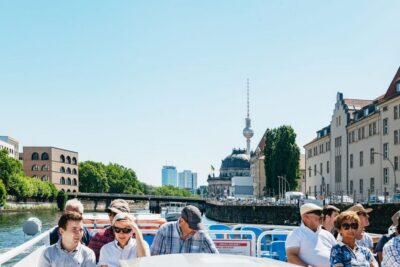
1-Hour City Tour by Boat with Guaranteed Seating
Read our review →
City History Canal Sightseeing Tour on a Motorboat
Read our review →
Browse the lists this tour appears in