Reviewed · BERLIN TOURS
Discover Berlin Express Tour: 2hr Highlights
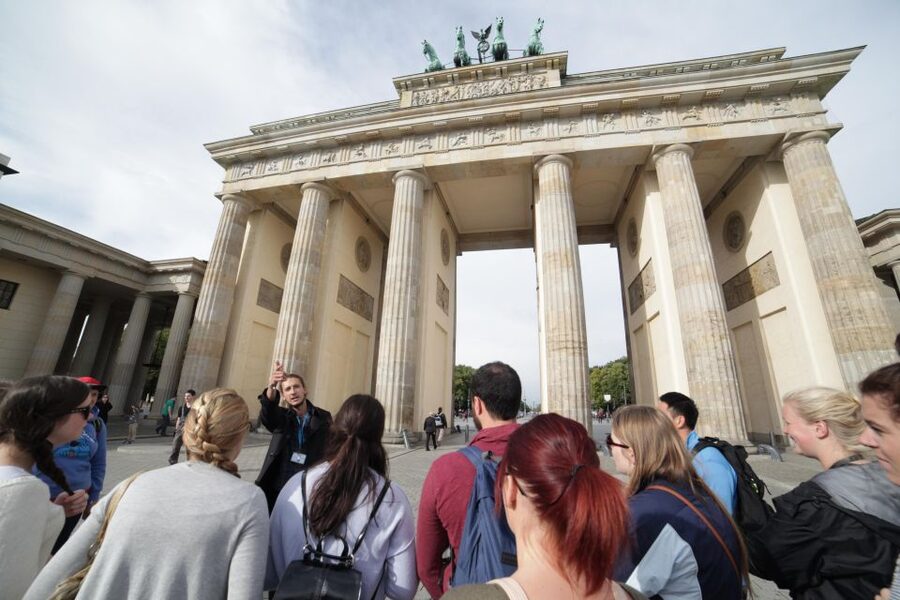
Berlin’s past hits you fast. This 2-hour express walking tour strings together big landmarks and serious memorials in a tight route, so you get oriented without burning a whole day. You’ll see the Brandenburg Gate, the Reichstag area, Wall remnants, and end at Checkpoint Charlie, with an emphasis on WWII and the Cold War.
I especially like the guided pace. It’s built for efficiency, yet it doesn’t feel like a sprint, and the route hits the moments that help you understand modern Berlin.
One thing to consider: this is mostly outside. The tour does not enter buildings, so if you’re hoping for indoor access or deep exhibits, you’ll want to plan those separately.
In This Review
- Key Highlights You’ll Actually Feel on This Walk
- Why a 2-Hour Express Walk Feels So Efficient
- Starting at Pariser Platz, Then Moving Straight Into the Story
- Brandenburg Gate to Reichstag: The City’s Headlines in One Flow
- The Memorial Route: Sinti and Roma, and the Murdered Jews of Europe
- Hitler’s Bunker Site and the WWII Turn You Cannot Skip
- Tiergarten and the Soviet War Memorial: Victory With Cost
- Topography of Terror Wall Remnants: When Division Becomes Visible
- Finishing at Checkpoint Charlie: Cold War Drama, Then Closure
- Price and Value: What You Get for $23
- Who This Tour Suits Best (And Who Might Want Something Else)
- A Quick Booking Decision: Should You Book It?
Key Highlights You’ll Actually Feel on This Walk
- Brandenburg Gate and Pariser Platz to start with Berlin’s headline symbol of unity and peace
- WWII memorial focus that includes the Sinti & Roma Memorial and the Memorial of the Murdered Jews of Europe
- Reichstag area and the Politicians’ Memorial to connect politics, persecution, and democracy
- Hitler’s Bunker site plus the nearby memorial sequence for a sober, chronological sense of the city’s turning points
- Topography of Terror Wall remnants and Checkpoint Charlie to end with Cold War reality, not just photos
Why a 2-Hour Express Walk Feels So Efficient
Berlin can overwhelm you fast. You walk a few blocks and suddenly you’re staring at something that shaped Europe. This tour is designed for that reality by using a 2-hour window to cover the main visual anchors you’ll keep seeing again and again as you explore on your own.
What makes it work is the balance of landmark viewing and meaning. You’re not only ticking off postcard sites. You’re also walking through the parts of Berlin that force you to think about what happened, and why remembrance matters. In other words, it’s sightseeing that teaches you how to look at the city.
At $23 per person, the value comes from the combination of route coverage and an English-speaking academic guide. You’re paying less for transit and more for interpretation. If you’re short on time, this is one of the easiest ways to get your bearings fast.
A few more Berlin walks and trips to compare
- Berlin: Reichstag, Dome and Government District Guided Tour
★ 4.7 · 18,288 reviews - Berlin: 1-Hour City Tour by Boat with Guaranteed Seating
★ 4.3 · 16,993 reviews - Berlin: TV Tower Standard Entrance Ticket
★ 4.4 · 15,883 reviews
Starting at Pariser Platz, Then Moving Straight Into the Story
You begin at Pariser Platz, with the meeting point in front of the Tourist Information Office. From there, you get a short orientation stop before you move on. Starting here helps because it lands you in a central, recognizable part of Berlin right away.
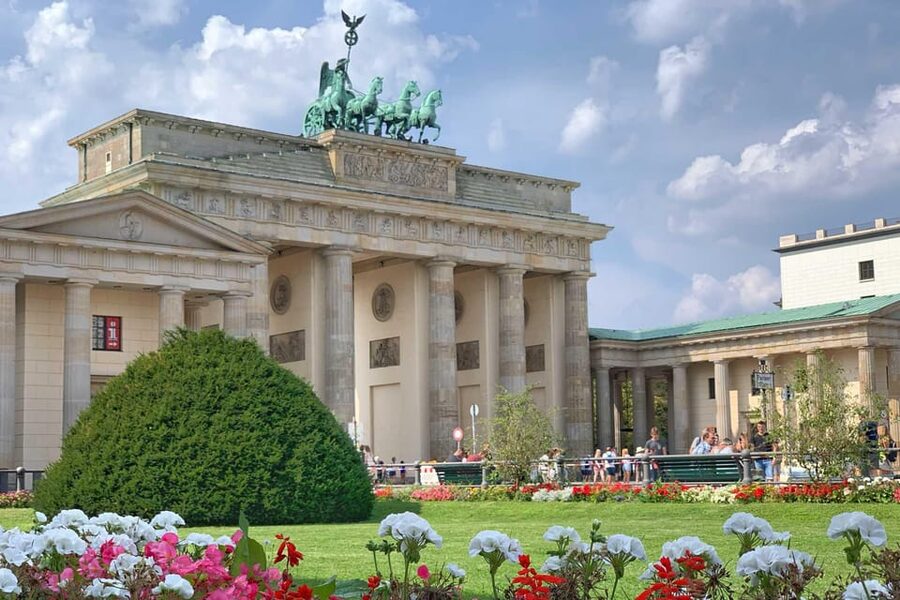
Pariser Platz sets the tone. You’ll be guided through the Brandenburg Gate area, including the surrounding neoclassical architecture of the square. The goal is practical: you learn what you’re looking at before the route shifts toward darker, more difficult memory sites.
I like that this early segment isn’t just photo time. A good guide uses this moment to frame the rest of the walk. You start with a symbol of unity and peace, then you steadily transition into the places where Berlin’s past is no longer abstract.
Brandenburg Gate to Reichstag: The City’s Headlines in One Flow
The route carries you from the Brandenburg Gate toward the Reichstag area. This is where Berlin’s identity becomes visible in layers. The Brandenburg Gate is presented as a symbol of unity and peace, and that matters because it’s the emotional baseline before the tour turns toward governance, persecution, and conflict.
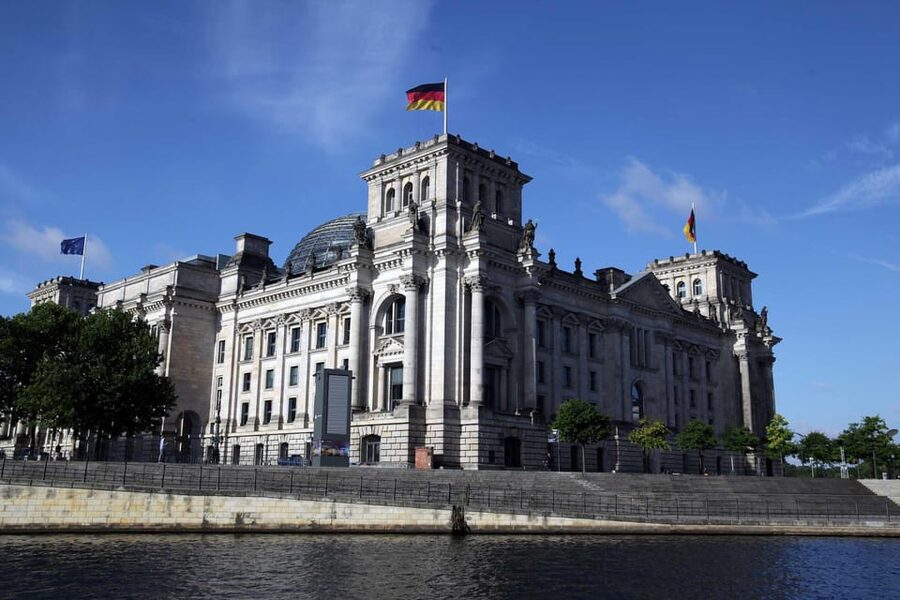
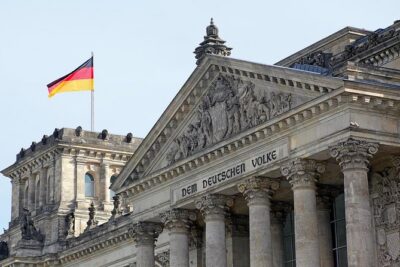
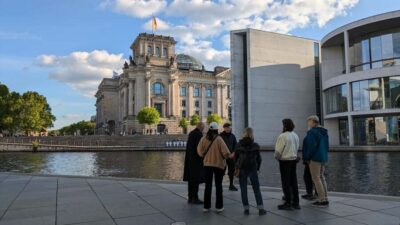
Next comes the Reichstag, Germany’s parliamentary building. You’ll approach it and hear about its history stretching from the Weimar Republic to the present. That time span is helpful because it gives you a sense of continuity and rupture. Berlin isn’t only about one era. It’s about how different eras used the same political spaces in different ways.
Right nearby is the Politicians’ Memorial. It commemorates political figures who faced persecution during turbulent times in German history. The placement adjacent to the Reichstag helps you connect politics with the human cost. You can stand in the same area and feel the difference between democracy as an idea and democracy under threat.
If you prefer tours that stick to meaning rather than trivia, this section is a strong match. The sights are famous, but the guide’s job is to help you interpret them as part of one ongoing story.
The Memorial Route: Sinti and Roma, and the Murdered Jews of Europe
A major reason this tour gets near-perfect feedback is that it treats memorials with care. You don’t just walk past them. You’re guided through what they commemorate and why the remembrance is central to understanding Berlin today.
First, you reach the Sinti & Roma Memorial. The tour frames it as a tribute to the thousands of Sinti and Roma people who suffered during the Holocaust. This is important because the Holocaust is often discussed too narrowly in everyday conversation. Here, the guide helps widen your focus so you leave with a fuller sense of who was targeted.
Then you proceed to the Memorial of the Murdered Jews of Europe. It’s described as a haunting installation with concrete slabs that form a labyrinth-like space. That physical layout does more than look eerie from a distance. It shapes your movement and makes you slow down. For many people, that’s exactly what a memorial is meant to do: interrupt the normal pace of tourism.
A practical tip for this kind of stop: wear shoes that let you stand and walk comfortably. Even though the tour is only 2 hours, memorial sections can feel longer because your attention shifts inward.
If you’re traveling with teens or adults who need a reason to care beyond photos, this sequence delivers it without trying to sensationalize anything.
Same city, a different way to spend the afternoon:
- Berlin: Boat Tour Along the River Spree
★ 4.4 · 11,252 reviews - Discover Berlin Half-Day Walking Tour
★ 5.0 · 9,624 reviews - Berlin: Government District around the Reichstag Guided Tour
★ 4.7 · 8,447 reviews - Berlin: Reichstag, Plenary Chamber, Cupola & Government Tour
★ 4.6 · 8,422 reviews
Hitler’s Bunker Site and the WWII Turn You Cannot Skip
One of the heaviest moments on the route is the site of Hitler’s Bunker. You’ll stand at the historic location beneath the city’s surface and learn about the final days of the Third Reich, plus the significance of where it sits in shaping post-war Berlin.
This stop is valuable because it links the war to the geography. Berlin isn’t only about museums. It’s about the fact that the city changed beneath people’s feet. Even if you’re not a WWII specialist, the guide’s explanations help you understand why this location still matters.
The tour keeps moving from memory to context. You’ll also pass the Finance Ministry, which functions as a modern contrast to the historical weight around it. That contrast helps your brain process what you’re seeing: the city didn’t stop after the war, it rebuilt, and it continues living with the evidence of what came before.
If you get a little overwhelmed, that’s normal. This route is deliberately designed to bring you through the emotional turning points. The difference is that you’ll have an English-speaking academic guide to help you stay oriented.
Tiergarten and the Soviet War Memorial: Victory With Cost
After the Reichstag area, you enter the Tiergarten to explore the Soviet War Memorial. The tour focuses on the soldiers who gave their lives during the Battle of Berlin in World War II, and it highlights the memorial’s grandeur as a testament to victory.
This part matters because it expands your perspective. WWII in Berlin isn’t only Germany’s story. It’s also the story of the Soviet soldiers who fought there. Even though you might not know the finer details before you arrive, the guided framing helps you understand the memorial’s purpose and why it was built the way it was.
This is also a good breathing moment in the day. Parks give you a little space between intense stops. You still stay within the tour route, but you’re not constantly looking at dense urban walls and buildings.
If you like tours that mix “look and learn” with a bit of walking relief, Tiergarten is a plus.
Topography of Terror Wall Remnants: When Division Becomes Visible
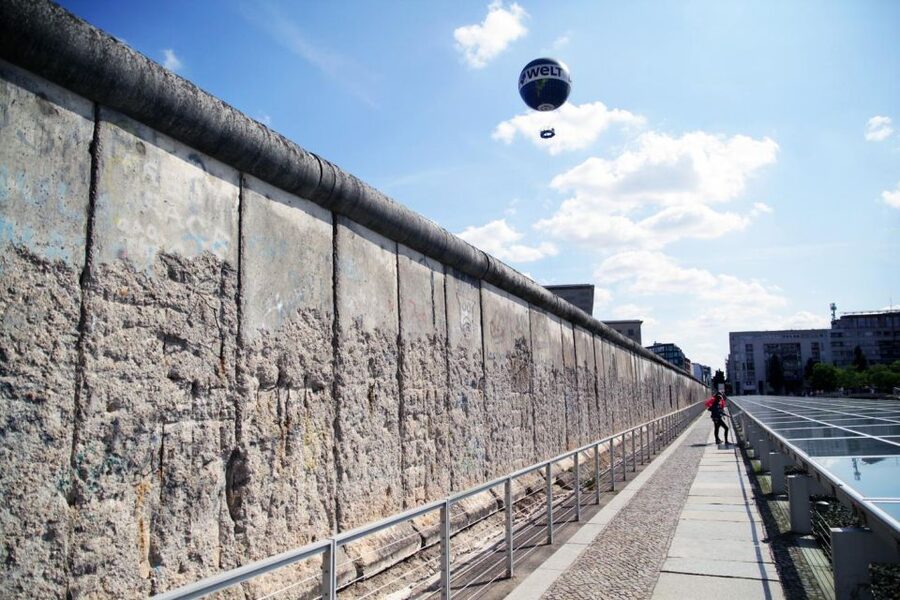
Then comes one of Berlin’s most important Cold War leftovers: Berlin Wall remnants connected to the Topography of Terror exhibit area. The tour focuses on how the city was divided during the Cold War.
This stop is where you start seeing the Cold War as more than an abstract term. The wall is part of the city’s physical identity, and these remnants make it real. Even without entering any buildings, you’ll get a clear sense of how division shaped daily life, movement, and the border mentality that defined the era.
I like that the guide keeps you from treating it like just another historical photo spot. The goal is to make you understand why Berlin became a symbol of East-West tension, and why it took so much will to move beyond it.
Bring your curiosity here. If you’re the type who likes noticing how cities change, this stop gives you clues that you can follow later as you explore on your own.
Finishing at Checkpoint Charlie: Cold War Drama, Then Closure
Your tour ends at Checkpoint Charlie, the famous border crossing point during the Cold War. You’ll conclude with guided storytelling about espionage and escape attempts, which is a compelling way to close the arc of division and resistance.
This ending works for two reasons. First, it’s visually easy to recognize, so you can remember what you learned. Second, it brings the theme home. You start with a symbol of unity and peace, you move through WWII devastation and memorials, and you end with the Cold War machinery of control.
If you’re wondering whether Checkpoint Charlie is worth seeing, this tour gives it context. You’re not just collecting a location. You’re hearing why the border crossing mattered, and how people tried to outsmart the system.
At the end of a 2-hour walk, that closure is valuable. It helps your brain stop trying to “piece it together later.”
Price and Value: What You Get for $23
For $23 per person and a 2-hour duration, the value is mostly about three things: an English-speaking experienced academic guide, a focused route, and time efficiency.
You see main sights that many visitors travel across the city for. Even more importantly, you get the interpretation you would otherwise have to source yourself. The guide helps connect the landmarks to the bigger themes the route is built around: WWII remembrance, political persecution, and Cold War division.
Also, since the tour does not enter buildings, it avoids the common time sinks that can derail a tight schedule. You get outside guided explanation and then you can decide what to do next based on what you cared about most.
In plain terms, this is a good buy if you want strong orientation plus meaningful stops, without needing extra days.
Who This Tour Suits Best (And Who Might Want Something Else)
This Berlin Express tour is a great match if:
- you only have a short amount of time in Berlin and want the headline sites plus major memorials
- you prefer a guide who can answer questions and keep the walking pace comfortable
- you like tours that explain meaning, not just locations
It might be less ideal if:
- you want to go inside museums or government buildings during your guided time
- you need very long stops for reflection, because the route is optimized for efficiency
- you’re looking for a purely lighter, entertainment-style walk
The good news is that the tour still gives you enough emotional and historical context to choose your own follow-up stops after.
A Quick Booking Decision: Should You Book It?
Yes, I’d book it if you want to get the most out of Berlin quickly and you’re comfortable with WWII and memorial-focused content. The strongest benefit is the guided route that connects major landmarks with the thinking behind them, and the pacing that keeps the whole thing manageable.
If you’re the kind of traveler who hates wasting time and wants your first day (or first half-day) to make sense, this tour is built for you. Just wear comfortable shoes, expect outside walking, and let the memorial sequence set the tone for how you’ll see Berlin afterward.
Newest Berlin reviews on the site
- Jetbike Berlin fun bike beer bike★ 5.0 · 3 reviews
- Karl-Marx-Allee Walking Tour: Berlin’s Socialist History★ 5.0 · 5 reviews
- Homeless on chic streets: city tour in Berlin from personal experience★ 4.6 · 3 reviews
- Berlin: Sachsenhausen Concentration Camp Guided Tour★ 4.9 · 42 reviews
- Historyof the Trans, Queer & Gay communities of Berlin tour★ 4.8 · 17 reviews
- Historic Berlin Pubs & History Tour★ 4.9 · 73 reviews
- Berlin: City Center Walking Tour★ 4.7 · 45 reviews
- Half-Day Berlin Highlights Segway Expedition★ 4.5 · 61 reviews
Berlin Tours, compared.
Reichstag, Dome and Government District Guided Tour
Read our review →
1-Hour City Tour by Boat with Guaranteed Seating
Read our review →
Government District around the Reichstag Guided Tour
Read our review →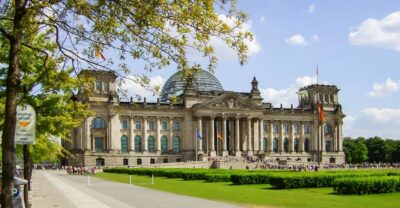
Reichstag, Plenary Chamber, Cupola & Government Tour
Read our review →