
Reviewed · HISTORICAL TOURS
Bremen: Walking Tour of Historic Schnoor District
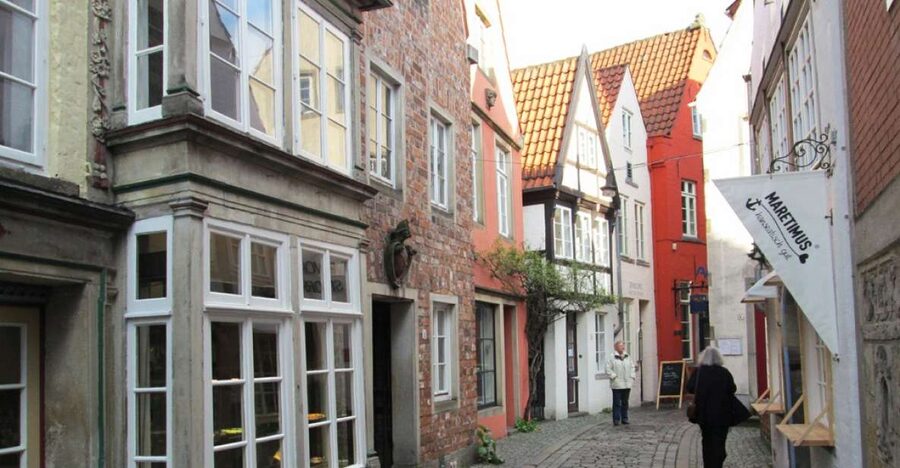
Schnoor is Bremen in miniature, and this 1-hour walk hits the highlights fast. I love the winding alleyways and the preserved 14th-century buildings that feel like they were built for slow wandering. The one catch: you only view structures from the outside, so if you want interiors, this tour won’t fill that gap.
Our German guide Sönke brought the stories to life, with humor and clear context that made the architecture easier to read as you walk. You’ll start right by the Die Glocke concert hall at Domsheide 6, where your guide is waiting with a sign that says Bremen Tour Guide. Wear comfortable shoes, because the lanes are narrow and the pace is walking-based.
In This Review
- Key highlights you should care about
- Schnoor in one hour: what you will see (and what you won’t)
- Where to meet: Die Glocke at Domsheide 6
- From monastery edge to famous quarter
- St. John’s Church: the redbrick Gothic landmark moment
- The half-timbered lanes near the Weser River
- Haus Schnoor 15 (Brasilhaus) and Packhaus Schnoor 2
- Facades, recreations, and the moving pieces of authenticity
- Classicism, historicism, Baroque, and Renaissance, explained in the street
- Goldsmiths, handicrafts, and what to do with the storefronts
- The $14 price, and why it can be good value
- Who should book this Schnoor walking tour
- Should you book this tour of Bremen’s Schnoor?
- FAQ
- How long is the Bremen Walking Tour of the Historic Schnoor District?
- How much does it cost?
- Is the tour wheelchair accessible?
- Are the buildings shown during the tour entered or viewed only from the outside?
- Where do I meet the guide?
- What language is the live guide?
- Is food and drinks included?
- Is a private tour available?
Key highlights you should care about
- Medieval beginnings: the area’s first written mention goes back to the 13th century, tied to a Franciscan monastery at the edge of today’s Schnoor
- St. John’s Church, redbrick Gothic: a 14th-century Catholic church that shapes the view you get as you move through the quarter
- Old secular houses you can spot from the street: including Haus Schnoor 15 (Brasilhaus) and Packhaus Schnoor 2, both dating to the 15th century
- Half-timbered textures near the Weser: classic shapes and beams that show how Bremen’s river life influenced building styles
- Architectural styles explained in plain language: classicism, historicism, Baroque, and Renaissance, tied to real facades you see on the walk
- Shops and goldsmith craft along the way: you pass storefronts selling local handiwork, even though food and drinks are not part of the tour
Schnoor in one hour: what you will see (and what you won’t)
This is a compact walking experience through Bremen’s Schnoor quarter, designed to give you a strong sense of place without turning into a half-day project. You’ll cover the lanes, the big visual landmarks, and the building types that make Schnoor famous, all on a 1-hour timeline.
Do know the viewing format up front. You will look at buildings from the outside only. That matters because Schnoor is full of doors, courtyards, and details, and the tour is built for seeing the shapes, materials, and street-level history, not going inside.
More Walking Tours in Bremen
- Bremen: Walking Tour in German with Night Guard
★ 4.7 · 2,922 reviews - Bremen: City Center Guided Walking Tour
★ 4.5 · 2,709 reviews - Bremerhaven: Sailor’s yarn, legends and sea walking tour
★ 4.7 · 33 reviews
Where to meet: Die Glocke at Domsheide 6
Meeting is easy if you like straightforward plans. You meet in front of Die Glocke concert hall, Domsheide 6, Bremen (28195). Your guide stands there holding a sign that says Bremen Tour Guide, so you are not wandering around asking random people for help.
The tour runs in German with a live guide. If German is not your thing, you may still find it enjoyable thanks to the architecture being visible right in front of you, but you will miss some of the guided storytelling if you cannot follow the language.
From monastery edge to famous quarter
Schnoor’s story starts long before the postcard-looking facades. The first-known written reference to Schnoor dates back to the 13th century, when a Franciscan monastery was built at the edge of what is now the district. Over time, the monastery itself largely disappeared, but the monastery church remains, and that surviving piece anchors the early timeline.
As you walk, you will connect that origin to the streets you see today. The tour is designed to make the neighborhood feel like a progression, not a random collection of old buildings. I like that approach because it turns Schnoor from a pretty place into an understandable one.
St. John’s Church: the redbrick Gothic landmark moment
One of your key stops is the present-day Catholic St. John’s Church, built in the 14th century. The style is redbrick Gothic, which gives it a very specific look compared with other European Gothic churches you might know.
Because this tour is exterior-focused, your “moment” here is about orientation: how the church sits in the neighborhood, how it relates to the surrounding houses, and how it helps explain why Schnoor became such a recognizable urban pocket. If you like architecture that you can read at street level, this part is worth slowing down for.
A few more Bremen walks and trips to compare
- Bremen: Historic old town tour with Geo Epoche
★ 3.3 · 5 reviews - Leipzig: City History Canal Sightseeing Tour on a Motorboat
★ 4.7 · 7,671 reviews - Berlin: Natural History Museum Entrance Ticket
★ 4.6 · 3,382 reviews - Leipzig: 1.5-Hour Historical Walking Tour in German
★ 4.7 · 2,217 reviews
The half-timbered lanes near the Weser River
As you move through Schnoor, you pass narrow stretches where half-timbered houses show up especially clearly near the Weser River. Those buildings are part of why people keep returning to this corner of Bremen.
You’ll also notice the “stacked” feel of the district. The little houses seem strung together like pearls on a string, which makes even a short walk feel like a whole sequence of scenes. The guide helps you see patterns, like how certain timber shapes and street-facing facades create a rhythm along the alleys.
There is a practical side to this too. Narrow streets can be slippery in bad weather, and there are curves. Comfortable shoes are not optional if you want to enjoy yourself rather than just get through it.
Haus Schnoor 15 (Brasilhaus) and Packhaus Schnoor 2
This is the part that history fans tend to love most: the tour points out older secular buildings, not only churches. Two of the most important examples include Haus Schnoor 15, also known as Brasilhaus, and Packhaus Schnoor 2, both dating back to the 15th century.
What makes these stops more than name-dropping is the way they connect architecture to everyday life. Church buildings tell one story. Secular houses tell another: business, neighbors, and how people built for daily routines. In a compact 1-hour format, those kinds of “real life” buildings help you understand Schnoor as more than a museum street.
Facades, recreations, and the moving pieces of authenticity
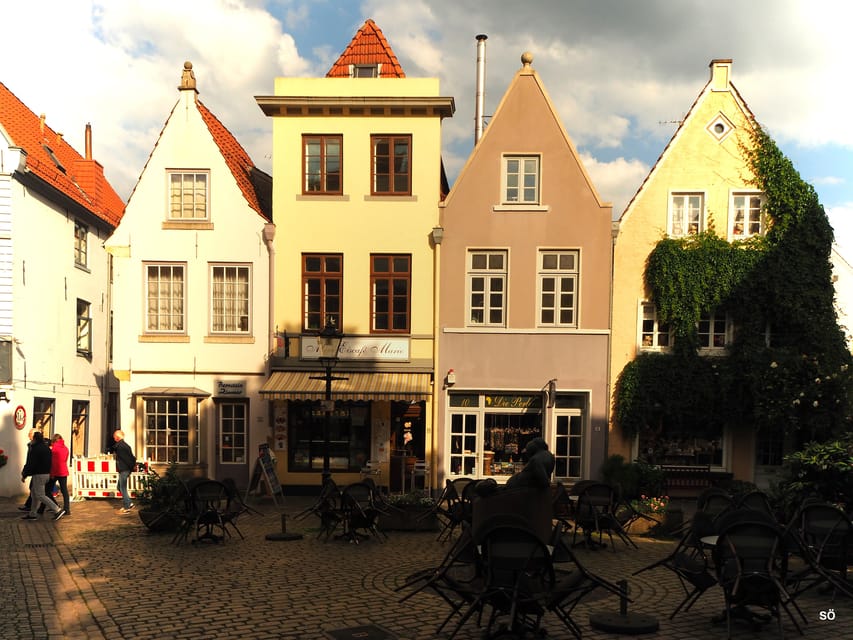
Schnoor also includes buildings that you might recognize as recreations or as facades that remain where the full structure did not. The tour gives you examples of houses recreated according to historical specifications, which is a big deal if you care about accuracy, not just aesthetics.
You may also see buildings where only the facades remain, meaning you get the look even if the original structures were altered or moved. That can feel tricky if you are the type who wants original bricks everywhere. I think the tour handles it well by framing what you are seeing as a deliberate preservation choice, not a mistake.
In the same spirit, you might spot the half-timbered house with the tea room. Even if you do not stop in, it adds a lived-in quality to the walk, because it shows how these structures have adapted for modern use while keeping their recognizable older forms.
Classicism, historicism, Baroque, and Renaissance, explained in the street
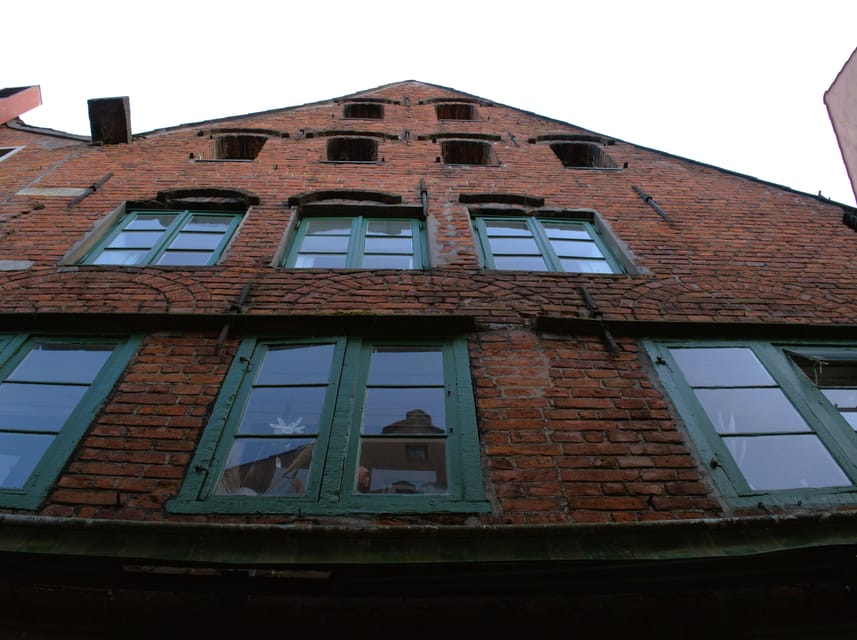
One of the more useful aspects of this tour is that you do not just get a list of old buildings. You learn how different architectural periods show up in Schnoor, including classicism and historicism, plus Baroque and Renaissance influences.
You might wonder, why does a 1-hour walk cover style names? Here is the value: those labels help you see differences quickly. Even from outside, you can start noticing shapes, proportions, and details that match certain periods. It is like giving you a small “decoder ring” for what you are looking at, so Schnoor becomes easier to read on your own after the tour.
Sönke’s style also matters here. From what I have gathered, his explanations land with humor and stories, which helps the architectural facts stick. When a guide makes history feel like people made choices, the time passes faster and the walk feels more fun.
Goldsmiths, handicrafts, and what to do with the storefronts
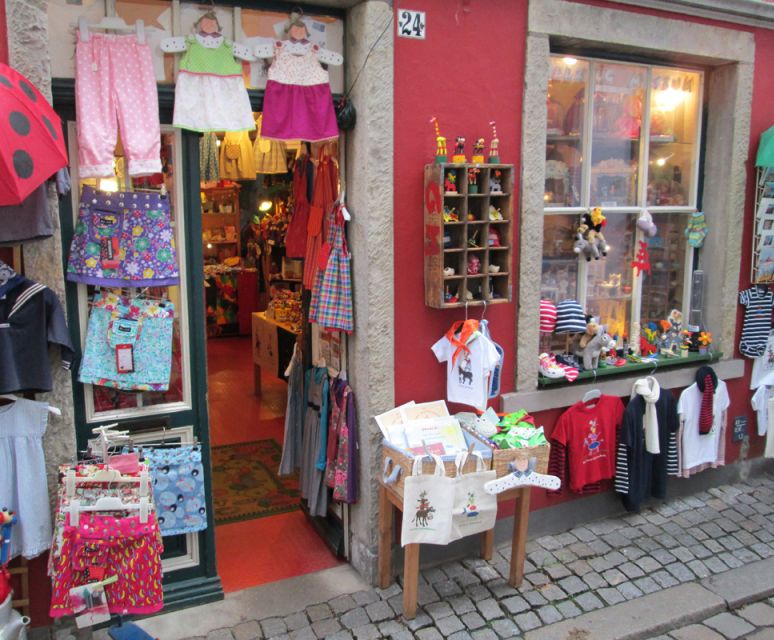
Schnoor is not only old houses. It is also a place where craft shops and traditional trades show up along the walk. You’ll pass goldsmiths and shops selling local handicrafts, and the exterior pacing keeps you moving through the quarter without long stops.
Food and drinks are not included, so plan for a snack or drink on your own before or after. The good news is that because the tour is only 1 hour, you can pair it with other Bremen sights without feeling locked into a meal schedule.
If you want to shop, keep your eye on window displays rather than stopping every time. The lanes are narrow, and taking too many detours can stretch the walk past the planned timing.
The $14 price, and why it can be good value
At $14 per person for a 1-hour live guided walk, this is priced in the “access to a guide” category rather than a “big-production attraction” category. You are paying for someone to point out what matters, connect time periods, and help you notice architectural details that you would likely miss alone.
The value gets better because the tour is compact and focused. You get key church context, standout 15th-century secular buildings, and the style overview, without needing transport tickets or a long schedule. Also, the rating is strong, with 429 reviews and an average of 4.8, which usually signals that people feel they learned something and still had fun.
My take: if you like walking tours, this is a low-risk way to get your bearings in Schnoor. If you are the type who wants to sit in a museum for hours, you may want something longer. But for a short window, this price makes sense.
Who should book this Schnoor walking tour
This is a great fit if you:
- want a quick but structured introduction to Schnoor’s architecture
- enjoy guided explanations that connect buildings to time periods
- have limited time in Bremen and prefer walking
- like playful storytelling, since guides here are known for humor and clear narrative
It is not the best match if you:
- need wheelchair access, since it is noted as not suitable for wheelchair users
- want interior visits, since you only see buildings from the outside
You’ll also want comfortable shoes. That small planning choice can make the difference between “I loved the lanes” and “I was counting minutes.”
Should you book this tour of Bremen’s Schnoor?
I would book it if your goal is to understand Schnoor, not just photograph it. The combination of a 13th-century origin story, the 14th-century St. John’s redbrick Gothic landmark, and the 15th-century secular houses like Haus Schnoor 15 (Brasilhaus) and Packhaus Schnoor 2 gives you a clean timeline in one hour.
It is also a good decision if you like the human touch. The guide experience, including Sönke, seems to bring the neighborhood to life with humor and lots of street-level explanations. That makes the walk feel shorter and more enjoyable, even when you are learning.
If your ideal sightseeing day is all about interiors, skip this one and look for tours with entrances. Otherwise, this is a solid, practical way to fall for Bremen’s Schnoor district quickly, then keep exploring on your own afterward.
FAQ
How long is the Bremen Walking Tour of the Historic Schnoor District?
The tour lasts 1 hour.
How much does it cost?
It costs $14 per person.
Is the tour wheelchair accessible?
No, the tour is not suitable for wheelchair users.
Are the buildings shown during the tour entered or viewed only from the outside?
Buildings are viewed only from the outside.
Where do I meet the guide?
Meet in front of the Die Glocke concert hall at Domsheide 6, Bremen, 28195. Your guide will be waiting with a sign that says Bremen Tour Guide.
What language is the live guide?
The live tour guide speaks German.
Is food and drinks included?
No, food and drinks are not included.
Is a private tour available?
Yes, private tours are available if you select that option.
Newest Bremen reviews on the site
- Espresso Kurs im Johann Jacobs Haus in Bremen★ 5.0 · 3 reviews
- Bremerhaven: Fish Bite Guided Walking Tour★ 4.8 · 13 reviews
- Bremen: Public Tour of the Town Hall in English★ 4.6 · 207 reviews
- Bremen Tour: Full-Day Canoe Rental on the Wümme River★ 4.8 · 4 reviews
- Bremen Schwachhausen: Crime Mystery Tour★ 3.6 · 4 reviews
- Bremen: Private pub crawl with insider-guide & free shots★ 4.5 · 22 reviews
- Bremen: Old Town Tour with Costumed Performer & Tour Guide★ 4.3 · 257 reviews
- Bremen: Private Walking Tour with a Professional Guide★ 4.2 · 22 reviews
Historical Tours, compared.
City History Canal Sightseeing Tour on a Motorboat
Read our review →

Browse the lists this tour appears in