
Reviewed · HISTORICAL TOURS
Berlin Uncensored: A History of Sex & Freedom
Sex history in Berlin is political, personal, and still alive. This tour connects the city’s long arc of sexual science, queer nightlife, and censorship, from 19th-century nudism to today’s club culture. I especially love that the guide, Jeff, is a sociologist and certified sex educator who keeps things informative without turning it into shock value.
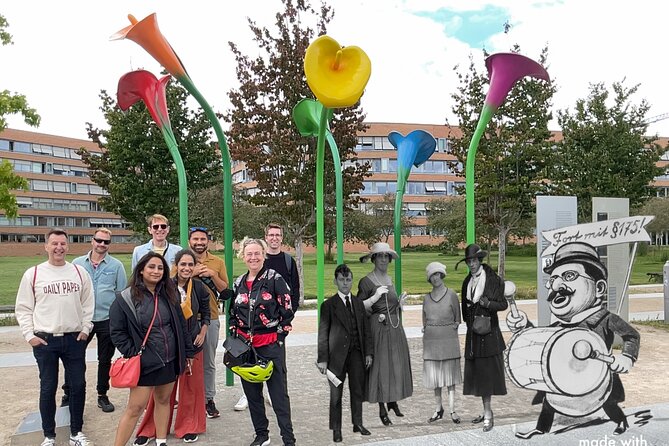
I also like the format. You get a small group (10 max), a built-in question-and-answer vibe, and plenty of visuals via augmented reality plus a stack of historical photos and archival material. One thing to consider is that the subject matter includes repression and persecution, so it is not a light, party-only walk.
In This Review
- Why this tour works: Jeff’s small-group approach
- Key things to know before you go
- Price and value for a 3.5-hour sex-science walk
- The stops feel connected, not random, with AR and archives
- Stop 1 at Nollendorfplatz: FKK and Berlin’s body freedom
- Stop 2 at Magnus-Apotheke: Magnus Hirschfeld and the Institute for Sexual Science
- Stop 3 at the LGBTQ memorial: the Nazi crackdown and pink triangles
- Stop 4 at Kurfürstenstraße: prostitution, fetish, and nightlife before the crackdown
- Stop 5 at Schwerinstraße 9: lesbian nightlife, Toppkeller, and Claire Waldoff
- Stop 6 by Christopher Isherwood’s residential building: the 1920s gay magnet
- Stop 7 at Denns BioMarkt: Eldorado Club, drag, and conflicting politics
- Stop 8 at the memorial stele: West versus East after WWII
- Stop 9 at Nollendorfplatz again: clubs, rules, and festivals today
- Respect and trauma-informed teaching you can feel in the pacing
- Who this tour is best for (and who might want to rethink)
- Should you book Berlin Uncensored?
- FAQ
- How long is Berlin Uncensored: A History of Sex & Freedom?
- What group size should I expect?
- Is the tour offered in English?
- What age is required to join?
- What is included in the tour price?
- Is entry ticket included for the stops?
Why this tour works: Jeff’s small-group approach
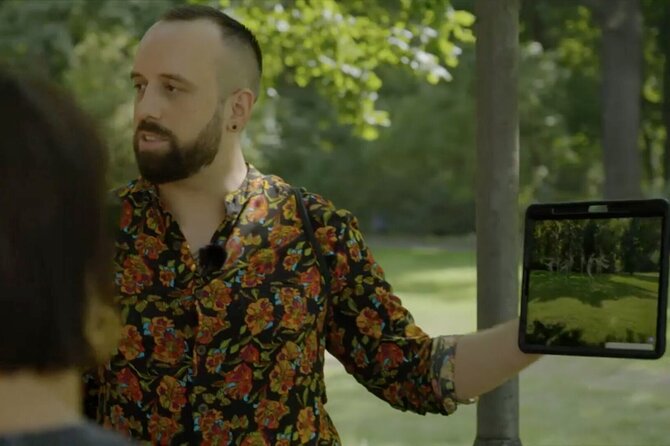
If you want sex history told with context, this is the rare tour that treats the topic as part of real society. Jeff frames each stop around how people shaped culture, how governments pushed back, and how communities survived. That makes the walk feel like cause-and-effect, not a random list of famous names.
The small group size matters. With a maximum of 10 people, you’re not just watching from the sidelines. You can ask questions and get answers that stay grounded in education and respect, which is exactly what many people are hoping for when they book a tour like this.
Key things to know before you go
- Jeff leads the tour, bringing sociology and certified sex education into every stop.
- Max 10 people means you can actually talk, not just listen.
- AR and Mixies photos help you visualize what you’re hearing about.
- 200+ archival photos and videos add depth without heavy reading.
- All stops are free to enter on this walking route.
- Adult-only (18+) keeps the content aligned with the tour’s intent.
More History Tours in Berlin
- Berlin: Natural History Museum Entrance Ticket
★ 4.6 · 3,382 reviews - Berlin: 3-Hour World Heritage Cruise to Potsdam
★ 4.5 · 1,569 reviews - Berlin: History of the Third Reich Guided Walking Tour
★ 4.7 · 791 reviews
Price and value for a 3.5-hour sex-science walk
At $82.90 per person for about 3 hours 30 minutes, this is not a budget squeeze. But it is also not trying to sell you on drinks, nightlife tickets, or a long list of paid add-ons. You’re paying for two things that actually cost time and effort: a specialized guide and learning tools.
First, the guide is not just a storyteller. Jeff is a professional sociologist and certified sex educator, and the tour is designed to answer questions thoughtfully. Second, you get AR elements, Mixies, and a big set of historical photos and video material. That combination tends to make the experience feel more like guided learning than a brief sightseeing detour.
If you like history with context and you’re curious about how attitudes toward sex, gender, and freedom changed in Berlin, the price starts to make sense fast.
The stops feel connected, not random, with AR and archives
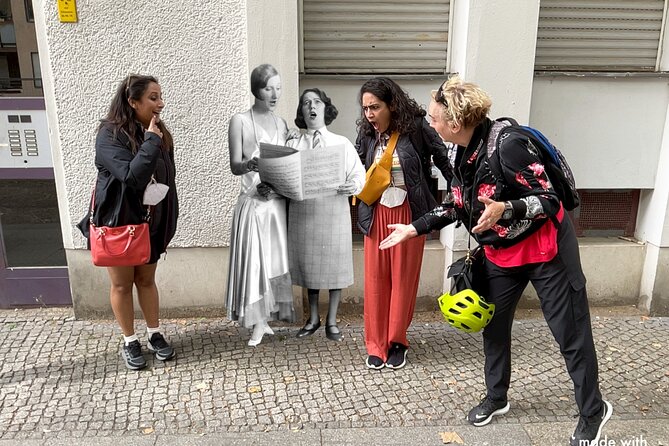
A big reason this tour lands well is the way it uses visuals. You’ll see AR elements that bring the street locations to life, plus Mixies for fun, personalized AR photos. You also get access to 200+ rare historical photos, videos, and archival materials, which gives you something to remember long after you’re back in your hotel room.
Still, you should know the practical side of AR. Even in a good tour, AR can sometimes feel a bit extra if you’re in the middle of listening. The good news is that the strongest moments typically use the visuals to clarify what Jeff is explaining, not to distract from it.
Stop 1 at Nollendorfplatz: FKK and Berlin’s body freedom
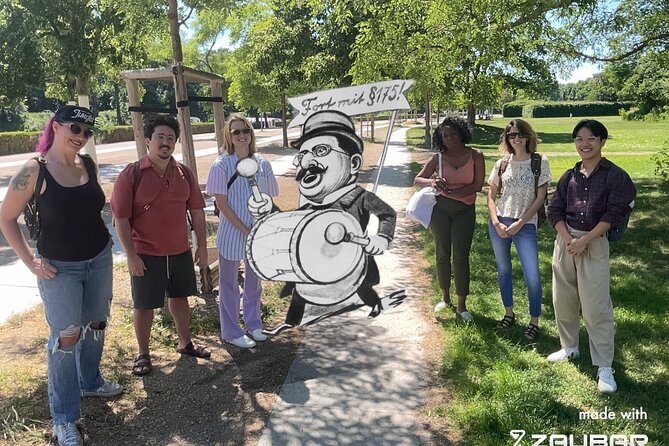
The tour starts at Nollendorfplatz, where Jeff welcomes the group and sets the tone. You begin with Berlin’s long history of FKK, a nudism movement tied to body freedom and public attitudes toward the body.
What I like about this first stop is that it gives you a baseline. Berlin did not just become sex-positive overnight. It developed a culture where bodies could be talked about in public spaces, especially around lakes and parks where FKK remains part of local life.
If you’re worried this will be overly graphic, you can relax. The focus is on culture and how attitudes formed, not on turning the topic into a stunt.
A few more Berlin walks and trips to compare
- Berlin Historical Highlights Walking Tour
★ 4.9 · 657 reviews - Berlin: 1h Boutiquestyle-Cruise on the Historic HEMINGWAY
★ 4.6 · 563 reviews - Berlin Private Complete History All Day Walking Tour
★ 5.0 · 474 reviews - Berlin: Cold War Era History Guided Bike Tour
★ 4.8 · 413 reviews
Stop 2 at Magnus-Apotheke: Magnus Hirschfeld and the Institute for Sexual Science
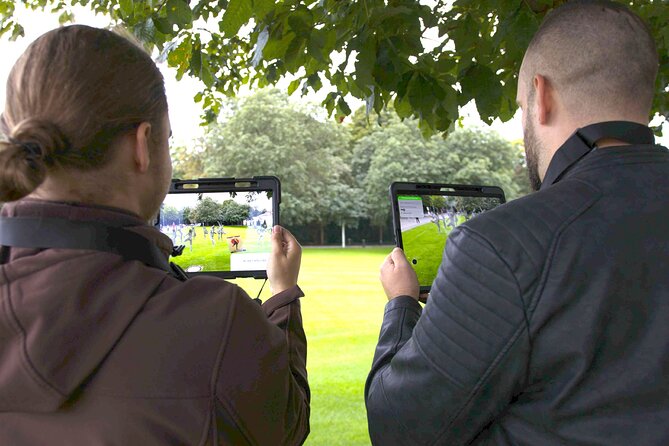
Next up is Magnus-Apotheke, and this is where the tour gets genuinely “Berlin-specific.” Berlin housed the world’s first Institute for Sexual Science, founded by Magnus Hirschfeld, a major pioneer in sexology.
You’ll connect that institute to real-world discoveries and ideas, including research on desire, relationships, contraception, and gender identity. The tour also highlights the invention of the rubber condom, plus early lines of study that relate to sexual health innovations.
Then it tackles the cruel part of history. Berlin’s institute was destroyed in 1933 by the Nazis, and the guide covers how that erased something potentially revolutionary. You also hear about figures connected to early gender-affirmation efforts, including Dora Richter, Lili Elbe, and Karl M. Baer.
This stop is one of the clearest examples of why the tour matters. Sex history is not only about nightlife. It is about medicine, identity, and what happens when institutions get attacked.
Stop 3 at the LGBTQ memorial: the Nazi crackdown and pink triangles
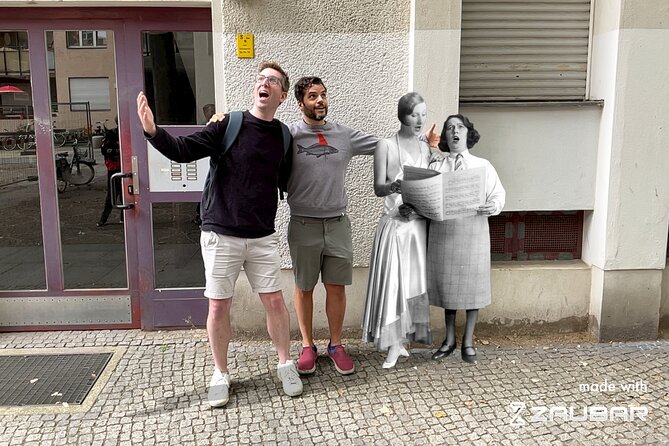
After that, you move to the Monument to Homosexuals Persecuted Under National Socialist Regime. This part shifts from “progress and research” to “power and punishment.”
Jeff explains how the Nazi regime censored sex, shut down erotic clubs, and outlawed sexual diversity. You’ll learn about Ernst Röhm and the Night of the Long Knives, when he was executed, and how persecution then spread to LGBTQIA+ people, sex workers, and others the regime branded as “degenerate.”
You also cover the pink triangle, first used as a camp marking, later reclaimed by LGBTQIA+ rights movements. That reclaiming detail is important because it turns a symbol of oppression into something that carries memory and resistance.
A consideration here: this section is heavy, even when told carefully. If you prefer history that avoids persecution topics, you might not enjoy this part. But if you want the full story of freedom in Berlin, it belongs.
Stop 4 at Kurfürstenstraße: prostitution, fetish, and nightlife before the crackdown
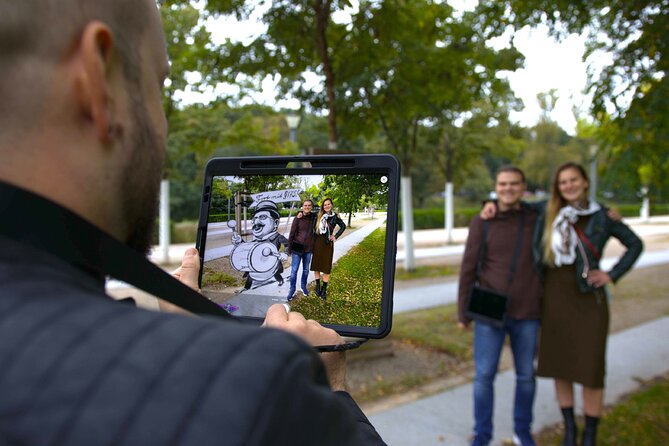
The tour then walks through Kurfürstenstraße, a street strongly associated with Berlin’s pre-Nazi sex-life reputation. Here, the focus is on how prostitution and underground kink culture operated in a city known for pushing boundaries.
Jeff’s framing helps you understand why these scenes mattered socially, not just sexually. The tour describes how Berlin catered to different desires well before the idea of mainstream “anything goes” became a marketing slogan.
One practical note: this is a walking route through city streets. You’ll be moving at a steady pace, and the best way to get value is to be mentally present, not multitasking on your phone.
Stop 5 at Schwerinstraße 9: lesbian nightlife, Toppkeller, and Claire Waldoff
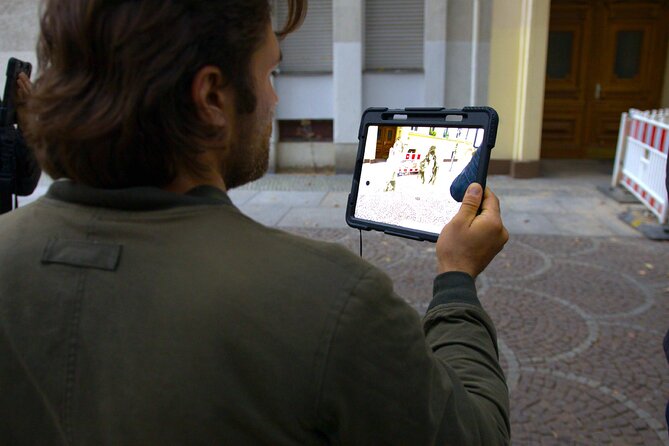
At Schwerinstraße 9, the tour turns toward lesbian community history. Berlin had one of the most thriving lesbian communities in the early 20th century, and you visit locations tied to that subculture.
A highlight here is Toppkeller, described as a meeting place where women who defied social norms could gather. Jeff also brings in cultural figures like cabaret performer Claire Waldoff and the mood of queer nightlife through references such as the Lavender Song.
This stop also includes the story of Josephine Baker, with a key nuance: Berlin celebrated her talent while also treating her with racial discrimination. That contrast is a useful reminder that admiration and equality were not the same thing.
Stop 6 by Christopher Isherwood’s residential building: the 1920s gay magnet
You then shift to literature and the social atmosphere of the 1920s and early 1930s. Jeff takes you to the residential building of Christopher Isherwood, where the guide connects Berlin’s gay scene to the places where he lived and socialized.
Isherwood’s memoirs and writings are a major thread here, and you’ll see how they later fed into adaptations like Cabaret. The tour uses this to show how Berlin’s freedom exported itself culturally, beyond the city’s borders.
If you like history that includes art, writing, and how ideas travel, you’ll probably enjoy this section. It is not only about streets, it’s about how those streets became stories.
Stop 7 at Denns BioMarkt: Eldorado Club, drag, and conflicting politics
Another memorable stop is near Denns BioMarkt, where the tour discusses the Eldorado Club and 1920s Berlin nightlife. The story here includes drag performers, sexually open individuals, and even high-ranking officials before the Nazis shut down “degeneracy.”
The tour name-checks Ernst Röhm again, linking the nightlife world with the political shadow that was growing. You’ll also hear an international-style anecdote: a journalist from US Vogue visited Eldorado and named a drag queen the most beautiful woman in Berlin.
This is a strong “Berlin contradiction” stop. It shows how a city can be socially experimental at the same time as it becomes politically vulnerable. That tension is a big theme of the whole tour.
Stop 8 at the memorial stele: West versus East after WWII
Then comes the post-WWII split, and Jeff explains how Berlin’s sexual culture developed differently in East and West. You visit the Internationale Stele GEGEN DAS VERGESSEN, and the story centers on how ideology shaped everyday life.
In West Berlin, the tour describes the sexual revolution as driving a more open attitude toward relationships, pornography, and alternative lifestyles. In East Berlin, freedom was restricted in many ways, but FKK nudism became widely popular.
A key detail you’ll hear is that the Wall was referred to as the condom of the GDR. The guide uses that phrasing to highlight how the divide shaped behavior and access. You’ll also learn that during the AIDS crisis, a conservative politician saved thousands of lives, with the guide connecting the point to practical public health choices.
This stop is useful because it stops the story from feeling like 1920s Berlin nostalgia. It shows the long game, and why sexual freedom was never just a trend.
Stop 9 at Nollendorfplatz again: clubs, rules, and festivals today
The final stretch brings you back around Nollendorfplatz, where the tour connects past attitudes to today’s sex-positive Berlin. You’ll hear about Berghain, including its strict no-photo policy, plus other clubs like KitKat Club, Insomnia, and Lab.Oratory, where electronic music and sexual exploration intersect.
The tour also covers Folsom Europe, described as the largest fetish festival in the world, drawing thousands to Berlin each year. That connects the nightlife scene to events with international reach, not just local reputation.
One tip: if you’re a first-time Berlin visitor, don’t treat this as a guarantee you can access every club mentioned. The point is cultural history and how people express freedom now. If you want to go out afterward, use Jeff’s modern tips to pick what matches your comfort level and interests.
Respect and trauma-informed teaching you can feel in the pacing
One of the most praised aspects of the tour is how it handles heavy topics responsibly. Jeff’s guidance is described as respectful and trauma-informed, and that matters here because this is history that includes persecution and violence.
You should also know the tour is intentionally structured so the group can ask questions. That keeps people from feeling like they must guess what something means. Instead, you get direct explanations in clear English.
This is one of those experiences where the tone affects everything. When it is handled well, you can actually learn without feeling overwhelmed.
Who this tour is best for (and who might want to rethink)
This tour is a great fit if you want a guided history of Berlin that connects sex, science, politics, and community. It works well for people who like asking questions, enjoy visual aids like AR, and want a small-group setting where you’re not stuck listening the whole time.
It also suits solo travelers, since the maximum group size and Q&A format make it easier to interact rather than feel lost.
You might reconsider if you only want light nightlife sightseeing, or if discussion of persecution and Nazi-era repression would be hard for you. This tour is not only about fun, and Jeff does not treat the topic like a joke.
Should you book Berlin Uncensored?
If you’re the kind of person who reads history and thinks about what social systems do to bodies and identities, I’d book it. The combination of Jeff’s credentials, the small-group format, the AR tools, and the wide sweep from nudism and sex science to WWII repression and modern nightlife is exactly the value you want for $82.90.
The best decision factor is your curiosity level. If you want the full context behind Berlin’s reputation for sexual openness, this tour gives you the why, not just the what.
FAQ
How long is Berlin Uncensored: A History of Sex & Freedom?
It lasts about 3 hours 30 minutes.
What group size should I expect?
The tour has a maximum of 10 travelers.
Is the tour offered in English?
Yes, it is offered in English.
What age is required to join?
The minimum age is 18.
What is included in the tour price?
You get a guided walking tour led by a sociologist and certified sex educator, augmented reality elements, Mixies personalized AR photos, 200+ rare historical photos/videos/archival materials, and insider tips on modern sex-positive nightlife and events.
Is entry ticket included for the stops?
The tour information lists admission tickets as free for the stops described in the route.
Newest Berlin reviews on the site
- Your ticket to The Wall Museum Berlin★ 3.0 · 60 reviews
- Rickshaw Tours Berlin – Groups of up to 16 people with several rickshaws★ 4.0 · 97 reviews
- Love and War in Berlin: Self-Guided Story Puzzle Walk★ 5.0 · 7 reviews
- Warnemuende Shore Excursion: Berlin Private Sightseeing Tour from Rostock★ 5.0 · 4 reviews
- eSIM for Germany and 34 European Countries★ 4.5 · 16 reviews
- Walking on the Wall: 3-Hour Tour in Berlin★ 4.5 · 34 reviews
- Karl-Marx-Allee Tour: Life and Architecture in East Berlin★ 5.0 · 19 reviews
- Warnemuende Shore Excursion: Private Berlin Tour★ 4.5 · 27 reviews
Historical Tours, compared.
City History Canal Sightseeing Tour on a Motorboat
Read our review →
Browse the lists this tour appears in