Reviewed · TICKETS
Berlin: The Feuerle Collection Guided Tour and Entry Ticket
Berlin feels different when you walk into concrete. The Feuerle Collection turns a renovated WWII telecommunications bunker into a calm, guided art walk where eras talk to each other. I especially like how the building itself sets the tone, quiet and deliberate, so you can actually look.
I also love the mix of Imperial Chinese furniture and older Southeast Asian sculpture, then watching it snap into focus again when the guide brings in modern art names like Nobuyoshi Araki and Adam Fuss. One possible drawback: with a 1 hour tour, you have to accept a faster pace if you want to linger with every object and every label.
In This Review
- Key things to know before you go
- Entering a renovated WWII bunker designed by John Pawson
- What you see first: Khmer sculpture in stone, bronze, and wood
- Imperial Chinese lacquer and stone furniture that rewards slow looking
- Modern art pairings with names like Nobuyoshi Araki and Adam Fuss
- The underground lake and the lighting design that makes it feel engineered
- How a 1-hour guided tour keeps the collection readable
- The rules matter more than you think (no phones, no cameras, no touching)
- Scent Room questions, and why you should be flexible
- Is it worth $25 for a guided entry to the Feuerle Collection?
- Who should book this Berlin art tour, and who might skip it
- Should you book the Feuerle Collection guided tour?
- FAQ
- How long is the Feuerle Collection guided tour?
- What language is the live guide?
- Where do I meet for the tour?
- Is the tour wheelchair accessible?
- Are cameras, phones, or video recording allowed?
- Is the tour suitable for children?
- Is food or drinks allowed during the tour?
Key things to know before you go
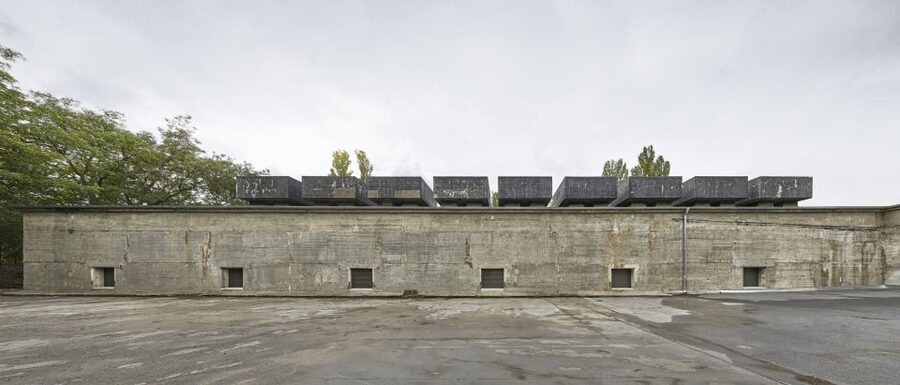
- A WWII bunker with modern design: you walk through architecture that was remodeled by John Pawson.
- A focused 1 hour guided route: you see a lot, but you do not get long, slow wandering time.
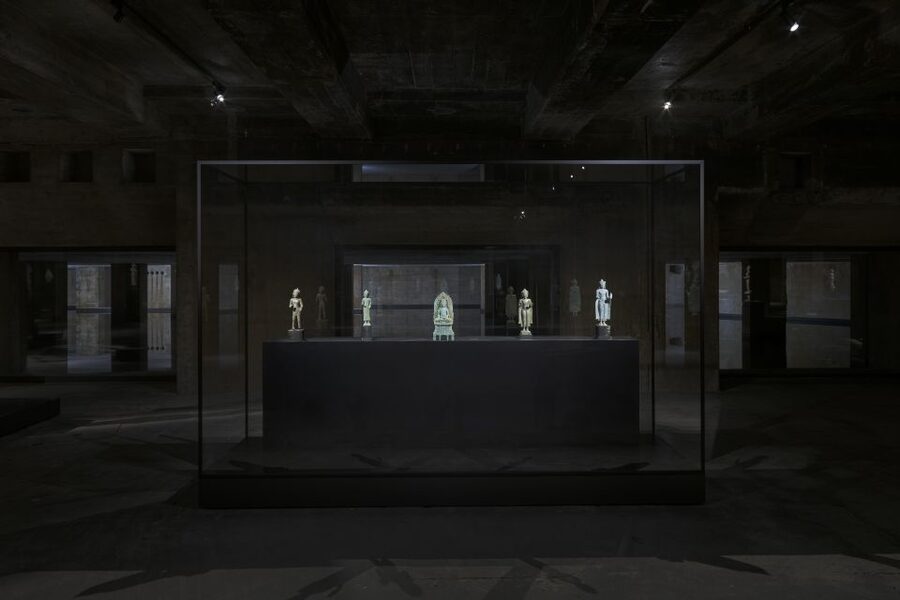
- Khmer sculpture and Imperial Chinese furniture: stone, bronze, and wood works from different worlds.
- Modern pairings with Araki and Adam Fuss: the museum keeps pushing connections, not separation.
- An underground lake matched to the lighting: it is part art, part atmosphere.
- Scent Room may not run on your day: it can be unavailable depending on timing.
Entering a renovated WWII bunker designed by John Pawson
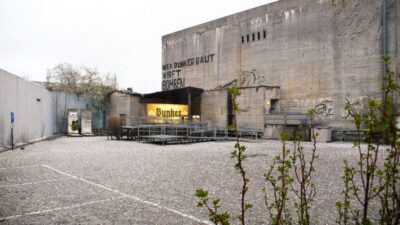
The best thing about the Feuerle Collection is the setting. You are not starting in a white-walled gallery where everything looks the same. You start in a former WWII telecommunications bunker, now renovated, and you feel that change immediately. The space is made for looking, with a controlled mood that turns the visit into something closer to an art sequence than a checklist.
This is where John Pawson’s design choices matter. Even when you are not thinking about architecture, the room layout and lighting nudge you into the right rhythm. You move, pause, look again. Then you move on. That matters because the collection is built on contrasts, and contrasts need silence to work properly.
You also get to experience the bunker as more than a backdrop. The building’s structure becomes part of the artwork experience, like the museum is saying: context is part of the object.
A few more Berlin walks and trips to compare
- Berlin: Reichstag, Dome and Government District Guided Tour
★ 4.7 · 18,288 reviews - Berlin: 1-Hour City Tour by Boat with Guaranteed Seating
★ 4.3 · 16,993 reviews - Berlin: TV Tower Standard Entrance Ticket
★ 4.4 · 15,883 reviews
What you see first: Khmer sculpture in stone, bronze, and wood
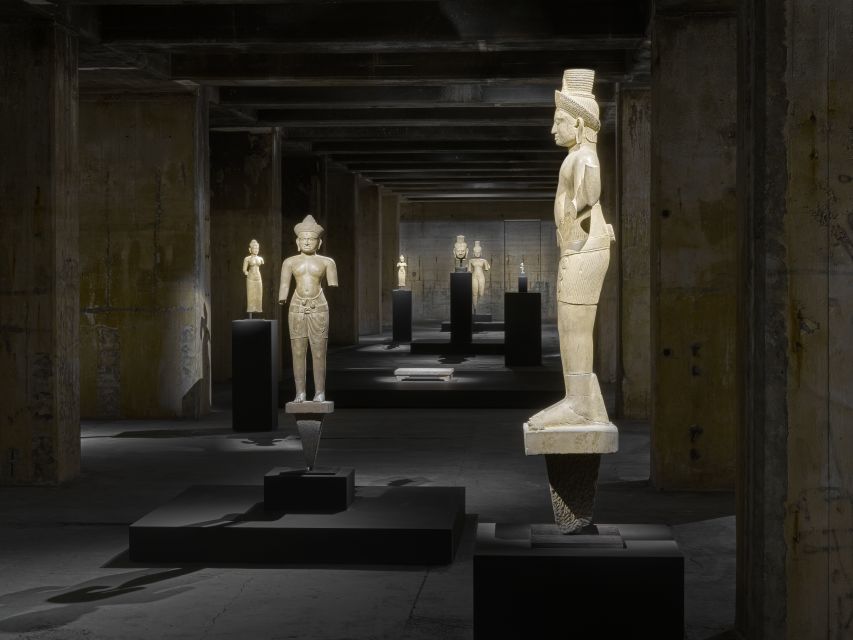
Your guided route begins with a walk through the older works, and the museum makes sure you start with strong visual forms. One of the standouts is the Khmer sculpture, spanning roughly the 7th to the 13th century. You will see stone sculpture, plus bronze and wood pieces later in the flow, and the guide helps you read what you are looking at beyond the obvious.
Here is why that opening works so well for you. Khmer art can feel overwhelming if you only look at it as “ancient.” With a guide steering the order and the attention, the sculptures become a language you can follow: form, detail, posture, texture, and repetition. The space also helps. In a bunker, you are less distracted by street noise and more aware of how objects sit in their rooms.
If you like art that feels both spiritual and physical, this section delivers. The shapes have weight. The surfaces reward close attention. And since the tour is guided, you do not just stare. You get a point of view that makes the next rooms easier to understand.
Imperial Chinese lacquer and stone furniture that rewards slow looking
After the Khmer works, the collection pivots toward Imperial Chinese furniture and related objects. This is where you get the kind of craftsmanship that can stop you mid-step. Expect intricate lacquer work, and also stone furniture pieces that look almost architectural.
For me, the key difference here is how the guide frames the “why” behind the display. You are not only seeing objects; you are seeing the relationships between materials and design. Lacquer can seem delicate at a distance. Up close, it becomes a surface you can read, with depth that changes as you shift your angle.
This section is also a great example of how the museum avoids forcing one story. Imperial Chinese works sit next to older Southeast Asian art, and the visit becomes comparative rather than chronological. You start noticing how cultures solve similar problems in different ways, like how they use pattern, how they treat edges, and how they handle visual balance.
Modern art pairings with names like Nobuyoshi Araki and Adam Fuss
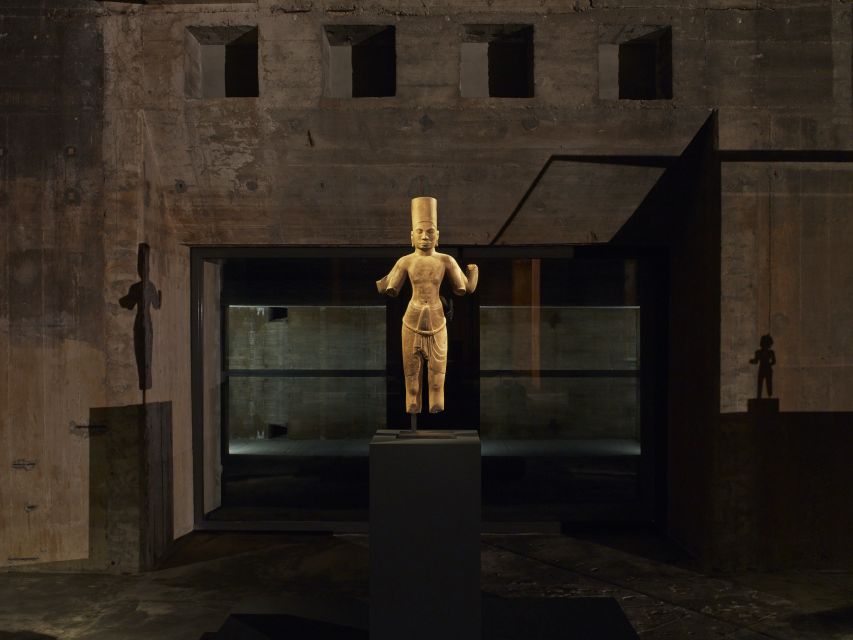
Then comes the part people often come for: modern art placed in conversation with antiquities. The museum makes this practical, not abstract. You compare complementary works, and the guide helps you see the pairing as intentional, not random.
You will encounter modern art by artists such as Nobuyoshi Araki and Adam Fuss. The point is not to turn the older objects into a backdrop for the contemporary pieces. Instead, the museum encourages a two-way reading. The ancient works bring gravity. The modern works bring a sharper sense of framing, perception, and idea.
Why this is valuable for you: lots of museums keep time periods separate. Here, the museum treats juxtapositions as a tool. You spend the tour learning how Désiré Feuerle, a connoisseur of Asian art, pioneered this method of putting antiquities next to contemporary art so they can challenge each other.
That design choice changes your whole experience. After you have seen the pairing logic once, the rest of the route feels like a conversation with your own eyes. You begin to ask: what does this object make me notice? And what does the next one change?
Same city, a different way to spend the afternoon:
- Berlin: Boat Tour Along the River Spree
★ 4.4 · 11,252 reviews - Discover Berlin Half-Day Walking Tour
★ 5.0 · 9,624 reviews - Berlin: Government District around the Reichstag Guided Tour
★ 4.7 · 8,447 reviews - Berlin: Reichstag, Plenary Chamber, Cupola & Government Tour
★ 4.6 · 8,422 reviews
The underground lake and the lighting design that makes it feel engineered
One of the coolest surprises in this visit is the underground lake. You are not just told it is there. The tour experience makes the lake feel placed by design, fitting into the light design and art of the space.
In a normal museum, water features can feel ornamental. Here, it feels integrated into the atmosphere. The lighting helps you sense the lake as part of the sequence. It slows the room down. It adds a different kind of visual texture. And it gives the tour a pause point where you can reset your attention before the next set of objects.
If you like spaces where architecture quietly shapes emotion, you will appreciate this. It is not loud or gimmicky. It works because the museum already understands that art is not only what you see. It is also how the room asks you to look.
How a 1-hour guided tour keeps the collection readable
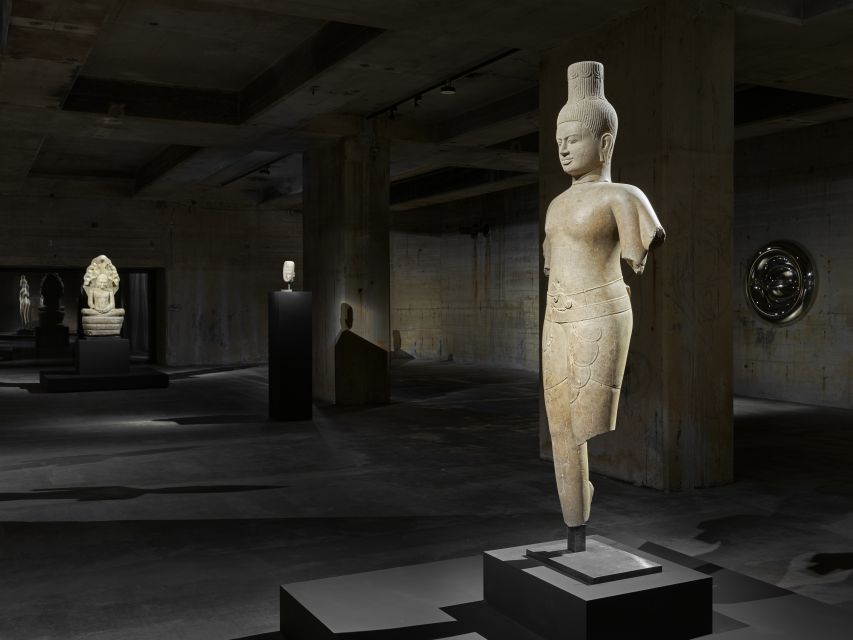
The Feuerle Collection tour lasts about 1 hour, and that time window is part of the experience design. The guide’s job is to guide your attention without making the talk feel like a lecture. You are expected to look as the story moves.
That also means you have to adjust your expectations a bit. This is not a slow afternoon where you can linger in every room for twenty minutes. If you want to read every label word-for-word, you may feel rushed. The upside is that the guide helps you hit the museum’s best ideas efficiently.
Here is what I would do if you want the most out of the pacing:
- Pay attention to the order you are given. The collection is meant to build comparisons.
- Use the pauses when the guide stops. Those are usually when the museum wants you to re-check details.
- If you care about one artist or one material, remember that the tour is short. Focus on that thread as you move.
A big plus is that the tour is led in English, so you get the curated meaning without translation friction. And it is wheelchair accessible, which matters in a space shaped by thick walls and older structures.
The rules matter more than you think (no phones, no cameras, no touching)
This is the kind of museum where rules shape the atmosphere. You are not allowed to touch exhibits, and you also cannot record video or take photos, including using your phone as a camera. Pets are not allowed, and food and drinks are not allowed.
For you, the practical takeaway is simple: plan to treat this like a looking museum, not a capture museum. If you like taking pictures, you will have to accept that impulse and focus instead on memory and observation. When a museum bans phones and cameras, it usually does not do that to annoy you. It does it to protect the calm and keep you present with the objects.
If you need a quick snack during a Berlin day, handle it before or after. The tour itself is about art and architecture, not breaks for eating.
Also note: children under 16 years are not suitable. That keeps the tone more adult and focused, but it also means the tour experience is not built around family pacing.
Scent Room questions, and why you should be flexible
One thing that shows up in feedback is that a Scent Room may not be available at times. The clean way to handle this is to treat it as a bonus if it is running, not as a must-see.
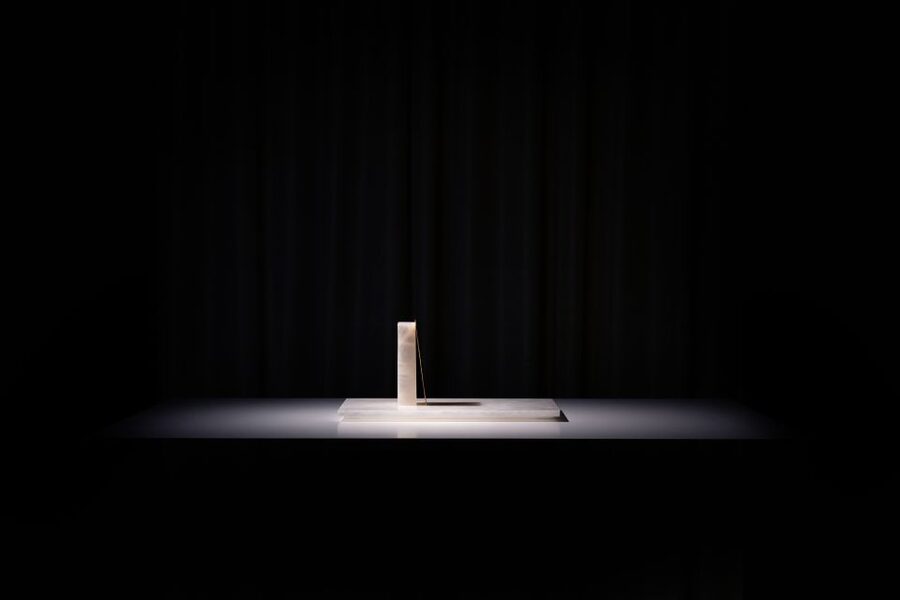
If you love sensory experiences, you can still enjoy the rest of the visit even if that specific feature is offline. The core power here is the architecture, the art objects, and the guided comparisons. The sensory add-on is extra, not the foundation.
Is it worth $25 for a guided entry to the Feuerle Collection?
At $25 per person, you are paying for two things at once: an entrance ticket plus a live guided tour. For Berlin, that kind of pairing can be good value, because you get help making sense of the collection. Many museums charge for entry, but you still walk through on your own. Here, the guide is part of the experience.
Also, the museum is short on time, so you are not buying a half-day plan. The tour is about 1 hour, which makes it a realistic stop even on busy days. You can pair it with nearby museum time, or you can slot it in as a calmer indoor break from Berlin’s weather swings.
The value question for you should be this: do you want context while you look? If yes, the $25 feels fair. If you prefer to wander freely with zero guidance, you may find the pace a bit strict.
Who should book this Berlin art tour, and who might skip it
This tour is a strong match if you:
- Like museums where modern art and older objects are connected intentionally.
- Want a guided explanation, especially around Asian art and design.
- Enjoy architecture as part of the story, not just a place to stand.
- Prefer a short, focused visit rather than a long museum day.
It is probably not the best fit if you:
- Need lots of time to sit and read everything at a slow pace.
- Want to photograph every room and detail.
- Are traveling with children under 16, since the tour is not suitable for them.
Should you book the Feuerle Collection guided tour?
If you want a Berlin stop that is thoughtful, unusual, and easy to schedule, I’d book it. The combination of a WWII bunker setting, Imperial Chinese furniture, Khmer sculpture, and modern art pairings makes this more than a standard museum walk. The guide helps you see the links, and the short duration lets you experience the main ideas without spending your whole day inside.
Book it if you like being guided through comparisons and you enjoy quiet looking time. Skip it if you hate rules like no phone and no cameras, or if you need longer than 1 hour to fully process art.
If you go with the right mindset, you’ll leave with a clear sense of how art from different eras can talk to each other, in a space built to make that conversation feel calm and specific.
FAQ
How long is the Feuerle Collection guided tour?
The tour lasts 1 hour.
What language is the live guide?
The live tour guide speaks English.
Where do I meet for the tour?
You meet at the entrance of The Feuerle Collection.
Is the tour wheelchair accessible?
Yes, the tour is wheelchair accessible.
Are cameras, phones, or video recording allowed?
No. Video recording, cameras, and cellphones are not allowed during the visit.
Is the tour suitable for children?
The tour is not suitable for children under 16 years.
Is food or drinks allowed during the tour?
No. Food and drinks are not allowed.
Newest Berlin reviews on the site
- Jetbike Berlin fun bike beer bike★ 5.0 · 3 reviews
- Karl-Marx-Allee Walking Tour: Berlin’s Socialist History★ 5.0 · 5 reviews
- Homeless on chic streets: city tour in Berlin from personal experience★ 4.6 · 3 reviews
- Berlin: Sachsenhausen Concentration Camp Guided Tour★ 4.9 · 42 reviews
- Historyof the Trans, Queer & Gay communities of Berlin tour★ 4.8 · 17 reviews
- Historic Berlin Pubs & History Tour★ 4.9 · 73 reviews
- Berlin: City Center Walking Tour★ 4.7 · 45 reviews
- Half-Day Berlin Highlights Segway Expedition★ 4.5 · 61 reviews
Tickets, compared.


Munich Hop-On Hop-Off Tour: 1-Day or 2-Day Ticket
Read our review →