
Reviewed · HISTORICAL TOURS
Berlin Protest History Tour: Rebels, Resistance, and Revolution
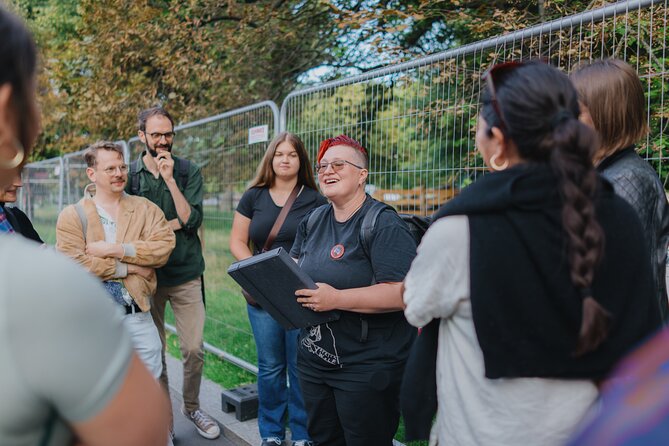
Berlin protesters are written into every brick. This tour turns big themes like resistance and revolution into walkable moments across central Berlin. I love the way each stop is small but specific, and I love how the story links politics to the streets you can actually stand on. One thing to consider: it is outdoors for most of the route, so plan for cold wind or rain.
The group stays intimate, capped at 15 people, and the pacing fits a short city walk of about 2 km. You also get an English-speaking expert guide with a mobile ticket, making it easy to start and keep moving. It is a focused way to understand how Berlin’s changing power systems shaped who could speak, protest, and survive.
In This Review
- Key highlights to look for
- Why this 2-hour protest walk feels sharper than a typical sightseeing tour
- Rotes Rathaus and the terracotta timeline of Berlin’s early uprisings
- Nikolaiviertel and Gasthaus Mutter Hoppe: East German symbols with missing pieces
- Marx-Engels-Forum: debating statues and why ideology needed public art
- Humboldt Forum and the Berlin Palace: protests that shaped democracy
- Rosenstraße monument in 1943: civil disobedience and the Nazi-era reality around it
- St. Mary’s Church, Martin Luther King, and Berlin’s faith-linked activism
- From the TV Tower to Brunnen der Volkerfreundschaft: the Cold War to 1989 in one stride
- Weltzeituhr at Alexanderplatz: a meeting spot designed for a divided city
- Price, pace, and logistics that matter in real life
- Who should book, and who might skip this protest history tour
- FAQ
- How long is the Berlin Protest History Tour?
- What is the price per person?
- Is the tour offered in English?
- Where does the tour start and end?
- Do I need a printed ticket?
- How big is the group?
- Is admission required for the stops?
- Is the tour outdoors?
Key highlights to look for
- Terracotta timelines that show what leaders wanted you to remember
- Nikolaiviertel and the Palace of the Republic leftovers, framed as East German theater and politics
- Rosenstraße’s 1943 civil disobedience, plus the foundations tied to Berlin’s oldest synagogue
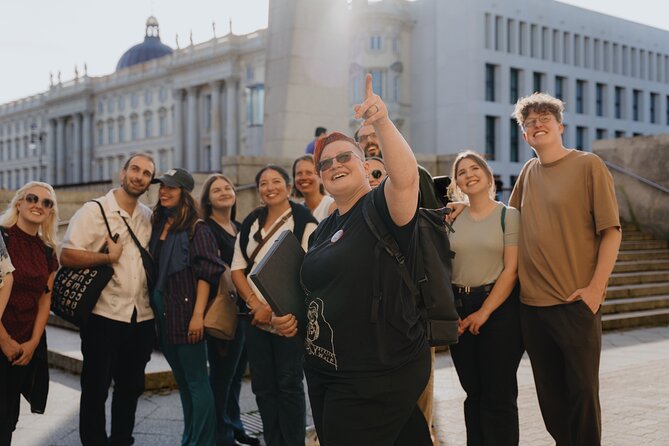
- 1848’s March Revolution as a seed for German democracy at the rebuilt Berlin Palace
- 1989 “T-shirt protest” energy around the Peaceful Revolution fountain
- Alexanderplatz world clock, right where East Berlin met the rest of the city
Why this 2-hour protest walk feels sharper than a typical sightseeing tour
This is the kind of Berlin walk that teaches you to look twice. Instead of listing rulers and dates, it points you toward symbols in stone, façades, and monuments, then explains why each one mattered to people on the ground.
I like that you get a true “small stops, big meaning” format. You will spend more time noticing details than trying to cram every museum in town.
At about 2 hours and roughly 2 km of walking, it is also realistic for a day when you already have plans. You are not signing up for a long endurance march, which makes the message hit harder because you stay in it the whole time.
More History Tours in Berlin
- Berlin: Natural History Museum Entrance Ticket
★ 4.6 · 3,382 reviews - Berlin: 3-Hour World Heritage Cruise to Potsdam
★ 4.5 · 1,569 reviews - Berlin: History of the Third Reich Guided Walking Tour
★ 4.7 · 791 reviews
Rotes Rathaus and the terracotta timeline of Berlin’s early uprisings
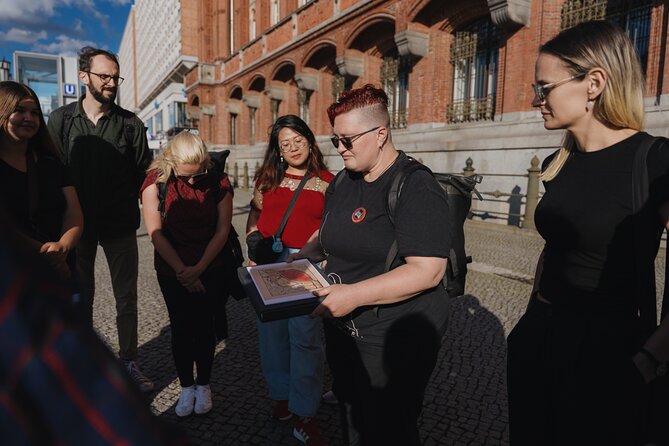
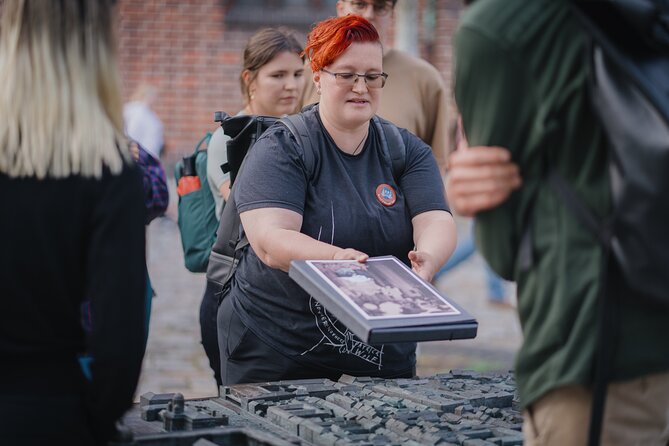
You start at the Rotes Rathaus area, guided from the sculpture Aufbauhelferin by Fritz Cremer. From there, the tour introduces a striking terracotta timeline that wraps around the town hall, like a visual history lesson you can pace with your own feet.
The main idea here is control of memory. This early-history segment shows the origins of the city and frames the cause for one of Berlin’s most important early uprisings, told in stone-like permanence.
What I find practical is that the timeline gives you a baseline. When you later see other political eras edited, missing, or staged, you’ll recognize the pattern right away.
It is also a smooth opener. You get momentum immediately, and the walk is gentle enough to help you get your bearings fast.
Nikolaiviertel and Gasthaus Mutter Hoppe: East German symbols with missing pieces
Next you head toward Nikolaiviertel, a place that can look like a theme set until you learn why it exists. Here, you spot a Socialist-style area built for Berlin’s 750th anniversary, plus the last remnants tied to the Palace of the Republic.
The Palace of the Republic is presented as both a seat of East German parliament and a major entertainment venue. That double role matters, because it explains how politics and everyday life got mixed on purpose.
Then the tour moves to Gasthaus Mutter Hoppe, framed as an East German answer to the terracotta timeline next door. This timeline highlights major moments in the socialist country’s story.
And here is a key detail the tour underlines: the Berlin Wall is suspiciously absent from that timeline. That absence is not treated as trivia. It becomes a lesson about what regimes emphasize, what they hide, and how public space tells you what to accept.
Marx-Engels-Forum: debating statues and why ideology needed public art
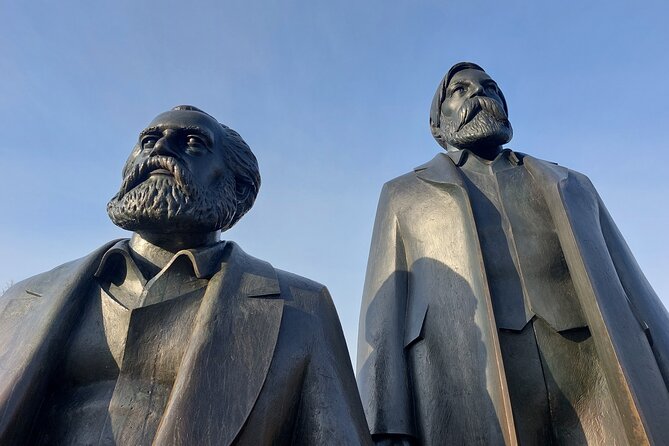
At the Marx-Engels-Forum, you meet Karl Marx and Friedrich Engels in statue form. The tour points out that the monument has been debated over the years, which adds a real-world layer to the history.
This stop works because it turns abstract ideology into something physical you can critique. You can look at a statue and then ask, who gets honored, who gets sidelined, and what story is being sold in plain sight.
In a city where so much is layered, that debate angle keeps the tour from feeling one-note. It reminds you that politics continues even after the era changes.
If you like thinking about public symbolism, this is one of the more thought-provoking stops.
A few more Berlin walks and trips to compare
- Berlin Historical Highlights Walking Tour
★ 4.9 · 657 reviews - Berlin: 1h Boutiquestyle-Cruise on the Historic HEMINGWAY
★ 4.6 · 563 reviews - Berlin Private Complete History All Day Walking Tour
★ 5.0 · 474 reviews - Berlin: Cold War Era History Guided Bike Tour
★ 4.8 · 413 reviews
Humboldt Forum and the Berlin Palace: protests that shaped democracy
The walk continues to Humboldt Forum, where you see the reconstructed Berlin Palace. The tour connects the palace not just to royal imagery, but to protests and revolutions that helped push democracy forward.
A specific focus here is the March Revolution of 1848. The tour frames it as a moment that sowed seeds of democracy in Germany, then ties that idea to what came later in Berlin’s long struggle over rights and power.
This stop is valuable because it bridges eras. You move from early uprisings to socialist-era storytelling, then to a turning point linked to civic change.
One practical note: this is where you may want to slow down visually. The building’s scale can swallow details, so rely on what the guide points to, especially the connections between architecture and protest history.
Rosenstraße monument in 1943: civil disobedience and the Nazi-era reality around it
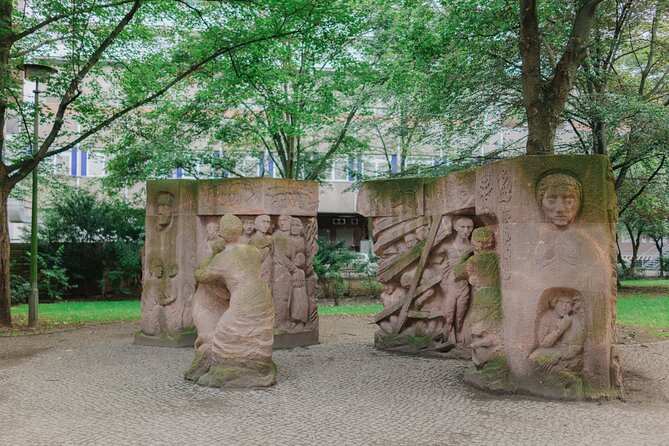
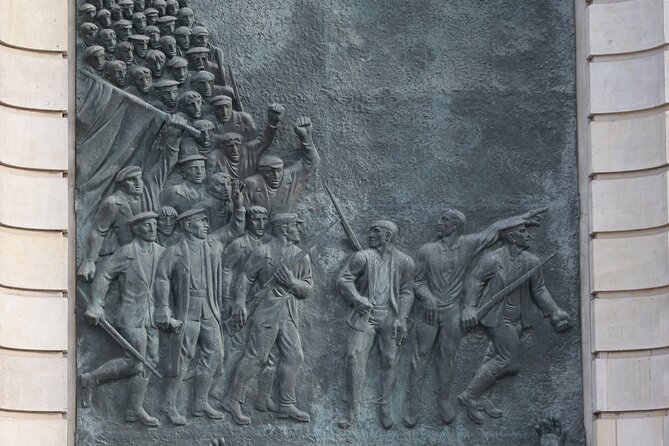
At Rosenstraße, the tour brings you to a monument for the women who staged a courageous act of civil disobedience in winter 1943. The tour presents it as the only protest by Germans against the Final Solution.
That language can hit hard, but the stop is also about clarity. You learn how this action was different from the obedience the Nazi system demanded, and how ordinary people found a way to resist.
The tour also addresses Jewish life under Nazi rule and connects you to physical traces tied to Berlin’s oldest synagogue. You see the foundations nearby, which makes the story feel less like a chapter in a textbook and more like something built into the city.
If you want Berlin history that does not flinch, this is one of the strongest stops on the route.
St. Mary’s Church, Martin Luther King, and Berlin’s faith-linked activism
Then you head to St. Mary’s Church, one of the oldest churches in Berlin. The tour highlights an event from 1964, when Martin Luther King delivered a sermon to a huge crowd.
This is a smart addition to a protest-themed walk because it links activism across borders. You are not only seeing German resistance or socialist-era politics. You are seeing how ideas about justice traveled and echoed in Berlin.
Even if you are not religious, the stop gives you perspective on how crowds gather and how voices become powerful in public spaces.
It also provides a pause from monuments and political façades. Churches, in this context, become meeting points for moral pressure, not just architecture.
From the TV Tower to Brunnen der Volkerfreundschaft: the Cold War to 1989 in one stride
A quick catch of the Berlin Television Tower reminds you how the city visually signaled communist power. It is the kind of landmark you already notice on your own, but the tour reframes it as more than a view platform.
From there you move to Brunnen der Volkerfreundschaft, where the tour walks you through the Peaceful Revolution of 1989. The story focuses on the events that led toward the Fall of the Wall, especially the energy of youth opposition.
A standout detail is the “T-shirt protest” staged by young East German oppositionists at the fountain in autumn 1989. That detail helps you picture what protest looked like when people were taking risk in real time.
This section also works emotionally. It is not just dates. It is people watching, people waiting, people deciding, then showing up.
If you want one stop that makes 1989 feel human instead of cinematic, make sure you listen closely here.
Weltzeituhr at Alexanderplatz: a meeting spot designed for a divided city
You finish at Weltzeituhr, the world time clock at Alexanderplatz, next to the area that functioned as a major meeting point in East Berlin. The clock is designed to show time in 148 cities around the world, which gives the place a global frame.
For a protest-focused tour, that global cue is not random. It subtly contrasts the idea of isolation with the reality of connection, travel, and outside awareness.
Finishing here is practical too. Alexanderplatz makes it easy to continue your day, whether you head back toward your hotel or connect to other transit lines.
And because the tour ends at a lively urban hub, it feels satisfying. You can look back at everything you walked past and then step straight into modern Berlin without the day getting complicated.
Price, pace, and logistics that matter in real life
The price is $30.04 per person for about 2 hours, with an expert guide and a mobile ticket. For central Berlin, that is a straightforward deal, especially because the stops are listed with free admission tickets.
Small group size helps a lot. With a maximum of 15 people, you are less likely to get lost behind someone’s camera. You also tend to get better pacing at stops that require listening, like Rosenstraße or the timelines.
The tour is offered in English, which keeps it accessible without turning the message into simplified history. It also means you can follow the nuance without needing German-language context.
One more practical point: the experience requires good weather. If Berlin is giving you wet, windy conditions, plan on dressing warm and using the restroom before you start, because you will be outside for much of the route.
Who should book, and who might skip this protest history tour
You should book if you want Berlin beyond checkpoints and photo spots. This is ideal for people who like how politics shows up in everyday design, like façades, timelines, statues, monuments, and street-level cues.
You’ll also like it if you prefer a short walking format with tight storytelling. It is made for understanding, not for racing.
I would not choose this as your only Berlin tour if you want major museum time. This walk is about key landmarks and meanings, not long indoor exhibits.
FAQ
How long is the Berlin Protest History Tour?
It lasts about 2 hours.
What is the price per person?
The price is $30.04 per person.
Is the tour offered in English?
Yes, it is offered in English.
Where does the tour start and end?
It starts at the Sculpture Aufbauhelferin – Fritz Cremer at Rotes Rathaus, Jüdenstraße, 10178 Berlin, and ends at the World Time Clock by the Weltzeituhr at Alexanderplatz, Alexanderpl. 1, 10178 Berlin.
Do I need a printed ticket?
No. A mobile ticket is included.
How big is the group?
The maximum group size is 15 travelers.
Is admission required for the stops?
The stops listed are with admission ticket free.
Is the tour outdoors?
It requires good weather, so you should plan for an outdoor walking experience.
Newest Berlin reviews on the site
- Your ticket to The Wall Museum Berlin★ 3.0 · 60 reviews
- Rickshaw Tours Berlin – Groups of up to 16 people with several rickshaws★ 4.0 · 97 reviews
- Warnemuende Shore Excursion: Berlin Private Sightseeing Tour from Rostock★ 5.0 · 4 reviews
- eSIM for Germany and 34 European Countries★ 4.5 · 16 reviews
- Love and War in Berlin: Self-Guided Story Puzzle Walk★ 5.0 · 7 reviews
- Walking on the Wall: 3-Hour Tour in Berlin★ 4.5 · 34 reviews
- Karl-Marx-Allee Tour: Life and Architecture in East Berlin★ 5.0 · 19 reviews
- Warnemuende Shore Excursion: Private Berlin Tour★ 4.5 · 27 reviews
Historical Tours, compared.
City History Canal Sightseeing Tour on a Motorboat
Read our review →
Browse the lists this tour appears in