
Reviewed · EVENING EXPERIENCES
Berlin: Live-Guided Evening Sightseeing Tour by Open-top Bus
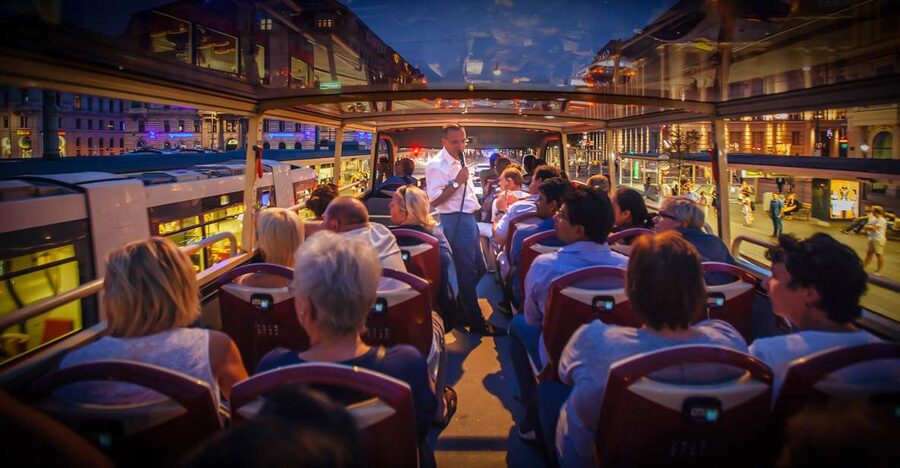
Berlin after dark is when it really clicks. This 75-minute open-top double-decker ride turns famous sights like the Brandenburg Gate into quick, easy orientation, with a live guide speaking English and German.
What I like most is the way you cover serious history and modern districts in one loop, and the fact you get headphones and a map right on board. One drawback to plan for: it is not a hop-on, hop-off tour, and the upper deck can feel cold in winter.
If you only have a day or two in Berlin, this kind of tour earns its keep. You start at Alexanderplatz, roll past places like the East Side Gallery and Oberbaum Bridge, then keep going through areas including Kreuzberg and Prenzlauer Berg. You finish back at Alexanderstraße, with enough context to know what to explore next on your own.
In This Review
- Key things to know before you board
- A 75-minute Berlin night overview from Alexanderplatz
- Open-top double-decker views: the best photos come with cold air
- The live guide factor: stories, humor, and real context
- Stop-by-stop: what you see after lights go on
- Alexanderplatz to the East Side Gallery and Oberbaum Bridge
- Kreuzberg and Nikolaiviertel: Berlin’s older core meets its louder side
- Museum Island, Berlin Palace, and Unter den Linden
- Brandenburg Gate and the Wall Memorial story
- Friedrichstadt-Palast, Bode Museum, and the New Synagogue
- Prenzlauer Berg, Mauer Park, and Kulturbrauerei
- Volksbühne and the rest of the route’s final rhythm
- Kreuzberg to Prenzlauer Berg: why the neighborhoods matter at night
- Price and value: what $35 buys you in real terms
- Quick tips to make your evening ride smoother
- Should you book Berlin’s evening open-top bus tour?
- FAQ
- What time does the tour depart?
- Where is the meeting point?
- Is this a hop-on, hop-off tour?
- How long is the tour?
- What sights will I see?
- Is the guide available in English?
- Are headphones included?
- Does the price include hotel pickup?
- Is the tour wheelchair accessible?
- Are pets allowed and do infants need tickets?
Key things to know before you board
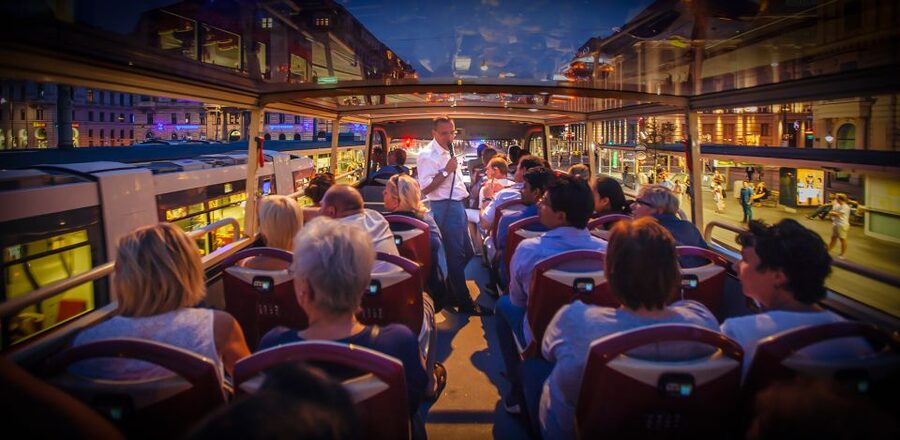
- Open-top double-decker night views: best angles for illuminated landmarks
- Live guide in English and German: stories tied to what you are seeing from the street
- Single-loop route, not hop-on hop-off: you stay on the bus for the full circuit
- Headphones plus a map: helps you follow along and remember stops
- Kreuzberg to Prenzlauer Berg: history and trendier neighborhoods in one ride
- Most useful for first-timers: you come away with a mental map fast
A 75-minute Berlin night overview from Alexanderplatz
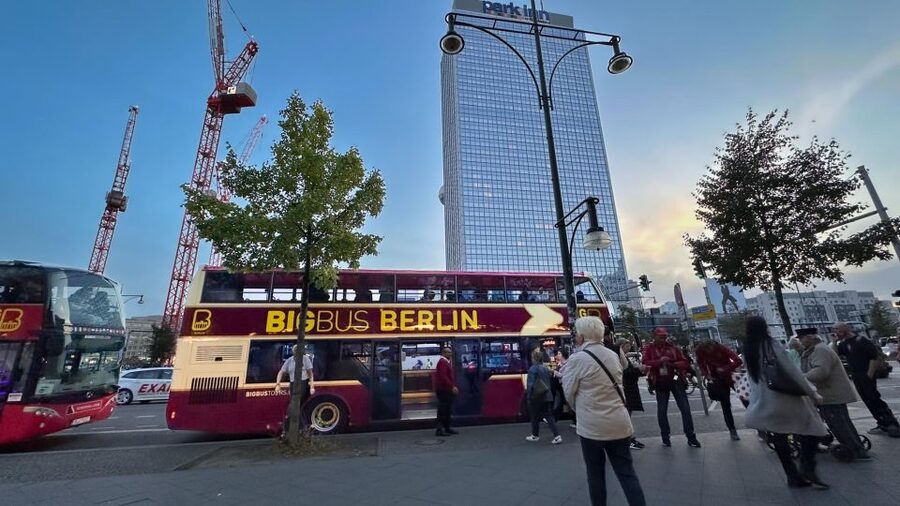
This tour runs about 75 minutes, starting at 6:00 PM from Alexanderstraße 3-5, right by Alexanderplatz (opposite the Park Inn Hotel). You should arrive 15 minutes early so you do not hold up departure.
The main value is simple: you get a timed, guided pass through Berlin’s biggest “what is where” landmarks without needing to figure out transit. At $35 per person, it is priced for people who want an evening activity that makes their next day easier. You are not buying time to wander; you are buying a fast mental map plus context from a live guide.
Also, you will be seated on an open-top double-decker, which matters at night. Berlin’s highlights are lit up differently than daytime stops, and from a moving bus you catch multiple perspectives without paying for multiple rides or walking between far-apart areas.
One practical note: there is no hotel pickup. Plan to reach Alexanderplatz on your own, then settle in and enjoy the ride.
A few more Berlin walks and trips to compare
- Berlin: Reichstag, Dome and Government District Guided Tour
★ 4.7 · 18,288 reviews - Berlin: 1-Hour City Tour by Boat with Guaranteed Seating
★ 4.3 · 16,993 reviews - Berlin: TV Tower Standard Entrance Ticket
★ 4.4 · 15,883 reviews
Open-top double-decker views: the best photos come with cold air
You are up top for the best angles, and that is the whole point. The double-decker format gives you the “city moving past you” effect, great for photos of bright facades and bridges, like you get with Oberbaum Bridge.
But at night, open-top comes with tradeoffs. A couple of specific issues show up in real-world experience: the bus can feel cold in winter, and windows can get foggy, which reduces visibility if you are stuck with misting glass between you and the view. In other words, the tour is still enjoyable, but you should dress for wind.
My advice: bring a warm layer, gloves if you get cold easily, and something you can pull up fast when the breeze hits. If you want the clearest views, position yourself where you can avoid the foggiest glass and wipe-ready your own lens approach (even if that just means staying alert and moving to a better side when you can).
If you are hoping for a “see everything up close” experience, reset expectations. This is a bus sightseeing tour, so you get the best look while you are passing. For close-up photos and museum-level time, you will need a follow-up plan after the tour.
The live guide factor: stories, humor, and real context
This is not just pre-recorded commentary. You get a live guide who speaks English and German, and the guide’s job is to connect the buildings to what Berlin went through.
A big strength here is how the narration adapts to the group. One account highlighted a guide named Simon, who stayed near the front upstairs and delivered a near private-tour feel, especially when the group was very small. Another guide named Demitri stood out for being informative and easy to follow. That matters because Berlin can feel complicated fast, especially if you do not know the timeline.
You will also notice how fast live guides have to translate between languages. One helpful detail: the guide can shift quickly between English and German while keeping the story moving. On a practical level, that means you are not only listening for names, you are listening for cause and effect.
Now the balanced part. One downside that can happen with multilingual narration is that conversations in German from some passengers can overpower parts of the English commentary for moments. You can reduce this by wearing your headphones properly and facing toward the guide when the story is specific.
Bottom line: if you like learning while you look, this tour works. If you prefer quiet sightseeing with minimal explanation, you may find the narration takes some of the spotlight off the view. For most people, the mix is the whole point.
Stop-by-stop: what you see after lights go on
The route is a single loop that returns to Alexanderplatz, and you will see a stack of landmarks. Here is what those stops mean for you, plus what to watch for from the bus.
Same city, a different way to spend the afternoon:
- Berlin: Boat Tour Along the River Spree
★ 4.4 · 11,252 reviews - Discover Berlin Half-Day Walking Tour
★ 5.0 · 9,624 reviews - Berlin: Government District around the Reichstag Guided Tour
★ 4.7 · 8,447 reviews - Berlin: Reichstag, Plenary Chamber, Cupola & Government Tour
★ 4.6 · 8,422 reviews
Alexanderplatz to the East Side Gallery and Oberbaum Bridge
You start at Alexanderstraße 3-5 by Alexanderplatz. Even if you are not getting off the bus, Alexanderplatz helps you ground the whole trip. You see how Berlin organizes itself around major squares and corridors, then the tour moves you into the “Wall and division” story pretty quickly.
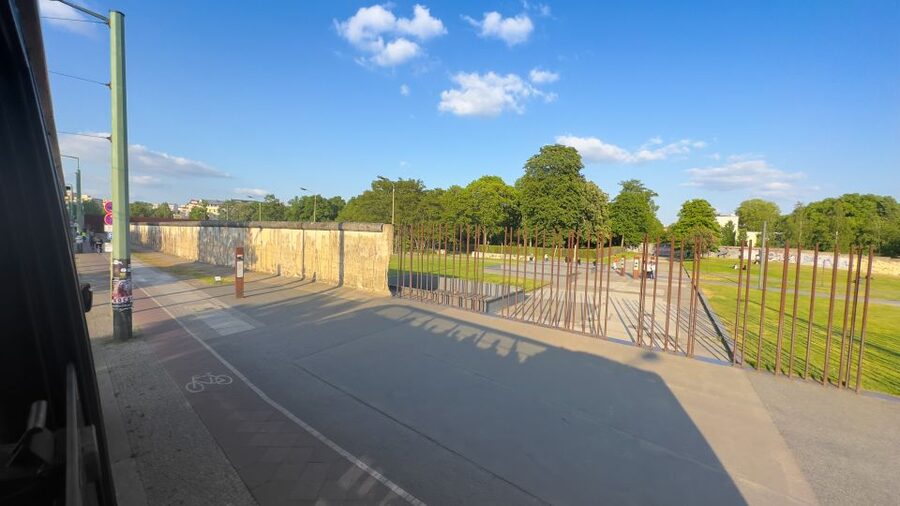
Next up, you pass the East Side Gallery. This is where Berlin’s Cold War history becomes visible in street-level form, and at night the murals and long stretches of wall feel more dramatic because the lighting catches the surfaces. From the upper deck, watch for how the wall runs through the urban blocks, not just as a single object but as part of a city scar.
Then comes Oberbaum Bridge. Bridges are a cheat code for orientation, and this one helps you understand how the city segments water routes while still keeping neighborhoods connected. At night, bridge arches and structure lighting make the span look almost like a landmark inside a landmark. It is one of those moments where you might think, okay, I finally see the geography.
Kreuzberg and Nikolaiviertel: Berlin’s older core meets its louder side
You roll into Kreuzberg, a district that tends to feel more expressive in the evening. From a moving bus, you will not get the same depth as walking through side streets, but you can catch the mix of architecture styles and city energy. This is a good stop for understanding why Berlin is not one single vibe, but many.
The tour also reaches Nikolaiviertel, which is a smaller historic district area. The value for you is comparison: you are seeing modern districts and then a place that feels more rooted and story-heavy. If you pay attention here, you start to understand how Berlin preserves or reconstructs its past.
Museum Island, Berlin Palace, and Unter den Linden
Then you shift toward central sights. Museum Island is a big one for first-timers because it clusters world-famous cultural sites into one concentrated zone. Even from the bus, the illuminated facades give you a sense of why this area matters. You will likely get a quick feel for Berlin’s intellectual spine.
You then pass Berlin Palace and Unter den Linden. The palace area ties back to national identity and shifting eras of Berlin, while Unter den Linden gives you the grand-street perspective. From the top deck, you can watch how the avenue pulls your eyes forward, which makes it easier to visualize where you might want to walk later.
Brandenburg Gate and the Wall Memorial story
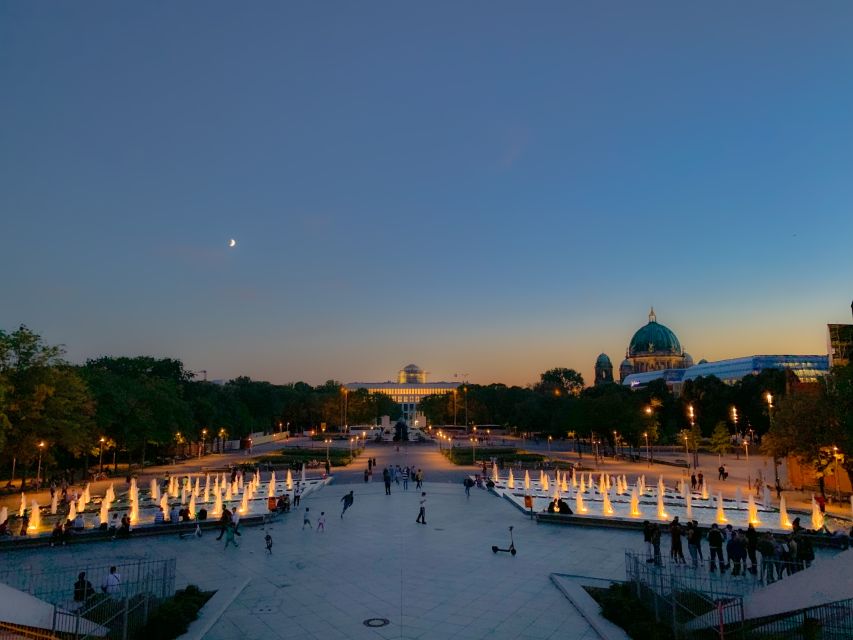
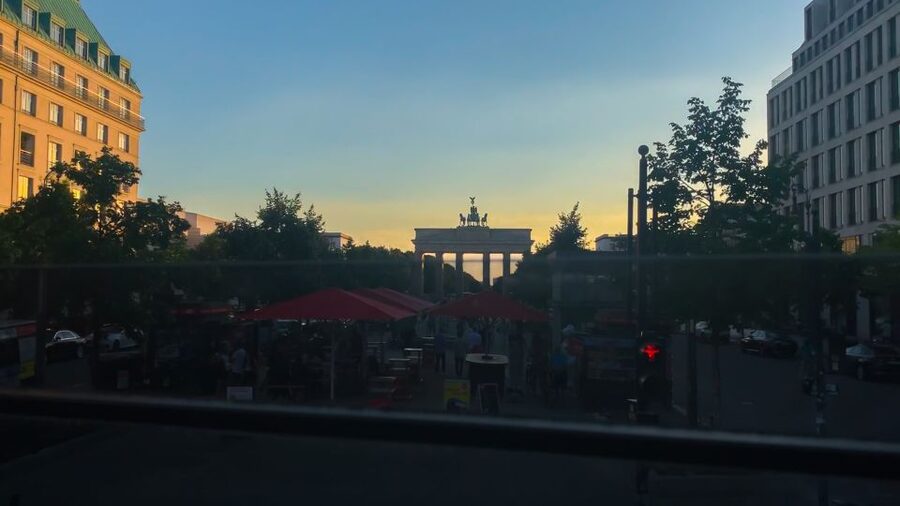
Brandenburg Gate is the obvious highlight, but the guide’s narration is what turns it from a photo stop into something you actually understand. At night, the Gate looks more formal and solemn, and that tone helps you absorb the symbolism.
After that, the route heads into the most emotional part of the itinerary: Tränenpalast (Palace of Tears) and the broader Wall narrative that culminates at the Berlin Wall Memorial. The Palace of Tears is tied to the human reality of crossing and being separated, so it hits differently when you are already primed by the earlier stops.
The Berlin Wall Memorial is where you want to pay close attention to what the guide says about division and the city’s recovery. From a bus, you do not get long time for reading and exploring, but you do get a guided mental framework for what you are seeing. If you plan to come back, this stop is your checklist starter.
Friedrichstadt-Palast, Bode Museum, and the New Synagogue
The tour includes Friedrichstadt-Palast, which helps show Berlin as a city of performance and modern culture, not only memorials. Even if you do not go inside, it widens the story beyond politics.
You also pass Bode Museum on the route. Again, you are not doing museum time here, but the location helps you understand how the city links art and power in the same belt.
Then you see New Synagogue Berlin – Jewish Centre. This is an important stop for understanding Berlin’s Jewish history and how the city honors it. Night lighting can make the architecture feel especially crisp from the bus, but the guide’s explanation is what makes it meaningful rather than just pretty.
Prenzlauer Berg, Mauer Park, and Kulturbrauerei
The later portion of the tour moves through Prenzlauer Berg. This is where the vibe shifts from monumental to neighborhood-scale life. You may notice how streets and blocks feel more lived-in, which helps you place Berlin’s history into the present.
The tour also passes Mauer Park, a spot tied to the Wall era that also has a reputation for community and gatherings. Even if you do not stop to walk, seeing it on the route helps you understand how places of division can transform into public space.
Then there is Kulturbrauerei, which gives you a sense of Berlin as a city that reuses industrial spaces for culture. From the bus, the takeaway for you is that Berlin often keeps the shells of older uses and repurposes them. It is not only reconstruction; it is reinvention.
Volksbühne and the rest of the route’s final rhythm
You also pass Volksbühne, a theater connected to Berlin’s arts scene. This is a fitting last note for an evening tour because it reminds you that Berlin’s story did not end when walls fell. The city kept writing new chapters in culture and public life.
Finally, you arrive back at Alexanderstraße 3-5, completing the single-loop circuit. You should feel like Berlin has a shape now, not just a pile of famous names.
Kreuzberg to Prenzlauer Berg: why the neighborhoods matter at night
A lot of tours stick only to the “big postcard” monuments. What makes this one more useful is the way it walks you through districts like Kreuzberg and Prenzlauer Berg as part of the same ride.
That helps you avoid a common first-timer mistake: treating Berlin like a museum you visit in sections. In reality, neighborhoods are where history meets daily life. Seeing them on the bus does not replace walking, but it gives you context for where you might want to spend your next evening.
Kreuzberg tends to read as more raw and current, while Prenzlauer Berg often feels more polished and residential. Even without getting out, you can clock those differences and decide what kind of Berlin day two you want.
If you enjoy food, markets, street art, and nightlife plans, this neighborhood pacing can make your independent exploring feel less random.
Price and value: what $35 buys you in real terms
At $35 per person for a 75-minute evening ride, you are paying for three things:
- A guided framework so the landmarks do not become just names.
- Effort saved since you are covering central sites in one loop.
- Convenience features like headphones and a map included.
This is usually good value if you are short on time or you want a first pass before choosing walking routes. In particular, it works well for a quick Berlin visit when you want to hit the big sights but still have room for independent plans afterward.
Where it is not the best fit is if you want lots of stops to get out and wander. Since it is a single-loop tour, your time at each location is more about viewing from the road than exploring on foot. If you love slow travel and want to linger at memorials or churches, you may feel slightly rushed.
The best way to think of it: buy this for orientation. Then use your favorite moments from the bus as your starting points for deeper follow-up.
Quick tips to make your evening ride smoother
Here are practical moves that can make a real difference.
- Bring a warm layer. Open-top at night is about weather, not comfort.
- Plan photos. The best shots usually happen as you pass major landmarks like the Brandenburg Gate and bridges, so be ready rather than fumbling.
- Listen actively at the Wall-related stops. That is where the guide’s story carries the most weight.
- Have a plan for after. Since you return to Alexanderplatz, it is easy to grab dinner or continue exploring without relocating.
- If the group is small, you may get a more personal feeling from the guide, as seen in examples where guides like Simon sat up with passengers.
If you go in with those expectations, the ride becomes less of a generic sightseeing loop and more of a guided “understand the city” session.
Should you book Berlin’s evening open-top bus tour?
I think you should book if you want an efficient first look at Berlin’s top sights, especially if your schedule is tight. The combination of open-top views, live English and German narration, and a route that blends big monuments with districts like Kreuzberg and Prenzlauer Berg is a smart fit for many first-timers.
I would skip or consider another option if you know you want to get out often and linger in one place for a long time. This tour is designed for seeing a lot by watching from the bus, not for walking a museum-style route.
If you like a guided night overview, it is a strong pick. With its solid track record (a 4.1 rating from 783 reviews) and the repeated praise for guide style, you are likely to come away with both photos and a clearer sense of where Berlin’s story lives in the map.
FAQ
What time does the tour depart?
The tour departs at 6:00 PM from Stop #1 at Alexanderplatz (Alexanderstraße 3-5).
Where is the meeting point?
Meet at Stop #1: Alexanderplatz, Alexanderstraße 3-5, 10178 Berlin, opposite the Park Inn Hotel. A Big Bus staff member helps with voucher or QR activation.
Is this a hop-on, hop-off tour?
No. This is a single-loop sightseeing tour, not hop-on, hop-off.
How long is the tour?
The duration is 75 minutes.
What sights will I see?
You will pass sights including Alexanderplatz, East Side Gallery, Oberbaum Bridge, Kreuzberg, Museum Island, Berlin Palace, Unter den Linden, Brandenburg Gate, Tränenpalast (Palace of Tears), Friedrichstadtpalast, New Synagogue Berlin – Jewish Centre, Berlin Wall Memorial, and more, including areas like Prenzlauer Berg.
Is the guide available in English?
Yes. Live commentary is provided in English and German.
Are headphones included?
Yes. Headphones (plus a map) are included.
Does the price include hotel pickup?
No. Hotel pickup and drop-off are not included.
Is the tour wheelchair accessible?
Yes. The tour is wheelchair accessible.
Are pets allowed and do infants need tickets?
The tour is pet friendly. Infants aged 4 and under travel free and do not require a ticket.
Newest Berlin reviews on the site
- Jetbike Berlin fun bike beer bike★ 5.0 · 3 reviews
- Karl-Marx-Allee Walking Tour: Berlin’s Socialist History★ 5.0 · 5 reviews
- Homeless on chic streets: city tour in Berlin from personal experience★ 4.6 · 3 reviews
- Berlin: Sachsenhausen Concentration Camp Guided Tour★ 4.9 · 42 reviews
- Historyof the Trans, Queer & Gay communities of Berlin tour★ 4.8 · 17 reviews
- Historic Berlin Pubs & History Tour★ 4.9 · 73 reviews
- Berlin: City Center Walking Tour★ 4.7 · 45 reviews
- Half-Day Berlin Highlights Segway Expedition★ 4.5 · 61 reviews
Evening Experiences, compared.
The Original Night Watchman Tour in Lantern Light
Read our review →

1.5-Hour Public Tour with Night Watchman Bremme
Read our review →
Munich Ghosts and Spirits Evening Walking Tour
Read our review →Browse the lists this tour appears in