Reviewed · BERLIN TOURS
Berlin: GDR witness tour in small group
Berlin’s GDR stories land differently than facts.
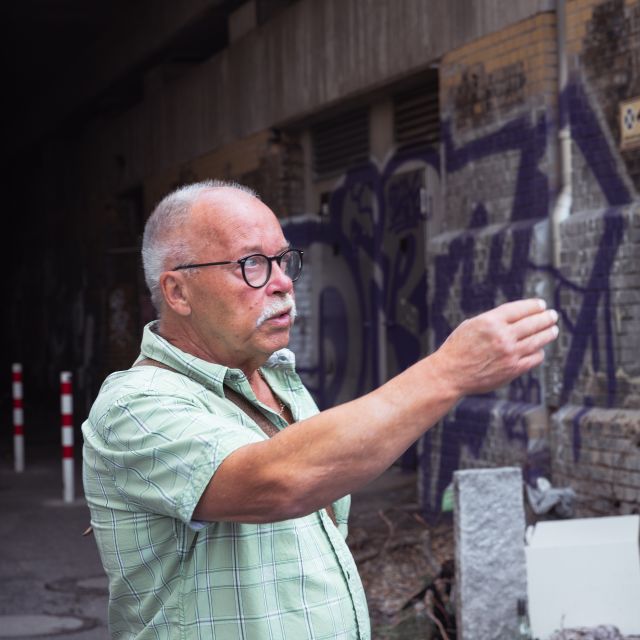
On this small-group GDR witness tour with former political prisoner Karl-Heinz Richter, you hear how the Stasi touched ordinary life, not just in theory but in daily routines. I like the firsthand detail and the fact that you’re in a small group where the experience can feel personal.
I’m especially taken by the way the tour follows real places tied to his story: his failed escape plan at Friedrichstrasse station and the months he spent in pre-trial detention in the Stasi prison in Berlin-Pankow. You get the who, what, and where, which makes the whole topic feel concrete fast.
One thing to consider: the storytelling style may not feel fully linear to everyone, and a few people have reported the tour running closer to 1.5 hours than the stated 2.5 hours. If you need a tightly paced, clock-driven program, keep that in mind.
In This Review
- Key things that make this witness tour worth your time
- A GDR witness tour beats a museum lecture
- Meet Karl-Heinz Richter, and why his background matters
- The Friedrichstrasse escape attempt, explained like a sequence you can picture
- Pre-trial detention in Berlin-Pankow, and the cost of trying to leave
- How the Stasi shaped everyday life in East Germany
- Stasi interrogation methods, and what they teach you about power
- Small-group format, real questions, and the pace you’ll feel
- Price and value for a 2.5-hour story session
- Who should book this GDR witness tour, and who might pass
- Should you book it? My honest call
- FAQ
- FAQ
- How long is the Berlin GDR witness tour?
- What does the tour cost?
- What language is the tour guide?
- Who leads the tour?
- What historical topics are included?
- Where did Richter try to escape?
- Where was Richter held after his escape attempt failed?
- Does the tour include hotel pickup or drop-off?
- Does the tour run rain or shine?
- Is the tour wheelchair accessible?
- Is there a cancellation option?
Key things that make this witness tour worth your time
- Karl-Heinz Richter, a real Stasi victim: the tour is driven by his personal account as a political prisoner.
- Friedrichstrasse escape attempt: you hear how he tried to jump onto a moving train.
- Stasi prison in Berlin-Pankow: you get his description of pre-trial detention conditions.
- Everyday GDR life, explained from inside: not just ideology, but daily pressure.
- Stasi interrogation methods: the tour focuses on how control worked in practice.
- German live guide, rain or shine: practical, straightforward, and built for real Berlin weather.
A GDR witness tour beats a museum lecture
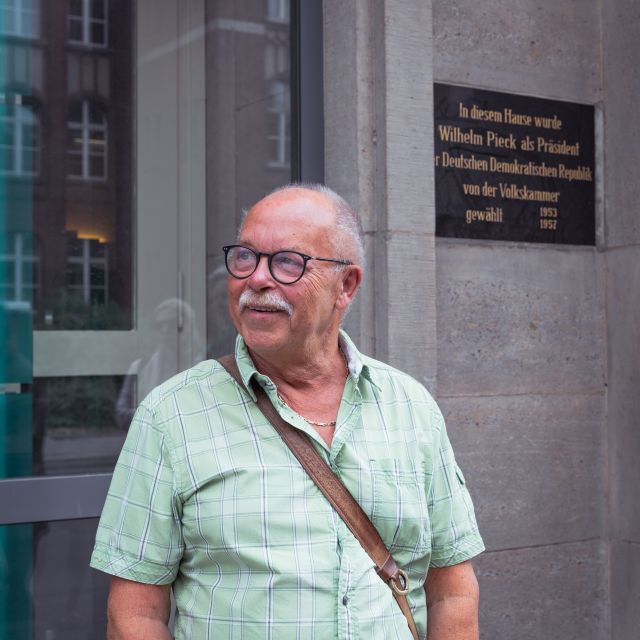
Berlin has plenty of GDR-related stops. But this format is different because it’s anchored in a person who lived it and then got punished for trying to leave. The point is not to recite dates. It’s to understand how surveillance and fear shaped everyday decisions, from where you could stand in public to what you dared to say in private.
I like that the tour’s core is simple: hear how life worked in the East and what the Stasi did to people who crossed certain lines. You’re not asked to memorize a timeline. Instead, you’re guided through key moments in Richter’s life, including his escape attempt and his imprisonment, and then you connect those dots to the wider system.
That makes it a good choice if you’re the kind of traveler who wants more than “interesting history.” You want cause and effect. You want the human layer behind the politics.
A few more Berlin walks and trips to compare
- Berlin: Reichstag, Dome and Government District Guided Tour
★ 4.7 · 18,288 reviews - Berlin: 1-Hour City Tour by Boat with Guaranteed Seating
★ 4.3 · 16,993 reviews - Berlin: TV Tower Standard Entrance Ticket
★ 4.4 · 15,883 reviews
Meet Karl-Heinz Richter, and why his background matters
The tour centers on Karl-Heinz Richter, born in Schwarzheide in Brandenburg in 1946. He grew up with his family in East Berlin. And then, about three years after the Wall was built, he planned to flee to the West.
That context is important because it explains why his story isn’t just about one dramatic moment. It’s about living inside a society that kept tightening its grip. You get a sense of how someone can be raised in the system, believe they can still find a way out, and then discover that the border is not only geographical, it’s psychological and administrative.
The tour also frames Richter’s experience as a firsthand view of the Stasi’s influence across East German society. That matters, because people often think the Stasi only showed up in special cases. Here, you see how pressure could become routine, and how that routine can crush trust, even among neighbors.
The Friedrichstrasse escape attempt, explained like a sequence you can picture
A highlight is Richter’s account of his planned escape at Friedrichstrasse station. He tried to jump onto a moving train. It sounds almost cinematic, but the tour treats it as a desperate plan shaped by the realities of the time.
I like how the story is tied to a real place. You get an immediate sense of scale and motion when you hear about the plan at a station people still associate with Berlin’s divided era. It’s not abstract. It’s physical. He needed to time it, commit to it, and act fast. And when the escape failed, the consequences were swift.
This is where the tour’s emotional weight lands. You can almost feel how quickly hope can flip into fear. And you start understanding why so many people stayed stuck, not because they lacked courage, but because the system was designed to catch them.
If you have a question like, What did escape attempts mean day to day, this part answers it from the inside.
Pre-trial detention in Berlin-Pankow, and the cost of trying to leave
After the failed escape, Richter spent several months in pre-trial detention in the Stasi prison in Berlin-Pankow. The tour doesn’t treat imprisonment like a footnote. It’s presented as a period with inhumane conditions, and it becomes the turning point that connects his escape plan to the wider Stasi world.
This section is valuable because it shows that the Stasi did not wait for a final verdict to ruin lives. Pre-trial detention was its own weapon. You get a sense of how captivity and uncertainty could be part of the punishment, not just the outcome.
From a travel standpoint, this is also the moment where you should slow down mentally. The tour invites you to understand what was lost, not only what happened. Freedom is not only the absence of bars. It’s control over time, movement, and basic dignity. Hearing how Richter experienced that makes the later discussion about interrogation methods feel more grounded, because you understand the environment first.
Same city, a different way to spend the afternoon:
- Berlin: Boat Tour Along the River Spree
★ 4.4 · 11,252 reviews - Discover Berlin Half-Day Walking Tour
★ 5.0 · 9,624 reviews - Berlin: Government District around the Reichstag Guided Tour
★ 4.7 · 8,447 reviews - Berlin: Reichstag, Plenary Chamber, Cupola & Government Tour
★ 4.6 · 8,422 reviews
How the Stasi shaped everyday life in East Germany
One of the strongest themes is the influence of the Stasi throughout East German society. The tour doesn’t stick to prison walls. It expands into what control looked like in everyday life, and why people felt watched even when they weren’t sure.
That’s the real takeaway for me: the system worked through pressure and fear, not only through dramatic arrests. When you hear how interrogation and surveillance fit together, everyday behavior starts to make sense. People learned what was safe. People learned what could get reported. And people learned that trust could be dangerous.
I also appreciate that the tour frames this as lived experience, not a one-size-fits-all explanation. Richter’s planned escape and his later imprisonment give you a direct route into the broader topic of how the Stasi operated.
If you want to connect the dots between politics and daily life, this is the section that does it.
Stasi interrogation methods, and what they teach you about power
The tour includes information about Stasi interrogation methods. This isn’t just about procedure. It’s about how power works when the goal is not only information, but control of the person.
When Richter describes what interrogation meant, you start to see the logic. Interrogation wasn’t only about answers. It was about breaking resistance, shaping narratives, and forcing people into situations where they felt trapped by the system’s structure.
That’s why this part sticks with you. You walk away thinking differently about institutions in general. A political police force can do more than punish. It can train a population to self-edit. It can make people police themselves.
This is also where the tour can feel intense. If you’re sensitive to accounts of mistreatment and coercion, give yourself a buffer after the tour so you can process what you heard without rushing off to the next stop.
Small-group format, real questions, and the pace you’ll feel
This is a moving small-group tour led by Secret Tours Berlin. The program is designed to be interactive, and because it’s a smaller group, you get a more human connection to Richter’s story than you would in a larger group setting.
That format matters. With a witness story, you can’t fully separate emotion from information. When you have more room for questions, you can steer toward what you care about, like how escape attempts were handled, what detention was like, or how Stasi influence showed up day to day.
The pace is part of the experience. You’re told a life story with key moments, including his background, the escape plan at Friedrichstrasse, the detention in Berlin-Pankow, and the system-level explanation of Stasi influence. It’s meant to be heard, not scanned.
Quick practical note: it takes place rain or shine. Berlin weather can be unpredictable, so wear layers and bring something that keeps your notes dry.
Price and value for a 2.5-hour story session
The price is listed at $27 per person for a 2.5-hour experience. On paper, that can look “budget” for a specialist history tour. The value comes from the fact that you’re hearing from a contemporary witness and Stasi victim, not from a script built only from documents.
So what are you really paying for? You’re paying for a guided conversation around a life that was directly shaped by the Stasi, including escape attempt history and imprisonment context. You’re also paying for the local knowledge that helps you understand Berlin’s East German reality in a way that connects to actual places like Friedrichstrasse station and Berlin-Pankow.
Is it perfect value for everyone? Not always. One caution I’d flag is that a few accounts have suggested the tour time may sometimes run shorter than the stated 2.5 hours. If you’re booking this as one of a limited number of timed activities, make sure you leave some slack in your schedule so you don’t feel squeezed.
Also, this is German-language. If German is a stretch for you, the value might drop because witness tours depend heavily on nuance. In that case, consider whether you’re comfortable following emotionally charged details in German.
Who should book this GDR witness tour, and who might pass
This tour is a strong fit if you want a personal, place-based understanding of the GDR and the Stasi. It’s especially worth it if you care about the human impact of political systems, and if you prefer stories tied to specific locations like Friedrichstrasse station and the Stasi prison in Berlin-Pankow.
You’ll likely enjoy it most if you’re comfortable with serious subject matter. The tour deals with planned escape, inhumane pre-trial detention conditions, and interrogation methods. That is heavy content, even when it’s presented clearly.
It may not be ideal if you need a perfectly tidy, strictly chronological narrative with the kind of documentary precision you might expect from a classroom style. The witness account approach can be more emotional and less structured in a way that feels uneven to some people.
Finally, this is wheelchair accessible. Just note that there’s no hotel pickup, so you’ll need to make your own way to the meeting area.
Should you book it? My honest call
If your goal is to understand the GDR beyond headlines, I think this is a smart booking. A tour led by Karl-Heinz Richter gives you a firsthand lens on escape attempts, Stasi detention in Berlin-Pankow, and the pressure of surveillance inside East German life. That combination is hard to replicate with standard sightseeing.
I’d book it if you can handle serious stories, you speak or follow German, and you have enough time for a full 2.5-hour session. I’d maybe pass or pair it with something lighter later if you know heavy testimony affects you.
FAQ
FAQ
How long is the Berlin GDR witness tour?
It lasts 2.5 hours.
What does the tour cost?
The price is listed as $27 per person.
What language is the tour guide?
The live tour guide speaks German.
Who leads the tour?
The tour is guided by Karl-Heinz Richter, and it is operated by Secret Tours Berlin.
What historical topics are included?
You’ll learn about everyday life in the GDR, Richter’s planned escape attempt, his imprisonment in the Stasi prison in Berlin-Pankow, and Stasi interrogation methods.
Where did Richter try to escape?
He tried to jump on a moving train at Friedrichstrasse station.
Where was Richter held after his escape attempt failed?
He spent several months in pre-trial detention in the Stasi prison in Berlin-Pankow.
Does the tour include hotel pickup or drop-off?
No. Hotel pickup and drop-off are not included.
Does the tour run rain or shine?
Yes, the tour takes place rain or shine.
Is the tour wheelchair accessible?
Yes, it is listed as wheelchair accessible.
Is there a cancellation option?
Yes. You can cancel up to 24 hours in advance for a full refund.
Newest Berlin reviews on the site
- Jetbike Berlin fun bike beer bike★ 5.0 · 3 reviews
- Karl-Marx-Allee Walking Tour: Berlin’s Socialist History★ 5.0 · 5 reviews
- Homeless on chic streets: city tour in Berlin from personal experience★ 4.6 · 3 reviews
- Berlin: Sachsenhausen Concentration Camp Guided Tour★ 4.9 · 42 reviews
- Historyof the Trans, Queer & Gay communities of Berlin tour★ 4.8 · 17 reviews
- Historic Berlin Pubs & History Tour★ 4.9 · 73 reviews
- Berlin: City Center Walking Tour★ 4.7 · 45 reviews
- Half-Day Berlin Highlights Segway Expedition★ 4.5 · 61 reviews
Berlin Tours, compared.

Reichstag, Dome and Government District Guided Tour
Read our review →
1-Hour City Tour by Boat with Guaranteed Seating
Read our review →

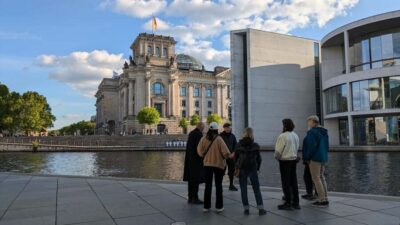
Government District around the Reichstag Guided Tour
Read our review →
Reichstag, Plenary Chamber, Cupola & Government Tour
Read our review →