
Reviewed · CYCLING TOURS
Berlin: Experience the Alternative Kreuzberg on a Bike Tour
Forget postcards. Ride Kreuzberg.
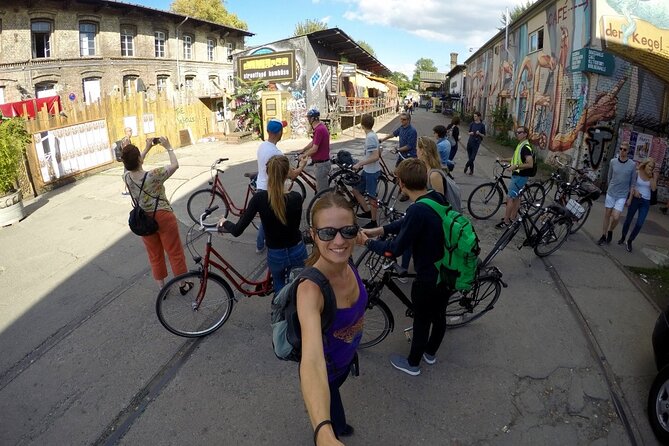
This 3-hour bike tour takes you into Berlin’s alternative neighborhoods, mixing Wall-era sights with everyday street life in Kreuzberg and nearby areas. You’ll cover a focused stretch of the city, stop often to talk through what you’re seeing, and finish with views that make the whole ride feel cinematic.
What I like most is the way the guide stitches together history and street culture without turning it into a lecture, plus the practical comfort of having a bike and helmet ready so you can just ride. The tour’s biggest trade-off is that it is more stop-and-explain than a long nonstop spin, so if you want maximum time pedaling and minimum talking, keep your expectations realistic.
In This Review
- Key highlights to look for on this Berlin bike tour
- Why this alternative Kreuzberg bike tour feels different
- Price and time: getting a lot of Berlin for $42.33
- The ride setup: bikes, helmets, and a guide-designed route
- From Nikolaiviertel to Kreuzberg: where the city loosens up
- Engelbecken’s calm between building types
- Wall-adjacent stops: Engelbecken, Das Baumhaus, and squatter art
- YAAM area views, then the long line of Wall art
- East Side Gallery to Osthafen: art, bridges, and river breaks
- A sculpture with competing interpretations
- Gorlitzer Park, Liegnitzer Straße, and Kotti: Berlin contrasts in motion
- Dolce Vita waterfront, Turkish market days, and boule life
- Finishing by Admiralbrücke: sunset energy and a last look at Kotti
- Should you book this bike tour instead of DIYing Kreuzberg?
- FAQ
- How long is the Berlin alternative Kreuzberg bike tour?
- What is the price per person?
- What language is the tour offered in?
- Is food included in the bike tour?
- What’s included with the tour?
- Does the tour run in bad weather?
- How big are the groups?
- Is the tour family-friendly?
- What if the minimum number of travelers is not met?
Key highlights to look for on this Berlin bike tour
- A route designed by your guide, so no two rides have to feel identical
- Wall-adjacent stops that connect art, housing, and community in plain language
- Kreuzberg and Friedrichshain neighborhoods beyond the usual tourist core
- Frequent short stops that help you understand what makes each area tick
- Spree-side moments where the ride turns calm for a minute
- Clear guide support for safety and questions, with guides like Rico, Rufus, Jake, Bjorn, Vincent, and Karl mentioned by past groups
Why this alternative Kreuzberg bike tour feels different
If your Berlin plans are heavy on museums and official monuments, this tour gives you a different rhythm. The ride is built around how the city actually feels when you’re moving through it, not just looking at it. And because the route is guide-designed under the Free-Berlin concept, you get that sense of a living neighborhood, not a scripted checklist.
A big part of the appeal is the theme: Berlin’s alternative edge. You’ll see places tied to squatting and artist communities, you’ll get a reality check on popular stereotypes, and you’ll end up at Wall-linked landmarks that most first-time visitors only ever glance at. Even when the stops are famous, the way you reach them is the point, with the city’s everyday texture in between.
More Bike Tours in Berlin
- Berlin: Sights and Highlights Bike Tour with a Local Guide
★ 4.8 · 2,698 reviews - Berlin Highlights 3-Hour Bike Tour
★ 5.0 · 948 reviews - Berlin City Bike Tour with Beer Garden Stop
★ 5.0 · 917 reviews
Price and time: getting a lot of Berlin for $42.33
At $42.33 per person for about 3 hours, you’re paying for three things at once: a guided route, bike access, and helmets. For that length of time, it’s a fair setup if you want structure and context, not just transportation. Plus, the group size stays small, with a maximum of 15, which usually means you can ask questions without feeling lost in a crowd.
The “watch the clock” angle matters here. This is not a full-day tour, so every stop has to count. The route is paced with short explanations and photo moments, then you’re back on the bike. If you love architecture and street history, that format works well. If you’re hoping for a lot more riding per hour and fewer stops, you may feel the balance is more guided than you expected.
The ride setup: bikes, helmets, and a guide-designed route
You start at Free Berlin Bike Tours & Rental, Poststraße 11, 10178 Berlin. Most rides are in the afternoon, with a listed start time of 2:24 pm, and the tour ends back at the meeting point. You get a mobile ticket, and the meeting area is near public transportation, so getting there is usually straightforward.
The included gear is practical: the bike and helmet are provided, and that alone saves you time and hassle in Berlin. The tour also runs in all weather conditions, so plan for rain or cold. The best move is simple: dress for the weather and protect the stuff you care about, like your phone and shoes.
One more thing I appreciate is the “family-friendly” angle. Children are welcome, and infant seats can be provided on request. The ride isn’t described as a hard workout, and past guests have noted it is easy to do. Still, you should expect frequent stops, so it’s ideal if your group likes to listen and look closely rather than grind distance.
Finally, the Free-Berlin concept matters. Since each guide designs their own route, you get variety across departures. That’s a real advantage if you’re staying multiple days and don’t want to feel like you repeated the same tour twice.
From Nikolaiviertel to Kreuzberg: where the city loosens up
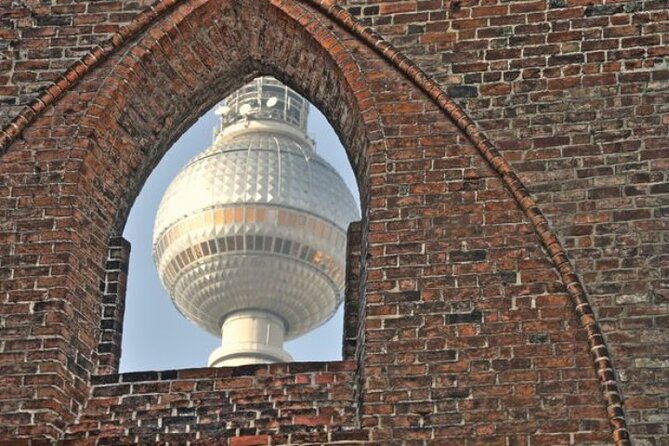
The tour begins at Nikolaiviertel, positioned as a sort of final stop of the established, well-known city. The vibe shift is intentional. After that first taste, you move into areas that feel more like real neighborhoods than curated sights.
Nikolaiviertel also sets the tone for how the guide will talk during the ride: short, targeted context that helps you read the streets instead of just admiring them. You get the first lesson on Berlin’s layered identity, then the pedal rhythm takes over and you’re heading toward Kreuzberg.
Then comes Kreuzberg itself. This is where the tour leans into stories: Kreuzberg as a mixing bowl with lots to tell. What makes it work on a bike is that you can see how different worlds sit next to each other without needing long walks. You’re not just hearing about contrasts, you’re passing through them.
The practical takeaway for you is this: if you’ve only skimmed Berlin’s major districts by foot, riding changes your understanding fast. Streets widen, buildings change character, and the city reveals itself in slices. That’s what this early stretch is preparing you for.
Same city, a different way to spend the afternoon:
- Berlin: Reichstag, Dome and Government District Guided Tour
★ 4.7 · 18,288 reviews - Berlin: 1-Hour City Tour by Boat with Guaranteed Seating
★ 4.3 · 16,993 reviews - Berlin: TV Tower Standard Entrance Ticket
★ 4.4 · 15,883 reviews - Berlin: Boat Tour Along the River Spree
★ 4.4 · 11,252 reviews
Engelbecken’s calm between building types
A quick stop at Engelbecken shows you an unexpected pocket of peace between prefab buildings, older-style structures, and modern architecture. This is the kind of place that teaches you a Berlin lesson: the city doesn’t divide neatly into “old” and “new.” You get that mix in one view.
If you like photographic moments, Engelbecken is worth using as a mental reset. You’ll have been moving through busy streets, then suddenly you’re looking at something calmer. It helps you understand why people choose Kreuzberg-style living in the first place: not everything is loud, not everything is official, and sometimes a quiet pocket appears exactly where you’d least expect it.
Wall-adjacent stops: Engelbecken, Das Baumhaus, and squatter art
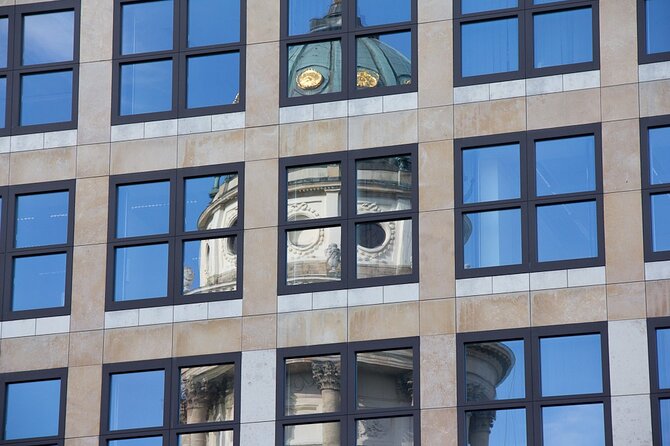
After the calm, the tour turns sharply into Wall territory with Das Baumhaus. The framing is specific and human: it’s described as the Treehouse by the Wall, tied to the story of a guest worker adapting to Kreuzberg mentality, creating a bold gardenhouse right next to the wall. The guide connects it to Berlin’s guerilla spirit, not as a vague slogan, but as a way people stake out space, identity, and belonging.
This stop is smart because it avoids abstract talk. You’re seeing a physical result of attitudes that shaped Berlin. And you’re also learning that “alternative” doesn’t always mean chaos. Sometimes it means creativity with rules of its own, built at street level.
From there, you reach another stop that focuses on the way multiple squattings helped create a space for artists. The route notes that this story shows up not only during the early scene years in the 1980s, but also again in the early 2000s. The building ended up becoming a room for artists of many kinds.
The drawback to this kind of stop, for some people, is that it can feel emotionally heavy if you’re expecting pure sightseeing. If you’re open to that, though, it pays off. These pauses help you understand that modern Berlin culture did not appear out of thin air. It was built, argued over, taken seriously, and defended.
YAAM area views, then the long line of Wall art
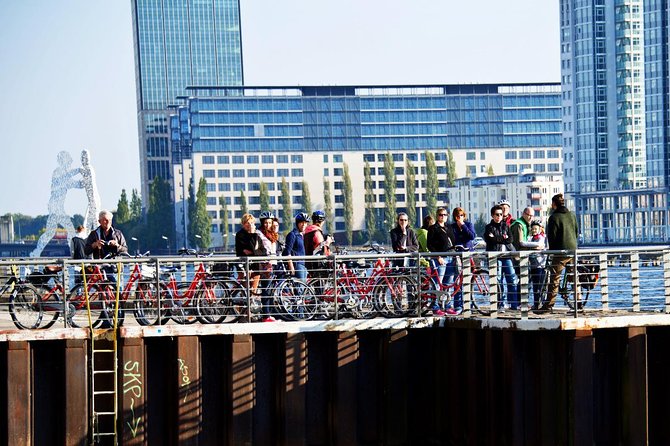
Next, the tour includes a stop connected to YAAM, described as an incredible club. Even if you’re not there to party, the view from this area gets the spotlight. You can look out toward the TV tower, the Holzmarkt, the Oberbaumbridge, and the river Spree. The point is that the Wall story isn’t frozen in the past, it’s layered into the skyline.
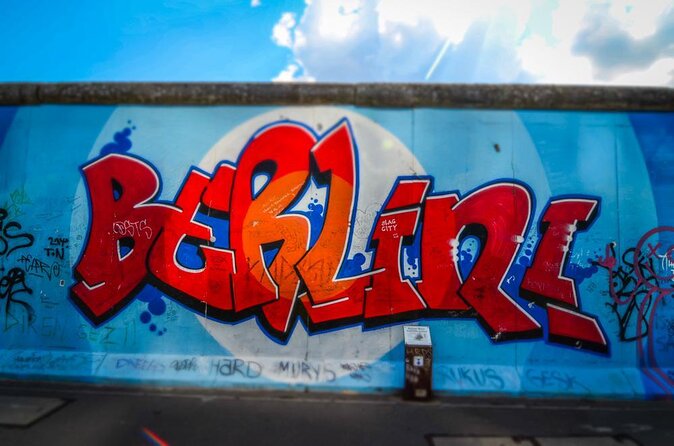
Then you hit East Side Gallery. The tour presents it as the longest remaining part of the Berlin Wall, filled with spectacular art, sitting right within a newly designed business quarter. This stop works because you’ll see the art up close, but you’re also seeing the present-day city around it. It’s an effective reminder that Berlin keeps changing while still carrying old scars.
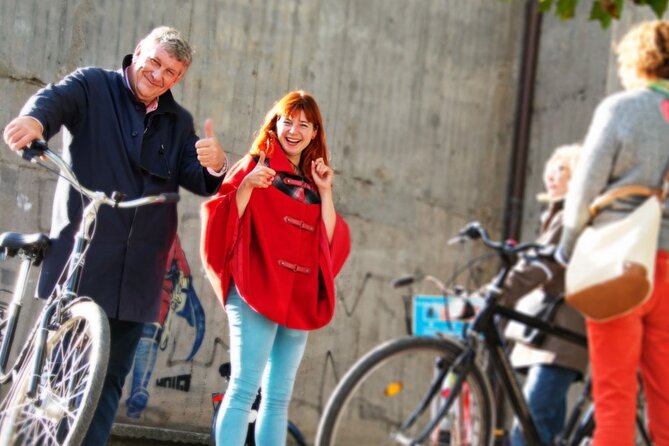
And if you want a solid guide, look for the kind of storytelling that people have praised repeatedly, from Rico’s upbeat explanations to Jake and Bjorn’s Wall-era insights and humor. The best guides here keep things safe, answer questions, and connect what you see to what life may have felt like when the Wall shaped daily movement.
East Side Gallery to Osthafen: art, bridges, and river breaks
After East Side Gallery, the tour moves to Oberbaumbrucke, described as the district’s landmark and a symbol of crossing borders in every meaning. Crossing is the theme, and you’ll feel it, because by now your ride has been circling around mobility, restriction, and freedom without making it purely political.
Then you go to Osthafen, once restricted borderland, now a spot for young urban creatives. The tour also points out the river Spree connection, with the water inviting a small break. This stop is more than scenery. It’s a reality check about how cities reuse space. Where restriction once defined movement, people now gather, work, and hang out.
If you’re riding on a rainy day, Osthafen can still be useful. You can keep your eyes on the way the river frames the district, even if you don’t linger as long. It’s a good place to stay warm and listen before the next set of neighborhood contrasts.
A sculpture with competing interpretations
There is also a stop at a uniquely described sculpture that leads to multiple interpretations. The route notes that the official one likely makes the least sense, which hints at what the guide will do with this stop: encourage you to think, not just accept the label.
This is also a moment where you can take a longer look, because you’re not scanning for a “must-see” icon. Instead, you’re practicing Berlin-style street reading, noticing the weird in-between details that make the city feel like it’s thinking.
Gorlitzer Park, Liegnitzer Straße, and Kotti: Berlin contrasts in motion
From Wall art and borderland themes, the tour shifts into Kreuzberg’s day-to-day weirdness and range.
First, Falckensteinstraße is framed as a way to understand Kreuzberg’s diversity of buildings, people, and history. The description calls it big-city life with escapism mixed in. That mix matters. Kreuzberg is not only about ideology or monuments, it’s about coexisting realities, and the street-level variety gives you proof.
Then comes Görlitzer Park, described as a former train station transformed into a park, symbolizing the thin line between alternative life and anarchy. Whether you love the word anarchy or not, the concept is clear: these spaces carry energy because they are repurposed and claimed by the community.
Next, you arrive at Liegnitzer Straße, where the tour calls out the peak of capitalism in the heart of the melting pot. The centerpiece is a car loft, a building where you can take your car up to your balcony. It’s the kind of contrast that makes Berlin funny and unsettling at the same time, because it shows how the city’s edges collide with everyday ambition.
This segment is also where the guide may challenge the caricatures. The route directly asks whether Kreuzberg is really home to anarchists, slobs, and survival artists, then says it’s much more, and the truth is the opposite of the stereotype. That’s a strong reminder for you: come to see actual people and actual spaces, not just internet myths.
Dolce Vita waterfront, Turkish market days, and boule life
A waterfront stop follows with “Dolce Vita at the waterfront,” including a Turkish market on Tuesdays and Fridays. The route also notes a bohemian neighborhood break, with a laid-back moment suggested through playing boule.
Even if you don’t arrive on market days, this is one of those stops that helps the ride breathe. It’s a calmer pause after the more intense border and counterculture themes, and it gives you a sense of Kreuzberg as a place where daily pleasure matters.
Finishing by Admiralbrücke: sunset energy and a last look at Kotti
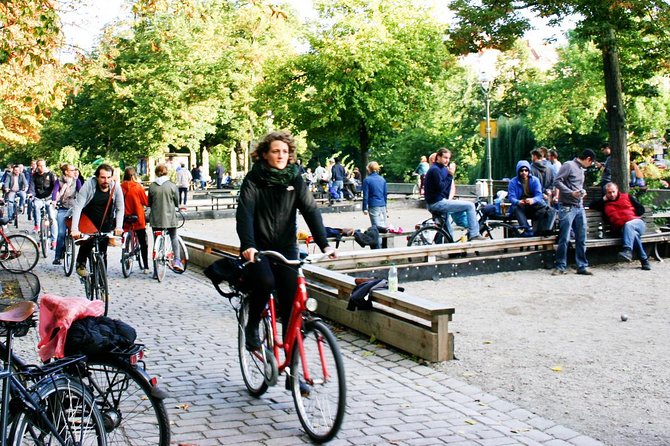
The final arc of the tour keeps shifting mood, then lands on something social and open.
You visit Admiralbrücke and the idea is simple: you can start your night in a bar, or you can start it with a summer sunset and hundreds of strangers. The route emphasizes the welcome feeling, come as you are. This is a good way to end if you want the trip to feel like Berlin, not like an inspection.
Before that sunset stop, you pass by Kottbusser Tor as a contrast point. The route describes the brutal 1970s architecture, heavy traffic, and a drug scene. This stop isn’t trying to soften reality, and you should go in mentally prepared for that edge. It’s a reminder that Berlin’s alternative culture exists alongside friction, and that neighborhoods are not theme parks.
If your guide is on form, you’ll understand why the contrast matters. The ride has taught you to read Kreuzberg in layers, and Kottbusser Tor is one of the strongest “layers” on that map.
Should you book this bike tour instead of DIYing Kreuzberg?
Book it if you want a guided way to connect Wall-era themes to what you can actually see on the streets today. It’s also worth it if you like the format of frequent short stops and explanations, not long lectures. The strong reviews highlight guides who are friendly, funny, and careful, with people like Rico and Rufus praised for keeping things safe and enjoyable, and guides like Jake and Bjorn praised for connecting history and culture with personality.
Do not book it if your top priority is maximum time pedaling. This ride takes its time on stops, and the experience is as much about learning and looking as it is about distance. Also plan for weather, since it runs in all conditions, and wear something you do not mind getting a bit marked around the bike chain. One practical note that comes up often is to wear tighter trousers.
One more good reason to go: the Free-Berlin concept means you are not getting a cookie-cutter route. You’ll feel like you’re learning a Berlin made of neighborhoods, not just landmarks.
If you want, tell me your travel dates and your comfort level with biking in city traffic. I can suggest when this tour fits best in a Berlin itinerary and how to pair it with other plans.
FAQ
How long is the Berlin alternative Kreuzberg bike tour?
It runs for about 3 hours.
What is the price per person?
The price is $42.33 per person.
What language is the tour offered in?
The tour is offered in English and German, depending on the selected option.
Is food included in the bike tour?
Food and drinks are not included unless specified.
What’s included with the tour?
You get a bicycle, a helmet, and a professional guide.
Does the tour run in bad weather?
Yes, it operates in all weather conditions, so dress appropriately.
How big are the groups?
The group size is typically 4 to 15 participants.
Is the tour family-friendly?
Children are welcome, and infant seats can be provided on request, with children accompanied by an adult.
What if the minimum number of travelers is not met?
If the tour is canceled because the minimum isn’t met, you will be offered a different date or a full refund. You can also cancel for a full refund up to 24 hours in advance.
More Cycling Tours in Berlin
- Berlin Highlights: 3-Hour Bike Tour
★ 4.9 · 809 reviews - Berlin Highlights Sightseeing Bike Tour in Small Groups
★ 5.0 · 652 reviews - Berlin: Alternative Bike Tour of Kreuzberg & Friedrichshain
★ 4.7 · 548 reviews - Berlin: Guided Bike Tour of The Wall and Third Reich
★ 4.8 · 511 reviews
Newest Berlin reviews on the site
- Day trip through multicultural city landscapes & photo highlights★ 5.0 · 5 reviews
- Berlin in one day – day tour with an expert guide★ 5.0 · 14 reviews
- Berlin on Your Own – Deluxe Round Trip from Warnemünde Port★ 4.5 · 5 reviews
- Berlin sightseeing boat tour on the Spree★ 4.0 · 93 reviews
- Berlin by Night Private Tour – All Must-See Sites Magically Lit Up at Night★ 4.0 · 5 reviews
- Berlin & Sachsenhausen Concentration Camp Tour from Warnemünde and Rostock Port★ 4.5 · 60 reviews
- Berlin & The Third Reich Private Guided Tour★ 5.0 · 3 reviews
- Berlin and Car Culture Tour★ 4.5 · 8 reviews
Cycling Tours, compared.
Sights and Highlights Bike Tour with a Local Guide
Read our review →
Classic Mike’s Bike Tour daily @ 11.30 incl Beer Garden & Surfers
Read our review →
Browse the lists this tour appears in