Reviewed · BERLIN TOURS
Berlin during Nazism – Tour in Italian
Nazi history has a Berlin address. This 3 hour Italian guided tour connects the rise of the Third Reich to the sites where atrocities played out in real streets and real buildings, not just textbook timelines. I especially like the small group size (max 20), because it keeps questions from getting lost, and I also like that it’s guided in Italian by a pro who can explain hard stuff clearly.
You walk a tight loop that moves between resistance, forced persecution, and Jewish life that was violently targeted. One of the best value points is that the key stops have admission included, so you are not constantly checking entry fees mid walk. Guides such as Lorenzo, Fabio, and Paolo are repeatedly praised for staying organized and holding attention, even when the weather turns unfriendly.
The main drawback is also the topic. This is heavy history, with memorials connected to mass killing and Nazi eugenics, so come ready for an emotional subject, not a casual sightseeing stroll.
In This Review
- Key things I’d plan for (before you go)
- Starting at Potsdamer Platz, and why the meeting point matters
- German Resistance Memorial Center: where plans met courage
- T4 Memorial: the precursor you should understand
- Anhalter Bahnhof ruins: when a station became a pipeline
- Scheunenviertel and the Jewish Quarter: life, then erasure
- Otto Weidt’s Museum: the story of rescue in the workplace
- Neue Synagoge and the meaning of a 1866 landmark
- Old Jewish Cemetery: what was left, and what was erased
- The pacing: 3 hours that keep moving, without feeling rushed
- Value and cost: what you are paying for
- Practical tips for planning your Berlin transport day
- Who this tour is for, and who might want to skip it
- Should you book Berlin during the Third Reich (Italian) with Vive Berlin Tours)?
- FAQ
- What language is the tour in?
- How long is the tour, and what are the start and end points?
- Are admission tickets included?
- Do I need public transport tickets?
- What should I bring for the walk?
- Is free cancellation available?
Key things I’d plan for (before you go)
- A small-group format helps you actually hear the guide and ask questions.
- Italian narration makes the history feel personal if you do not want to rely on German or English apps.
- Admission is handled for the major stops on the route, so the cost is mostly about the guide.
- The route pairs Nazi-era sites with Jewish landmarks, which gives you the full human context.
- You’ll walk through multiple neighborhood shifts, from Potsdamer Platz to Hackescher Markt area in about three hours.
Starting at Potsdamer Platz, and why the meeting point matters
The tour starts at Potsdamer Platz 10, near the S or U Bahn Potsdamer Platz station. Get there a bit early, because the group forms quickly and the whole flow depends on everyone being on time for the first explanation.
Look for the blue bicycle of Vive Berlin Tours. It’s an easy visual cue when you are in a busy transport hub, and it saves you the usual early-morning guessing game. The tour uses a mobile ticket, so have your phone ready and your battery charged.
The tour runs around 10:00 am and ends at Hackescher Markt. That end point is handy, because you can connect to public transit and keep exploring without backtracking.
A few more Berlin walks and trips to compare
- Berlin: Reichstag, Dome and Government District Guided Tour
★ 4.7 · 18,288 reviews - Berlin: 1-Hour City Tour by Boat with Guaranteed Seating
★ 4.3 · 16,993 reviews - Berlin: TV Tower Standard Entrance Ticket
★ 4.4 · 15,883 reviews
German Resistance Memorial Center: where plans met courage
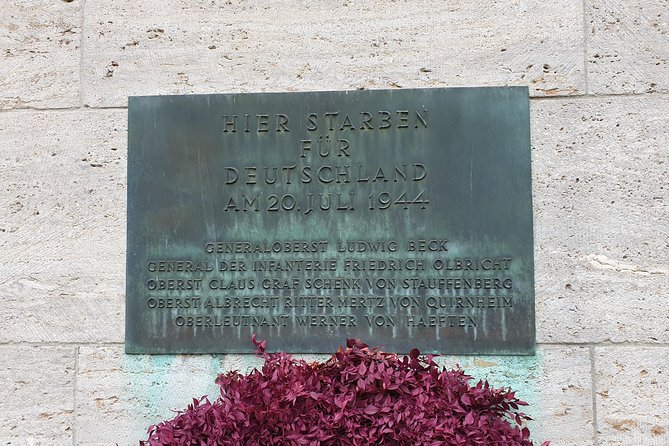
One of the first stops is the German Resistance Memorial Center, at the site linked to Operation Valkyrie. This is the part of the story many people miss, because Berlin is often remembered only for the regime’s power and the city’s destruction. Here you get the other side, the people and groups who acted against National Socialist dictatorship from 1933 to 1945.
What I like about this stop is the framing. You are not just told that resistance existed. You learn how individual people and small groups pushed back, even though the risks were enormous. If you care about why some ordinary lives still tried to change the outcome, this is a key moment.
There is also a built-in reminder that history is not only dates. It is choices. This center helps you see resistance as something deliberate, not just a vague idea that happened somewhere else.
T4 Memorial: the precursor you should understand
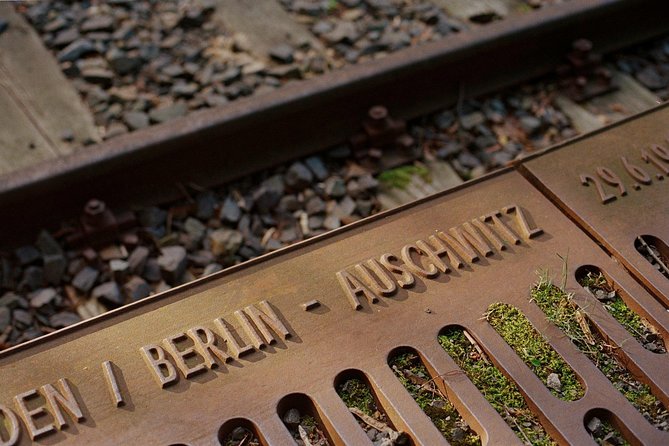
Next comes the T4 memorial for the victims of the Nazi euthanasia program. The scale is staggering: about 300,000 people were killed because of mental and physical disabilities or chronic diseases.
You also learn the meaning of T4. It refers to the office at Tiergartenstrasse 4, where the program was directed. And importantly, the memorial is presented as a precursor to the Holocaust, which helps connect the dots between early Nazi targeting and later mass genocide.
This stop can hit hard, because it is about dehumanization made into policy. I recommend giving it your full attention. Skip the habit of half listening while you scroll on your phone. Here, the details are part of how the story makes sense.
Anhalter Bahnhof ruins: when a station became a pipeline
The tour then moves to Anhalter Bahnhof, now mostly ruins destroyed in World War II. It used to be one of the biggest European train stations by the end of the 1800s. The reason it matters on this tour is what left from there in the 1942 to 1945 period: so-called death trains.
This stop changes the way you see infrastructure. A station looks neutral on a casual walk. On this visit, it becomes something more disturbing, a place where logistics served atrocity.
Even with the ruins, you can feel why this site is powerful. It turns the Nazi story from ideology into movement, schedules, and forced travel. If you have ever wondered how a system could function so efficiently, this location gives you a physical clue.
Same city, a different way to spend the afternoon:
- Berlin: Boat Tour Along the River Spree
★ 4.4 · 11,252 reviews - Discover Berlin Half-Day Walking Tour
★ 5.0 · 9,624 reviews - Berlin: Government District around the Reichstag Guided Tour
★ 4.7 · 8,447 reviews - Berlin: Reichstag, Plenary Chamber, Cupola & Government Tour
★ 4.6 · 8,422 reviews
Scheunenviertel and the Jewish Quarter: life, then erasure
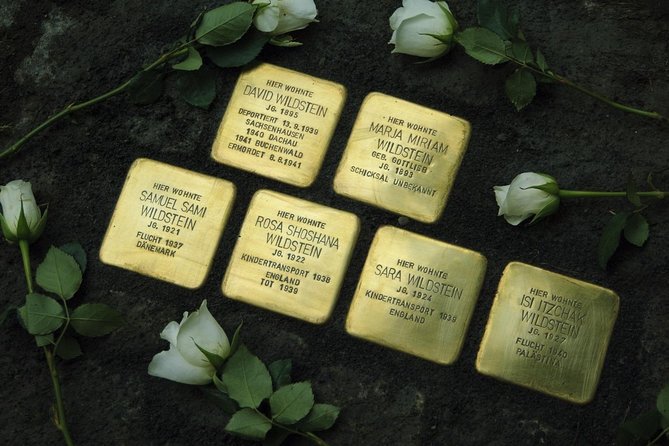
After the memorial-heavy stops, the tour shifts into Scheunenviertel, associated with the Jewish Quarter in Berlin. This is not a side note. It is the counterweight to everything before it.
You visit institutions connected to Jewish life, including the New Synagogue area and references to educational work tied to Moses Mendelssohn, a major figure in the modernization of Judaism. The idea is clear: you are not only learning about persecution. You are learning about community, culture, and daily life that was thriving before it was shattered.
The best way to experience this segment is to slow down and let the neighborhood context land. Berlin has layers, and this area helps you see how the city’s identity was shaped, then violently interrupted.
Otto Weidt’s Museum: the story of rescue in the workplace
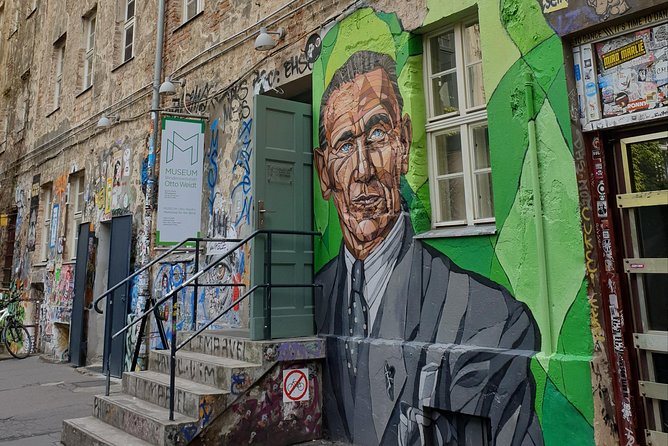
Another standout stop is Museum Blindenwerkstatt Otto Weidt. Otto Weidt is sometimes called the Schindler from Berlin, and the connection is explained through actions that helped Jewish workers survive.
Weidt hired Jewish employees, including blind and disabled people, and the museum highlights how work created a shield against deportation to Nazi extermination camps. That focus matters. It shows you survival was not only about escape plans. It could also be about protection, risk, and human decisions inside a factory system.
In a tour like this, it’s easy for everything to turn into doom. This stop adds something different. It does not erase the horror, but it shows the presence of resistance through everyday action.
If you like history with real people attached to it, you will probably find this one of the most memorable stops.
Neue Synagoge and the meaning of a 1866 landmark
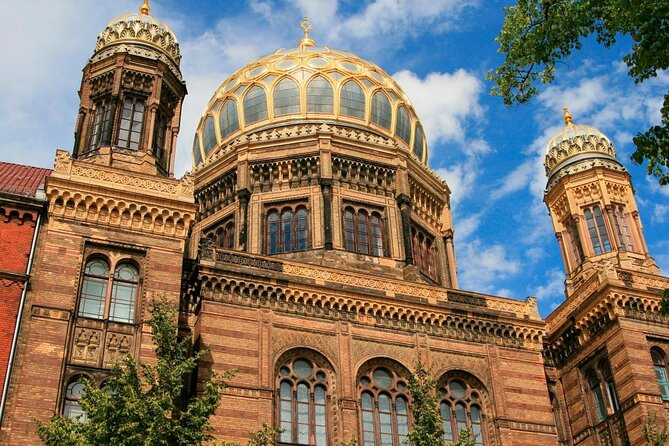
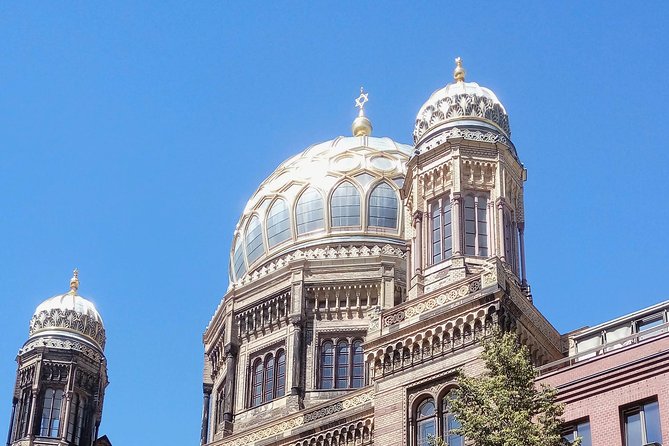
The tour also visits the Stiftung Neue Synagoge Berlin – Centrum Judaicum, tied to the New Synagogue. Built in 1866, it was designed to seat 3,200 people and was described as the largest Jewish place of worship in Germany at the time.
That scale tells you something important about Berlin in the 1800s. This was not a small, isolated community. It was large enough to build a landmark that acted like a public symbol.
On a tour focused on Nazism, this stop might feel like a change of pace. That is actually the point. You come to understand what was targeted and why. You also see why rebuilding and preservation are part of how memory keeps moving forward.
Old Jewish Cemetery: what was left, and what was erased
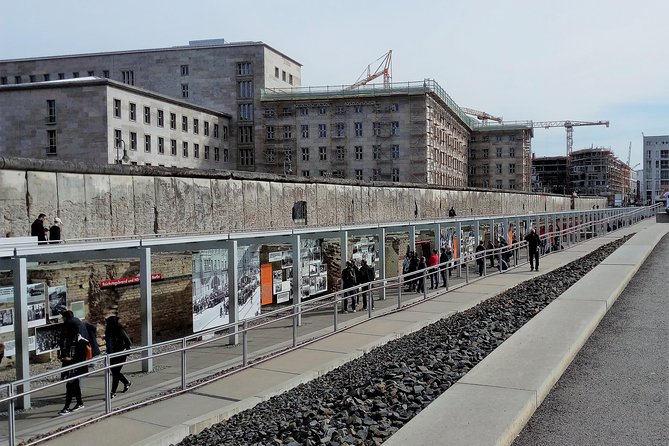
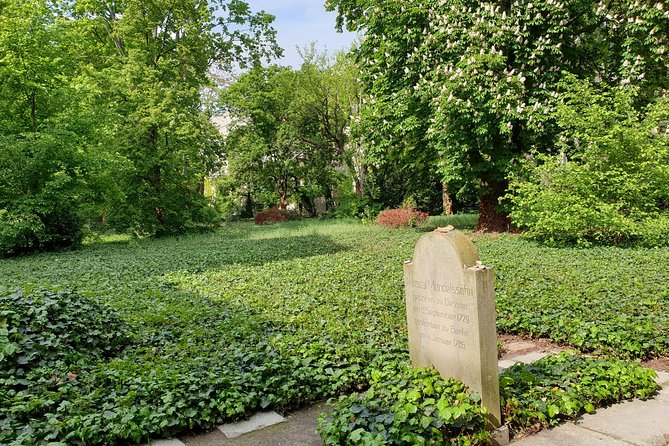
The final historical stop is the Alter Judischer Friedhof on Hamburger Straße, the Old Jewish Cemetery. It was once the resting place of many notable members of Berlin’s Jewish community and is described as the oldest recognizable cemetery in the inner city.
Today very little remains of the original site. During the Nazi period, the Gestapo destroyed the cemetery. Visiting it on a guided tour gives you a way to understand how loss can be literal, not symbolic.
I find cemetery stops are most impactful when you let them be quiet and physical. No rushing, no “next, next” mindset. Even if you only spend about 10 minutes there, use the time for reflection, then keep going with the story.
The pacing: 3 hours that keep moving, without feeling rushed
This is an approximately 3 hour experience with multiple short stops, not one long museum session. That format works well in Berlin because the distance between key Nazi-era and Jewish-history locations is manageable, but you still get variety.
The company also emphasizes that the tour runs in all weather conditions. So yes, you will want layers, and you should dress for rain, wind, and cold. A good pair of shoes matters here. The route mixes memorial spaces and neighborhood sidewalks.
The pacing is also part of why guides get praise for keeping people engaged. Short explanations, clear transitions, and enough time at each stop to understand why it matters. In the feedback, guides like Lorenzo and Federica are specifically singled out for professionalism and for staying on top of the group.
Value and cost: what you are paying for
At $27.87 per person for about 3 hours, you are paying mostly for the guide and the focused walk between key sites. The tour includes local taxes and a professional guide in Italian.
Another value point is the admission situation. The listed stops are marked as admission ticket free, so you are not layering extra museum fees on top of the tour price. You still handle your own transport to and from the route.
This makes the tour a strong option if you want context without building your own hit-or-miss schedule. Berlin is full of memorials. A guided route helps you connect them into one story, which is hard to do correctly on your own.
Practical tips for planning your Berlin transport day
Transportation is not included, so plan for public transit. The tour advice says to buy a day card for Berlin public transportation for zones AB.
You can reach the start area at Potsdamer Platz easily by transit, and the endpoint at Hackescher Markt also connects well. If you are doing more sightseeing after the tour, this layout is convenient.
Also note: food and drinks are not included. Bring a small water bottle and consider a quick snack plan for before or after, because memorial walking can take more energy than you expect.
Who this tour is for, and who might want to skip it
This tour is ideal if you want a structured, Italian language way to understand Nazi Germany in Berlin, with attention to both atrocities and Jewish community landmarks. If you are a first-time visitor who likes historical context instead of only architecture photos, this fits well.
It can also work for families with teenagers who can handle difficult topics. One of the strongest signs in the feedback is that older kids were guided through the subject in a way that supported understanding beyond books.
If you are very sensitive to themes of persecution and mass killing, you might want to read your own comfort level honestly. This is not a casual tour. It’s an educational walk through painful history.
Should you book Berlin during the Third Reich (Italian) with Vive Berlin Tours)?
I think you should book it if you want your Berlin history organized, human, and explained in Italian. The small group size, strong guide performance, and admission included for the key stops make it a good value.
Book it especially if you care about the full chain of events: the rise of the regime, resistance, the Nazi eugenics program, deportation logistics, and then the Jewish landmarks that show what was targeted. That pairing helps you avoid the common mistake of seeing Nazi-era sites as isolated facts instead of linked actions.
Skip it if you want light sightseeing or if you cannot handle memorial-based education right now. Otherwise, bring comfortable shoes, dress for the weather, and give the guide your attention. This tour works best when you treat it like a serious class, not like a wander.
FAQ
What language is the tour in?
The guide language is Italian. You will have a professional guide speaking Italian throughout the walk.
How long is the tour, and what are the start and end points?
The tour lasts about 3 hours. It starts at Potsdamer Platz 10, 10785 Berlin, Germany and ends at Hackescher Markt, 10178 Berlin, Germany.
Are admission tickets included?
Admission tickets for the listed stops are free, and the tour includes local taxes. The experience includes the professional guide, and you do not pay separate admission for those stops listed on the route.
Do I need public transport tickets?
Yes. Transportation to and from attractions is not included. You should buy a Berlin day card for public transportation for zones AB.
What should I bring for the walk?
The tour operates in all weather conditions, so dress appropriately. Wear comfortable shoes because you will be walking through multiple stops.
Is free cancellation available?
Yes. You can cancel up to 24 hours in advance for a full refund. If you cancel less than 24 hours before the start time, the amount paid is not refunded.
Newest Berlin reviews on the site
- Your ticket to The Wall Museum Berlin★ 3.0 · 60 reviews
- Rickshaw Tours Berlin – Groups of up to 16 people with several rickshaws★ 4.0 · 97 reviews
- Love and War in Berlin: Self-Guided Story Puzzle Walk★ 5.0 · 7 reviews
- Warnemuende Shore Excursion: Berlin Private Sightseeing Tour from Rostock★ 5.0 · 4 reviews
- eSIM for Germany and 34 European Countries★ 4.5 · 16 reviews
- Walking on the Wall: 3-Hour Tour in Berlin★ 4.5 · 34 reviews
- Karl-Marx-Allee Tour: Life and Architecture in East Berlin★ 5.0 · 19 reviews
- Warnemuende Shore Excursion: Private Berlin Tour★ 4.5 · 27 reviews
Berlin Tours, compared.

Reichstag, Dome and Government District Guided Tour
Read our review →
1-Hour City Tour by Boat with Guaranteed Seating
Read our review →

Government District around the Reichstag Guided Tour
Read our review →
Reichstag, Plenary Chamber, Cupola & Government Tour
Read our review →