
Reviewed · TICKETS
Berlin: Deutschlandmuseum – Flexible Entrance Ticket
German history plays like a movie, in rooms. I like the big 2,000-year sweep and the way interactive displays pair staged moments with period exhibits and interactive media. It is engaging and varied, but it may feel more visual than deeply academic if you are chasing a super detailed, all-the-way-down-the-rabbit-hole historical approach.
This is a Deutschlandmuseum entry built for people who want history they can feel, not just read. The museum sets up key turning points across twelve eras, and each one comes with exhibits from the time plus media that helps you connect the dots.
Plan to spend your one-day ticket at a comfortable pace. And if you are sensitive to crowds, go thoughtfully, because at least some visitors found it too full for their taste.
In This Review
- Key points before you go
- Germany’s 12-Era Timeline in Staged Rooms
- From Battle of Varus to 2006 Summer Fairy Tale: The Big Range
- Learning With Exhibits and Interactive Media (Not Just Panels)
- Price and Value: Is $30 Worth It?
- Plan Your Visit for a Smooth One-Day Experience
- Who This Deutschlandmuseum Ticket Fits Best
- Should You Book the Deutschlandmuseum Flexible Entrance Ticket?
- FAQ
- How much does the Deutschlandmuseum Flexible Entrance Ticket cost?
- How long is the ticket valid?
- Does the ticket include entry to the Deutschlandmuseum?
- Is there a way to skip the line?
- Do I need pre-registration to use the ticket?
- Can I cancel and get a full refund?
- Can I pay later?
- Is the museum wheelchair accessible?
- What kind of history does the museum cover?
- Is it suitable for kids?
Key points before you go
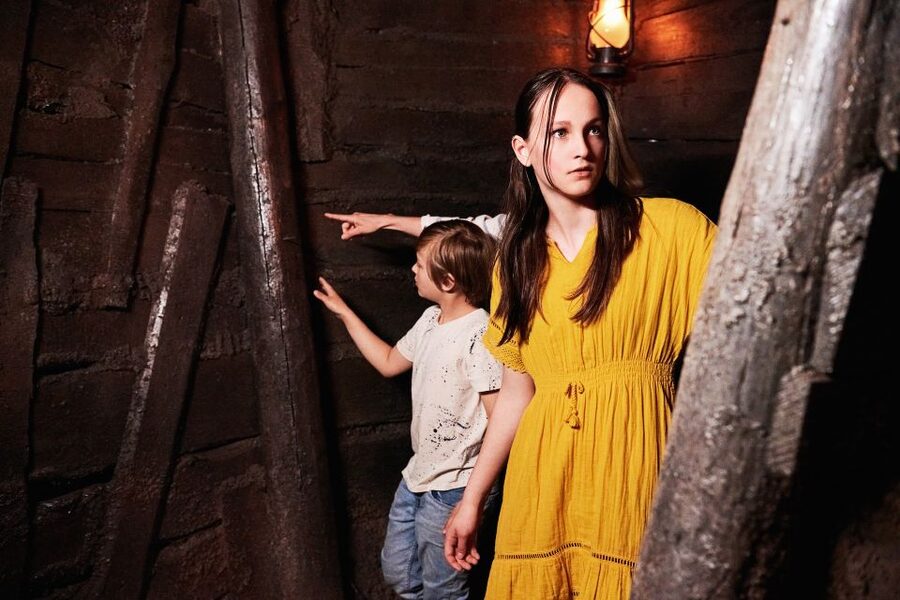
- 12 eras, one continuous German history story with staged turning points across a 2,000-year timeline
- Period exhibits plus interactive media, so you are not stuck staring at panels
- Designed for all your senses, not just your eyes
- Skip-the-line entry, including a separate entrance so you lose less time
- Family-friendly energy, with history explained in a straightforward way for kids
- Works well for a flexible day trip, since appearance is possible without pre-registration
Germany’s 12-Era Timeline in Staged Rooms

The Deutschlandmuseum experience is built around a simple idea: history sticks better when it is set up like real scenes, not just facts on a wall. Instead of a traditional gallery of artifacts with strict timelines, you move through detailed stagings of historical turning points. The goal is that you understand the flow of German history over a long stretch of time, while staying curious from room to room.
One thing I really appreciate about this style is that it gives you structure. You are not left wondering where to start or what you should be paying attention to. The museum organizes the story into twelve eras, and each era has its own theme and historical moment. That matters because German history can feel complicated fast. Breaking it into chapters makes it easier to keep your mental map intact.
You also get a blend of formats. Each depiction is paired with historical exhibits from the period, plus interactive media. That mix is the museum’s trick. Text can be slow. Objects can be abstract. Interactive elements can turn static information into something you can actively process.
Where this approach can disappoint is also clear. One visitor flagged that it does not go into historical depth everywhere. If your idea of a great history stop is exhaustive detail and scholarly nuance for every event, this may feel too “explained” and too staged. Think of it as a fun, approachable interpretation, not a full research library.
A practical tip: pace yourself like you are watching a series. If you try to sprint through all twelve eras, you will miss the point. Give yourself enough time to look at the period items and take a moment with the interactive parts, because that is where most of the learning is happening.
A few more Berlin walks and trips to compare
- Berlin: Reichstag, Dome and Government District Guided Tour
★ 4.7 · 18,288 reviews - Berlin: 1-Hour City Tour by Boat with Guaranteed Seating
★ 4.3 · 16,993 reviews - Berlin: TV Tower Standard Entrance Ticket
★ 4.4 · 15,883 reviews
From Battle of Varus to 2006 Summer Fairy Tale: The Big Range
The Deutschlandmuseum covers about 2,000 years of German history, which is a huge promise for any museum. It starts with early history tied to the Battle of Varus and goes forward through major turning points all the way to a modern reference point: the 2006 summer fairy tale. That span alone tells you the museum is trying to show continuity, change, and recurring themes across centuries.
What I like about a wide timeline is that you can spot cause and effect without needing a separate lecture. You see history as a sequence, not as isolated eras. When you encounter an earlier turning point and then later see how the story shifts, the museum’s layout helps you connect ideas.
At the same time, a very long timeline has a tradeoff. You cannot get the same depth on every century when you are moving across twelve eras. So set expectations. You are not here to master one tight topic. You are here to build a high-level understanding and leave with a stronger sense of how different periods link together.
If you want to get the most value, pick a couple “anchor” eras that you care about most. Spend extra time there, then let the other eras be your guided tour through the broad story. This keeps you from feeling like you are doing homework you did not sign up for.
And do not ignore the modern endpoint, even if you think you came for older centuries. One reason this museum feels like it works is that it tries to connect modern cultural moments back to the long arc of history. That can make the final rooms feel less random and more like the conclusion of a story you were already tracking.
Learning With Exhibits and Interactive Media (Not Just Panels)
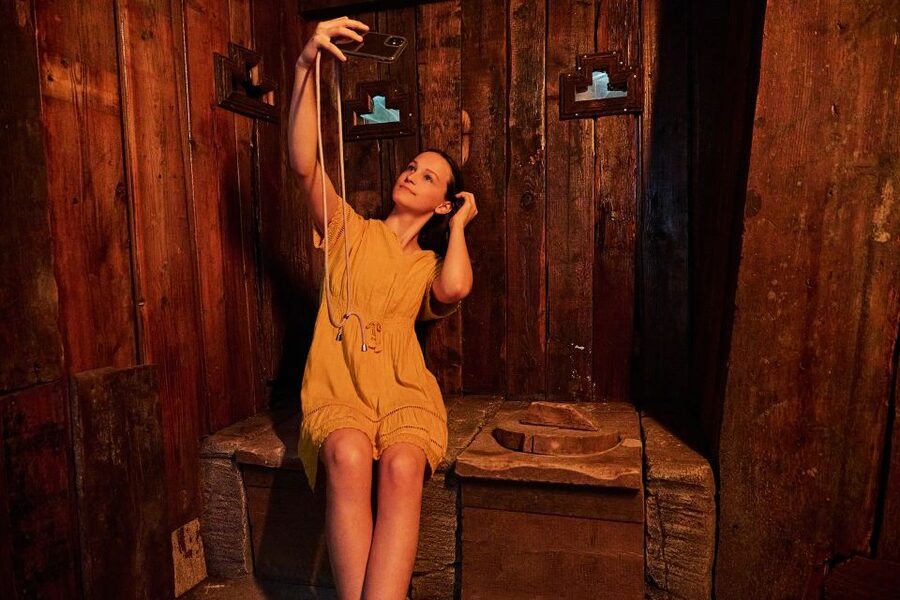
The museum’s pitch is about a “new way of knowledge transfer,” and the best way to understand that is to look at the format. You are not only reading. You are seeing period exhibits next to the themed scenes, and you are using interactive media to shape what you learn.
This is where the experience can feel especially fun. Several visitors highlighted the variety and the atmosphere, and one person specifically said history comes across easily and the idea works well even for children. That is a strong sign that the museum does not assume you already know all the background. It is built for understanding, not for testing.
Interactive media can do a few helpful things:
- It can slow you down in the right places, so you actually look at the period details
- It can explain connections between moments without a long lecture
- It can make abstract themes feel concrete through how the room is set up
You should still expect to do some thinking. This is not pure entertainment with no learning. But it does not feel like formal schooling either. The museum lands in the middle: a guided, playful history walkthrough.
Here is a smart way to use it: when you enter a new era, start by looking at the staging first. Then check the period exhibits. Only after that, use the interactive media. That order helps you build a mental picture before you get extra context.
One more thing to keep in mind is crowding. One review said it was too full and that took away from the fun. In practical terms, if you arrive during a busy window, interactive stations and shared viewing areas may feel harder to enjoy. If you are flexible, aim for a time when you can take your time without constantly squeezing past other people.
Price and Value: Is $30 Worth It?
At about $30 per person for a one-day flexible entrance ticket, the value depends on your goals. If you want a fast, engaging way to get a broad understanding of German history with interactive elements, this is priced like an experience ticket, not like a deep academic program. That fits what the museum is offering.
The ticket also includes some meaningful “time value” items:
- No waiting in line
- Skip-the-line via a separate entrance
- Flexible appearance without pre-registration
- Free cancellation up to 24 hours in advance for a full refund
That combination matters. When you are in Berlin, time is often the real cost. Cutting wait times and making the entry feel flexible turns your visit into a smoother part of the day, rather than a logistical project.
Now the balanced take: if what you want is an intensely detailed, event-by-event history lesson, the price may not feel justified, because you may end up wanting more depth than the museum can provide in its staged, broad format. On the flip side, if you value variety, clear explanations, and a setting that feels lively, the price feels easier to justify.
If you are visiting with kids, the value equation can improve fast. A visitor noted the atmosphere works well for children and that the history is explained in an easy way. That is often where an interactive museum format beats a standard museum visit.
Same city, a different way to spend the afternoon:
- Berlin: Boat Tour Along the River Spree
★ 4.4 · 11,252 reviews - Discover Berlin Half-Day Walking Tour
★ 5.0 · 9,624 reviews - Berlin: Government District around the Reichstag Guided Tour
★ 4.7 · 8,447 reviews - Berlin: Reichstag, Plenary Chamber, Cupola & Government Tour
★ 4.6 · 8,422 reviews
Plan Your Visit for a Smooth One-Day Experience
This is a 1-day ticket, and you can check availability for starting times. That means you should treat it like a time-window plan, not a “drop in whenever” ticket that has no structure. Still, it is flexible in the sense that you do not need pre-registration to appear.
For your on-the-ground strategy, I suggest you think of your day in three chunks:
- Arrive and settle into the first era without rushing
- Build momentum through a couple more eras while you are still fresh
- Finish on your preferred topics, not on whatever room is next in line
Because there are twelve eras, your experience will depend heavily on how you move. If you go too fast, the interactive media loses impact. If you go too slow, you may feel pressure to finish before you run out of time.
Also, pay attention to crowd conditions. One review mentioned it was too full, which suggests capacity can affect comfort. If you are traveling during a peak season or on a weekend, I would expect busier moments and plan to spend more time with spacing in mind.
Since the ticket includes a separate entrance and no line waiting, you can usually focus on entering and getting your bearings quickly, which makes the rest of the visit feel easier.
Who This Deutschlandmuseum Ticket Fits Best
This experience is a strong match if you want:
- A fun, varied way to learn German history across a long timeline
- An interactive museum where the format helps you understand, not just memorize
- A place that can work for children, at least based on how visitors describe the tone and clarity
- A broad overview rather than deep specialization
It may not be the best fit if you:
- Want scholarly, heavily detailed history for every turning point
- Get stressed by crowds and can get frustrated in busy spaces
- Prefer museums that focus on one era or one theme for deeper study
A helpful rule: if you like history best when it is shown as a story with scenes and objects, you will likely enjoy this. If you prefer strict, text-heavy academic presentations, you may find it too “explained” or too general.
Should You Book the Deutschlandmuseum Flexible Entrance Ticket?
I would book this if you are looking for an energetic, approachable German history experience in Berlin. The combination of staged turning points, period exhibits, and interactive media makes it easy to stay engaged across twelve eras. Add skip-the-line entry and a flexible one-day ticket, and it is the kind of plan that works even when your day schedule is still in flux.
Skip it, or at least consider alternatives, if you want intense historical depth on every topic, or if you know crowds will stress you out. In that case, you might prefer a smaller, more focused museum experience where you can linger without feeling rushed.
If your goal is to leave Berlin with a clearer sense of how German history moves across centuries, this is a practical, enjoyable ticket to put on your list.
FAQ
How much does the Deutschlandmuseum Flexible Entrance Ticket cost?
It costs about $30 per person.
How long is the ticket valid?
The ticket is valid for 1 day. You should check availability to see starting times.
Does the ticket include entry to the Deutschlandmuseum?
Yes, entry to the Deutschlandmuseum is included.
Is there a way to skip the line?
Yes. It includes no waiting in line and skip-the-line entry through a separate entrance.
Do I need pre-registration to use the ticket?
No. It offers flexible appearance without pre-registration.
Can I cancel and get a full refund?
Yes. Free cancellation is available up to 24 hours in advance for a full refund.
Can I pay later?
Yes. It is available as reserve now and pay later, so you can book your spot and pay nothing today.
Is the museum wheelchair accessible?
Yes, wheelchair accessible information is included.
What kind of history does the museum cover?
The museum presents 2,000 years of German history, using detailed stagings of historical turning points from twelve eras.
Is it suitable for kids?
Based on available feedback, the atmosphere can work well for children, and history is described as being explained in an easy way.
Newest Berlin reviews on the site
- Jetbike Berlin fun bike beer bike★ 5.0 · 3 reviews
- Karl-Marx-Allee Walking Tour: Berlin’s Socialist History★ 5.0 · 5 reviews
- Homeless on chic streets: city tour in Berlin from personal experience★ 4.6 · 3 reviews
- Berlin: Sachsenhausen Concentration Camp Guided Tour★ 4.9 · 42 reviews
- Historyof the Trans, Queer & Gay communities of Berlin tour★ 4.8 · 17 reviews
- Historic Berlin Pubs & History Tour★ 4.9 · 73 reviews
- Berlin: City Center Walking Tour★ 4.7 · 45 reviews
- Half-Day Berlin Highlights Segway Expedition★ 4.5 · 61 reviews
Tickets, compared.


Munich Hop-On Hop-Off Tour: 1-Day or 2-Day Ticket
Read our review →