Reviewed · BERLIN TOURS
Berlin and National Socialism: Berlin under Nazism
Berlin tells its Nazi story street by street. This 4 hour Spanish guided tour strings together key buildings and memorials so you understand how the Third Reich left its mark, from official power to the places of mass murder. Third Reich Berlin is the theme, and the route helps it click fast.
I love that it rolls up several major sights with admission included, so your time does not get wasted on ticket lines. I also love the teaching style I keep seeing credited to guides like Júlia, Helena, and Celia, with careful explanations and extra visuals such as photos and videos to place you in the moment.
One thing to plan for: this is not a light stroll. It is a heavy subject, and with several outdoor stops, weather can turn the comfort level down fast, so dress for cold or rain and settle in for a respectful pace.
In This Review
- Key highlights in this Berlin under Nazism experience
- Why Berlin under Nazism works better than random sightseeing
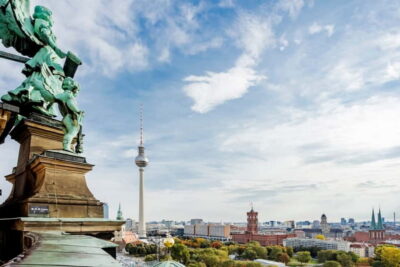
- Getting oriented at Berlin TV Tower before the history starts
- Bundestag stop: from ruins to modern democracy
- Memorial to the Sinti and Roma Victims of National Socialism
- Soviet Memorial Tiergarten: war dead and a different kind of memory
- Tempelhof: an aviation hub you can still feel
- Topography of Terror: the system behind terror
- Fuhrerbunker area: the final chapter location
- Ending at the Memorial to the Murdered Jews of Europe
- Price and time value: what $25.54 buys you
- Who should book this Berlin under Nazism tour
- Should you book it
- FAQ
- How long is the Berlin under Nazism tour?
- What language is the guide?
- How many travelers are in the group?
- What is included in the price?
- Is the AB transport ticket included?
- Where does the tour start and what time?
- Where does the tour end?
- Do I get a mobile ticket?
- Is it near public transportation?
- Can I cancel for free?
Key highlights in this Berlin under Nazism experience
- Bundestag after reunification: see how the building’s modern role ties into Germany’s later reckoning, including the Foster led reconstruction that finished in 1999
- Sinti and Roma genocide memory: a focused stop at the memorial for Porraimos, honoring the 220,000 to 500,000 people murdered by Nazi persecution
- Soviet war memorial context: the Soviet Memorial Tiergarten marks the war dead, especially about 80,000 Soviet soldiers who died during the Battle of Berlin in April and May of 1945
- Topography of Terror museum stop: an indoor and outdoor history museum designed to explain the system behind terror, not just the aftermath
- Tempelhof Airport in the bigger story: the route pauses at Tempelhof, including its importance as a major early 20th century aviation hub
- Fuhrerbunker area: you visit the area associated with Hitler’s refuge during his last hours alive, then end at a major memorial for the murdered Jews of Europe
Why Berlin under Nazism works better than random sightseeing
If you try to see Berlin in any order, the story can feel like a pile of disconnected landmarks. This tour fixes that. You move through sites connected to WWII and the Nazi period, and the guide frames what you see in a clear sequence so the city starts to make sense.
For me, the value is not just that you hit famous stops. It is that the tour is built to explain cause and consequence. You start where modern Germany gathers in public life, then you work your way through memorials for victims, war memory, and places tied to the Nazi state. By the end, the route lands at the Memorial to the Murdered Jews of Europe, which gives the whole morning a sober final focus.
You get a Spanish speaking guide, and the feedback on specific guides keeps sounding similar: precise context, respect for what happened, and a teaching approach that actually helps you hold onto details. People credit guides like Júlia and Celia for making tough history feel understandable without making it feel casual.
The time block matters too. At about 4 hours, you can do a lot without turning the day into a marathon. And with a maximum group size of 25 travelers, it feels easier to ask questions and keep your place in the story.
A few more Berlin walks and trips to compare
- Berlin: Reichstag, Dome and Government District Guided Tour
★ 4.7 · 18,288 reviews - Berlin: 1-Hour City Tour by Boat with Guaranteed Seating
★ 4.3 · 16,993 reviews - Berlin: TV Tower Standard Entrance Ticket
★ 4.4 · 15,883 reviews
Getting oriented at Berlin TV Tower before the history starts
The meeting point is the Berlin TV Tower, at Panoramastraße 1A, 10178 Berlin. The tour starts at 10:00 am and ends at the Memorial to the Murdered Jews of Europe, at Cora-Berliner-Straße 1, 10117 Berlin.
Starting at the TV Tower is smart. Even if you are new to Berlin, you can use that as a landmark and get your bearings before the route turns serious. It also sets up the day as a linear experience rather than a scattered hop.
You should also know this tour is delivered with a mobile ticket, so you are not scrambling for paper. And it is described as near public transportation, which is helpful if you want to connect it to the rest of your itinerary.
One small but practical tip: wear shoes you can stand in for a while. The route includes multiple stops, some of them outdoor. When the weather is cold or wet, your feet become the main character of the story.
Bundestag stop: from ruins to modern democracy
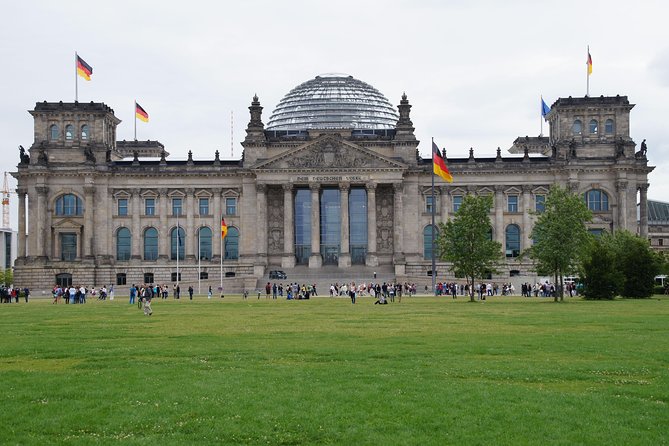
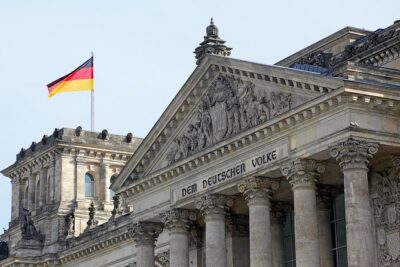
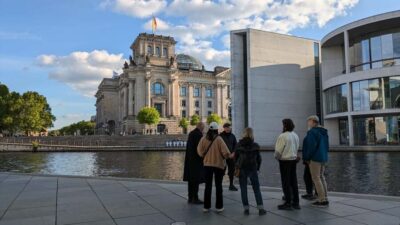
The first major building stop is the Bundestag. This is not the Nazi era scene itself. Instead, it is the lesson about what comes after. The building you see today is part ruin, part recovered symbol. It was protected from the elements and partially renovated in the 1960s. After German reunification on 3 October 1990, it went through a full reconstruction led by architect Norman Foster, finished in 1999. Since then, it is again the meeting place of the German parliament.
That timeline is the point. You are not just looking at a structure. You are seeing how Germany reworked its political center after reunification. It is a reminder that historical periods do not end neatly, they get replaced, argued over, and rebuilt.
A practical reason this stop works early: it gives you a framework for the rest of the tour. As you move from memorial to memorial, you start to understand the difference between official power, propaganda, and the long public memory of victims.
Memorial to the Sinti and Roma Victims of National Socialism
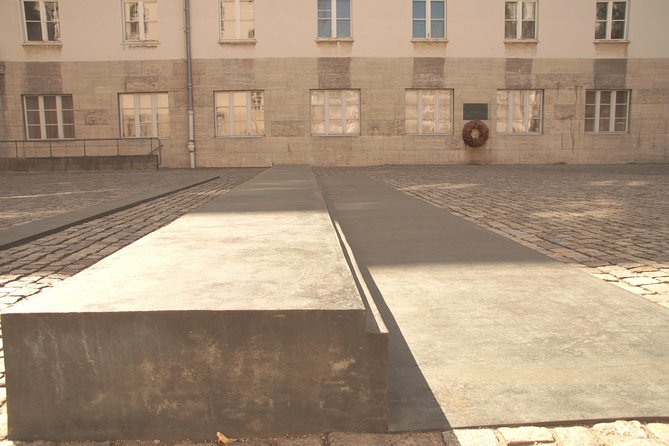
Next comes a memorial that forces you to face a group whose suffering is often less discussed. The route stops at the Memorial to the Sinti and Roma Victims of National Socialism, dedicated to the memory of people murdered in Porraimos, within the Nazi genocide of the European Sinti and Roma peoples. The figures given here are 220,000 to 500,000 murdered.
This is a short stop, but it is deliberately placed. It changes the tone of the tour from institutions and wartime settings into the human cost. A good guide will help you read the memorial in a way that connects name and identity to what the Nazi state did.
If you care about a complete picture of WWII crimes, you will appreciate that this stop is explicit. It is not a vague mention of victims. It is a dedicated place of remembrance with a clearly stated purpose.
Same city, a different way to spend the afternoon:
- Berlin: Boat Tour Along the River Spree
★ 4.4 · 11,252 reviews - Discover Berlin Half-Day Walking Tour
★ 5.0 · 9,624 reviews - Berlin: Government District around the Reichstag Guided Tour
★ 4.7 · 8,447 reviews - Berlin: Reichstag, Plenary Chamber, Cupola & Government Tour
★ 4.6 · 8,422 reviews
Soviet Memorial Tiergarten: war dead and a different kind of memory
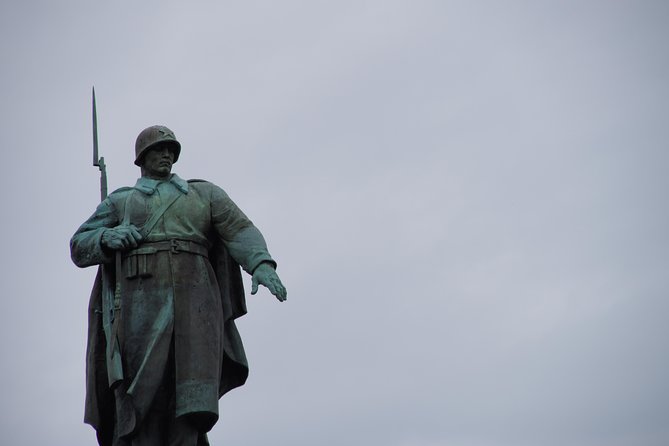
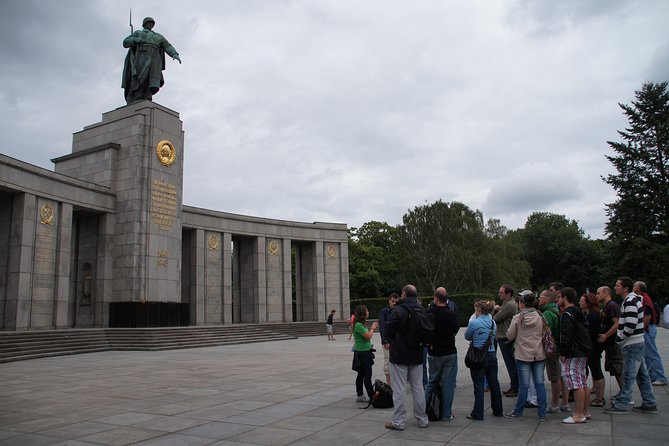
Then you step into the Soviet Memorial Tiergarten. This is one of several war memorials erected by the Soviet Union to commemorate war dead, with special attention to the 80,000 soldiers of the Soviet Armed Forces who died during the Battle of Berlin in April and May of 1945.
What I like about including this stop is that Berlin’s WWII memory does not belong to only one story. You see how different nations commemorate losses, and you also see how those choices shape what later generations feel is most important.
This stop is also a reality check: the city is not just about Nazi crimes. It is also about the war’s brutality and the competing layers of memorialization that remain visible in Berlin.
Tempelhof: an aviation hub you can still feel
The route then pauses at Tempelhof. The big detail here is its early 20th century role. Tempelhof Airport was one of the most important airports at the start of that century, and in 1926 it had ten flights daily, making it the largest airport in Europe.
Why does this belong on a Nazi era focused tour? Because Berlin in that period was not only about ideology and violence. It was also about movement, logistics, and the infrastructure that makes power possible. Even without going deep into every political detail, standing at a place like Tempelhof helps you visualize how modern systems grew and how a big city runs on transportation.
If you like connecting the dots between everyday infrastructure and historical events, you will enjoy this stop. If you are expecting only the most directly tied Nazi sites, this one can feel more atmospheric than explicit. But that contrast is also useful.
Topography of Terror: the system behind terror
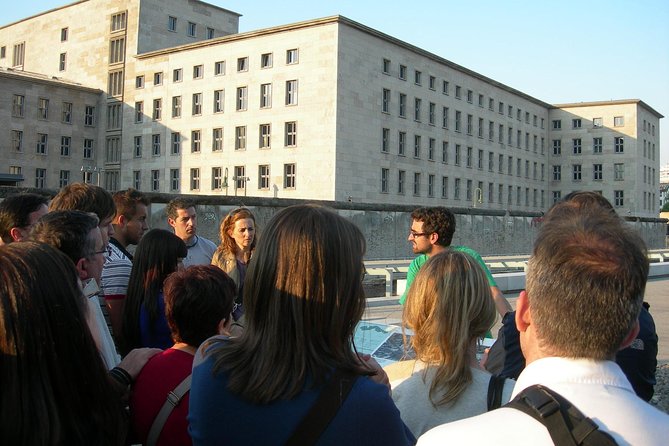
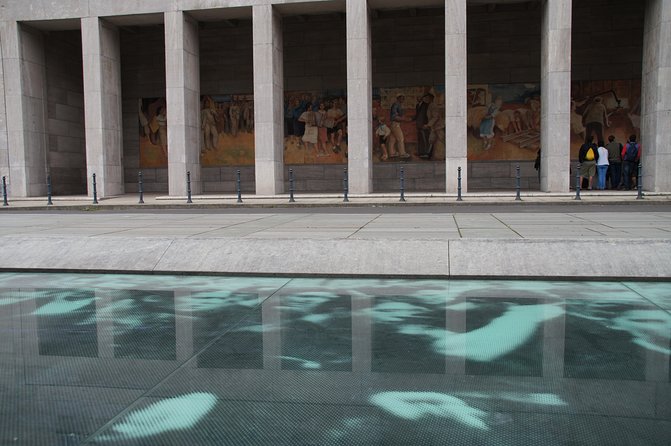
The tour heads to Topography of Terror, a museum in Berlin described as both indoor and outdoor, focused on history. This is an admission included stop, and it is one of the most direct ways to understand what happened beyond the headlines.
A good history museum works differently than a memorial. Memorials often ask you to remember. Museums explain how and why within an organized space. With Topography of Terror, you get that blend, plus the indoor and outdoor format means you are not stuck staring at one wall of information.
In the feedback about guides like Júlia and Helena, a recurring theme is how well they turn the location into something you can picture. People specifically mention the guide using photos and videos to help you place yourself during the period. That matters here. The museum topic can be overwhelming, so visuals and clear framing help you follow the logic without zoning out.
Practical note: museum stops can slow the pace because you tend to read more. Plan to give yourself mental space here. This is not a quick photo stop.
Fuhrerbunker area: the final chapter location
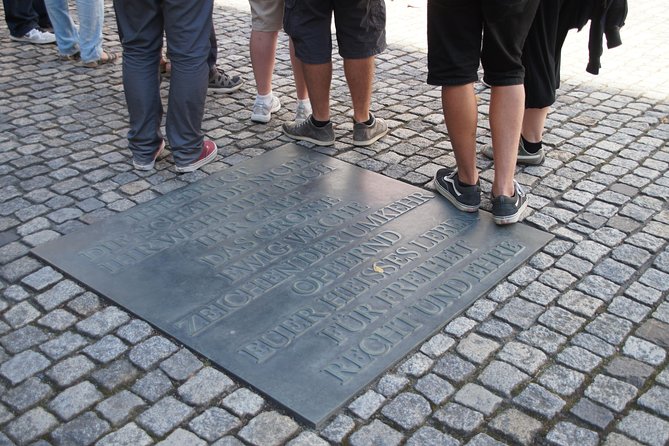
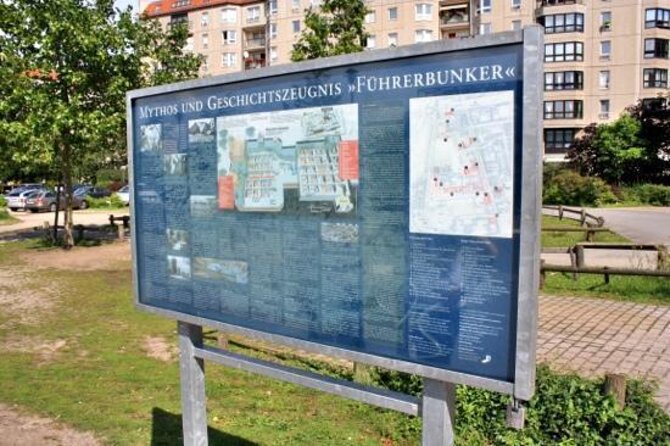
After learning the system behind terror, the tour moves to the Fuhrerbunker area. The description is direct: you will discover the area where Hitler had his refuge during his last hours alive.
This is one of those stops where the distance between history and the real geography is uncomfortable. A guided explanation helps you understand why the location matters without turning it into a thrill ride. You are there for context, not spectacle.
If you have been carrying only broad ideas about WWII, this stop can feel like a turning point. It brings the narrative down to the endgame, the final hours, and it makes the Nazi regime feel less abstract.
Still, it is only one piece of a larger story. That is why the route does not end here. It continues to a major memorial for victims, so the emotional arc stays anchored in remembrance.
Ending at the Memorial to the Murdered Jews of Europe
The tour concludes at the Memorial to the Murdered Jews of Europe. This is a powerful ending, because it shifts your attention from the site tied to Hitler’s refuge to the victims who never returned.
The best part of ending at a memorial is that you do not leave the tour feeling like you learned only about perpetrators. Even when you visit places associated with Nazi power, the route’s final focus keeps responsibility and human loss front and center.
If you still have energy after the tour, use the ending point to keep the day quiet. You can also use it as a starting location for other nearby history in Berlin, but only if you feel mentally ready.
Price and time value: what $25.54 buys you
The price is $25.54 per person, and the tour lasts about 4 hours. That is relatively strong value for a guided, multi stop route that includes admission tickets. On top of that, the group maximum is 25, which usually helps the experience feel less like a herd.
A plain way to think about value: you are paying for (1) a Spanish speaking guide who explains context, and (2) access where admissions are included. Even if some stops have free entry, the overall structure still saves you time and decision making. You do not have to figure out which places are ticketed on the spot.
One more value angle: history-heavy tours become cheaper in the long run when you leave with understanding, not just photos. If you are the type who likes to know what a building meant at the time, this format tends to pay off.
Also note the average booking timing is about 36 days in advance. If you want a particular guide or you travel in a busy season, book earlier.
Who should book this Berlin under Nazism tour
This is a good fit if you want Berlin history tied to the Third Reich in a guided, structured way. It is also ideal if you like seeing several key locations in one go, instead of piecing it together yourself.
I would also recommend it if you care about correct victim representation beyond the most obvious WWII narrative. The stop for the Sinti and Roma victims of National Socialism is a meaningful part of that.
Where you might think twice: if you are sensitive to intense topics or you are not up for outdoor time in uncertain weather. The subject matter here is tragic, and the route is designed to treat it seriously.
If you speak Spanish or you want a Spanish guided explanation, that is a big plus. Several guides credited in the feedback, including Júlia, Helena, and Celia, are described as professional and very attentive in their explanations.
Should you book it
Yes, I think you should book this if your goal is understanding, not just pictures. The route gives you a coherent spine: power and political rebuilding at the Bundestag, victim memorials for the Sinti and Roma and the murdered Jews of Europe, war memory through the Soviet Memorial Tiergarten, and deeper explanation via Topography of Terror, capped by the Fuhrerbunker area.
Book it particularly early in your Berlin trip if you can. When you do this first, later visits to other historical sites tend to feel clearer because you already have a framework.
And if you do book, show up ready for cold weather and heavy emotions. Bring a jacket, keep your phone charged for photos you do take, but prioritize listening. A tour like this is at its best when you give it your full attention.
FAQ
How long is the Berlin under Nazism tour?
The duration is about 4 hours.
What language is the guide?
The tour includes a Spanish speaking guide.
How many travelers are in the group?
The maximum group size is 25 travelers.
What is included in the price?
Admission tickets are included.
Is the AB transport ticket included?
No, the AB transport ticket is not included.
Where does the tour start and what time?
It starts at Berlin TV Tower (Panoramastraße 1A, 10178 Berlin) at 10:00 am.
Where does the tour end?
It ends at the Memorial to the Murdered Jews of Europe (Cora-Berliner-Straße 1, 10117 Berlin).
Do I get a mobile ticket?
Yes, the tour uses a mobile ticket.
Is it near public transportation?
Yes, it is near public transportation.
Can I cancel for free?
Yes. You can cancel up to 24 hours in advance for a full refund. If you cancel less than 24 hours before the start time, you would not get a refund.
Newest Berlin reviews on the site
- Your ticket to The Wall Museum Berlin★ 3.0 · 60 reviews
- Rickshaw Tours Berlin – Groups of up to 16 people with several rickshaws★ 4.0 · 97 reviews
- Love and War in Berlin: Self-Guided Story Puzzle Walk★ 5.0 · 7 reviews
- Warnemuende Shore Excursion: Berlin Private Sightseeing Tour from Rostock★ 5.0 · 4 reviews
- eSIM for Germany and 34 European Countries★ 4.5 · 16 reviews
- Walking on the Wall: 3-Hour Tour in Berlin★ 4.5 · 34 reviews
- Karl-Marx-Allee Tour: Life and Architecture in East Berlin★ 5.0 · 19 reviews
- Warnemuende Shore Excursion: Private Berlin Tour★ 4.5 · 27 reviews
Berlin Tours, compared.
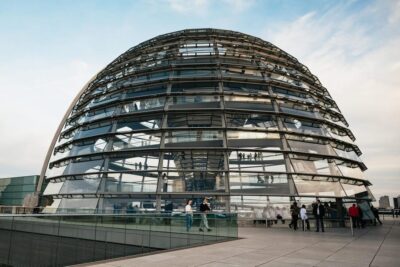
Reichstag, Dome and Government District Guided Tour
Read our review →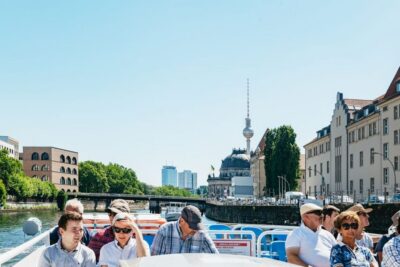
1-Hour City Tour by Boat with Guaranteed Seating
Read our review →
Government District around the Reichstag Guided Tour
Read our review →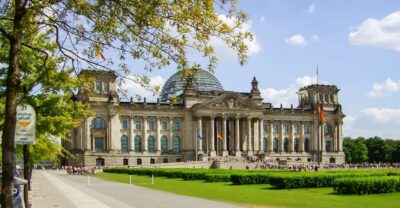
Reichstag, Plenary Chamber, Cupola & Government Tour
Read our review →