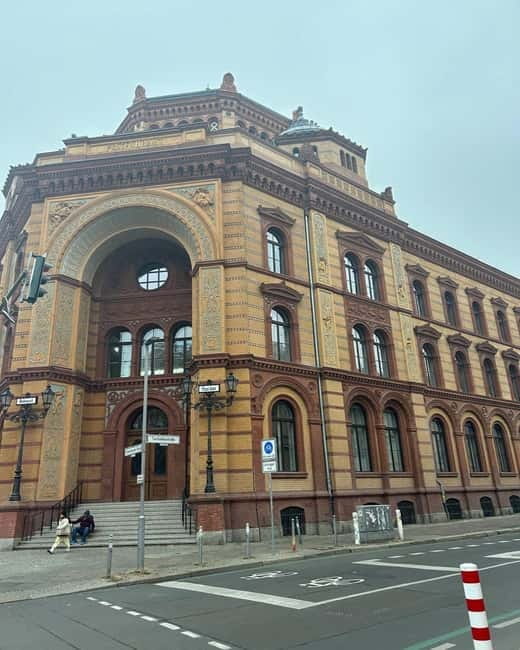
Reviewed · BERLIN TOURS
Alternative tour of Berlin in Spanish
Alternative Berlin has sharp edges and heart. This Spanish guided tour threads together Oranienburger Straße, Hackesche Höfe courtyards, and the street life of Kreuzberg and Kotti, with stops that feel like Berlin beyond the postcards.
I especially like how the walk mixes design, street art, and culture in a tight loop. You’ll get a strong sense of Kotti and Kopi districts, including the story behind Turkish hip hop and the punk, anarchist, Marxist energy in the streets. The only real drawback is that the tour runs at a fast pace, so come ready to walk.
In This Review
- Key points before you go
- Meeting at Pariser Platz, then setting the tone near Brandenburg Gate
- Oranienburger Straße and Hackesche Höfe: old Berlin, in real space
- Kotti district: punk, halal, and the Turkish hip hop origin story
- Kreuzberg streets and Victor Ash’s Astronaut Cosmonaut graffiti
- Baumhaus and a sustainable pause in central Berlin
- The Kopi district: punk culture, anarchism, and Marxism
- Yaam Market: African food stalls and possible live reggae
- Oranienstraße to East Side Gallery: finishing with Berlin’s most famous wall
- Price and getting value from a 3-hour alternative Berlin route
- Who should book this alternative Berlin tour
- Should you book this tour?
- FAQ
- What language is the guided tour in?
- How long is the tour?
- Where does the tour start and where does it end?
- What is included in the price?
- What is not included?
- Do I need to buy a transit ticket for AB zones?
- Is there free cancellation and flexible payment?
Key points before you go
- Oranienburger Straße connects Berlin’s Jewish past to today’s changing streets
- Hackesche Höfe gives you a close-up look at an art nouveau courtyard complex
- Kotti district is where punk bars, clubs, and standout halal restaurants share the same blocks
- Kreuzberg graffiti stop includes Victor Ash’s Astronaut Cosmonaut with a war-related twist
- Kopi district plus Yaam Market brings you punk culture and African food stalls into one route
Meeting at Pariser Platz, then setting the tone near Brandenburg Gate
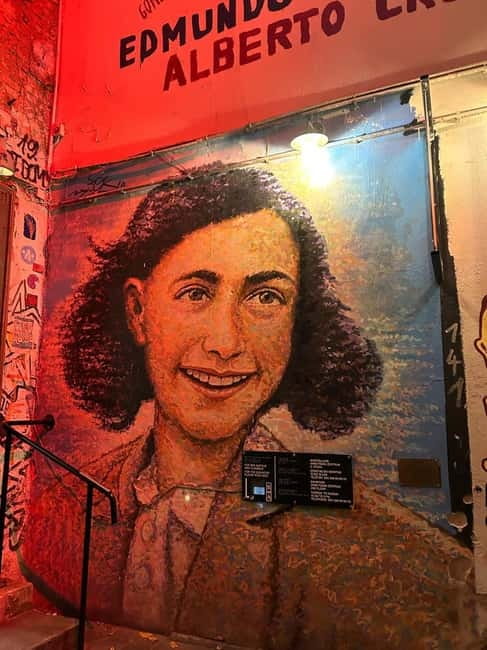
The tour starts at Pariser Platz, right in front of the Academy of Arts. Since Brandenburg Gate sits at Pariser Platz, you’re basically starting where Berlin likes to pose for photos, then quickly moving away from the official postcard path.
You’ll begin the guided visit at 3:00 pm, and that timing matters. Berlin can feel like a long day once you start moving, so this is a smart choice if you want a focused, high-information route without eating your whole afternoon.
This is also a Spanish speaking experience, so plan on following the guide closely. If you’re not fluent, it can still work, but you’ll enjoy it more if you’re comfortable with Spanish explanations, plus any bits shown in the original language.
A few more Berlin walks and trips to compare
- Berlin: Reichstag, Dome and Government District Guided Tour
★ 4.7 · 18,288 reviews - Berlin: 1-Hour City Tour by Boat with Guaranteed Seating
★ 4.3 · 16,993 reviews - Berlin: TV Tower Standard Entrance Ticket
★ 4.4 · 15,883 reviews
Oranienburger Straße and Hackesche Höfe: old Berlin, in real space
After you get your bearings near Brandenburg Gate, the route moves along Oranienburger Straße. This street is tied to the Jewish community in the late 19th and early 20th centuries, and the tour uses the walking route to keep that context from feeling abstract.
What I like here is that you’re not only hearing facts. You’re seeing how the city’s layout and architecture create the mood of different eras, even when modern life is happening all around.
Next comes Hackesche Höfe, a memorable art nouveau courtyard complex. Courtyards like this are the kind of Berlin detail that’s hard to spot on your own. Here, the guide helps you notice the scale, the design, and why these interior spaces matter in a city built on layers.
Practical note: courtyards often mean you’ll be switching between open street and enclosed indoor outdoor-feeling spaces. Bring a layer. Weather can change fast, and those courtyards can feel cooler than the sidewalk.
Kotti district: punk, halal, and the Turkish hip hop origin story
Then the tour shifts into one of Berlin’s most alternative and multicultural areas, the Kotti district. This is where street-level Berlin gets loud in a good way. You’ll see the kind of punk bars and clubs that don’t try to impress with polish, they just create a distinct atmosphere.
One specific advantage: the walk calls out some of the best halal restaurants in the area. That’s valuable because it helps you connect the sightseeing to actual, useful food plans later.
The guide also brings in a detail that makes Kotti feel more than a generic “cool neighborhood.” You’ll learn that Turkish hip hop was born in this neighborhood. That idea changes how you read the streets. Instead of treating it like nightlife geography, you start seeing it as creative infrastructure.
A possible consideration: Kotti can feel intense, and the tour keeps a quicker rhythm. If you’re the type who likes to stop and stare for 30 minutes, you may need to adjust expectations and just absorb in short bursts.
Kreuzberg streets and Victor Ash’s Astronaut Cosmonaut graffiti
From Kotti, the route moves into Kreuzberg, another district where Berlin mixes identities, styles, and political edges. Here you’re not only exploring, you’re reading the city like a collage.
A standout stop is the Astronaut Cosmonaut graffiti by Victor Ash. The tour highlights that it has a surprising relationship to war. That’s the kind of street art connection that stays with you, because it makes you ask why this image, why this symbol, and why it lands in this particular part of the city.
From a practical point of view, graffiti stops are also great for photos, but you get more value if you keep your curiosity switched on. Spend a minute longer than you think you need. The explanation is what turns a wall from background noise into a meaningful marker.
Then you’ll continue through areas the city clearly uses as social stages, including Oranienstraße, a favorite place among young people. The route also includes a walk through Bethaniendamm, which feels more intimate and residential than the main street energy.
Same city, a different way to spend the afternoon:
- Berlin: Boat Tour Along the River Spree
★ 4.4 · 11,252 reviews - Discover Berlin Half-Day Walking Tour
★ 5.0 · 9,624 reviews - Berlin: Government District around the Reichstag Guided Tour
★ 4.7 · 8,447 reviews - Berlin: Reichstag, Plenary Chamber, Cupola & Government Tour
★ 4.6 · 8,422 reviews
Baumhaus and a sustainable pause in central Berlin
As the tour continues, you’ll arrive at Baumhaus, described as a sustainable space in the heart of the capital. This stop adds a different texture to the day. After the density of neighborhoods and the loud signals of street art and nightlife, Baumhaus gives you a moment to reset your brain.
I like that the tour doesn’t just move in straight lines from famous to famous. It includes a practical kind of “what Berlin is choosing now” stop, even if you don’t go inside for long.
If you’re planning your own evening afterward, this is a smart timing point. You’ll finish the tour later at East Side Gallery, but Baumhaus can also help you decide what kind of Berlin you want next, social, artistic, or community-minded.
The Kopi district: punk culture, anarchism, and Marxism
Now you reach the Kopi district, described as a place where punk culture, anarchism, and Marxism converge. That’s a big claim, but it makes sense in Berlin once you pay attention to the vibe of certain streets and venues.
This part of the tour works best if you’re open to political and cultural context. Even if you don’t share the ideology, it helps you understand why the aesthetics and the energy exist. Berlin has a way of turning ideology into visible street culture, and Kopi is one of those places where you can feel it.
From what the tour emphasizes, the goal isn’t to lecture you. It’s to connect beliefs to physical space, so you can recognize the “why” behind what you see.
Again, pace matters. This walk is designed to cover a lot in a short window. You can still enjoy it fully, but treat it like an active tour, not a casual amble.
Yaam Market: African food stalls and possible live reggae
The route then heads to Yaam market, where you can explore African food stalls. This stop adds something practical: it’s a chance to taste or at least plan your next meal using the guide’s local knowledge.
The tour notes that if you’re lucky, you may even witness a live reggae concert. I wouldn’t plan your whole day around that, but it’s exactly the kind of bonus that makes a short guided walk feel like a live show rather than a checklist.
If you want to get the most out of Yaam, keep an eye on smell and crowd flow. Market food is often best when you follow what looks freshly prepared rather than what looks most photo-friendly. And if you’re not eating, you can still enjoy the atmosphere and use it as a reference point for your own street food hunt later.
Oranienstraße to East Side Gallery: finishing with Berlin’s most famous wall
The tour finishes at East Side Gallery. That ending choice is smart because it gives you a clear visual anchor for the rest of the day. You see street-level alternative culture earlier, then you close with something globally recognized.
East Side Gallery can be busy, but it works well as a final stop because the guide has already given you context for how Berlin communicates through art, whether it is graffiti, courtyard spaces, or political expression.
Once you reach the finish point, you’re at a good spot to keep going on your own. If you still have energy, this is a logical place to connect your alternative walk to a more iconic Berlin narrative, without losing what you learned earlier.
Price and getting value from a 3-hour alternative Berlin route
At $23 per person for a 3-hour tour, the math is usually straightforward: you’re paying for a Spanish speaking guide and a structured route through neighborhoods you might not choose on your own.
The included part is simple: a tour guide in Spanish. You’ll still need local transit for part of the day, because the tour does not include the public transportation ticket. The listed cost for the transit ticket is 7 € per person for AB zones.
Is it worth paying for transit on top? For a tour like this, yes, because the value comes from how it strings together distant areas like Oranienburger Straße, Kotti, Kreuzberg, and the finish at East Side Gallery into one coherent experience. Walking everything would take far longer and would likely reduce the quality of what you learn at each stop.
I’d also call out the mental value of the pacing. When a guide keeps things moving, you get more context per hour. It’s intense, but that intensity is part of the appeal if you want Berlin knowledge fast.
Who should book this alternative Berlin tour
This tour fits you best if you want more than the standard highlights. If you like street art with meaning, neighborhood culture beyond monuments, and real talk about how Berlin’s communities shaped music and politics, this is a strong match.
It’s also a good choice if you’re traveling on a shorter schedule and want a dense, guided route you can build the rest of your day around. Three hours is long enough to feel like you toured, but short enough to still add your own plans afterward.
If you’re sensitive to walking intensity, go in with eyes open. The tour runs quickly, so wear comfortable shoes and keep breaks short.
Should you book this tour?
Yes, if your Berlin goal includes alternative neighborhoods like Kotti, Kreuzberg, and the Kopi district, and you want the stories behind what you see, from Hackesche Höfe courtyards to Victor Ash’s Astronaut Cosmonaut graffiti.
I’d skip it only if you want a slow, relaxed sightseeing day with lots of time to wander on your own. This one is guided, active, and fairly packed with stops. You’ll love it most if you can match that pace and enjoy learning in motion.
FAQ
What language is the guided tour in?
The tour guide is Spanish.
How long is the tour?
The duration is 3 hours.
Where does the tour start and where does it end?
It starts at Pariser Platz, in front of the Academy of Arts, and it finishes at East Side Gallery.
What is included in the price?
The price includes a tour guide in Spanish.
What is not included?
A public transportation ticket for AB zones is not included, and it is listed as 7 € per person.
Do I need to buy a transit ticket for AB zones?
Yes. The tour does not include the AB zones public transportation ticket, which is listed at 7 € per person.
Is there free cancellation and flexible payment?
Yes. You can cancel up to 24 hours in advance for a full refund, and you can reserve now and pay later.
Newest Berlin reviews on the site
- Jetbike Berlin fun bike beer bike★ 5.0 · 3 reviews
- Karl-Marx-Allee Walking Tour: Berlin’s Socialist History★ 5.0 · 5 reviews
- Homeless on chic streets: city tour in Berlin from personal experience★ 4.6 · 3 reviews
- Berlin: Sachsenhausen Concentration Camp Guided Tour★ 4.9 · 42 reviews
- Historyof the Trans, Queer & Gay communities of Berlin tour★ 4.8 · 17 reviews
- Historic Berlin Pubs & History Tour★ 4.9 · 73 reviews
- Berlin: City Center Walking Tour★ 4.7 · 45 reviews
- Half-Day Berlin Highlights Segway Expedition★ 4.5 · 61 reviews
Berlin Tours, compared.
Reichstag, Dome and Government District Guided Tour
Read our review →
1-Hour City Tour by Boat with Guaranteed Seating
Read our review →
Government District around the Reichstag Guided Tour
Read our review →
Reichstag, Plenary Chamber, Cupola & Government Tour
Read our review →