

Reviewed · BAMBERG TOURS
Witch Trials in Bamberg
Bamberg has a darker side. This 1.5-hour witch trials walk ties street corners to what really happened to ordinary people in the 1600s. You’ll also see how the city talks about this past today, not just the spooky parts.
I especially like two things: the guide’s clear take on how accusations reached Trudenhaus and people of many backgrounds, not just a cartoon villain. And I love the focus on places tied to imprisonment, including the medieval prison called Lochgefängnisse.
One consideration: the topic is heavy. You should be ready for stories about persecution and fear, with explanations grounded in what people believed back then, and not a light stroll through pretty streets alone.
In This Review
- Key points you will actually remember
- Starting at Domplatz, and finding the right guide fast
- Old Court Bamberg: where civic life meets fear
- Strolling Bamberg’s old alleys with “hidden clues”
- Geyerswörth Palace: power and prestige in the same frame
- Trudenhaus and the medieval prison called Lochgefängnisse
- Nuremberg context: why Bamberg’s witch hunt fits a bigger pattern
- Walking pace, timing, and what the 1.5 hours feel like
- Price and value: is $15 worth it?
- Who should book Witch Trials in Bamberg
- Should you book this tour?
- FAQ
- FAQ
- How long is the Witch Trials in Bamberg tour?
- What does the tour cost?
- Where do I meet the guide?
- How do I recognize the tour guide?
- What language is the tour in?
- Is the tour wheelchair accessible?
- What sites does the tour include?
- Can I cancel and get a full refund?
- Is reserve and pay later available?
- Is the tour offered for groups?
Key points you will actually remember
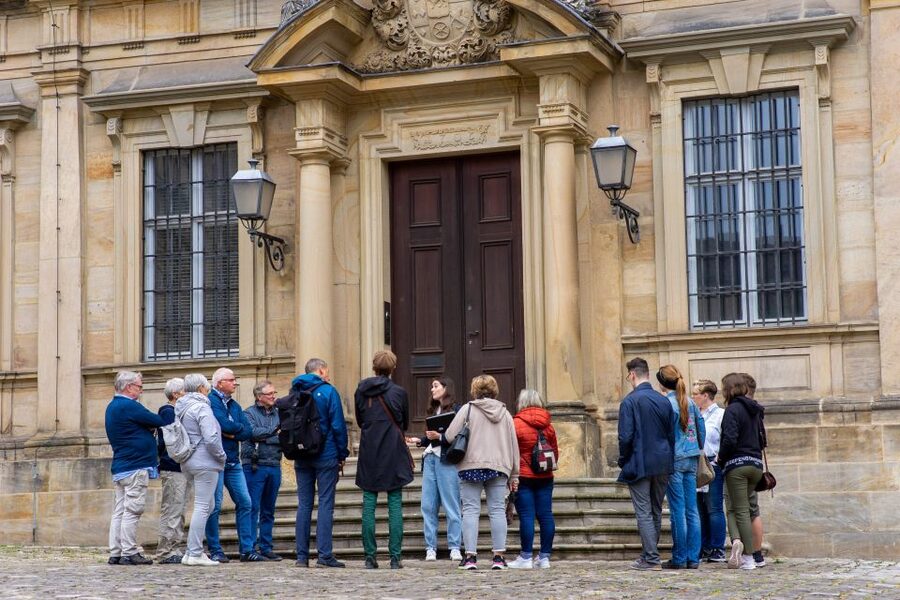
- Schöne Pforte to the cathedral area, using Bamberg’s lanes as a living map of the trials
- Trudenhaus and prison reality, with the medieval Lochgefängnisse explained in context
- Hidden clues of the witch hunt, tied to how cases were built and justified
- Connections to Nuremberg, so you can see the wider pattern beyond Bamberg
- Geyerswörth Palace stop, adding power and prestige to a story about accusation
- Finish at the Malefiz-Haus site (1627 to ca. 1650), which gives the walk a strong ending point
Starting at Domplatz, and finding the right guide fast
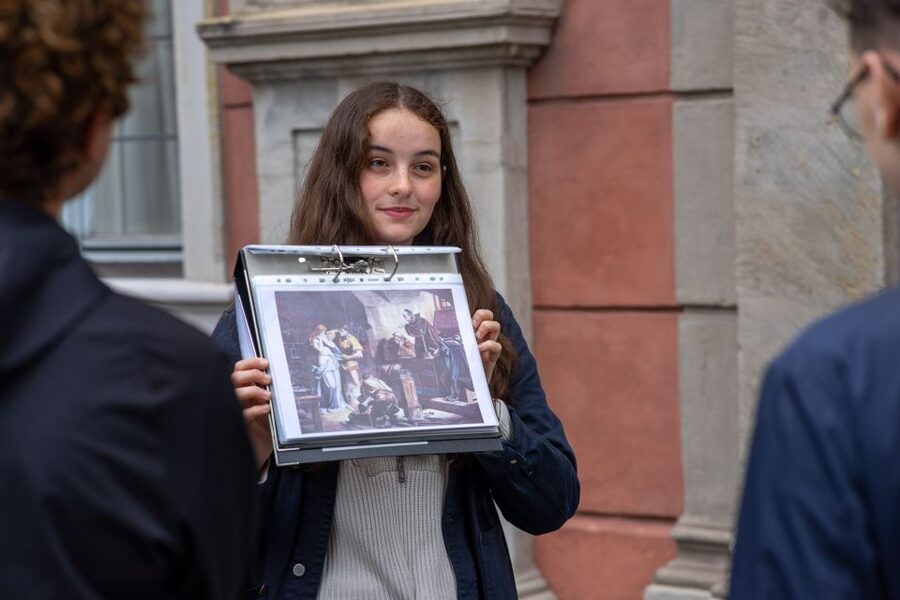
Your tour begins around the cathedral area, on Domplatz, in front of the entrance to the Alte Hofhaltung. The guide will be easy to spot if you look for a name tag reading Geschichte Für Alle e.V. and a picture folder in hand.
This matters more than you’d think. Witch-trial tours can start in slightly awkward places, and Bamberg’s center can feel maze-like when you’re cold, hungry, or both. Being at Domplatz puts you where the city’s old power centers cluster, so the story clicks immediately.
The tour is guided the whole way, and you’ll have short stretches on foot between stops. That pacing is ideal for Bamberg’s lanes: you get enough movement to feel the layout, but not so much that the story gets lost.
A few more Bamberg walks and trips to compare
- Bamberg: Guided Walking Tour
★ 4.6 · 3,202 reviews - Bamberg: Guided Beer History Tour with Optional Tasting
★ 4.6 · 772 reviews - Bamberg: City Highlights Walking Tour
★ 4.6 · 679 reviews
Old Court Bamberg: where civic life meets fear
One of your first guided sections is Old Court Bamberg, a setting that helps you understand why these trials could happen. You’re not just learning about rumors or folklore. You’re learning about how public institutions, authority, and everyday judgment could combine in the 17th century.
What I like about this part is the way it frames accusations as something society produced. The tour makes it clear that the persecuted were not limited to a single type of target. Instead of the cliché of a red-haired outsider or an elderly “mother” figure, the message is that men and women, and people from different social classes, could end up accused. Even mayors are included in the story, which is a blunt reminder that proximity to power did not protect people.
A possible drawback here is tone. If you came hoping for spooky theatre, you might find it more factual and uncomfortable than fun. But if you want history that explains how people convinced themselves something terrible was justified, this is the right start.
Strolling Bamberg’s old alleys with “hidden clues”
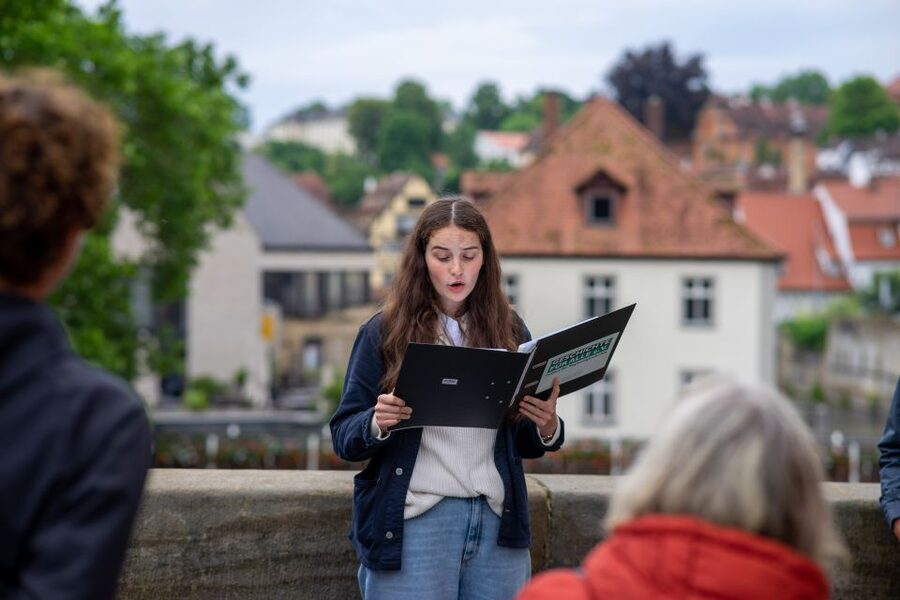
A big part of the experience is walking through Bamberg’s older streets while the guide points out details tied to the witch hunt. The tour doesn’t treat the city like a backdrop. Instead, it treats Bamberg like a document, one you read with your feet.
You’ll get multiple short “on foot” transfers, just a few minutes each, which is perfect for staying focused. Bamberg’s center is compact, so you’re usually close to the next relevant location. That also means you’re not spending the hour mostly walking in the cold.
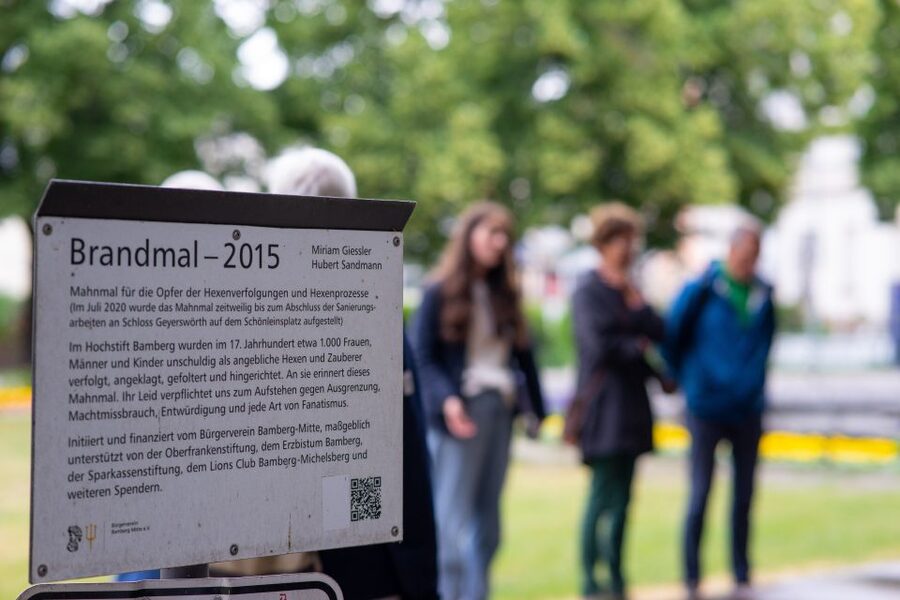
The guide also talks about the hunt for witches and sorcerers as a long-running, serious part of the 1600s. The tour highlights that hundreds of citizens were affected in Bamberg during that time. When you hear that number while standing in the old street grid, it stops feeling abstract.
My practical advice: keep your phone put away for the explanation parts, and only pull it out when you’re asked to look at something specific. The best moments are when you connect a spoken detail to a real location in front of you, not when you’re speed-scrolling photos.
Geyerswörth Palace: power and prestige in the same frame
You’ll also pass through the area of Geyerswörth Palace during a guided segment. This stop adds a useful contrast. Even if your subject matter is the persecution of the vulnerable, you’re also seeing the spaces linked to status and influence.
Why this is valuable: it helps you understand that accusations did not happen in a vacuum. Authority lived in impressive buildings and formal court contexts. If you only focus on fear and superstition, you miss the machinery that made accusations credible to others.
This is also where the tour’s theme of “how the city dealt with it until today” begins to feel real. You’re learning a story that still shapes how a place remembers itself. Bamberg is not pretending it never happened, and that honesty makes the walk more meaningful.
If you’re sensitive to grim themes, pace yourself here. You’ll have enough time to recover between segments because the route uses short transitions and not constant walking.
Same city, a different way to spend the afternoon:
- Bamberg: Guided Historical Culinary Tour
★ 4.6 · 461 reviews - Bamberg: Immersive Medieval Tour
★ 4.7 · 232 reviews - Bamberg: Self-Guided BierSchmecker® Tour
★ 4.5 · 187 reviews - Bamberg: Beer & Brewery Tour – 2 Hour – English Or German
★ 5.0 · 150 reviews
Trudenhaus and the medieval prison called Lochgefängnisse
This is the emotional core of the tour. The story includes Trudenhaus, Bamberg’s witch prison, and explains what happened to people who ended up there. The tone is direct: anyone sent there was considered as good as lost.
That line lands harder when you’re not listening to it from a screen, but from a guide standing in a place connected to the past. You start to notice how quickly a system can label someone, then close options until the victim’s choices shrink to almost nothing.
You’ll also learn about the medieval prison called Lochgefängnisse. Even without getting too graphic, the tour makes the architecture and purpose of imprisonment part of the story. You are not just learning that trials existed. You’re learning how punishment was designed to break people physically and mentally.
One more practical thought: if you’re the type who needs light moments to stay engaged, this might feel intense. Still, the tour is not just shock value. It uses the prisons to explain how fear and control worked together, and that’s why the place-based history matters.
Nuremberg context: why Bamberg’s witch hunt fits a bigger pattern
Another highlight is learning about the history of witch hunts in Nuremberg. This is one of the smartest choices the tour makes, because it prevents you from treating Bamberg as a one-off tragedy.
You come away with a sense that witch hunting was part of a broader European pattern that different cities participated in, each with local details. That context helps you interpret what you saw in Bamberg. It also makes the topic feel less like isolated “dark legends” and more like how societies handled fear when they needed an explanation, even if the explanation was wrong.
I like that this segment adds perspective without turning the whole tour into a long lecture. It’s still tied back to what you’re walking past, so the Nuremberg piece supports the Bamberg story instead of replacing it.
Walking pace, timing, and what the 1.5 hours feel like
The tour is 1.5 hours, with multiple guided sections and short transfers. You shouldn’t expect huge distances, but you should expect a steady flow of explanation while you move between stops.
That timing is ideal for many Bamberg itineraries. It fits into a day where you also want to explore the old town on your own. It’s short enough that you won’t feel like the rest of your evening is gone, but long enough to build a coherent narrative.
Language is German only. If your German is basic, you can still enjoy the tour because the subject matter is anchored in place and the guide’s explanations aim to be answerable. Still, if you understand little German, you might want to pair this with self-guided sightseeing right after, so you can process the story without rushing.
The tour is also wheelchair accessible, which is a big plus. The route uses walking segments, so your guide’s pacing and your comfort with older streets will matter, but accessibility is explicitly supported.
Price and value: is $15 worth it?
At $15 per person, this is strong value for a 1.5-hour guided walk that covers a painful but important local chapter. The cost makes more sense when you consider what’s included: not just a quick overview, but a structured guided route through multiple meaningful stops tied to persecution, imprisonment, and how the topic is remembered.
The guide also answers questions. Based on the feedback you’ll likely hear once you join, people appreciate that the guide can explain ideas clearly and respond to curiosity. That sort of interaction is hard to price, but it’s a big reason small tours can feel worth it even when they are inexpensive.
My rule of thumb: if you enjoy walking tours that teach you how a city worked, not just what it looks like, this will feel like money well spent.
Who should book Witch Trials in Bamberg
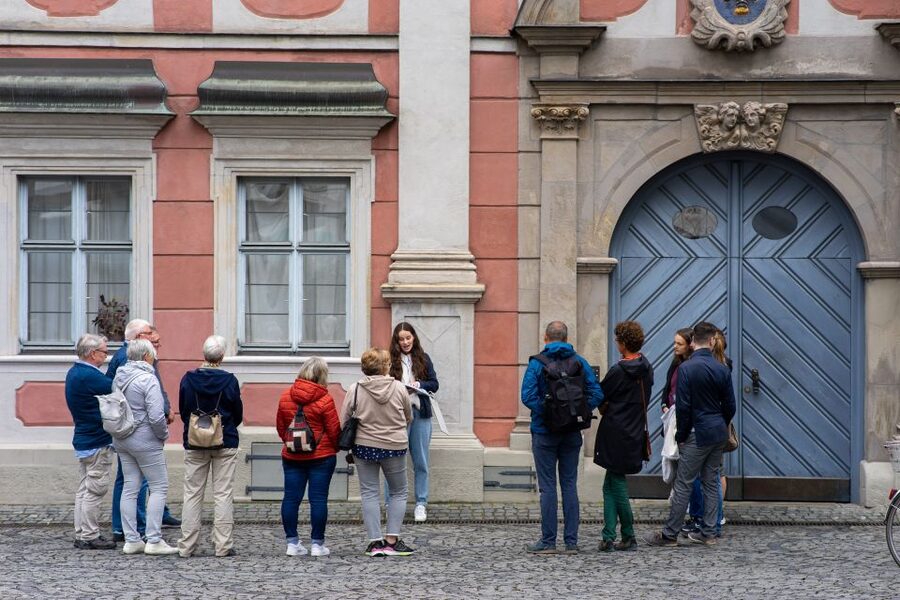
This tour is a great fit if you like:
- History that connects street-level places to real events
- Walking tours that explain context and consequences, not just dates
- Stories with a moral edge, where you learn how fear and authority can collide
It may be less satisfying if you want:
- A comedy tour
- Only “pretty Bamberg” highlights without heavy themes
- A purely visual tour with minimal talking
Also, if you’re traveling with older teens or curious adults who like to ask questions, the format can work well. The guide is there to answer, and the prison locations and city power centers naturally raise good questions.
Should you book this tour?
If you want a short, guided way to understand a real 17th-century chapter of Bamberg, I think you should book it. The price is friendly, the route is walkable, and the stops include the kind of place-based history that makes a topic stick in your mind.
Do book it if you’re okay with heavy content and you’re curious about how communities handled fear, blame, and authority. Skip it only if you’d rather keep Bamberg’s story light and purely scenic.
FAQ
FAQ
How long is the Witch Trials in Bamberg tour?
The tour lasts 1.5 hours.
What does the tour cost?
It costs $15 per person.
Where do I meet the guide?
Meet on Domplatz in front of the entrance to the Alte Hofhaltung.
How do I recognize the tour guide?
The guide holds a picture folder and wears a name tag that says Geschichte Für Alle e.V.
What language is the tour in?
The live tour guide speaks German.
Is the tour wheelchair accessible?
Yes, the tour is wheelchair accessible.
What sites does the tour include?
You will stroll through Bamberg’s old alleys, tour the Old Court Bamberg, visit the area of Geyerswörth Palace, learn about the medieval prison called Lochgefängnisse, and finish at the site of the Malefiz-Haus from 1627 to ca. 1650.
Can I cancel and get a full refund?
Yes. You can cancel up to 24 hours in advance for a full refund.
Is reserve and pay later available?
Yes. You can reserve your spot and pay nothing today.
Is the tour offered for groups?
If you have a group of 10 or more people, you should contact the provider at [email protected].
Newest Bamberg reviews on the site
- Best of Bamberg Private Walk Tour with a Professional Guide★ 5.0 · 3 reviews
- Bamberg: Immersive Medieval Tour★ 4.7 · 232 reviews
- Bamberg: Self-Guided BierSchmecker® Tour★ 4.5 · 187 reviews
- Bamberg: Where Hollywood dreams and movies are born★ 4.5 · 26 reviews
- Bamberg: Guided Tour of the Gardeners’ District★ 4.4 · 26 reviews
- Bamberg: Historical City Tour in German with Brewery Visit★ 4.5 · 108 reviews
- Bamberg: Beer & Brewery Tour – 2 Hour – English Or German★ 5.0 · 150 reviews
- Bamberg: Bar & Club Tour with free Shots & VIP entry★ 4.5 · 25 reviews
Bamberg Tours, compared.


Beer & Brewery Tour – 2 Hour – English Or German
Read our review →
Browse the lists this tour appears in