
Reviewed · BAMBERG TOURS
Bamberg: Immersive Medieval Tour
Bamberg turns medieval life into a hands-on walk. This 75-minute tour uses mead, fire, and living history to help you read the town’s streets like they belong to the 11th century. You also get the big-picture story of why Bamberg earned the nickname second Rome, long before you see the cathedral and town hall up close.
I especially like the start ritual, a glass of medieval mead that sets the tone fast. I also like how the route favors quieter side lanes, so you are not stuck only in the busiest show-me streets, which matters in Advent season and on weekends.
One consideration: the tour is in German only, so if you rely on English, you might feel a bit lost while the guide switches between history and the darker medieval themes like witches’ ointment.
In This Review
- Key things to know before you go
- Why Bamberg feels like a second Rome in 75 minutes
- Start at the meeting point with medieval mead and a role
- Town hall streets and the Romanesque cathedral area you can actually picture
- Wells, fire striker, and witches’ ointment props: what hands-on really adds
- How the tour connects buildings to how cities evolve
- Price and value: $23 for 75 minutes that actually move
- Practical tips to make the 75 minutes feel easy
- Should you book the Bamberg medieval tour?
Key things to know before you go

- You begin with mead and actually drink something as the tour starts, not as an afterthought
- You role play as a noble lady or a craftsman, so the history becomes personal, not just explained
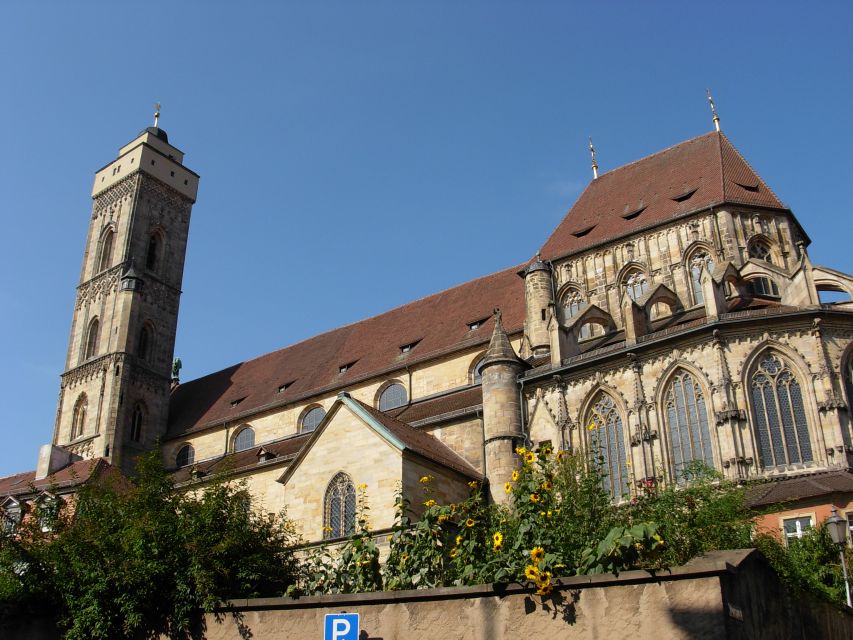
- You see Bamberg’s 11th-century bones, including the town hall area and the Romanesque cathedral
- You handle medieval-style props, like collecting water from wells and using a fire striker
- You explore Nebengassen style side streets, which can feel calmer than the main flow
- You get a darkly playful theme, including references to witches’ ointment and medieval superstitions
Why Bamberg feels like a second Rome in 75 minutes
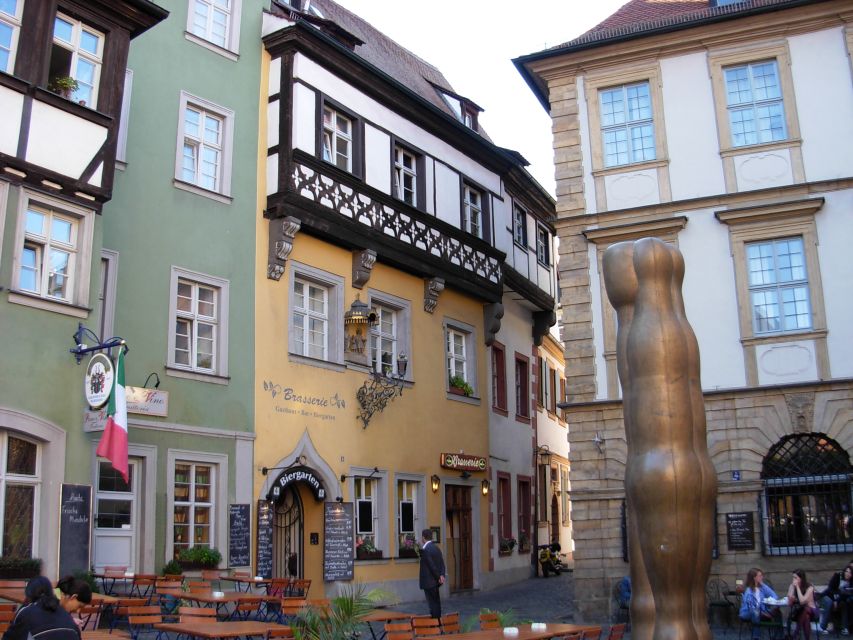
Bamberg is a UNESCO World Heritage Site, and that is not just a sticker for your map. The old town was shaped with intent, and this tour frames that intent through the story of Emperor Henry II in the 11th century, when Bamberg was chosen as a second Rome. That idea matters, because it helps you connect individual buildings to a wider plan: faith, power, and urban design all show up in the streets you walk.
You will also get a practical sense of how Bamberg influenced central European urban form over the centuries. Even if you are not a history nerd, this is the kind of explanation that makes architecture feel usable. You start noticing patterns, street rhythm, and how major civic and religious landmarks anchor the surrounding neighborhoods.
The tour does not try to replace a guidebook. It does something more useful for most people. It gives you a reason to look, then forces you to look while you are still in motion, still in the town, still in that “how did daily life work?” mindset.
A few more Bamberg walks and trips to compare
- Bamberg: Guided Walking Tour
★ 4.6 · 3,202 reviews - Bamberg: Guided Beer History Tour with Optional Tasting
★ 4.6 · 772 reviews - Bamberg: City Highlights Walking Tour
★ 4.6 · 679 reviews
Start at the meeting point with medieval mead and a role
You meet at Tourismus- und Kongressservice Bamberg, Geyerswörthstraße 5, 96047 Bamberg. From there, the experience moves quickly from “tourist present” to “medieval character.” The first moment is a glass of mead, included in the tour, and it sets a clear mood: this is history you taste, not history you just hear.
Then comes the role element. You are asked to step into a persona, either a noble lady or a simple craftsman, for the duration of the tour. That switch is clever. It turns big topics like religion, work, and mortality into something you can imagine from the inside. You are not just learning facts. You are practicing how a person in that world might move, talk, and react.
A note on the rules: alcohol and drugs are listed as not allowed. At the same time, mead is included. The safest way to read that rule is as do not bring your own alcohol or substances. You will already have the mead the organizers provide.
Town hall streets and the Romanesque cathedral area you can actually picture
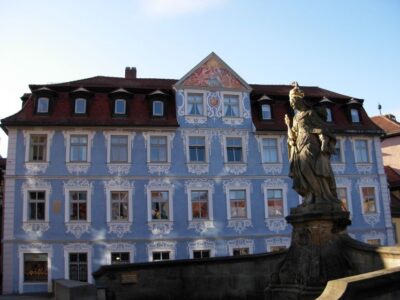
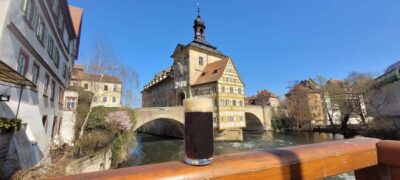
The tour includes stops around Bamberg’s well-preserved historic structures, including the colorful town hall area and the ancient Romanesque cathedral. Even in a short 75 minutes, these are the kind of landmarks that help you anchor the story. Without a civic landmark and a religious landmark, “medieval life” can turn vague. Here, it stays connected.
What I like about focusing on these specific places is that they show two sides of the medieval world. Town hall spaces point toward governance, public life, and community order. The Romanesque cathedral area points toward faith, meaning, and the heavy emotional weight people carried in everyday existence.
And the tour does not keep you in one spot. Reviews highlight that the group often spends time in the side lanes, the Nebengassen, away from the biggest crowds. That is a very smart choice in Bamberg, because the main areas can get crowded during Advent market time or weekends. Side streets also help the role play land better. A theatrical moment feels more believable when the surroundings are less interruptible.
Potential drawback: because the tour packs history, role play, and hands-on bits into a tight timeframe, you will not get long, slow sightseeing breaks at each landmark. If you want to linger for photos, you may have to do that on your own after the tour.
Wells, fire striker, and witches’ ointment props: what hands-on really adds
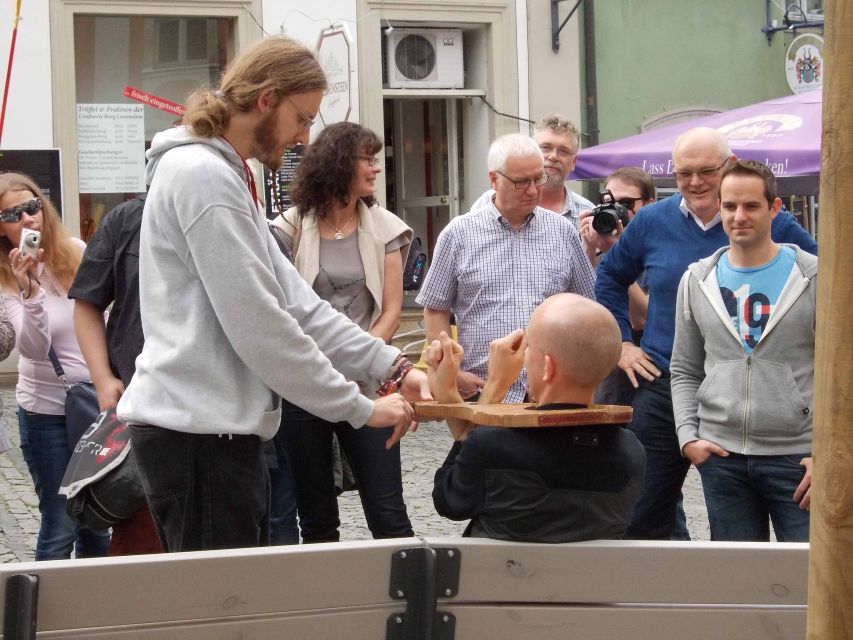
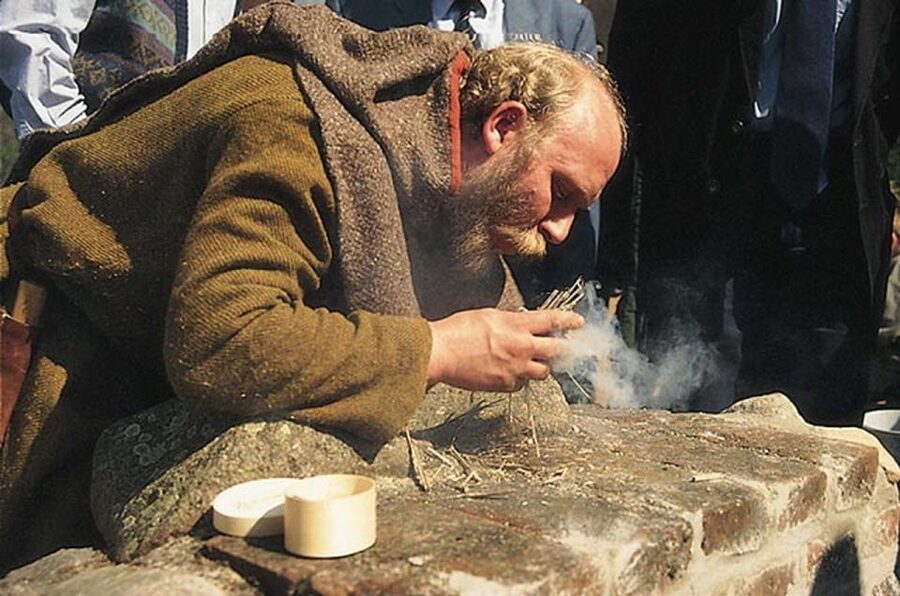
This is the part that makes the tour different from a basic guided walk. You will encounter medieval magic in a practical, sensory way: fire, mead, and witches’ ointment as part of the themed storytelling. The tour also includes hands-on activities, like collecting water from wells and igniting embers in a stove using a fire striker.
That matters because medieval history can turn into secondhand information. You read about tools, you see buildings, but you do not feel the constraints. When you try a fire striker concept, even briefly, you start to understand that heat, light, and cooking were not “automatic.” They were work, and they shaped daily life.
The well water moment helps in a similar way. It turns “water source” from a vague idea into a specific daily task. That is how you build mental realism. You begin to imagine the time spent, the routines, and the risk and effort involved in something as ordinary as staying supplied.
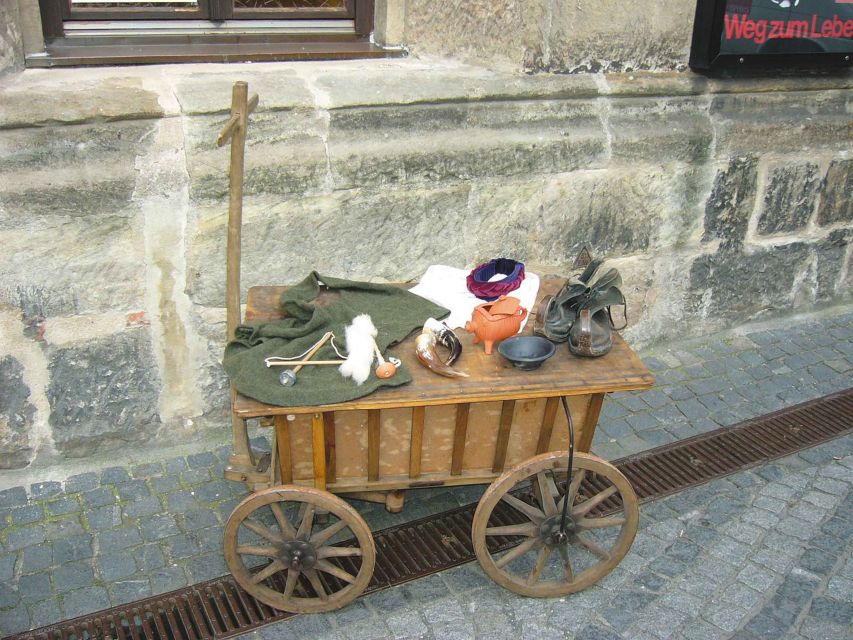
The witches’ ointment element is more about atmosphere and belief systems than practical chemistry. It is part of how the tour portrays how people made sense of the world when explanations were different and fear was often part of the social fabric. You come away understanding that medieval life was not just crafts and stone churches. It was also superstition, rumor, and spiritual interpretations of events.
One thing to keep in mind: the tour involves fire-related theming and handling props. Wear comfortable clothing and close-toed shoes. If you get uncomfortable with theatrical reenactment themes, this one might feel a bit more intense than a straightforward history walk.
Same city, a different way to spend the afternoon:
- Bamberg: Guided Historical Culinary Tour
★ 4.6 · 461 reviews - Witch Trials in Bamberg
★ 4.4 · 187 reviews - Bamberg: Self-Guided BierSchmecker® Tour
★ 4.5 · 187 reviews - Bamberg: Beer & Brewery Tour – 2 Hour – English Or German
★ 5.0 · 150 reviews
How the tour connects buildings to how cities evolve
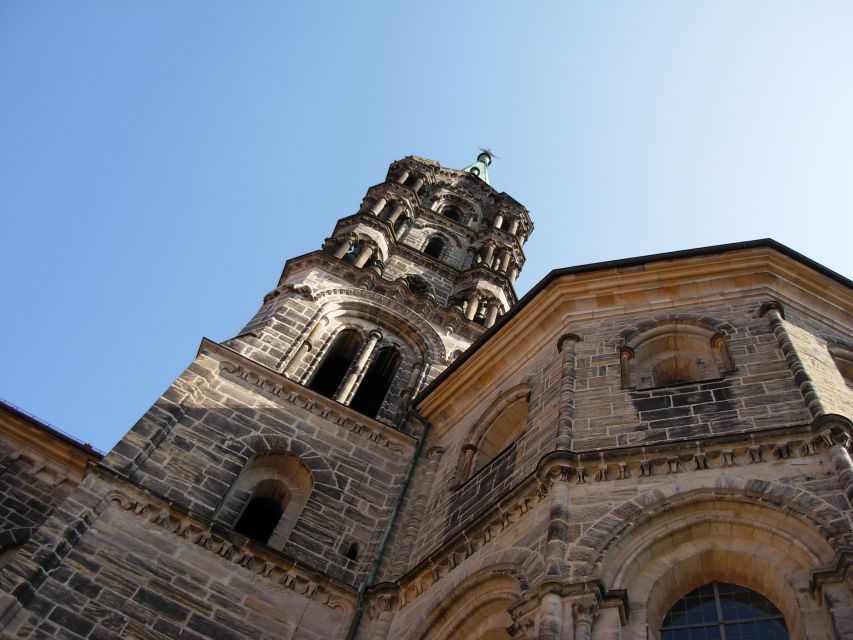
Bamberg’s architecture is not just pretty. The tour explains how it influenced central European urban form and evolution over time. In real terms, that means you are trying to answer questions like: why did towns grow the way they did, how did major buildings shape movement, and how did civic and sacred spaces interact with everyday streets?
The value here is that you are not just learning what Bamberg has, you are learning how it became that way. When a guide links Henry II’s era to what you see today, the city shifts from a collection of sites into a readable system.
There is also an emphasis on the “common people” angle. The tour does not only zoom in on kings and emperors. It tries to give you a sense of how everyday life, love, and death were experienced when people believed in demons, witches, and the supernatural. That approach is not everyone’s taste, but it is at least memorable, and it makes you look at the town with more empathy.
Price and value: $23 for 75 minutes that actually move
At $23 per person, this tour sits in the range where you should ask one question: do I get something worth my time, not just a route with talking? For me, the answer is yes because you get multiple “included” elements that most history walks do not provide.
You get:
- A live guide
- An interactive medieval tour format
- Mead at the start
On top of that, you get hands-on moments, role play, and themed props that turn the history into a sensory experience. That is what turns a short duration into real value. Seventy-five minutes is long enough to cover key historic landmarks and still do activities, but short enough that you can fit it into a full day of Bamberg sightseeing.
If you prefer a quiet museum-style pace, you might feel rushed. But if you like learning through doing, this price feels reasonable, especially given the strong rating of 4.7 from 232 reviews.
Practical tips to make the 75 minutes feel easy
This tour is in German, and it is live-guided. If your German is basic, you still might follow the story, especially because role play and props carry a lot of meaning even when vocabulary slips. Still, set your expectations accordingly.
Plan for outdoor walking. Bamberg’s medieval center means you will likely move through narrow lanes and historic streets. Wear layers, particularly if you visit in winter. One review notes minus temperatures and observes the guide working in real cold while carrying a basket throughout, which is a good sign that the tour continues outdoors no matter the season.
Also, do not overpack your day. Seventy-five minutes flies by because the format changes often: mead first, then story, then roles, then props, then landmark-focused walking. If you schedule a long break right after, you can process what you learned while it is still fresh.
Should you book the Bamberg medieval tour?
Book it if you want history that feels active. You like interactive experiences, you enjoy role play, and you want a short route that connects Bamberg’s Henry II era to the buildings you can see, including the town hall and the Romanesque cathedral area.
Skip it if you need an English-language guide, or if you want a quiet, purely informational walk with lots of time for lingering and photos. This tour is designed to move, act, and participate.
If you are visiting during Advent season or a weekend and you know crowds will slow your sightseeing, this format also has a practical edge. The route tends to include side lanes rather than only the main crowd corridors, which can make the whole experience feel more like you are discovering the town instead of just passing through it.
Newest Bamberg reviews on the site
- Witch Trials in Bamberg★ 4.4 · 187 reviews
- Best of Bamberg Private Walk Tour with a Professional Guide★ 5.0 · 3 reviews
- Bamberg: Self-Guided BierSchmecker® Tour★ 4.5 · 187 reviews
- Bamberg: Where Hollywood dreams and movies are born★ 4.5 · 26 reviews
- Bamberg: Guided Tour of the Gardeners’ District★ 4.4 · 26 reviews
- Bamberg: Historical City Tour in German with Brewery Visit★ 4.5 · 108 reviews
- Bamberg: Beer & Brewery Tour – 2 Hour – English Or German★ 5.0 · 150 reviews
- Bamberg: Bar & Club Tour with free Shots & VIP entry★ 4.5 · 25 reviews
Bamberg Tours, compared.


Beer & Brewery Tour – 2 Hour – English Or German
Read our review →
Browse the lists this tour appears in