
Reviewed · HISTORICAL TOURS
private city tour of Hamburg’s UNESCO World Heritage Site
Hamburg’s port stories are full of surprises. This private UNESCO World Heritage tour keeps things focused and quiet, so you can actually hear the meaning behind Hamburg’s landmarks instead of just snapping photos. I like how the walk starts at Hammaburg-Platz and builds from the city’s earliest identity, then turns into trade history at Kontorhausviertel. I also like the way Speicherstadt is explained, from Hanseatic-era shipping to how modern trade shaped what you see today.
The main drawback is simple: it is a 2-hour walking tour, so if you want long sits down or lots of free time to explore on your own, you might feel a bit rushed.
In This Review
- Key highlights at a glance
- A private UNESCO walk through Hamburg’s trade power
- Price and logistics that matter for value
- Where the story begins: Domplatz and the Hammaburg origin
- Kontorhausviertel: merchants, buildings, and the “prima ballerina” idea
- A critical-thinking moment you will appreciate
- Speicherstadt’s red brick gorges and the shipping timeline
- Westphalen and the worker’s connection
- Coffee barons and Persians: stories behind the names
- Stops, pacing, and what you can realistically expect
- The guide factor: why Marius makes it work
- What makes the UNESCO experience feel more than a checklist
- Who this tour suits best
- Should you book this private Hamburg UNESCO tour?
- FAQ
- FAQ
- How long is the private Hamburg UNESCO city tour?
- What is the maximum group size?
- Where does the tour start and end?
- Is admission included for the stops?
- What is included in the price?
- What is not included?
- Do I get a ticket, and is it mobile?
- Is the tour cancellable?
- Is it easy to reach by public transport, and are service animals allowed?
Key highlights at a glance
- Small private group up to 15, so the pace stays comfortable and questions fit in
- Hammaburg-Platz to Speicherstadt, with a clear story arc from origins to maritime trade
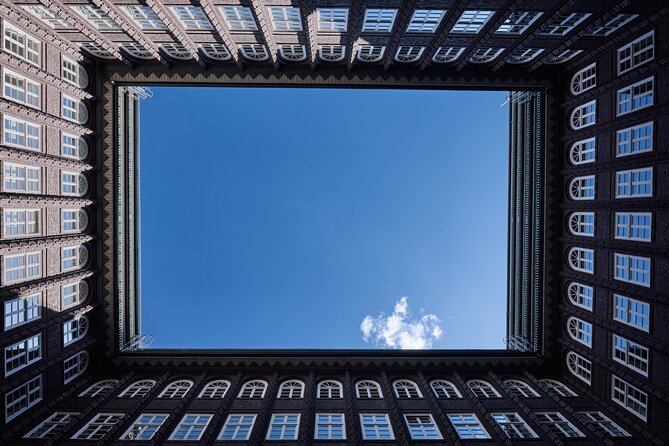
- Kontorhausviertel details, including the Kontorhäuser and their famous decorative characters
- Port charter contradictions, explained in plain language so you can judge the story yourself
- Named roles and local nicknames, like Schutenschupser and Ewerführer, tied to how the port actually worked
A private UNESCO walk through Hamburg’s trade power
Hamburg looks calm from the sidewalk, but the city has always been about movement. This tour makes that clear fast, because it follows the thread of trade, shipping, and merchants from the earliest Hamburg foundation up through the port districts.
I like that it feels built for real understanding, not just landmark coverage. You end up seeing the UNESCO site as one connected system, not three random stops.
More History Tours in Hamburg
- The Local Tour of Hamburg Historic Centre
★ 5.0 · 1,058 reviews - Hamburg: UNESCO-World Heritage Sites Tour
★ 4.7 · 137 reviews - Sightseeing Tour – Free Tour – Historic Center-Hamburg On Foot
★ 5.0 · 112 reviews
Price and logistics that matter for value
For $208.28 per group (up to 15), you are paying for a private guide and a guided narrative across the UNESCO World Heritage area. If you travel with a family or friends, the per-person value can get much better, especially because this is a true group experience with only your party.
It runs about 2 hours, and you get a mobile ticket. Stops are not tied to paid museum admissions, and the scheduled checkpoints are admission ticket free.
A practical note: since there is no private transportation included, you’ll want to arrive ready to walk between areas. The tour itself is the product, so plan your day around walking time.
Where the story begins: Domplatz and the Hammaburg origin
You kick off at Domplatz, but the tour’s true starting point is Hammaburg-Platz in the Altstadt. That matters because Hammaburg is presented as the birthplace and nursery of Hamburg, and the guide uses that idea to anchor everything that follows.
This is a strong first step because it gives you a handle on the city name and early identity. Instead of guessing why Hamburg became Hamburg, you get the name explanation and the early development story right up front.
You also get the layout of the day’s thematic areas, so later details at Kontorhausviertel and Speicherstadt land better. It is the classic travel trick: get your bearings first, then the walls start talking.
Kontorhausviertel: merchants, buildings, and the “prima ballerina” idea
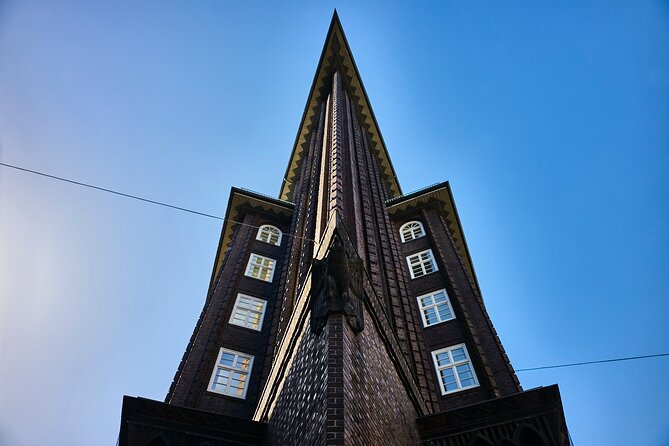
Next comes Kontorhausviertel, the former center of Hamburg merchants. This is where the tour shifts from beginnings to a period when commerce shaped architecture and street life.
You do not just look at buildings here. You get context for how modern world trade took off at the end of the 19th century, and you connect that to what you can still see in the district.
A fun, memorable stop is the guide’s focus on the Kontorhäuser’s “prima ballerina” character, including her pretty ballerina skirt. It is the kind of detail that turns a facade into a story, and it helps you notice decorative symbolism that you would likely miss on your own.
A few more Hamburg walks and trips to compare
- Hamburg: Speicherstadt Historical Guided Walking Tour
★ 4.7 · 71 reviews - Lights tour through the port of Hamburg and to the historic warehouse district
★ 3.5 · 70 reviews - Free Tour: History of the Port, Red Light District and the Beatles
★ 5.0 · 48 reviews - Historic Free Tour of Hamburg Old Warehouse District
★ 5.0 · 18 reviews
A critical-thinking moment you will appreciate
The tour also brings in the founding charter of the port and points out a contradiction or two. I like this part because it nudges you to look beyond heroic myths. You get the chance to understand how official documents, local needs, and reality did not always line up cleanly.
Speicherstadt’s red brick gorges and the shipping timeline
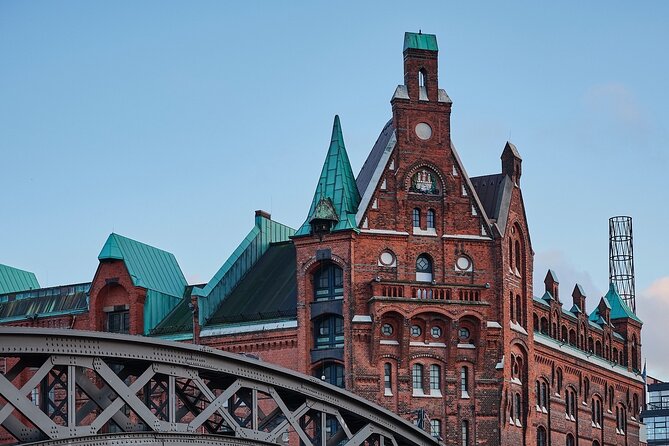
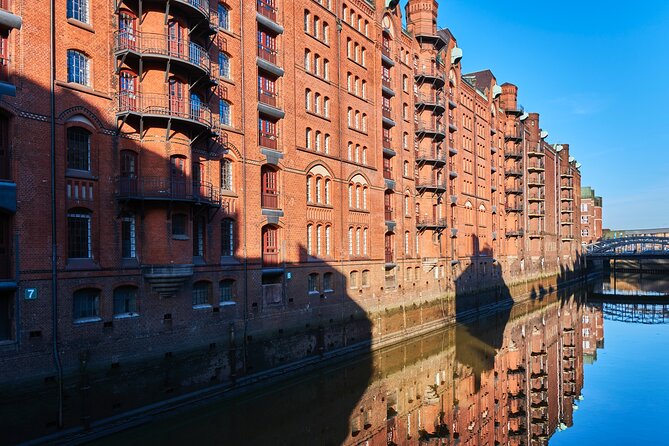
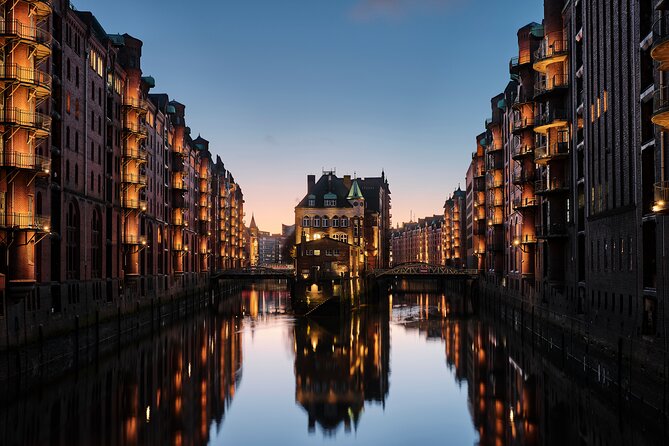
Then you head to Speicherstadt, and this is where the visuals really click. The place is described as red brick gorges, and once you are walking among the warehouses, you understand why that comparison fits.
Here the emphasis stays on port history and maritime trade, tracing a line from a Hanseatic cog to something like a modern container ship. Even if you know Hamburg has a major port, this timeline helps you see how shipping needs shaped the built environment.
You also learn the human side of port life through terms and roles that sound mysterious until someone explains them. Two that stand out are Schutenschupser and Ewerführer, and the guide explains exactly what they did. That kind of detail makes the port feel functional, not romantic.
Westphalen and the worker’s connection
Another detail I found especially practical is the discussion around Westphalen: what it has to do with Hamburg and why workers lived there in a castle. The tour uses this to show how people and place were linked, not just trade and money.
I like moments like this because they keep the tour grounded. You can admire warehouses all day, but you still want to know who lived alongside the machinery of trade.
Coffee barons and Persians: stories behind the names
The tour also explains why you hear about coffee barons and Persians in Hamburg. The key point is that these names are treated as story hooks, not random trivia. When a guide ties a nickname to real local history or roles, the city feels specific to itself, not generic.
Stops, pacing, and what you can realistically expect
The schedule is built around three themed checkpoints, each around 30 minutes. You start at Domplatz, then move to Kontorhausviertel, then finish at Speicherstadt, with the overall tour running around 2 hours.
That structure is ideal if you want a guided story without spending your whole day in a group. It is also good if you enjoy learning in short chunks, because each area has a clear topic and a clear visual focus.
At the end, the tour finishes at Sankt Annenplatz, right on the border between Speicherstadt and Hafencity. That is a smart landing zone because it lets you continue walking depending on what you feel like doing next. If you want more of the modern harbor vibe, you can go toward Hafencity. If you want to stay with warehouses, you are still close.
The guide factor: why Marius makes it work
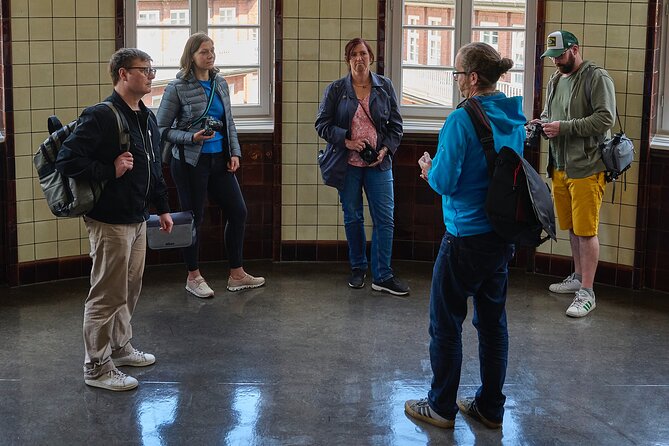
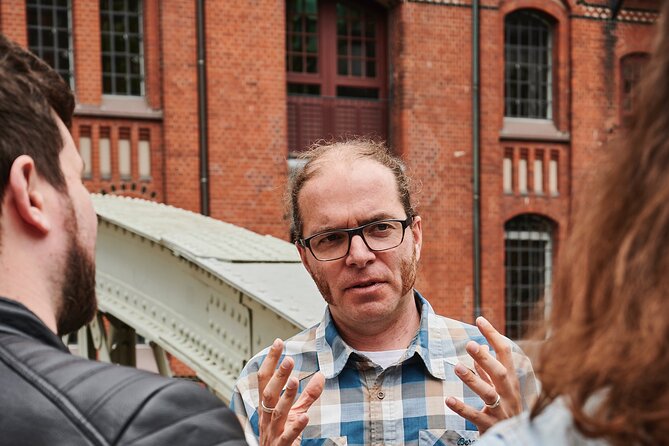
The experience is provided by Marius Gebhardt Fotografie & Stadtführungen, and the biggest praise is consistent: he is an expert in Hamburg history who tells it in a way that feels engaging and easy to follow.
I’d also take note of what you can infer from the kind of feedback this tour gets. One person who arrived on short notice found Marius flexible enough to fit them in quickly, and the tour still felt like it had careful planning behind it. Another key point is that the tour works well for families, including teenagers, not just adults who love heavy history.
That balance matters. You do not want a lecture. You want explanations you can carry with you into the next street.
What makes the UNESCO experience feel more than a checklist
UNESCO sites can become photo errands if a guide only points out official facts. Here, the UNESCO framing is used to connect the dots between places and purposes, especially around port trade and merchant culture.
You learn how Hamburg’s identity is tied to maritime work, commercial power, and the buildings that came from those needs. You also get the sense that history has contradictions, and the guide does not smooth them away.
The best part is how the details are tied to real outcomes. When you hear what different port roles did, you understand why the spaces look the way they do. When you learn why worker housing showed up in specific places like Westphalen and a castle, you see the city as a living system, not a museum set.
Who this tour suits best
This is a great fit if you want a private experience and prefer a guide who can explain as you walk. It is also ideal if you like architecture but want meaning behind decoration, like the Kontorhäuser ballerina details.
It is especially good for small groups or multi-generational families. One set of families mentioned that their kids, ages 12 and 16, enjoyed it. That tells me the pacing and storytelling can handle different attention spans.
If you are the kind of traveler who likes to understand terms and local names, you will feel rewarded. You get Schutenschupser, Ewerführer, coffee barons, and Persians explained in context, and that is where this tour becomes memorable.
Should you book this private Hamburg UNESCO tour?
If you want Hamburg to make sense in 2 hours, I think this is a strong booking. The private group size up to 15 and the tight thematic flow make it good value, and the guide’s storytelling style seems to be the difference between a nice walk and a real understanding of the UNESCO area.
Book it if you care about trade history, port details, and the human stories hidden inside industrial buildings. Skip it only if you want lots of free wandering time without guidance, or if you want more museum-style exhibits rather than street-level explanations.
FAQ
FAQ
How long is the private Hamburg UNESCO city tour?
It lasts about 2 hours.
What is the maximum group size?
This is a private tour for your group, with up to 15 people.
Where does the tour start and end?
It starts at Hammaburg-Platz in Altstadt (20095 Hamburg) and ends at Sankt Annenplatz (20457 Hamburg), right on the border between Speicherstadt and Hafencity.
Is admission included for the stops?
The scheduled stops are listed as admission ticket free.
What is included in the price?
You get a personal historical city tour through the UNESCO World Heritage Site of Hamburg.
What is not included?
Private transportation is not included.
Do I get a ticket, and is it mobile?
Yes. The tour includes a mobile ticket.
Is the tour cancellable?
Free cancellation is available. You can cancel up to 24 hours in advance for a full refund. If you cancel less than 24 hours before the start time, the amount you paid is not refunded.
Is it easy to reach by public transport, and are service animals allowed?
It is near public transportation, and service animals are allowed.
Newest Hamburg reviews on the site
- World War 2 Hamburg Private Guided Tour★ 5.0 · 6 reviews
- Ticket for the Emigration Museum BallinStadt Hamburg★ 4.0 · 57 reviews
- Winter Alster tour★ 4.0 · 12 reviews
- UNESCO World Heritage – Speicherstadt and Kontorhaus district★ 4.5 · 12 reviews
- The Beatles on St. Pauli★ 5.0 · 3 reviews
- hamburg Experienced differently with wish rental bike relaxed enjoy★ 5.0 · 5 reviews
- Hamburg Private Food Tours with a Local: 100% Personalized★ 5.0 · 3 reviews
- Private Romantic Urban & Street Photoshoot★ 5.0 · 69 reviews
Historical Tours, compared.

City History Canal Sightseeing Tour on a Motorboat
Read our review →
Browse the lists this tour appears in