
Reviewed · NUREMBERG TOURS
Nuremberg: St. Johannis Friedhof &Hesperidengärten IN GERMAN
Cemeteries can be a history lesson. This 1.5 hour guided walk turns St. Johannis cemetery into a storybook, with artistic epitaphs and a local guide who connects graves to Nuremberg’s people. I also like the added contrast of Hesperidengärten, a garden stop that explains how recreation and Mediterranean fruit growing once fit into daily life.
One thing to plan around: the Hesperidengärten are only visitable from May to October, so you may miss that section depending on when you go.
In This Review
- Key highlights you should care about
- St. Johannis Cemetery turns memorials into city stories
- Price and value for a 1.5 hour German guided walk
- Where the tour starts, and how to be ready for the walk
- The cemetery route: patricians, craftsmen, artists, and politicians
- Albrecht Dürer’s Grab: the art connection you can’t fake
- Hesperidengärten: recreation and Mediterranean fruit, in season
- When heat and season affect your enjoyment
- A guide who makes biographies click, not just facts
- Who this tour suits best
- Should you book the St. Johannis Cemetery and Hesperidengärten tour?
- FAQ
- How long is the tour?
- What language is the guided tour in?
- Where is the meeting point?
- Can I visit the Hesperidengärten year round?
- Is the tour suitable for wheelchair users or visually impaired people?
- What else do you see besides the cemetery?
Key highlights you should care about
- Germany’s most beautiful cemetery (voted in 2013), with graves that read like mini biographies
- Live German-speaking guide, so you get context instead of just sightseeing
- Albrecht Dürer’s Grab, a major name anchor during the walk
- Patricians, craftsmen, artists, and politicians, all represented through what’s written and sculpted on the tombs
- Hesperidengärten culture, recreation plus Mediterranean fruit cultivation (seasonal, May to October)
St. Johannis Cemetery turns memorials into city stories
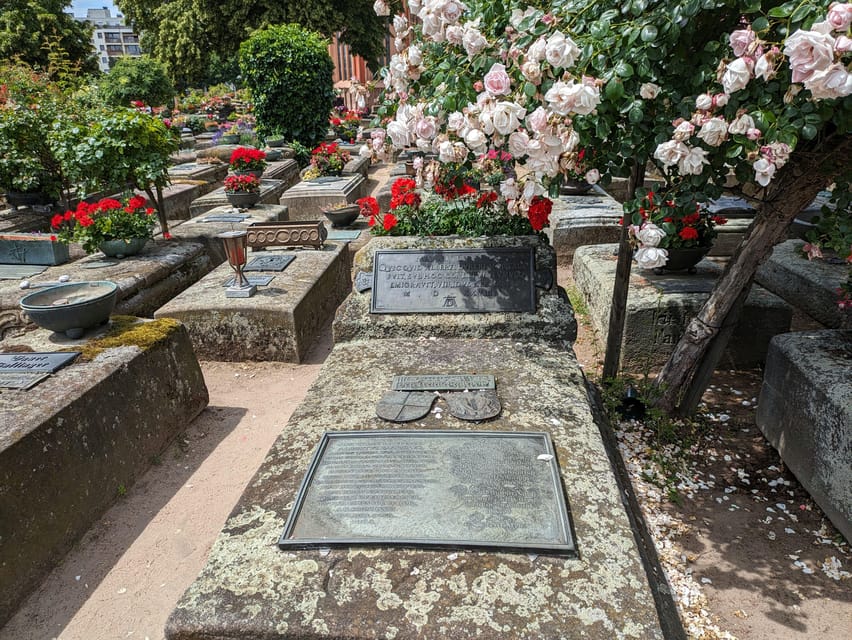
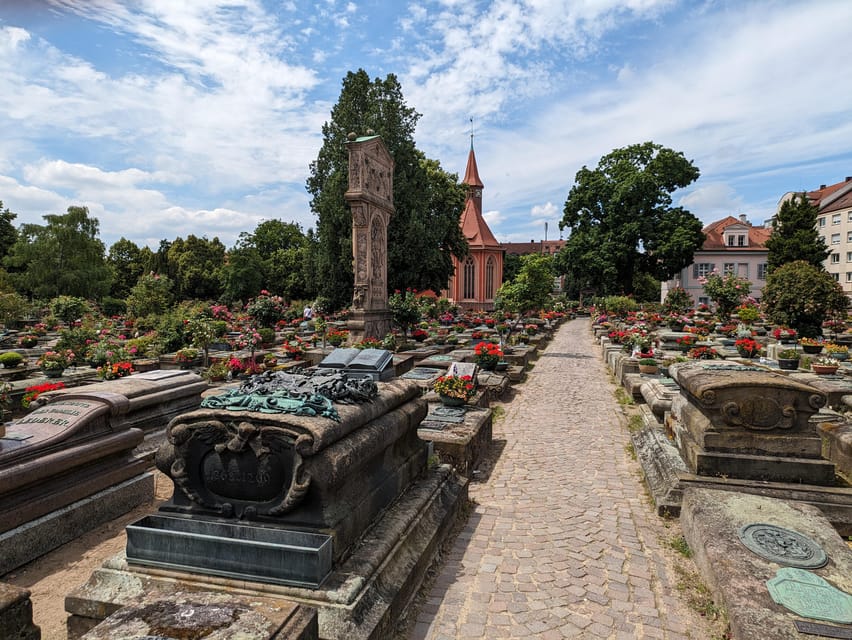
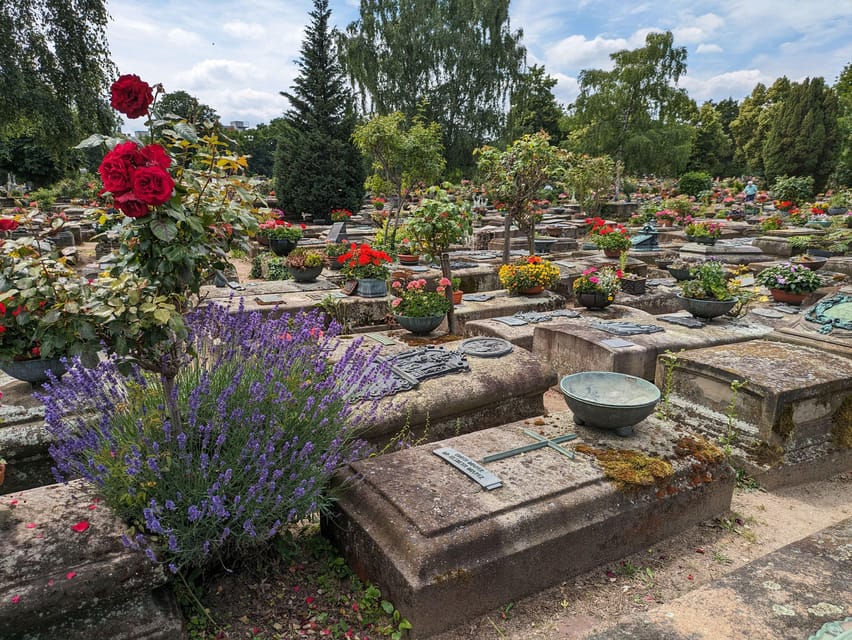
If you think of cemeteries as quiet places to pass through, this tour changes the angle. St. Johannis Friedhof is considered one of Europe’s most famous burial grounds, and it was voted Germany’s most beautiful cemetery in 2013. Walking it with a guide means you’re not just looking at dates, you’re learning how Nuremberg wanted its notable families to be remembered.
What makes this special is the mix. You’ll see graves connected to patricians, craftsmen, artists, and politicians, so the cemetery becomes a snapshot of who shaped the city. Artistic epitaphs and monuments are not treated as decoration here. They’re the message, and the guide helps you read that message.
A few more Nuremberg walks and trips to compare
- Nuremberg: City Tour with the Bimmelbahn Train
★ 4.4 · 2,475 reviews - Nuremberg: Old Town Guided Walking Tour
★ 4.6 · 2,416 reviews - Nuremberg: Tunnels and Secret Passages in the City Wall Tour
★ 4.8 · 2,334 reviews
Price and value for a 1.5 hour German guided walk
The cost is about $17 per person for roughly 1.5 hours. That’s not a “museum ticket” price, it’s a “time with a local guide” price. If you enjoy history that’s tied to real places, this format pays off fast because the tour is short and focused.
You do give up one thing: flexibility. This is a set route, with a strong emphasis on specific stops. If your ideal Nuremberg afternoon is spontaneous wandering through markets and squares, you might prefer a different kind of guided tour.
Where the tour starts, and how to be ready for the walk
You’ll meet at St. Johannisfriedhof, East Entrance (Lindengasse, corner of Johannisstraße). The easiest way to avoid stress is to arrive a few minutes early and wear shoes you can comfortably walk in, because the ground can feel more “outdoor” than city-street.
This is also a German-language tour. If your German is basic, you can still catch a lot from visuals and repeated place names, but the full experience relies on understanding the guide. The good news is that the tour is designed to be approachable. One review noted the walking distance is around one kilometer, and it felt manageable even for older participants who wanted history without a big hike.
The cemetery route: patricians, craftsmen, artists, and politicians
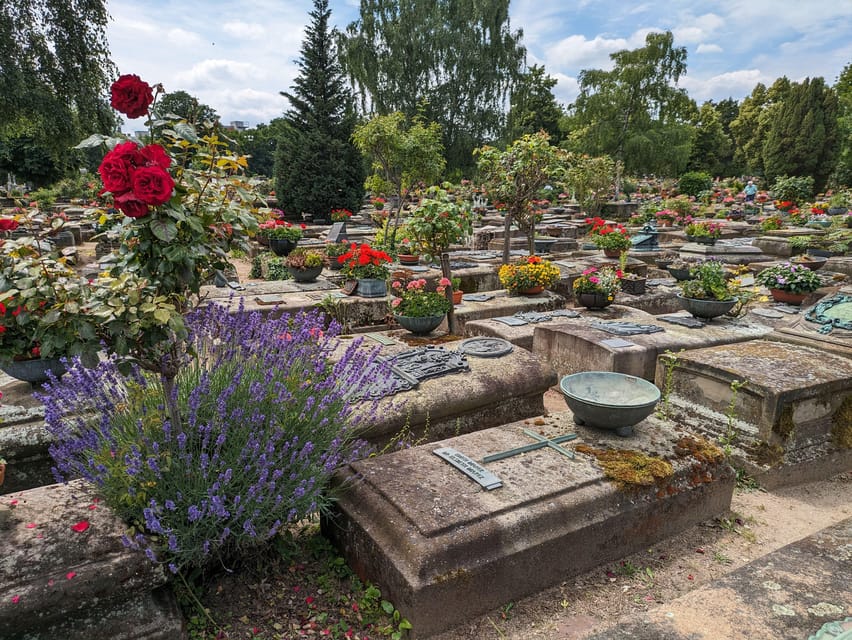
This isn’t a random list of famous graves. The tour is built around sections of the cemetery that represent different social roles in Nuremberg. As you move through the grounds, you’ll learn how people from different trades and ranks shaped the city, not only through what they did, but through how they were commemorated.
Expect to spend meaningful time on the epitaphs and what they communicate. In many cemeteries, stone text is something you scan quickly. Here, the guide treats the inscriptions like primary sources. You start noticing patterns, like how family identity and civic pride show up in what’s carved and written.
There’s also a natural “photo pause” effect. The cemetery makes you slow down, look closely, and then move on. Even if you’re not usually interested in cemetery architecture, the combination of art and local context makes the sights feel purposeful.
Same city, a different way to spend the afternoon:
- Nuremberg: Medieval Dungeons Guided Tour
★ 4.8 · 2,214 reviews - Nuremberg: Walking Tour of Former Nazi Party Rally Grounds
★ 4.7 · 1,665 reviews - Medieval Tour in Nuremberg in Spanish
★ 5.0 · 1,374 reviews - Nuremberg: Historischer Kunstbunker WWII Art Bunker Tour
★ 4.8 · 921 reviews
Albrecht Dürer’s Grab: the art connection you can’t fake
A standout moment on the route is Albrecht Dürer’s Grab. Dürer is one of Nuremberg’s most recognizable artistic names, so seeing his grave on this walk links the city’s identity to its memorial culture. It’s a different kind of art experience than a gallery, because you’re watching how a society remembers creators.
What I like about including a name like Dürer is that it gives you an emotional and historical anchor. You can follow the guide’s explanations about the cemetery’s broader themes, and then one famous stop helps everything click into place.
Hesperidengärten: recreation and Mediterranean fruit, in season
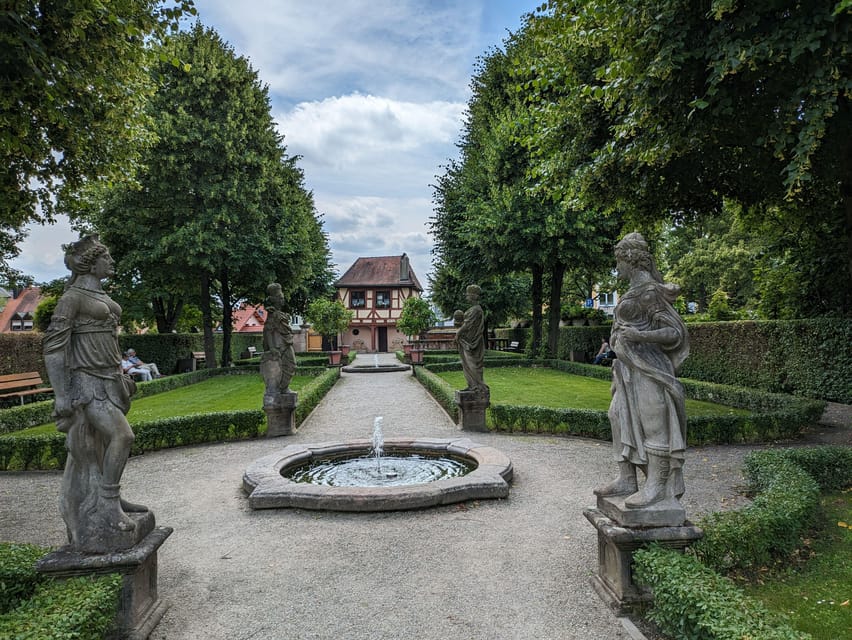
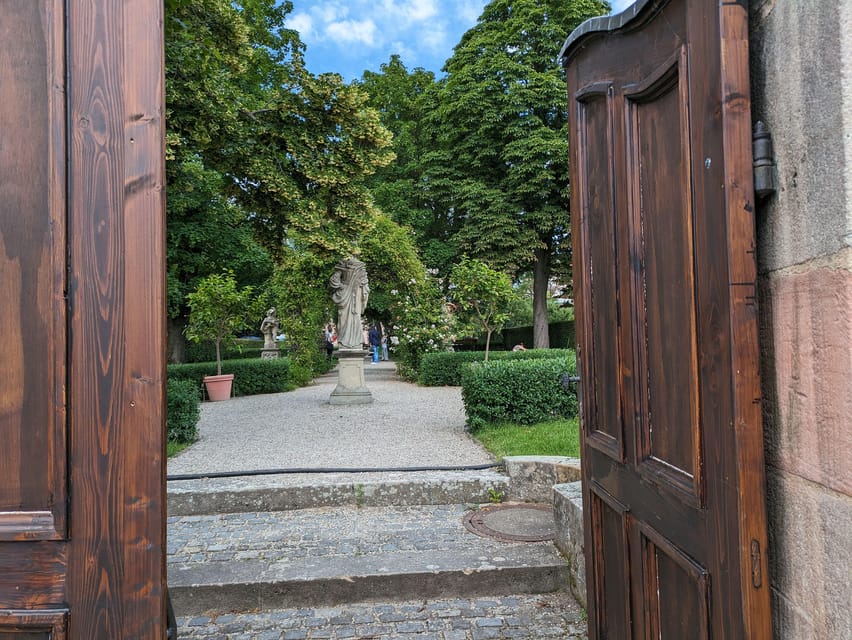
After the cemetery portion, the tour goes to the Hesperidengärten. This is where the mood shifts. Instead of tombs and epitaphs, you’re looking at a historic garden concept tied to leisure and cultivation.
These gardens served recreation, but they also played a role in cultivating Mediterranean fruit. That combination is part of why the gardens matter for understanding the surrounding area, often described as the green Johannis district. You’re seeing how people once used space for both enjoyment and practical growing.
Big planning note: the Hesperidengärten can only be visited from May to October. If you’re traveling outside those months, you’ll want to check whether your tour date includes the gardens or stays strictly with the cemetery.
When heat and season affect your enjoyment
The gardens are outdoors, and weather matters. One guide-day experience highlighted that extreme heat can make this stop feel less interesting, even if the setting is historically meaningful. That’s a useful reality check.
If you’re going in summer, bring what you’d normally bring for an outdoor stroll: water, sun protection, and a light layer that you can adjust. If you’re sensitive to heat, aim for a cooler time of day when possible, and treat the garden as a brief pause rather than the only reason to take the tour.
If you’re more focused on art and monuments than horticulture, you may also find that the garden portion is best as a context stop, not a guaranteed “must-see” for everyone. Still, the recreation-and-fruit story is a neat window into daily life behind the more famous sites in Nuremberg.
A guide who makes biographies click, not just facts
The heart of this experience is the local guide in German. The strongest feedback I see is about how guides turn dry details into something you can picture. One named guide is Sabine Peters, and the recurring praise is that her way of teaching makes biographies and history feel alive and entertaining.
That matters because cemeteries can be intimidating if you’re unsure what you’re looking at. With the guide guiding your attention to epitaphs and connections among social groups, the cemetery stops feeling like a silent archive and starts feeling like a structured lesson.
You also benefit from the group context. Even when your German isn’t perfect, you’ll notice how the guide repeats key ideas as you move from one grave to the next. That flow is part of why a short 1.5 hour tour can feel substantial.
Who this tour suits best
This is ideal if you like:
- History that’s tied to real places, not only big landmarks
- Art and inscriptions, especially if you enjoy reading what’s written
- A short, focused route that fits into a packed day in Nuremberg
It may not be the best fit if:
- You don’t enjoy cemetery settings at all
- You have limited stamina for outdoor walking
- You need wheelchair access or visual accommodations, since the tour is not suitable for wheelchair users or visually impaired people and it’s listed as not suitable for people with low level of fitness
Should you book the St. Johannis Cemetery and Hesperidengärten tour?
Book it if you want a smart, local, German-guided look at Nuremberg that feels different from the usual museums and squares. At about $17 for 1.5 hours, you’re paying for interpretation, not just admission. The cemetery’s mix of patricians, craftsmen, artists, and politicians, plus Albrecht Dürer’s Grab, makes the time feel efficient.
Consider waiting or choosing another option if your travel dates are outside May to October, because the Hesperidengärten portion is seasonal. And if you prefer mostly lively stops with minimal walking, remember that this experience is built around a calm outdoor route, about one kilometer at a steady pace.
If you’re traveling during the garden season, wear comfortable shoes, plan for the outdoor conditions, and bring your curiosity for funerary art and local memory. That’s when this tour is at its best.
FAQ
How long is the tour?
It lasts about 1.5 hours.
What language is the guided tour in?
The tour is held in German.
Where is the meeting point?
Meet at St. Johannisfriedhof, East Entrance, Lindengasse corner of Johannisstraße.
Can I visit the Hesperidengärten year round?
No. The Hesperidengärten can only be visited from May to October.
Is the tour suitable for wheelchair users or visually impaired people?
No. It is listed as not suitable for wheelchair users and visually impaired people.
What else do you see besides the cemetery?
You also visit Albrecht Dürer’s Grab and then finish in the Hesperidengärten.
Newest Nuremberg reviews on the site
- Tour en español al Campo Zeppelin★ 5.0 · 8 reviews
- Tour del tercer Reich por Núremberg en español★ 4.6 · 27 reviews
- Stein: Public guided tour of the “Old Mine” museum★ 4.5 · 18 reviews
- Nürnberg: Private JGA mit 4 Stopps + Clubeintritt + Shots★ 3.6 · 5 reviews
- “Rotes Bier” and “Blaue Zipfel”. A historical-culinary walk★ 4.4 · 190 reviews
- Outdoor escape with puzzle backpack in Nuremberg: The master’s legacy★ 4.6 · 5 reviews
- Nuremberg: Old Town Guided Tour By Bus★ 4.4 · 198 reviews
- Nuremberg: Bar and Club Tour with Free Shots and Free Entry★ 3.8 · 23 reviews
Nuremberg Tours, compared.

Tunnels and Secret Passages in the City Wall Tour
Read our review →

Walking Tour of Former Nazi Party Rally Grounds
Read our review →


Browse the lists this tour appears in