
Reviewed · NUREMBERG TOURS
Nuremberg: Medieval Time Travel for Kids
Medieval Nuremberg, for kids who actually want more. I like this tour for how it turns everyday medieval life into hands-on games and real questions, not lectures. Two big wins for me are the water-focused stories along the Pegnitz and the stop-by-stop way the guide builds connections between people, places, and daily routines.
One thing to consider is that the tour is German only, so if your group needs English, you may have a harder time following all the details. It’s also not suitable for children under 6, so younger kids might lose the thread before the games and role-play land.
In This Review
- Key highlights I’d build my plan around
- Meet the guide at Henkerhaus and get into the story fast
- Pegnitz water lessons that make medieval life click
- Trödelmarkt and Hauptmarkt: the market squares where stories live
- Liebesinsel and Fleischhauerbrunnen: small landmarks with useful context
- St. Sebaldus Church, plus a relief that explains the church’s role
- Historical games and the staged sacred ritual, not just facts
- Medieval professions, childhood food and play, and the knights-and-princesses check
- Walking the Old Town between sights, without a long slog
- Price and duration: why $11 can be real value for families
- Practical tips so you get the most out of the tour
- Who this tour fits best
- Should you book this Medieval Time Travel for Kids tour?
- FAQ
- Where do I meet the guide?
- How long is the tour?
- What is the price?
- What language is the tour guide?
- What will we learn about medieval life?
- What medieval themes are connected to Nuremberg’s locations?
- Will kids have activities, or is it just walking and listening?
- What is the Christmas market connection?
- Is the tour suitable for young children or mobility needs?
- Can I get a refund if plans change?
Key highlights I’d build my plan around
- Pegnitz water in medieval life, explained in kid-friendly terms
- Old Town markets, including the famous spot where the Christmas market happens
- St. Sebaldus Church relief, focused on the church’s role in daily life
- Historical games and shared role-play, including a staged sacred ritual
- Medieval professions and childhood basics, from food and play to myths like knights and princesses
- A walk that stays short between stops, so energy stays high
Meet the guide at Henkerhaus and get into the story fast
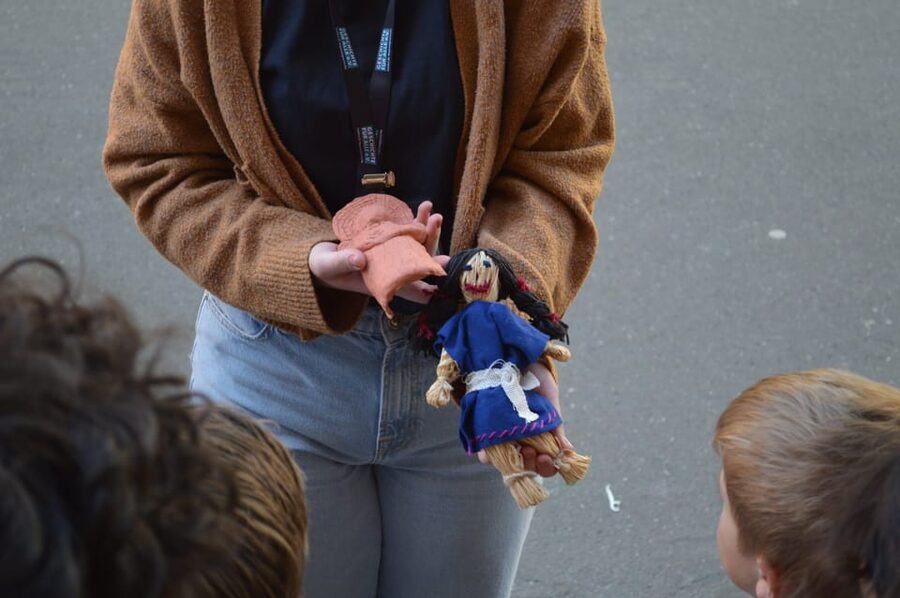
You start at the Hangman’s House area, the Henkerhaus Museum, and you’ll spot the guide by a green name badge and a folder marked Geschichte Für Alle. From the first minutes, the tone is active. You are not just looking at buildings, you are using them as props for history.
This is a walking tour of Nuremberg’s Old Town, designed to keep kids moving without turning into a sprint. You’ll want comfortable shoes because the route connects several sights close to each other, with brief walks between stops.
A few more Nuremberg walks and trips to compare
- Nuremberg: City Tour with the Bimmelbahn Train
★ 4.4 · 2,475 reviews - Nuremberg: Old Town Guided Walking Tour
★ 4.6 · 2,416 reviews - Nuremberg: Tunnels and Secret Passages in the City Wall Tour
★ 4.8 · 2,334 reviews
Pegnitz water lessons that make medieval life click
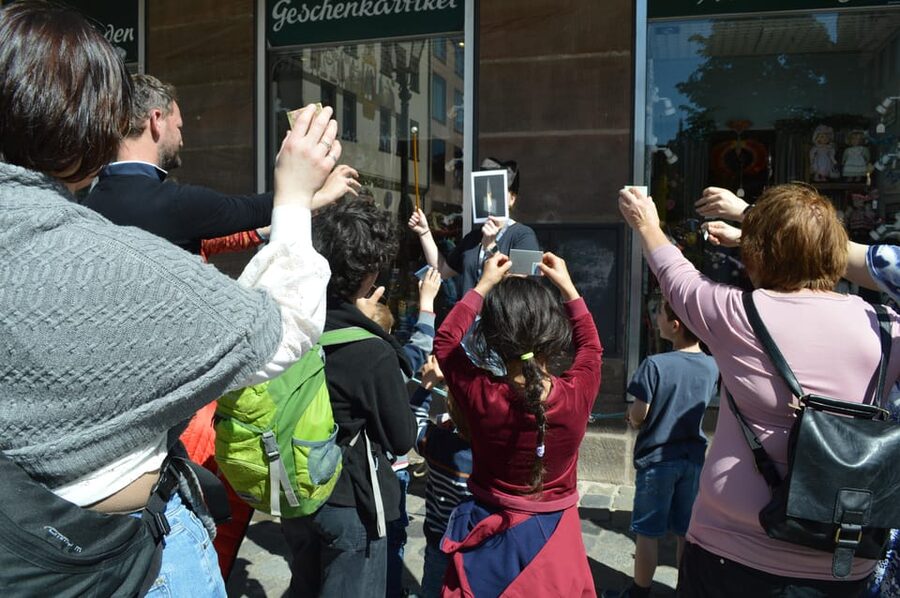
One of the most memorable parts is how the guide uses the river Pegnitz to explain what water meant in medieval times. Instead of treating water as a background detail, you connect it to daily life in the city and how people planned their routines around the river.
I like this approach because it gives kids a simple mental model: medieval life wasn’t only castles and armor. It was chores, needs, and practical choices, and water was part of that picture every day.
You’ll also hear how medieval towns functioned through everyday systems, and that’s what makes the learning feel grounded. Kids who might tune out at the word Middle Ages usually perk up when the guide ties stories to something real you can point to on the map.
Trödelmarkt and Hauptmarkt: the market squares where stories live
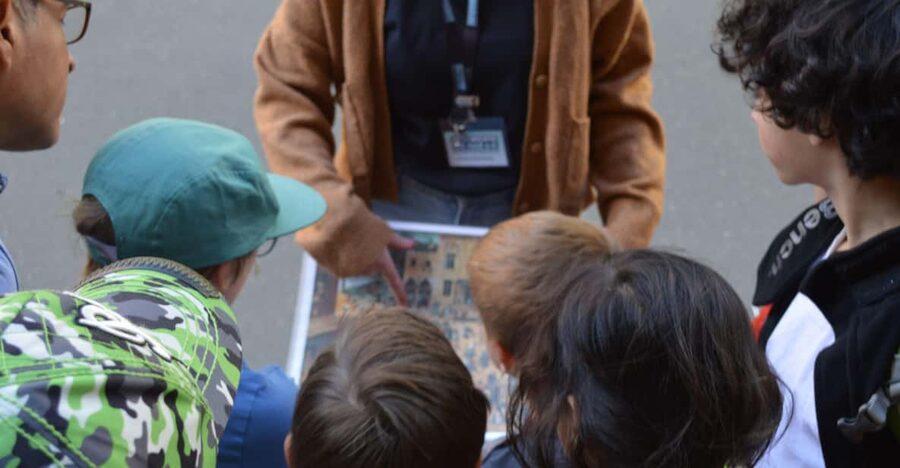
Next you spend time around Trödelmarkt and then on toward Hauptmarkt Nürnberg, the famous market square. This is where the guide brings the city into focus through trade and public life, which is a great fit for families because markets are easy for kids to imagine.
There’s also an extra bonus if you’re traveling in the right season: the market is known for the annual Christmas market. Even if you are not there in peak season, the place itself helps kids understand why people gather in big open squares in the first place.
The guide treats the market stops like story checkpoints. You’ll learn what made these areas important, and you’ll connect them back to the everyday needs of children and adults, not just fancy buildings.
Liebesinsel and Fleischhauerbrunnen: small landmarks with useful context
You’ll make a couple of short walking hops to the Liebesinsel and the Fleischhauerbrunnen, each with its own guided explanation. These are the kinds of stops that can feel optional on a self-guided walk, but on this tour they matter because they help you “read” the city.
I found this particularly helpful for kids because it breaks the walk into manageable chapters. Instead of one long history lecture, you get a series of short scenes. That structure keeps attention from drifting.
Also, these mid-route stops help you notice details. When you understand what a place is for, you start seeing it everywhere, even from street level.
Same city, a different way to spend the afternoon:
- Nuremberg: Medieval Dungeons Guided Tour
★ 4.8 · 2,214 reviews - Nuremberg: Walking Tour of Former Nazi Party Rally Grounds
★ 4.7 · 1,665 reviews - Medieval Tour in Nuremberg in Spanish
★ 5.0 · 1,374 reviews - Nuremberg: Historischer Kunstbunker WWII Art Bunker Tour
★ 4.8 · 921 reviews
St. Sebaldus Church, plus a relief that explains the church’s role
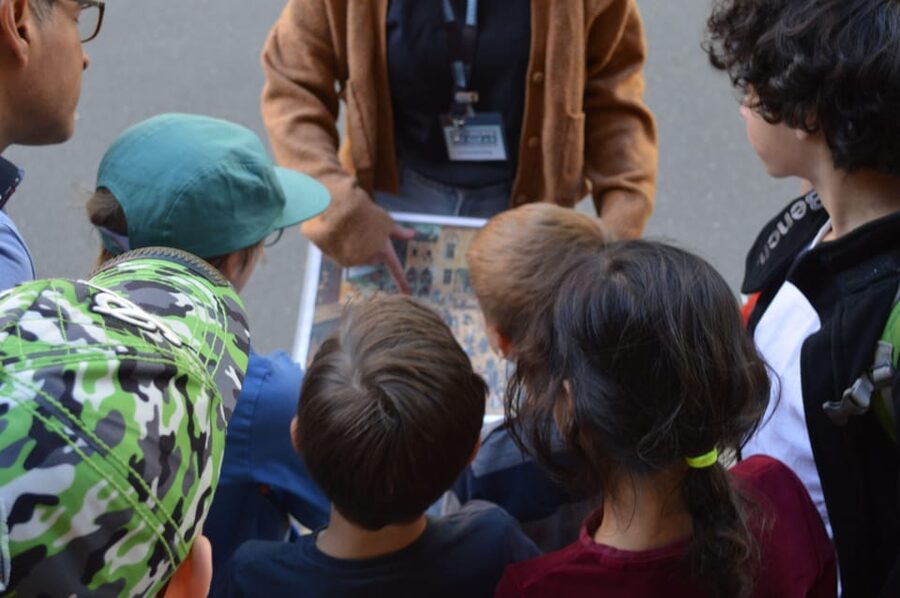
At St. Sebaldus Church, the guide goes beyond pointing at the building. You’ll also focus on the relief outside the church, and the discussion centers on the role of the church in everyday life.
This is one of those moments where the tour makes a practical choice. It explains religion in terms of people’s lives, not distant doctrine. For kids, that means they can connect the church to what they already understand: authority, community rules, and social routines.
If your child has questions like why people built churches so often or how one institution could influence daily habits, this stop gives you language to answer them. It’s also a good chance for adults to get a clearer sense of how central the church was in shaping medieval routines.
Historical games and the staged sacred ritual, not just facts
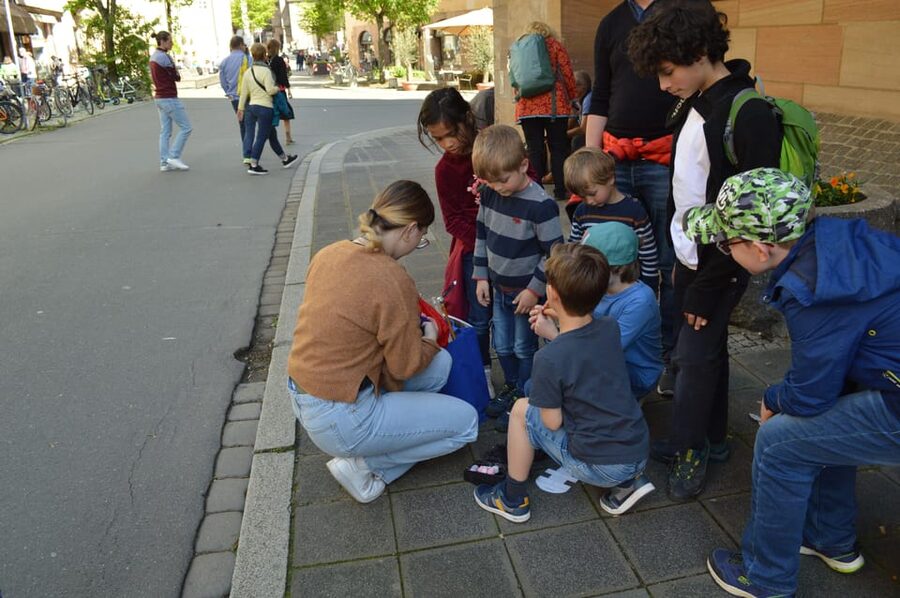
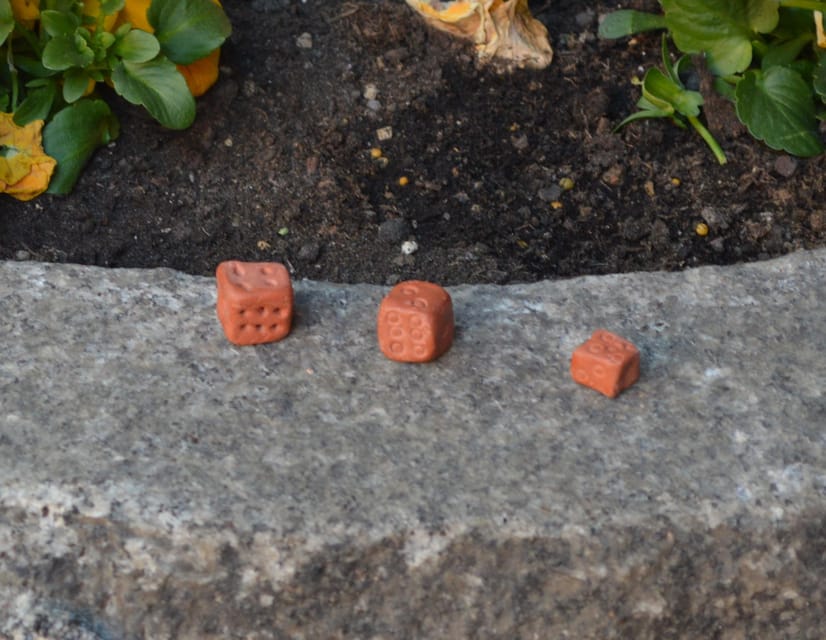
The fun part is not an afterthought here. You play historical games as part of the walk, with activities happening at the stops rather than only at the beginning or end.
That matters because kids learn best when they’re doing something. The games also help you remember what you just heard, because your body is part of the lesson. If you have a child who needs movement to stay engaged, this format is a strong match.
You’ll also take part in a joint staging of a sacred ritual. Even if you are not sure what to expect, the tone is aimed at making the idea understandable and participatory. For families, these moments can be the highlight because everyone gets involved, including adults.
Medieval professions, childhood food and play, and the knights-and-princesses check
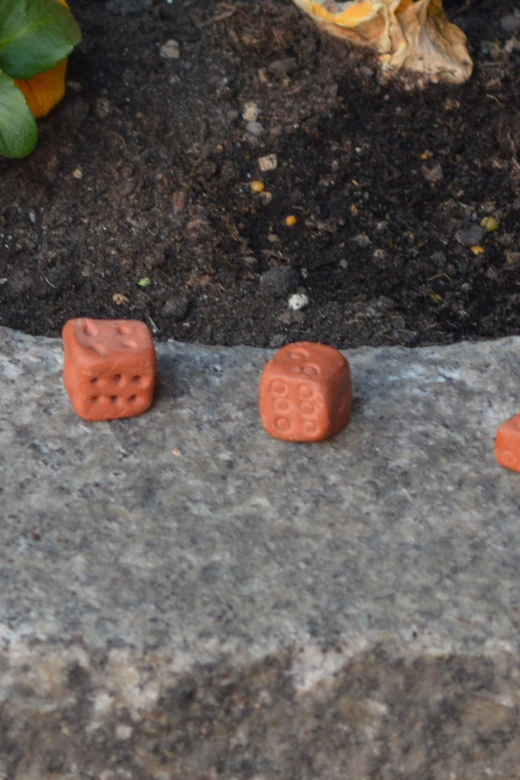
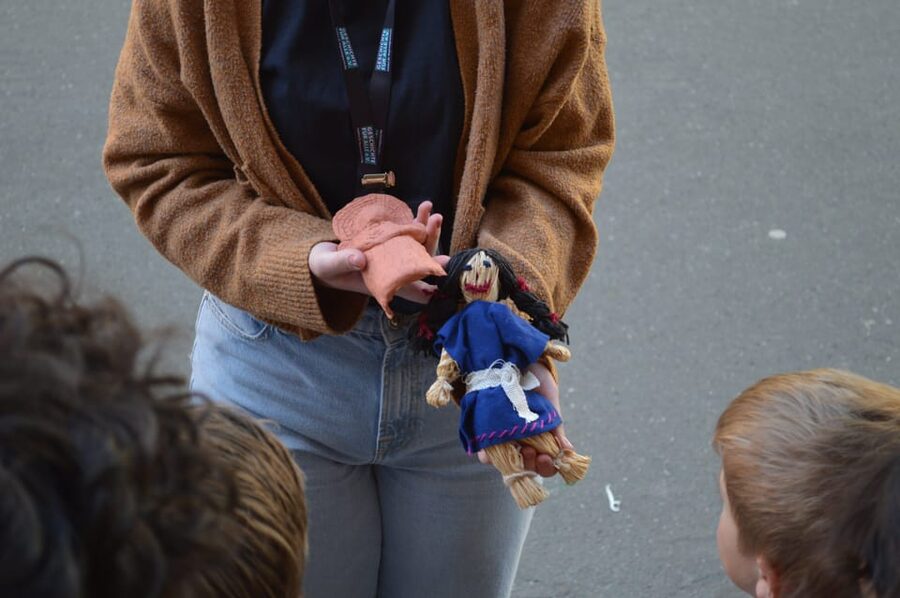
One of the most useful angles is how the guide talks about children in the Middle Ages. You’ll learn about what children ate, what they played with, and whether knights and princesses fit the Nuremberg reality.
I appreciate that the tour doesn’t treat medieval life as pure fantasy. It uses kids’ curiosity to separate what people imagined from what likely existed. That’s a smart way to keep history honest while still letting imagination do its job.
You’ll also discover different medieval professions. This is where you start seeing the city as a set of jobs that support daily life. For kids, that can be a lightbulb moment because it turns the question Who lived where? into What did they do, and why?
Walking the Old Town between sights, without a long slog
The tour is paced as a sequence of short walks, usually only a few minutes between stops. That makes a big difference with kids, especially the ones who do well for the first 20 minutes and then need a change of pace.
You are covering several key areas in the Old Town, but the route is built to keep the experience moving. You get guided time at each halt, then you reset while walking to the next place.
You’ll finish at Weißgerbergasse, which is a nice way to end on a street that feels clearly part of the historic fabric. It gives you a “last scene” feeling as the tour wraps up.
Price and duration: why $11 can be real value for families
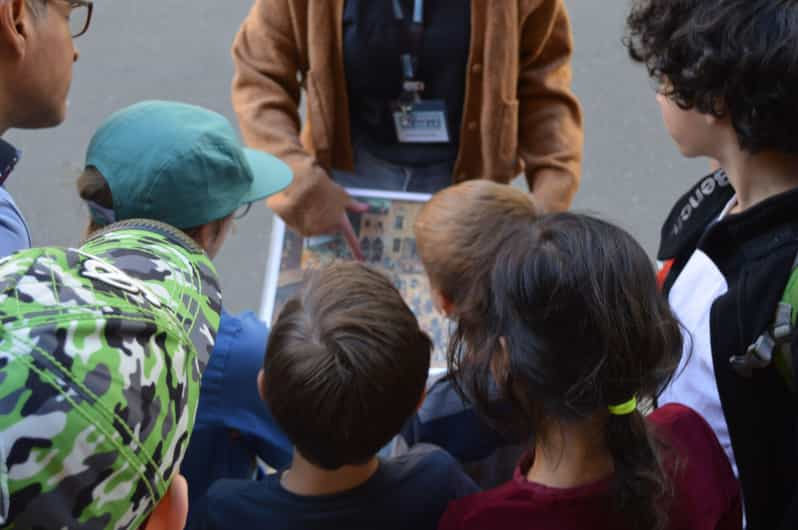
At about $11 per person for a 2-hour guided walk, this is priced for families who want something meaningful without spending a full day and a big budget. The time matters too. Two hours is long enough to cover real content and interactive activities, but short enough that kids are still ready to participate when the games start.
The best value here is not just the price tag. It’s the structure: guide-led storytelling at multiple locations, plus interactive participation. Many family activities either cost more or take longer, and this one avoids that trap by fitting a lot into a short window.
If you are already planning to spend time in Nuremberg’s Old Town, this tour can act like a “decoder ring” for what you see later on your own.
Practical tips so you get the most out of the tour
This one is simple, but the details help. Bring comfortable shoes because the walk connects multiple stops. Also dress for weather since you’ll be outside for parts of the experience.
If your child tends to get restless, lean into the tour’s pacing. Let them ask questions during the guided stops, then encourage them to participate when the guide turns the lesson into a game or role-play.
One more practical point: because the tour is in German, you might want to check that your group can follow basic instructions and enjoy the experience even if not every word is understood. The interactive parts can still carry the day.
Who this tour fits best
This is a strong pick for families with kids age 6 and up. The activities are clearly aimed at child participation, and the content is built around childhood life, play, and social roles, not only architecture.
It’s also a good match for adults who want their kids to learn without feeling like they are sitting through a lecture. The church, market life, and city routines all get explained in plain terms you can use later to talk about what you see.
Not a fit if anyone in your group has mobility impairments. The tour is not listed as suitable for that, and since you will be walking through Old Town streets, it’s better to choose a different format.
Should you book this Medieval Time Travel for Kids tour?
If you want an Old Town walk in Nuremberg that keeps kids active, this is an easy yes. The mix of water stories, market stops, church context, and hands-on participation gives you more than facts. You get a way to think about medieval life that sticks.
Book it if your group is comfortable with a German-led experience and you have kids who enjoy games and role-play. Skip it if you need an English tour or if your child is under 6, since the structure is meant for slightly older kids who can follow activities through multiple stops.
FAQ
Where do I meet the guide?
You meet at the Henkerhaus Museum area, at the Hangman’s House, in front of the guide at Trödelmarkt. The guide has a green name badge and a folder with the words Geschichte Für Alle.
How long is the tour?
The tour lasts 2 hours.
What is the price?
The price is $11 per person.
What language is the tour guide?
The live tour guide speaks German.
What will we learn about medieval life?
You’ll learn about medieval daily life for children, including what they ate and played with, and whether knights and princesses were really part of life in the city. You’ll also cover topics like the role of the church and working life and leisure time.
What medieval themes are connected to Nuremberg’s locations?
The tour includes lessons connected to the river Pegnitz and how water was used in medieval times. You’ll also stop at important Old Town sights such as St. Sebaldus Church and the major market square.
Will kids have activities, or is it just walking and listening?
There are historical games and you can take part in a joint staging of a sacred ritual, with guided stops along the way.
What is the Christmas market connection?
You stop at Hauptmarkt Nürnberg, the famous market where the annual Christmas market takes place.
Is the tour suitable for young children or mobility needs?
It is not suitable for children under 6. It is also listed as not suitable for people with mobility impairments.
Can I get a refund if plans change?
Free cancellation is available up to 24 hours in advance for a full refund.
Newest Nuremberg reviews on the site
- Tour en español al Campo Zeppelin★ 5.0 · 8 reviews
- Tour del tercer Reich por Núremberg en español★ 4.6 · 27 reviews
- Stein: Public guided tour of the “Old Mine” museum★ 4.5 · 18 reviews
- Nürnberg: Private JGA mit 4 Stopps + Clubeintritt + Shots★ 3.6 · 5 reviews
- “Rotes Bier” and “Blaue Zipfel”. A historical-culinary walk★ 4.4 · 190 reviews
- Outdoor escape with puzzle backpack in Nuremberg: The master’s legacy★ 4.6 · 5 reviews
- Nuremberg: Old Town Guided Tour By Bus★ 4.4 · 198 reviews
- Nuremberg: Bar and Club Tour with Free Shots and Free Entry★ 3.8 · 23 reviews
Nuremberg Tours, compared.
Tunnels and Secret Passages in the City Wall Tour
Read our review →
Walking Tour of Former Nazi Party Rally Grounds
Read our review →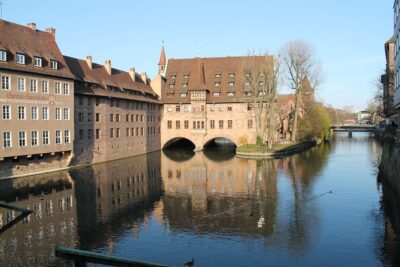
Browse the lists this tour appears in