Reviewed · MUNICH TOURS
Munich: Scary Tour with actors in GERMAN
Witch hunts walk right up to you. This 90-minute Munich tour uses professional actors and costumes to turn dark 16th-century stories into something you can follow street by street. I like that it is serious enough to teach facts, but paced like theater.
At several stops, you will watch scenes of executions, torture, and the pact with the devil, then connect the fiction to real places you can still see today. I also like that the guide and actors work the group into the story, so you are not just standing and listening. One possible drawback: the tour is in German only, so non-German speakers may feel left out.
If you can handle grim topics, you are in for a memorable night stroll. The pace is built for evening walking, and the route links major old-town landmarks to shocking themes like prostitution and witch hunts. I would consider it only if you are comfortable with stories about torture and executions, even though it is delivered in a theatrical, tour-friendly way.
In This Review
- Key highlights that make this tour worth your time
- Munich’s scary walking tour in German: what the 90 minutes actually feel like
- Meeting point at Karlsplatz/Stachus and the easiest way to find your group
- Neuhauser Tor and Salzstraße: where Munich’s punishments began outside town
- Former Jesuit school and St. Michaelis: the tower collapse and the accusation machine
- Schöner Turm, Frauenkirche, and the devil who shows up where it is windy
- Town Hall courtyard and Marco Bragadino: alchemy, persuasion, and story momentum
- St. Peter’s Church and the hangman’s day-to-day reality
- Old Town Hall and the Platzl: torture chamber legends, then the red-light shift
- Price and value: does $46 for 90 minutes make sense?
- Language, comfort, and weather: what you should plan around
- Who should book this scary Munich tour, and who should skip it
- Should you book this Munich: Scary Tour with actors in German?
- FAQ
- What language is the tour conducted in?
- Where is the meeting point?
- How do I recognize the guide?
- How long is the tour?
- Will the tour run in rain?
- Is the tour wheelchair accessible?
- What is the payment and cancellation policy?
Key highlights that make this tour worth your time
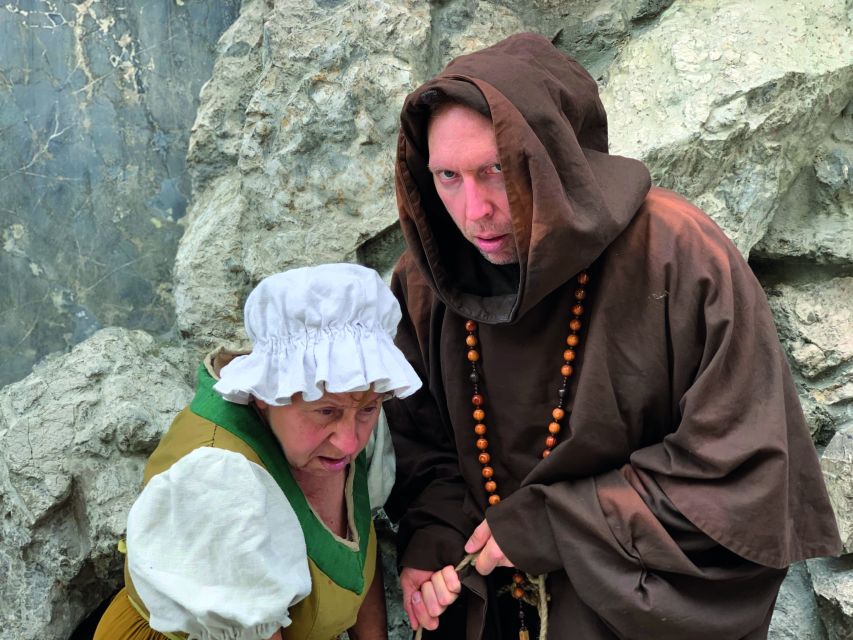
- Professional actors in historic costumes bring the stories to life at key landmarks
- Neuhauser Tor to the Old Town Hall links punishments, torture legends, and city institutions in one walk
- Frauenkirche and the devil myth gets explained with local folklore tied to the building itself
- Real Munich names enter the script, including duchess Renata, Jesuit Father Ignatius, and alchemist Marco Bragadino
- Dark subjects with a clear storyline, covering witch hunts, prostitution history, and hangman life
- Works in rain or shine, so you can plan an evening without worrying about weather
Munich’s scary walking tour in German: what the 90 minutes actually feel like
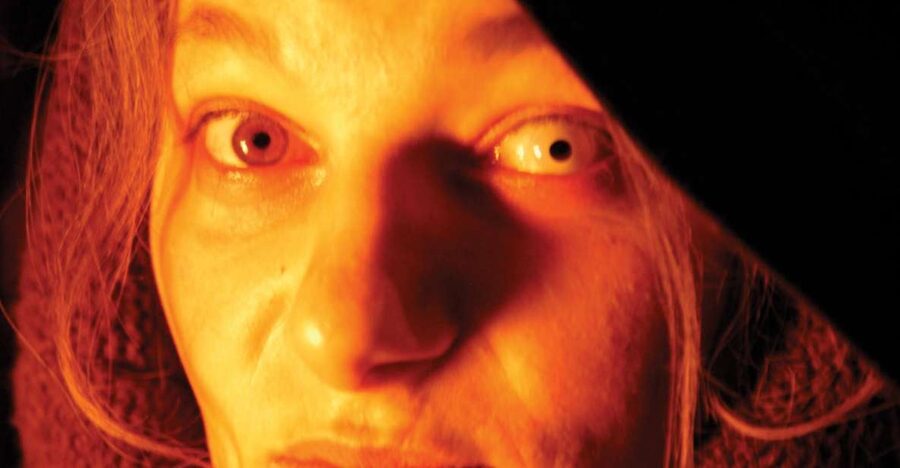
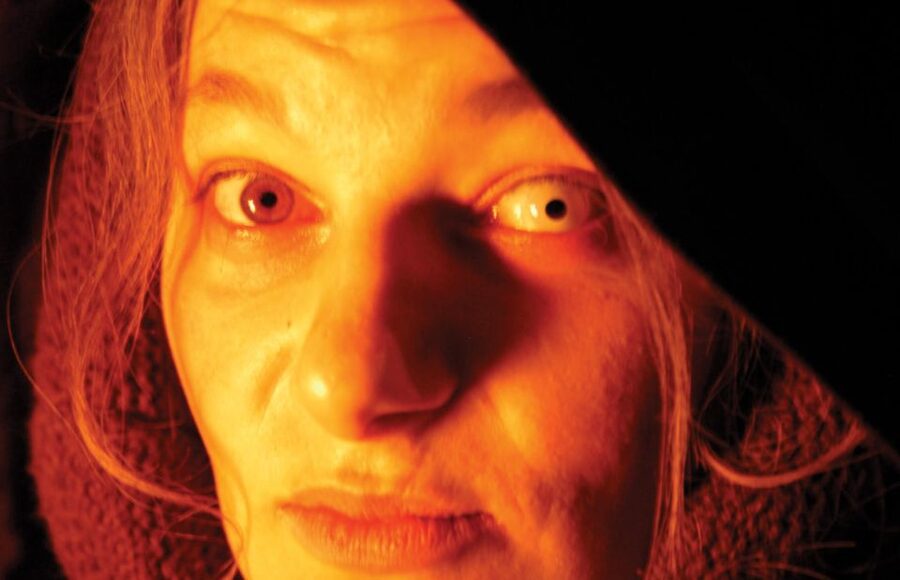
This is not a museum tour where you look at glass cases. It is a street performance with a walking plan attached. In the evening, Munich’s old center turns into stage set. Actors step out of the dark, costumes on, and they re-enact fates, conflicts, and punishments that shaped how people thought, feared, and controlled each other.
The tone matters. You will hear grim themes like witch hunts, prostitution in the historic center, torture, and executions. But the show has structure. You do not just get horror stories. You get a guided explanation of why the events connect to specific spots you pass, and why certain myths became part of the local storytelling.
If you love history that feels human, this works well. You get scenes of arguments, trades, and daily roles, including the people behind the system, not only the victims. And if you enjoy theater, the acting style keeps things moving so your brain does not go numb.
At the same time, manage your expectations. The entire experience is built around storytelling, not academic lecturing. It is entertainment with facts threaded in, and the focus is on making the past legible while staying engaging.
A few more Munich walks and trips to compare
- From Munich: Neuschwanstein & Linderhof Castle Full-Day Trip
★ 4.6 · 14,646 reviews - Neuschwanstein & Linderhof Castle-Fairytale Day Tour from Munich
★ 4.5 · 7,275 reviews - Munich: Third Reich & WWII Walking Tour
★ 4.6 · 6,181 reviews
Meeting point at Karlsplatz/Stachus and the easiest way to find your group
You start at Karlsplatz/Stachus, under the archway of the Karlstor. If you want a fast setup, aim to arrive a few minutes early, because evening groups can tighten up in old-town streets.
Your guide wears a big blue bag with the white words Weis(s)er Stadtvogel written on it. That is a great visual anchor. It makes it easier to identify the right group quickly, which matters when you are meeting in a public square.
Once you gather, expect a short lead-in before you start walking. The route is designed so the acting scenes land right when you reach the linked landmarks, so keeping pace is part of the fun.
Neuhauser Tor and Salzstraße: where Munich’s punishments began outside town
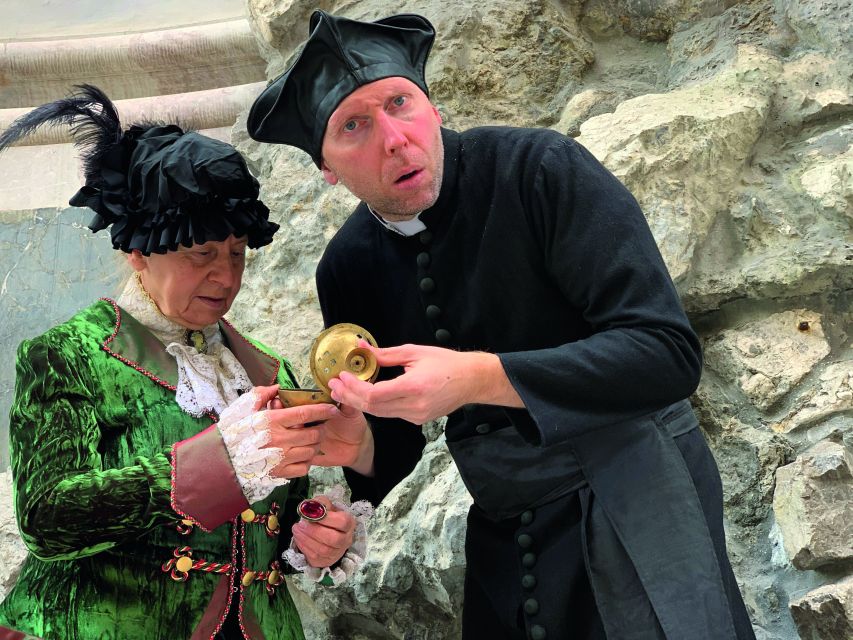
The tour opens at Neuhauser Tor, and it immediately frames a key idea: punishment was not only an event. It was geography. Delinquents were led out toward execution areas outside the city.
From there, you move along Salzstraße, a street tied to Munich’s old life and routes. The tour uses this transition to set up the witch-hunt era and how religious power, political authority, and fear collided. You are not just hearing about witch hunts in the abstract. You are walking through the kind of path that carried people, rumors, and consequences.
This portion sets the emotional tone too. If you have ever wondered why certain executions happened where they did, this tour addresses the logic in a story-driven way, including the idea that the location was outside town.
Former Jesuit school and St. Michaelis: the tower collapse and the accusation machine
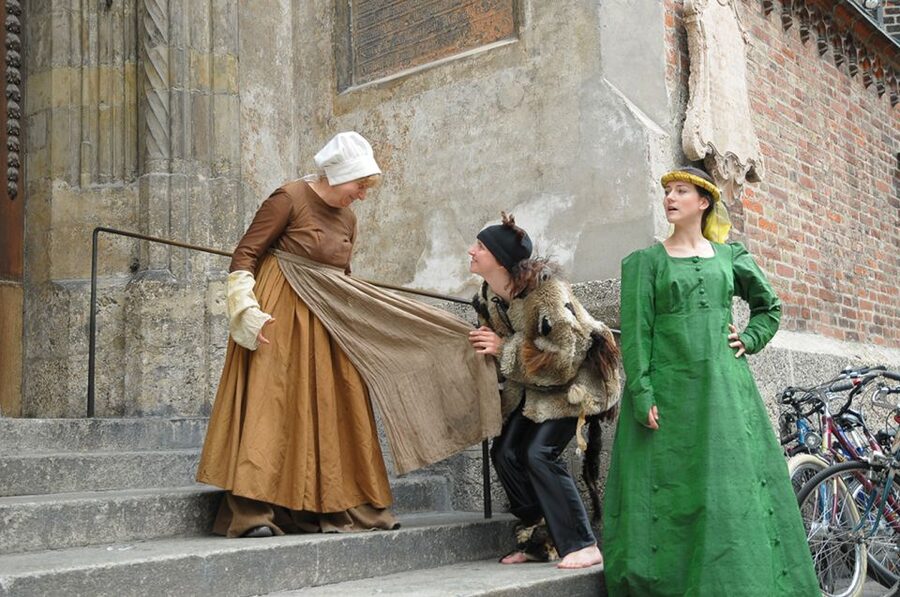
As you continue, you hit the former Jesuit school linked to the witch hunts. This stop matters because it shifts the story from punishment to ideology. It is easier to understand how witchcraft accusations spread when you see how institutions and authority could shape what people believed.
Then you reach St. Michaelis Church, where the show pivots into a scene between duchess Renata and Jesuit Father Ignatius. The dialogue theme is fear translated into certainty: after the church’s tower collapsed during construction, the story claims an unusual storm was caused by accursed bad women.
I like this stop because it explains how myths can become explanations. You might not take the claims at face value, but you can see how a disaster becomes a target when a community already has a framework for blame.
The acting here gives you emotional clarity. Instead of reading about prosecution in a textbook, you feel the pressure in the argument, and you understand why rumor could turn into action.
Same city, a different way to spend the afternoon:
- Dachau Concentration Camp Memorial Site Tour from Munich by Train
★ 4.5 · 5,637 reviews - Neuschwanstein Castle Tour from Munich
★ 4.5 · 5,117 reviews - Third Reich Walking Tour Munich
★ 4.5 · 4,291 reviews - Munich Hop-On Hop-Off Tour: 1-Day or 2-Day Ticket
★ 4.3 · 4,161 reviews
Schöner Turm, Frauenkirche, and the devil who shows up where it is windy
At Schöner Turm, the tour tells the sad story of an unfortunate goldsmith. This is one of those moments where the performance suggests that fear had economic teeth too. People were not only judged for beliefs. They were judged for circumstances, standing, and survival.
Then you move to Frauenkirche, and the tour leans hard into the local devil myth. You will meet the Prince of Darkness himself, at least in story form, and you will hear why the devil supposedly helped the master builder construct the church. The show also plays with the famous idea that the area is windy, tied to the tale, and you even get a playful question about the devil’s shoe size.
This is a smart piece of pacing. Right after heavy accusations, you get folklore that uses humor and imagery. It makes the myth memorable, and it makes the architecture feel connected to local imagination instead of only being a landmark you pass.
One practical consideration: you are outside for much of this part, so if Munich weather is chilly, layer up. If you have good timing, you can use the stops to warm your hands briefly while you catch the next scene.
Town Hall courtyard and Marco Bragadino: alchemy, persuasion, and story momentum
Next comes the Town Hall area. The tour uses the yard of the town hall to stage a meeting with an alchemist, Marco Bragadino, who is presented as a goldsmith. The performance leans into persuasion and showmanship, as if you are watching a pitch unfold in front of real civic power.
This stop is valuable even if you usually skip folklore. It helps you understand why alchemy and miracle-talk had appeal in a time when people were desperate for solutions. The tour does not present it as modern fantasy. It presents it as a social role, a way people sought leverage, wealth, or meaning.
I also like how the tour keeps the story moving forward. After devil myths and witch explanations, the script changes gears to something more human, the temptation to believe that a clever person can make the world change.
St. Peter’s Church and the hangman’s day-to-day reality
At St. Peter’s Church, the theme shifts to the everyday life of a hangman. This is where the tour gets specific about the kind of role the city employed and relied on, including why such a person had to be avoided and how one might obtain a gallows rope.
This is not just shock value. It gives you a framework for how a punishment system worked beyond the public spectacle. You learn that execution was supported by labor and logistics, not only by ideology.
And because it is theater, you get those details in a way that sticks. You might find yourself remembering phrases or images better than if it were just a list.
Old Town Hall and the Platzl: torture chamber legends, then the red-light shift
Then you arrive at the Old Town Hall, and the show takes you across a former torture chamber while sharing gruesome stories tied to the space.
This is a sensitive part. If you are the type who prefers lighter tours, you should think carefully. The tour deals with torture and executions, and it does not sanitize the topic. Still, the performance context matters: you are told why these spaces existed, not only what happened in them.
After that, the tour heads toward Platzl, which the show describes as home to Munich’s red light district until the Olympic Games of 1972. This part also connects to a cultural memory of the area, including the idea that the red-light work disappeared from the historic center over time.
It is an effective end note because it shows how quickly a city’s moral map can change. The tour takes you from dark institutions and punishments to a specific neighborhood identity that changed within modern memory.
The contrast lands, and it helps the overall experience feel less like random horror and more like a guided explanation of how Munich dealt with taboo life across centuries.
Price and value: does $46 for 90 minutes make sense?
At $46 per person for a 90-minute walking tour, you are paying for three things: a live guide, professional actors, and a route through multiple major landmarks with scenes tied directly to each one.
That pricing feels fair if you enjoy performance-based touring. You are not paying for transportation or an entry ticket. You are paying for a script, costumes, acting time, and the effort to keep you moving while telling a connected story.
If you are the type who prefers quiet guided facts only, it might feel pricey for what is essentially a walk. But if you want to see Munich’s old center as a theater stage, this is one of the more entertaining options in the price range.
Also, the overall rating is strong, and the common theme is that the acting breaks up monotony and keeps the information digestible. One review also highlights that the humor and interaction can make the tour feel lighter even while covering dark material.
Language, comfort, and weather: what you should plan around
This tour is German only. If you do not read or understand German well, you might find it hard to track the story beats and jokes. One of the most direct criticisms you will want to take seriously is exactly this language gap.
Timing-wise, you walk in the evening, and the schedule is set by starting times. The tour runs rain or shine, so you should bring a light rain layer even in warm months.
Wheelchair access is listed as available. That said, any old-town walking route can involve uneven paving and short stretches of standing for scenes, so plan for some time on your feet even if the route is accessible.
Who should book this scary Munich tour, and who should skip it
Book it if you:
- Like street theater that teaches local stories at real locations
- Want a guided night walk that links multiple landmarks
- Are curious about witch-hunt folklore and how it became tied to Munich spaces
- Enjoy a tour that sometimes includes audience interaction
Consider skipping it if you:
- Do not speak German well and want an easy language experience
- Prefer tours with no references to torture, executions, and prostitution history
- Get uncomfortable with gruesome stories even when presented as dramatized scenes
If you are traveling as a couple or small group, the format can be especially fun because the acting feels immediate. If you are traveling with older kids, you should judge whether the content fits your family comfort level, since the themes are dark.
Should you book this Munich: Scary Tour with actors in German?
My call: book it if you want Munich after dark with story momentum. The mix of landmark walking and staged scenes is the whole point, and it is done in a way that can be informative without turning into a lecture.
The decision hinges on two practical factors. First, the language. If German is not your comfort zone, you will feel it. Second, the subject matter. If you can handle grim topics, the tour is designed to connect those topics to the city you are standing in.
If those two points work for you, this is a strong value at $46 for 90 minutes. You will leave with clearer explanations for local myths like why the Frauenkirche story includes the devil, and you will understand how fear, religion, and civic power shaped Munich’s old streets.
FAQ
What language is the tour conducted in?
The live tour guide speaks German.
Where is the meeting point?
You meet at Karlsplatz/Stachus, under the archway of the Karlstor.
How do I recognize the guide?
Your guide will be wearing a big blue bag with the white words Weis(s)er Stadtvogel written on it.
How long is the tour?
The tour lasts 90 minutes.
Will the tour run in rain?
Yes, the tour takes place rain or shine.
Is the tour wheelchair accessible?
Yes, wheelchair accessibility is listed.
What is the payment and cancellation policy?
You can reserve now and pay later, and you can cancel up to 24 hours in advance for a full refund.
Newest Munich reviews on the site
- Private day trip from Munich to Eagle’s Nest, Salzburg and back★ 4.5 · 15 reviews
- Private Tour from Munich to Salzburg with English Speaking Driver★ 4.5 · 10 reviews
- Private day trip: Munich to Neuschwanstein Castle, local driver★ 4.5 · 3 reviews
- Private day trip from Munich to Salzburg and Hallstatt★ 4.5 · 17 reviews
- Private Day Trip Munich to Harburg, Dinkelsbuhl & Rothenburg★ 4.5 · 24 reviews
- Private Day Trip from Munich to Eagle’s Nest and Hallstatt★ 4.5 · 9 reviews
- Munich Lake Konigssee and Berchtesgaden Salt Mine Private Tour with Lake Cruise★ 4.5 · 7 reviews
- Private day trip from Munich to Eagle’s Nest and Salzburg★ 4.5 · 9 reviews
Munich Tours, compared.
Neuschwanstein & Linderhof Castle Full-Day Trip
Read our review →
Neuschwanstein & Linderhof Castle-Fairytale Day Tour from Munich
Read our review →
Dachau Concentration Camp Memorial Site Tour from Munich by Train
Read our review →
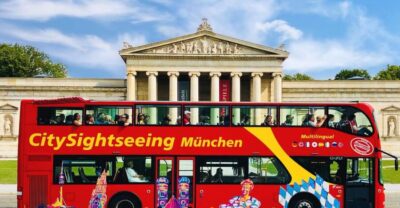
Munich Hop-On Hop-Off Tour: 1-Day or 2-Day Ticket
Read our review →