Reviewed · MUNICH TOURS
München: Stadtführung Henker, Huren, Hexen in GERMAN
A city walk about executioners, sex workers, and witches changes your perspective fast, and the stops around Frauenkirche and St. Michael’s Church are a great way to keep it grounded in real Munich. I also love how your guide turns heavy topics into sharp, street-level stories, with details like why the main headquarters sat outside the city and why prostitution later faded out in the 1970s. One possible drawback: if you want rock-solid proof tying every stop directly to each theme, a couple of connections may feel less certain, and you will need to stay close to hear the German clearly.
You’ll spend 2 hours walking, rain or shine, and you can choose a shared group or a private tour. The meeting point is under the Neuhauser archway, and your guide will be easy to spot with a big blue bag that reads Weis(s)er Stadtvogel.
In This Review
- Key moments that make this tour memorable
- Executioners, Huren, Hexen: what this Munich tour is really about
- Neuhauser Tor: where sentences left the city
- St. Michael’s Church: an easy Munich landmark with a heavy story
- Frauenkirche and the public face of Munich
- Alter Hof (Old Court of Munich): power that never really left
- Walking along the historic salt road
- Former Jesuit college: witch-hunt fear meets real buildings
- Prostitution in Munich: why it ends later than you think
- What you won’t see, and what that means for your comfort
- Duration, walking style, and why that 2 hours feels right
- Price and value: is $25 for a 2-hour German tour worth it?
- Choosing between group and private: the listening difference
- A practical tip for a better experience in German
- So should you book Henker, Huren, Hexen in Munich?
- FAQ
- How long is the tour?
- What language is the guide speaking?
- Where do we meet the guide?
- Does the tour run in bad weather?
- What is included in the price?
- Are entrance fees, food, or drinks included?
- Is the tour suitable for people with mobility impairments?
- Can I cancel, and can I pay later?
Key moments that make this tour memorable
- Meet under Neuhauser archway and start at the edge of the old city’s power corridor
- St. Michael’s Church and Frauenkirche as recognizable Munich anchors for dark stories
- Neuhauser Tor viewpoint where delinquents were led out for execution
- Alter Hof (Old Court of Munich), where law and authority get their walking-map treatment
- Salt road and the former Jesuit college, tying geography to witch-hunt fears
- No reenactments, just explanations, so you control what you take in
Executioners, Huren, Hexen: what this Munich tour is really about
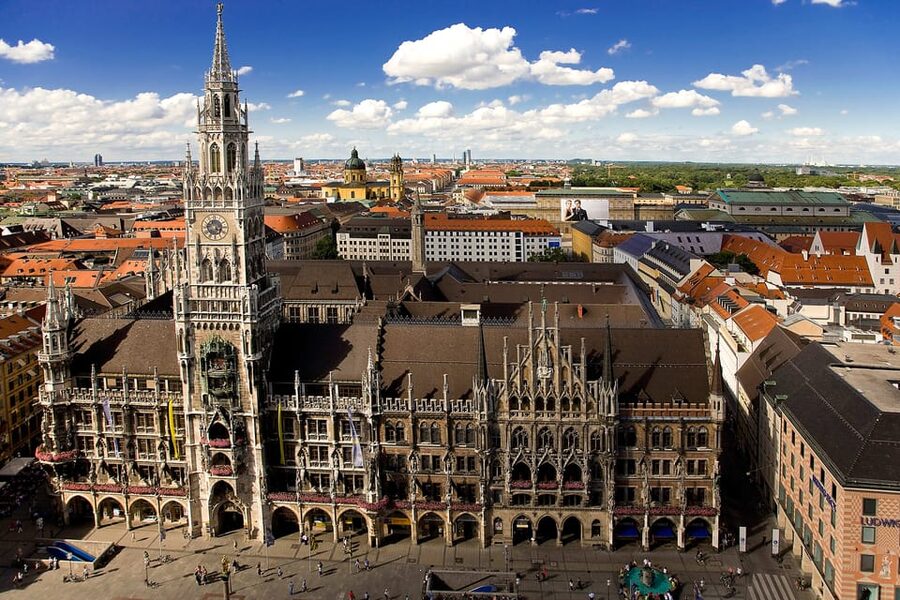
This is a 2-hour walking tour with a very specific aim: show what executioners, prostitutes, and people accused of witchcraft had in common in Munich, and how the city ran on fear, punishment, and control. You do not get actors or staged scenes. You get a guide pointing at street corners, churches, and civic buildings, then explaining how these systems operated.
The theme is tough. The point is not shock value. The point is context. You start seeing how roles that sound separate on a textbook page were often linked in one messy municipal machine, including the fact that executioners could also act as pimps. That one detail alone is enough to make the whole tour feel different from a typical “dark history” stroll.
A few more Munich walks and trips to compare
- From Munich: Neuschwanstein & Linderhof Castle Full-Day Trip
★ 4.6 · 14,646 reviews - Neuschwanstein & Linderhof Castle-Fairytale Day Tour from Munich
★ 4.5 · 7,275 reviews - Munich: Third Reich & WWII Walking Tour
★ 4.6 · 6,181 reviews
Neuhauser Tor: where sentences left the city
Your tour starts at the Neuhauser area, under the archway, and it quickly moves you to the place tied to the city’s punishment system. You’ll stand at the Neuhauser Tor, described as the spot where delinquents were led out of the city to be executed.
Why this stop matters: a gate is not just a photo spot. It is an answer to a practical question. How did a city move someone from everyday life to punishment without turning the whole city into a courtroom? By starting here, you get the physical logic first, then the stories make more sense as you walk.
St. Michael’s Church: an easy Munich landmark with a heavy story
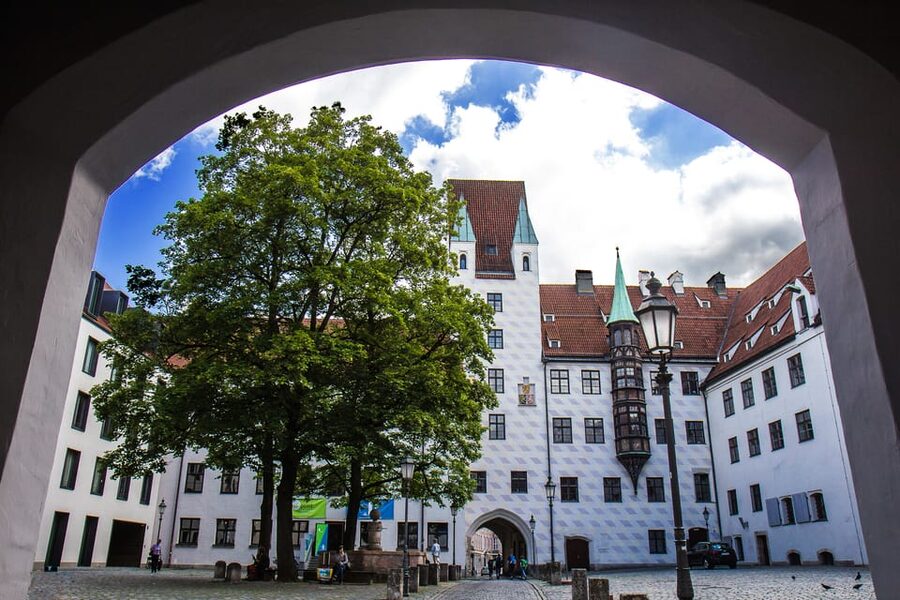
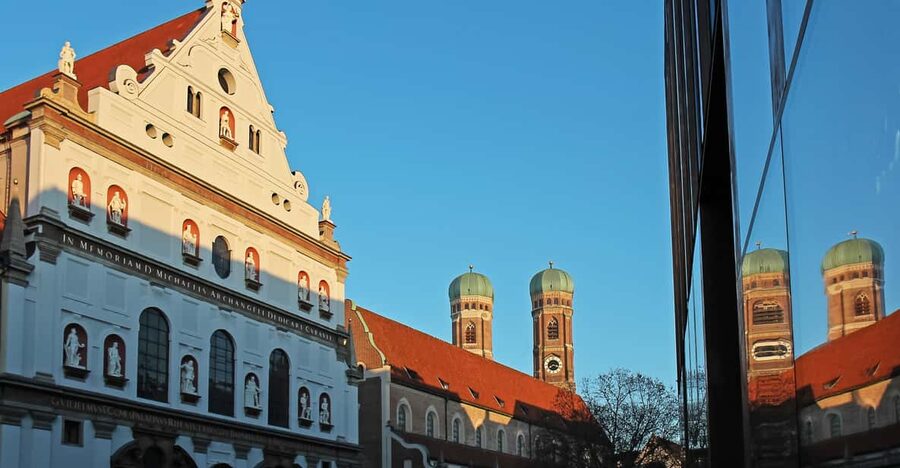
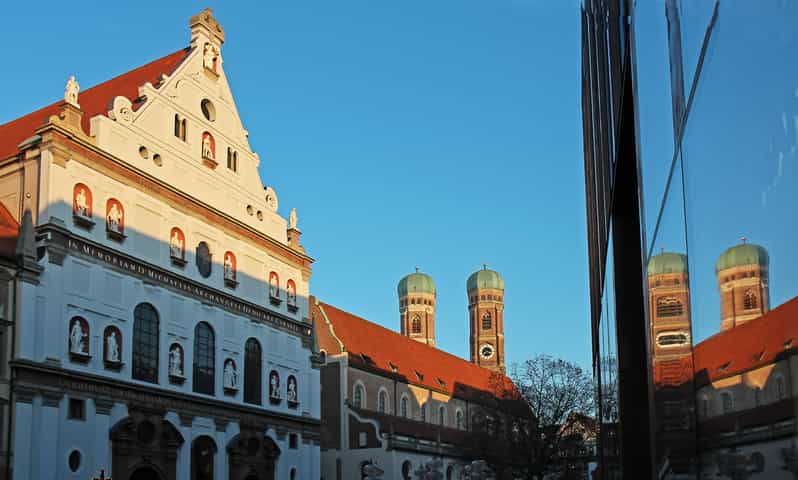
Next comes St. Michael’s Church. It’s a real, recognizable piece of Munich, which helps you keep your bearings while the guide talks about torture, witch hunts, and executions.
The main value of this stop is contrast. You see a church that feels stable and permanent, then you hear how people lived under systems that were not. It makes the past feel less like a distant chapter and more like something that happened right in sight of everyday life.
If you are the type who likes a clear, direct link between a stop and the theme, pay attention to what your guide says here. I like this kind of tour most when the guide stays specific about the connection rather than stretching the narrative. With this one, the best experience comes when you can hear the details clearly and stay engaged.
Frauenkirche and the public face of Munich
The Frauenkirche is the best-known Munich landmark on this walk, and you see it as the tour carries you through the center. Your guide uses this highly visible spot to talk about how the city’s authority showed itself to the public, while darker practices often happened on the edges or behind the scenes.
This is where the tour earns its keep if you like “explain it where you stand” history. Churches and courts are dramatic settings, but the guide’s job is to connect the setting to how punishment and reputation were managed. You’ll hear that the headquarters connected to these actions were located outside the city, and that geographical choice mattered.
Practical note: since you are in a busy central area, crowd noise can make it harder to catch every point in German. If listening is your priority, position yourself closer to the guide when you stop.
Same city, a different way to spend the afternoon:
- Dachau Concentration Camp Memorial Site Tour from Munich by Train
★ 4.5 · 5,637 reviews - Neuschwanstein Castle Tour from Munich
★ 4.5 · 5,117 reviews - Third Reich Walking Tour Munich
★ 4.5 · 4,291 reviews - Munich Hop-On Hop-Off Tour: 1-Day or 2-Day Ticket
★ 4.3 · 4,161 reviews
Alter Hof (Old Court of Munich): power that never really left
You’ll pass the Alter Hof, the Old Court of Munich. This is not a “tour bus window” moment. It is another point where governance shows up in stone and street layout.
Why this matters: executioners, punishments, and witch trials were not random acts. They worked because institutions, reputations, and enforcement were tied together. The guide’s stories make it easier to understand how authority could be both legal on paper and cruel in practice.
I like that you do not just walk past impressive buildings. You get the “who had the power here” angle. Even if you only remember one thing, it helps you read Munich differently.
Walking along the historic salt road
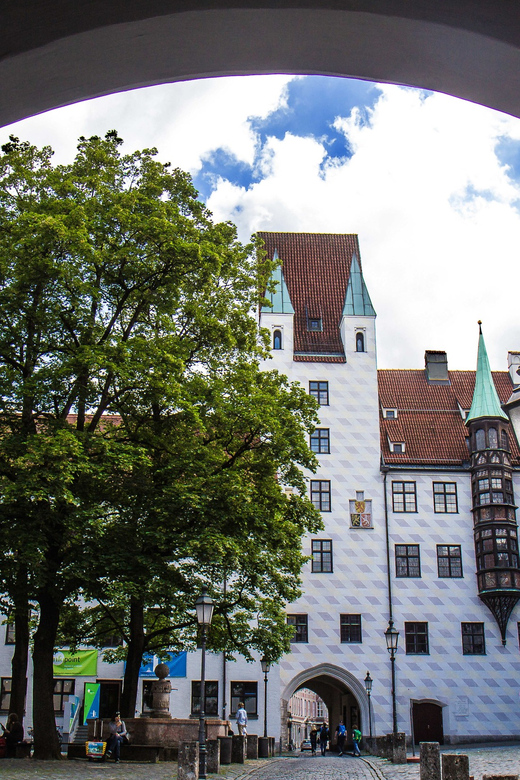
As the tour continues, you travel along the historic salt road. Salt routes sound like a trade fact, but here the guide uses geography as a clue for how information and influence moved.
This kind of street-level history is useful because it avoids the trap of making everything feel like it happened in an isolated courtroom. You start seeing the city as a network. Roads mattered. Placement mattered. Who was close to the right people and places could affect what happened to accusations, punishments, and “order.”
If you like guided walks that connect the dots between infrastructure and human behavior, this segment will feel satisfying. It turns a simple route into a reason something could happen where it did.
Former Jesuit college: witch-hunt fear meets real buildings
You reach the former Jesuit college area next, where you hear about witch hunts and how people tried to make sense of them. This is one of the more chilling parts of the itinerary because it focuses on a kind of social panic that could grow fast when leaders decided it needed an enemy.
The tour also includes specific, guide-led facts that help you anchor the topic. You’ll hear why the witch hunt machinery had its centers outside the city, and how municipal systems linked fear to action.
In terms of tone, I suggest you go in knowing the subject matter is dark and uncomfortable. You will not get soft language. The goal is understanding, not entertainment.
Prostitution in Munich: why it ends later than you think
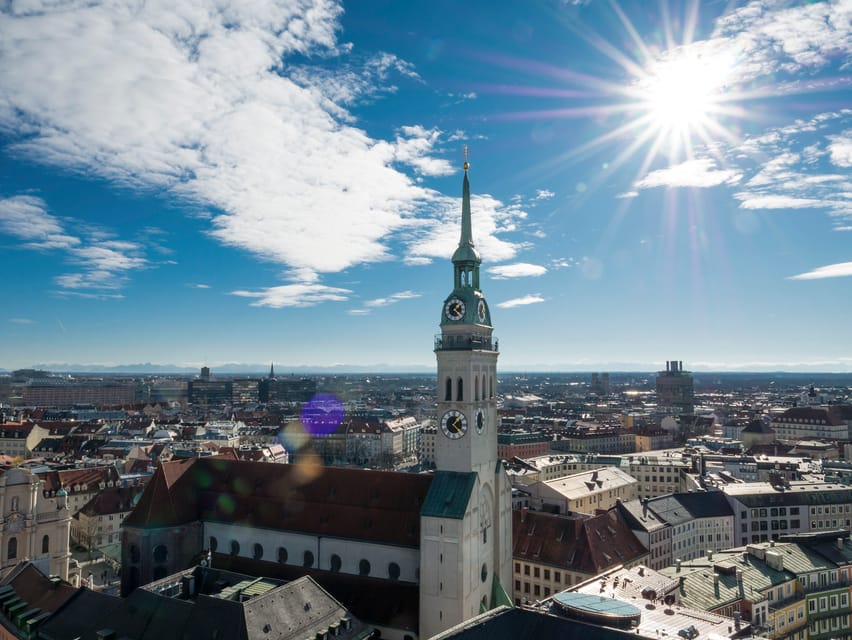
One of the tour’s defining ideas is the connection between executioners and prostitution, including the claim that executioners also acted as pimps. That is a strong theme, and it can shape the entire walk’s story logic.
You’ll also hear a specific point: why prostitution ended in the 1970s. That detail is valuable because it stops the tour from being only about “medieval horror.” It nudges you into the more complicated reality that systems changed over time, including how policing and social policy eventually shifted.
Important balance note: this is not a tour that treats sex work as a moral lesson. It’s a tour about how Munich handled people through control, punishment, and regulation. If you prefer history that is strictly legal or strictly religious, you might find the topic mix challenging. For most people, that mixture is exactly why the tour feels memorable.
What you won’t see, and what that means for your comfort
This tour does not include actors or reenactment. That sounds like a minor detail, but it changes the whole experience. You are not watching staged torture or being led through theatrical scenes. You are walking and listening to explanations.
That matters for comfort. You can process the topic at your own pace. You can look away during the hardest parts. And you can decide which points to take notes on.
If you are worried about being emotionally worn out, this no-actor format is a plus. The subject is still heavy, but you control the volume more than in a reenactment show.
Duration, walking style, and why that 2 hours feels right
The whole tour is 2 hours, which is a sweet spot. Long enough to connect several major Munich landmarks and the key “dark history” geography points. Short enough that you do not have to commit your whole day to one theme.
Because it is a walking city tour, it works best if you come prepared to stay on your feet through multiple stops. Comfortable shoes are the big requirement. If you get tired easily in crowds or on uneven pavement, plan accordingly.
Also, the itinerary is built around visible public spaces. That’s why the landmarks matter. You are not chasing distant locations and you are not waiting in line for interiors with entrance fees.
Price and value: is $25 for a 2-hour German tour worth it?
At $25 per person for a 2-hour guided walk, the value is mainly in two things: a specialist guide and the landmark route. You get a knowledgeable city guide and an actual guided experience focused on a niche topic that most general sightseeing tours skip.
Entrance fees are not included, so the value is not in museum access. It is in interpretation. You pay for the guide’s ability to connect places like Neuhauser Tor, St. Michael’s Church, Frauenkirche, Alter Hof, the salt road, and the former Jesuit college into a single story arc.
In my book, that is good value if you like learning as you walk and you feel comfortable with German guidance. If you want a quieter, purely visual tour with minimal talk, then a thematic dark history focus might feel like too much conversation for your tastes.
Choosing between group and private: the listening difference
You can pick either a shared group or a private tour. That choice affects how easy it is to follow the German and how much the guide can pace for you.
A shared group can be fun because you get a lively atmosphere and a range of questions. A private tour is better if you want more control, quieter listening, or more time at specific stops to absorb details.
Given the tour’s reliance on guide explanations, listening clarity matters. If German is not your strongest language, private might help you ask for clarification in the moment. If German is comfortable for you, either option can work well.
A practical tip for a better experience in German
Two things will make your tour smoother: position and pace.
Position: when you arrive at a stop like Frauenkirche or a gate area, get close enough to hear without craning or losing half the guide’s sentences. Crowds can be loud in the center.
Pace: rain or shine means you might walk in less-than-ideal weather. I recommend sticking with the plan, staying close to the group, and wearing footwear with traction.
And one more detail you can use right away: meet under the Neuhauser archway and look for the guide carrying a big blue bag with the white words Weis(s)er Stadtvogel. That cuts down on awkward delays.
So should you book Henker, Huren, Hexen in Munich?
Book it if you want a guided walking tour that connects Munich landmarks to uncomfortable themes, with explanations that turn street corners into meaning. You’ll like it especially if you enjoy thematic history and you are comfortable walking and listening in German for 2 hours.
Skip it or think twice if you need every claim to come with formal certainty at every single stop, or if you struggle to hear spoken German in busy places. Also, because the tour is described as wheelchair accessible but not suitable for people with mobility impairments, check your own mobility needs carefully before committing.
If you match the vibe, this tour is a memorable way to see Munich. Not through pretty postcards, but through how the city worked, punished, and rationalized its way through fear.
FAQ
How long is the tour?
The tour lasts 2 hours.
What language is the guide speaking?
The live tour guide speaks German.
Where do we meet the guide?
Meet your guide under the Neuhauser archway. The guide will be wearing a big blue bag with the white words Weis(s)er Stadtvogel.
Does the tour run in bad weather?
Yes, the tour takes place rain or shine.
What is included in the price?
The price includes a guided tour with a guide.
Are entrance fees, food, or drinks included?
No. Entrance fees, food, and drinks are not included.
Is the tour suitable for people with mobility impairments?
The tour is described as wheelchair accessible, but it is also listed as not suitable for people with mobility impairments. You should judge your own needs carefully.
Can I cancel, and can I pay later?
You can reserve now and pay later, and you can cancel up to 24 hours in advance for a full refund.
Newest Munich reviews on the site
- Private day trip from Munich to Eagle’s Nest, Salzburg and back★ 4.5 · 15 reviews
- Private Tour from Munich to Salzburg with English Speaking Driver★ 4.5 · 10 reviews
- Private day trip: Munich to Neuschwanstein Castle, local driver★ 4.5 · 3 reviews
- Private day trip from Munich to Salzburg and Hallstatt★ 4.5 · 17 reviews
- Private Day Trip Munich to Harburg, Dinkelsbuhl & Rothenburg★ 4.5 · 24 reviews
- Private Day Trip from Munich to Eagle’s Nest and Hallstatt★ 4.5 · 9 reviews
- Munich Lake Konigssee and Berchtesgaden Salt Mine Private Tour with Lake Cruise★ 4.5 · 7 reviews
- Private day trip from Munich to Eagle’s Nest and Salzburg★ 4.5 · 9 reviews
Munich Tours, compared.

Neuschwanstein & Linderhof Castle Full-Day Trip
Read our review →
Neuschwanstein & Linderhof Castle-Fairytale Day Tour from Munich
Read our review →
Dachau Concentration Camp Memorial Site Tour from Munich by Train
Read our review →
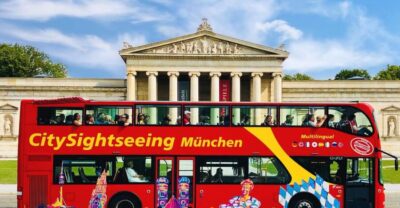
Munich Hop-On Hop-Off Tour: 1-Day or 2-Day Ticket
Read our review →