
Reviewed · HISTORICAL TOURS
Karlsruhe: Guided City History & Culture Walking Tour
Karlsruhe’s story is written in its streets. This 1.5-hour walk is built around the city’s Baroque planned roots, then connects them to the people who shaped Karlsruhe’s identity, from Karl III Wilhelm to architect Weinbrenner. I especially like the way the guide uses funny anecdotes and practical insider tips to make the past feel usable in the present. One thing to consider, though, is that it is an outdoor tour in all weather, so you need to dress for whatever Karlsruhe throws at you.
You’ll start at the Tourist-Information Karlsruhe on Kaiserstraße, then spend the rest of the time learning how Karlsruhe works as a “new start” city. I like that it includes a German-speaking local guide and keeps the focus on history and culture without turning it into a lecture. If you hate walking or you need long stops, plan your pace, because you are on the move for the full 1.5 hours.
In This Review
- Key tour takeaways (what matters most)
- Starting on Kaiserstraße, getting oriented fast
- Karl III Wilhelm and the bold move from Durlach to Karlsruhe
- Baroque planning in real life, not just on paper
- Weinbrenner’s classical ideas, and why they still matter
- Funny anecdotes and insider tips you can reuse
- The flow of the walk: what the 1.5 hours likely feels like
- Tuesday options: Hometown Karlsruhe and Residence of Law
- Price and value: what $12 buys you
- Who should book this walking tour in Karlsruhe?
- What’s included, and what you’ll handle on your own
- Practical notes to keep your day comfortable
- Should you book this Karlsruhe guided city history and culture tour?
- FAQ
- FAQ
- How long is the Karlsruhe guided city history and culture walking tour?
- How much does the tour cost?
- Where does the tour start?
- Does the tour end back at the meeting point?
- What language is the tour guide speaking?
- What is included in the price?
- What is not included?
- Is the tour wheelchair accessible?
- Does the tour run in all weather?
- Is there a Tuesday theme for the tour?
- Are there age rules or restrictions?
Key tour takeaways (what matters most)
- Karl III Wilhelm’s 1715 decision: why a new city replaced the older capital in Durlach
- Karlsruhe’s planned city design: how the Baroque blueprint still shapes what you notice today
- Weinbrenner’s classical influence: see how architecture ties into a larger cultural idea
- Humor plus context: funny anecdotes that make names and dates easier to remember
- Insider tips you can actually use: guidance that helps you look around after the tour
- Tuesday theme option: Hometown Karlsruhe, Residence of Law, with a different cultural angle
Starting on Kaiserstraße, getting oriented fast
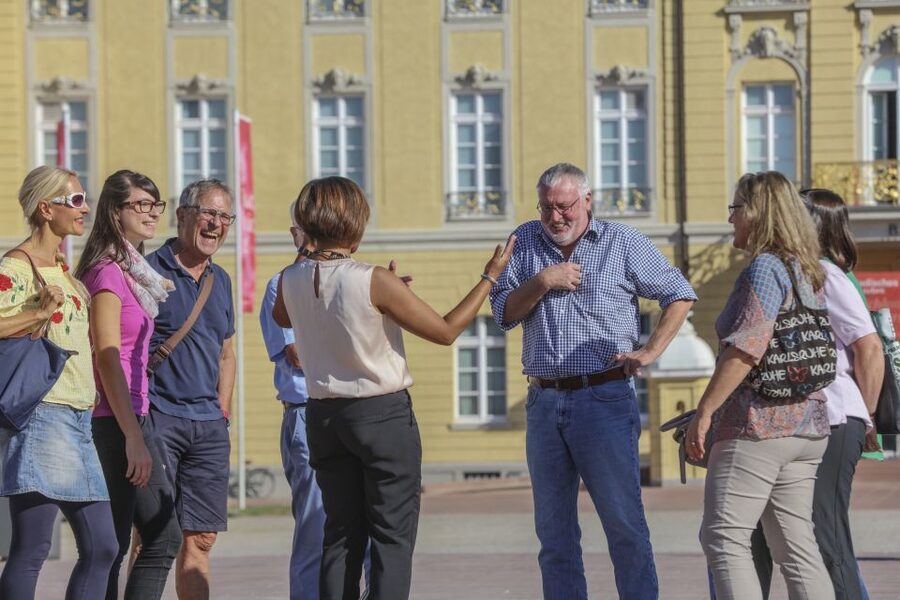
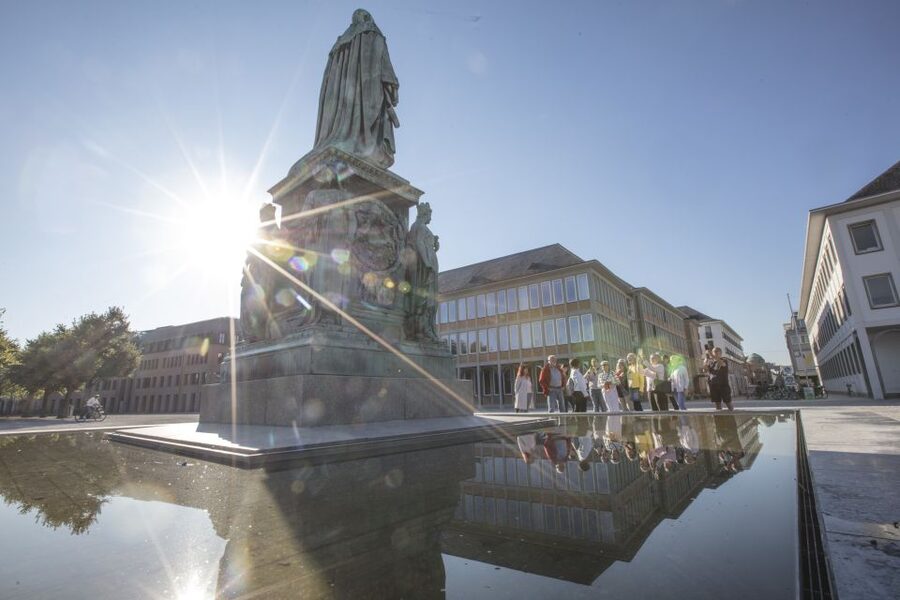
Your tour begins at the Tourist-Information Karlsruhe, Kaiserstraße 72 to 74, right by the market square. That matters more than it sounds. You are starting in a place designed for visitors to orient themselves, which means you can quickly build a mental map before you’re deep into the city’s story.
Within the first stretch of walking, the guide sets the tone: this is not just a list of dates. The focus is on how Karlsruhe became a distinctive place, even though it is only about 300 years old. You will hear how its Baroque planned-city approach was a novelty for its time, and how that early intention still shows up in the atmosphere you experience today.
A few more Karlsruhe walks and trips to compare
- Leipzig: City History Canal Sightseeing Tour on a Motorboat
★ 4.7 · 7,671 reviews - Berlin: Natural History Museum Entrance Ticket
★ 4.6 · 3,382 reviews - Leipzig: 1.5-Hour Historical Walking Tour in German
★ 4.7 · 2,217 reviews
Karl III Wilhelm and the bold move from Durlach to Karlsruhe
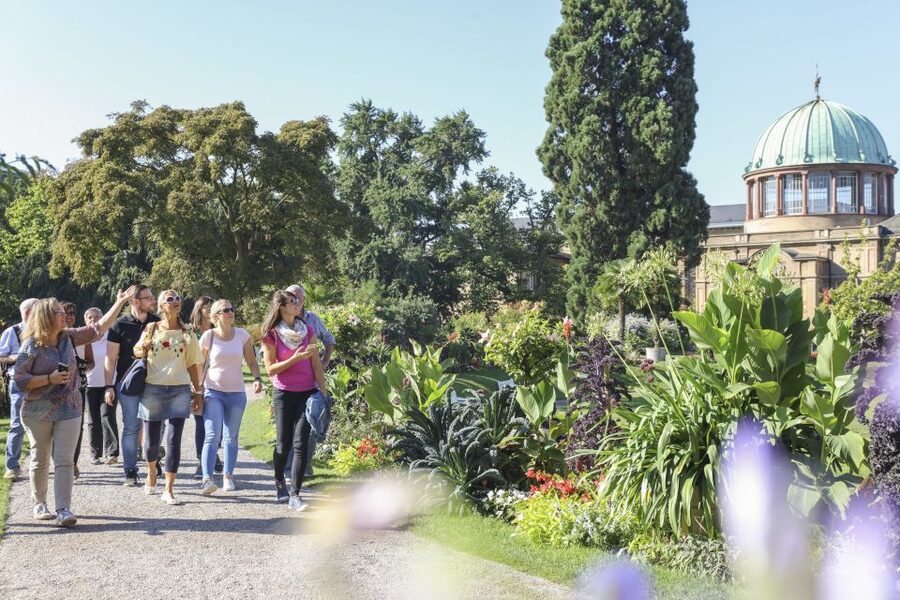
A big thread of the tour is Karl III Wilhelm, Margrave of Baden-Durlach, and the choice he made in 1715. The most interesting part for me is that you are not only told that he founded Karlsruhe. You also learn what made him decide to build a completely new city and leave the old capital of Durlach behind.
That background changes how you read the city. Instead of thinking of Karlsruhe as “where buildings happened,” you start seeing it as a deliberate project. A planned city does not just appear, it gets imagined, argued over, and then built. When the guide connects Karl III Wilhelm’s decision to what you can observe in the streets and layout, it feels like the tour is teaching you a way of looking.
If you like political history that stays human, this is a good fit. The story of relocating a capital is a high-level decision, but it becomes understandable once you treat it as a culture shift, not just a historical footnote.
Baroque planning in real life, not just on paper
Karlsruhe’s Baroque planned-city identity is one of the tour’s selling points, and it shows up in what the guide points you toward while you walk. This is the part where you start thinking, okay, this is a city with a design idea, not a random collection of streets.
You will learn how Karlsruhe was considered a novelty when it was new, because the city was designed with intention. That matters today because “planned” is not a dry academic label. It affects how neighborhoods connect, how you orient yourself, and what kinds of civic energy a city tends to project.
I also appreciate the timing. In 1.5 hours, you are not asked to memorize everything. Instead, you get a framework for noticing. After you hear why the city was laid out the way it was, you’ll likely find yourself looking at streets, sightlines, and the overall feeling of order and purpose.
Weinbrenner’s classical ideas, and why they still matter
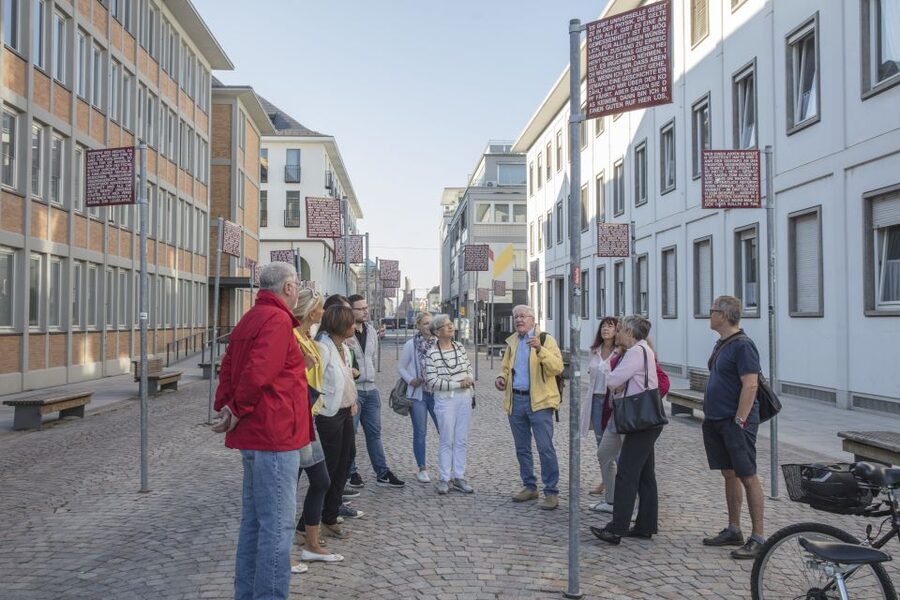
Another key focus is classical city architect Weinbrenner. You will connect his ideas to the broader story of Karlsruhe, and that is where the tour becomes more than a founder tale.
The practical value here is how the guide explains the relationship between planning and architecture. Baroque planning sets a foundation, and then architects shape the look and feel within that structure. If you care about why cities feel a certain way, you will get something out of learning the name Weinbrenner and understanding his role in the city’s classical direction.
This is also where humor and storytelling help. Architecture can become abstract fast, so having an animated guide approach the subject with funny anecdotes and personal insight makes it stick. The goal is for you to walk away with a few solid anchors, not a stack of notes.
More walking tours in Karlsruhe:
- Karlsruhe Private Guided Walking Tour
★ 3.6 · 3 reviews - Discover Berlin Half-Day Walking Tour
★ 5.0 · 9,624 reviews
Funny anecdotes and insider tips you can reuse
The tour description promises funny anecdotes and personal insider tips, and that combination is exactly what makes short walking tours worth your time. History alone is fine, but it can slide right off unless someone helps you attach it to something you will remember.
From what’s emphasized in the experience, the guide mixes humor with explanations. That means you’re more likely to recall the characters and concepts, Karl III Wilhelm and Weinbrenner included, because the stories ride on top of them.
The insider tips part is especially useful for people who want more than sightseeing. Even if you do not know much German history, the guide can help you interpret what you see next. You might leave with a sharper sense of what to look for around the city center, and that can make your self-guided time afterward smoother.
The flow of the walk: what the 1.5 hours likely feels like
You should expect an active, continuous stroll. There are no long sit-down breaks described, so treat it like a moving conversation with stops where the guide can explain context.
Here is the way the structure tends to work based on what the tour focuses on:
Start at the Tourist-Information by the market square. You get introductions and the big picture: Karlsruhe’s age, its planned-city identity, and what names matter for understanding it.
Walk while the guide builds the Karl III Wilhelm story. Expect to hear how the Margrave founded the city in 1715 and why he chose to leave Durlach behind. This is where you start connecting “why” to “what you see.”
Then shift toward architecture and classical design. This is where Weinbrenner comes in, tying architecture to Karlsruhe’s cultural direction.
Finish back at the meeting point. You likely end with a final set of pointers, plus tips that help you keep the perspective after the tour ends.
Because it is 1.5 hours, the pace is steady. If you enjoy fast context and you want your first Karlsruhe introduction to be practical, this timing is ideal.
Tuesday options: Hometown Karlsruhe and Residence of Law
There’s a special note that Tuesdays use a themed approach: Hometown Karlsruhe, Residence of Law. That means the guide’s framing may shift toward how law and civic life fit into the city’s story.
This is a smart detail if you like the idea that culture is not only art and architecture. Law and institutions shape daily life, and a “Residence of Law” angle can give you a different way to interpret the city’s character.
If you are choosing a day, this theme is worth considering. You might get a richer match if you are interested in how civic identity gets built and maintained, not just how buildings get designed.
Price and value: what $12 buys you
At $12 per person for 1.5 hours, this tour is priced to be a low-risk first step. You are not paying for an all-day experience or museum entrance fees. You are paying for guided context, local perspective, and the kind of storytelling that helps you turn a city walk into something you understand.
The value comes from a few specific elements:
- A local German-speaking guide who explains the big ideas in an accessible way
- Insider tips and funny anecdotes, which add recall and usefulness
- A focused time window that works even if you have limited hours in Karlsruhe
If you enjoy learning on foot and you want a quick way to orient yourself, the price feels fair for what you get. If you dislike group tours, are very sensitive to weather, or want detailed stops at specific landmarks with optional entry tickets, you might feel the time is short.
Who should book this walking tour in Karlsruhe?
I think this works best for people who want an efficient, narrative introduction to Karlsruhe. It is ideal if you:
- want context about why Karlsruhe looks and feels the way it does
- enjoy names and storylines, Karl III Wilhelm included
- like guided humor and practical city interpretation
- are in Karlsruhe for a short stay and want a smart first outing
It is probably not the best match if you need deep museum-style detail, want a slow-moving pace, or plan to spend most of your day avoiding walking outdoors. But for the majority of first-timers, it reads like a strong orientation option.
What’s included, and what you’ll handle on your own
Included in the experience is a local German-speaking guide, insider tips, and funny anecdotes. That’s the core. You are not paying for admissions, food, or drinks.
What’s not included is also straightforward: food and drinks, personal expenses, admission tickets, and the cost of any optional activities. If you want coffee or a snack, you will need to plan that separately. Also, if you are the type who likes to pair a guided walk with a museum visit, check those entry costs on your own before committing.
Practical notes to keep your day comfortable
A few details matter for how smoothly your tour goes:
- It is an outdoor tour that runs in all weather, so dress for conditions
- It is wheelchair accessible
- Alcohol and drugs are not allowed
- Children under 3 years old can participate free of charge
Even if you dress well, bring a simple plan for comfort: water, a hat or umbrella as needed, and shoes you can walk in for a solid 1.5 hours.
Should you book this Karlsruhe guided city history and culture tour?
If your goal is a first hit of Karlsruhe that makes the city’s planned layout and key figures easier to understand, I’d book it. The strongest draw is the combination of clear explanations, humor, and insider tips, plus a tight 1.5-hour format that respects limited time.
I’d skip or reconsider if you want a highly site-specific itinerary with ticketed stops, or if you know you will struggle with outdoor walking in changing weather. Otherwise, for the price, this is a solid way to get your bearings and leave with a better sense of why Karlsruhe is Karlsruhe.
FAQ
FAQ
How long is the Karlsruhe guided city history and culture walking tour?
The tour lasts 1.5 hours.
How much does the tour cost?
The price is $12 per person.
Where does the tour start?
It starts at the Tourist-Information Karlsruhe by the market square, Kaiserstraße 72 to 74, 76133 Karlsruhe.
Does the tour end back at the meeting point?
Yes, it ends back at the meeting point.
What language is the tour guide speaking?
The live tour guide speaks German.
What is included in the price?
You get a local German-speaking guide, insider tips, and funny anecdotes.
What is not included?
Food and drinks, personal expenses, admission tickets, and the cost of optional activities are not included.
Is the tour wheelchair accessible?
Yes, the tour is wheelchair accessible.
Does the tour run in all weather?
Yes. Please remember it is an outdoor tour and tours take place in all weather.
Is there a Tuesday theme for the tour?
Yes. On Tuesdays, the tour is guided on the theme Hometown Karlsruhe, Residence of Law.
Are there age rules or restrictions?
Children under 3 years old may participate free of charge. Alcohol and drugs are not allowed.
Newest Karlsruhe reviews on the site
- Karlsruhe Private Guided Walking Tour★ 3.6 · 3 reviews
- Karlsruhe Genesis – underground art by Markus Lüpertz★ 5.0 · 3 reviews
- Black Forest. From Baden-Baden to Strasbourg. Two countries in one day★ 4.5 · 24 reviews
- The best in Baden-Baden surroundings and Black Forest. Start from Baden-Baden★ 4.5 · 28 reviews
- Karlsruhe: 24-Hour Hop-On Hop-Off Sightseeing Bus Ticket★ 4.4 · 362 reviews
Historical Tours, compared.
City History Canal Sightseeing Tour on a Motorboat
Read our review →
Browse the lists this tour appears in