
Reviewed · MUSEUMS
Heusenstamm:tour of the Depot of the museum of communication
Early messaging suddenly feels human.
This Museum Depot Heusenstamm tour is a tight 1.5-hour walk that helps you picture what daily communication felt like long ago, and I love how the route moves through the world’s largest telephone collection rather than treating phones as static display. You also get a fun photo moment with rare historic vehicles. One thing to consider: the collection is enormous, so in just 1.5 hours you will only see a curated slice.
In practice, this makes the tour best as a first look, then you can follow up on what caught your eye. I also appreciate that the guide is live and speaks German, which adds real context to the objects. The museum experience is strong, but if you want to read every label, plan extra time after the tour.
In This Review
- Key Highlights You Should Know Before You Go
- Museum Depot Heusenstamm: A Smart Way to Start With Communication History
- The Timeline You’ll Follow: From Tube Receivers to Internet Radio
- Inside the Depot Displays: 1930s TVs, Radio Icons, and Giant Artifacts
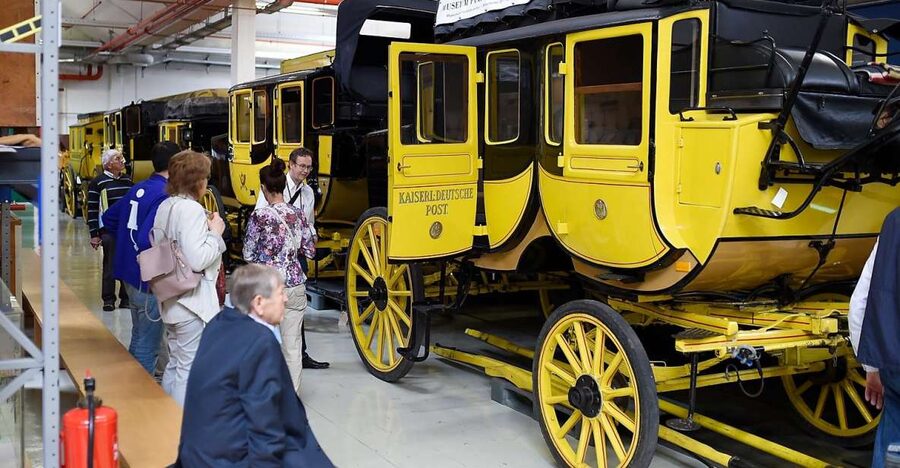
- Photo Opportunities With Historic Vehicles: Make the Past Visible
- The Art Layer: Paintings in a Technology Museum
- Museum of Communication Frankfurt: How the Depot Tour Fits In
- Price and Value: What $16 Buys You for 1.5 Hours
- Timing and Arrival Tips for Heusenstamm
- Who Should Book This Tour (and Who Might Skip It)
- The Bottom Line: Should You Book Museum Depot Heusenstamm?
- FAQ
- How long is the guided tour in Museum Depot Heusenstamm?
- What is the price for this experience?
- What languages are available for the live guide?
- What is included in the ticket?
- Is food or drinks included?
- Can I photograph the objects and historic vehicles during the tour?
- Is there free cancellation?
Key Highlights You Should Know Before You Go
- 375,000 communication objects in one depot, with the tour showing the most interesting sections
- Rare 1930s television sets and radio design milestones tied to real everyday use
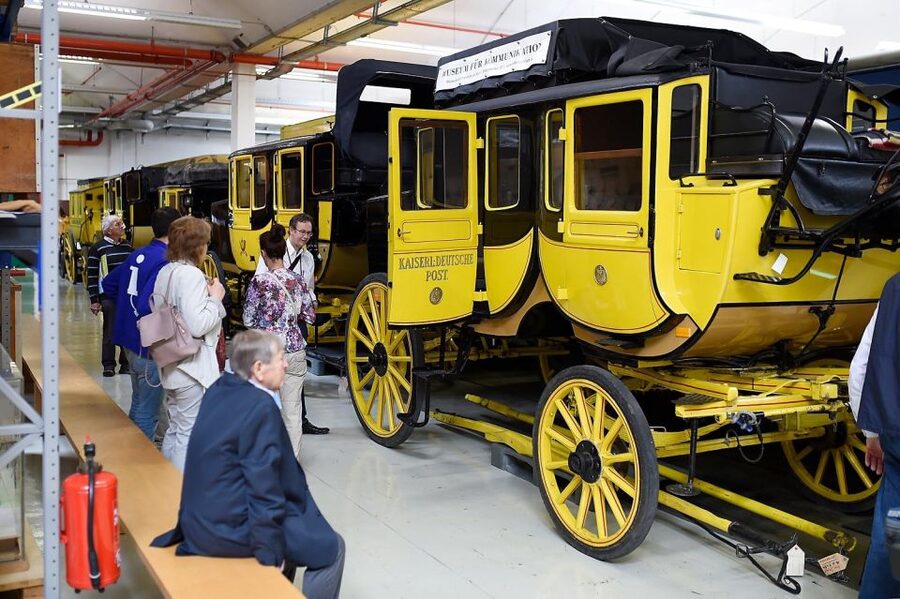
- Historic vehicles and photo opportunities that make the past feel less like theory
- Telephone evolution on a clear timeline, from tube receivers toward today’s internet radio era
- Large-scale artifacts like sleighs, buses, and telephone boxes you do not usually see in museums
- A painting collection spanning from the 17th century to modern works, adding an arts layer to tech history
Museum Depot Heusenstamm: A Smart Way to Start With Communication History
The Museum Depot in Heusenstamm is not trying to be a “talk about it in general” history lesson. The whole point is that communication technology is physical. Buttons, receivers, housings, display units, and even giant pieces like old vehicles show how people built systems they could actually use.
In 1.5 hours, you get a guided walking tour that focuses on the most compelling highlights from a collection said to cover 375,000 objects. That number matters, because it explains why this tour works best when you treat it like a fast orientation. You are not going to see everything. You will, however, learn what to look for next.
I like that the tour helps you put yourself in the time of early messaging rather than just memorizing dates. When you see the progression from old receivers toward later radio and internet-era audio thinking, the story becomes more personal, more practical, and honestly more surprising.
A few more Germany walks and trips to compare
- Berlin: Jewish Museum Berlin Entrance Ticket
★ 4.5 · 8,393 reviews - Berlin: DDR Museum Tickets
★ 4.3 · 3,443 reviews - Berlin: Natural History Museum Entrance Ticket
★ 4.6 · 3,382 reviews
The Timeline You’ll Follow: From Tube Receivers to Internet Radio
You will walk through the development of communication as a real progression, not a list. The tour takes you from older telephone technology into later concepts that connect audio, broadcasting, and global networking.
A great part here is that the collection is not limited to phones alone. You are shown how radios and televisions fit into the same human need: sending a message and receiving one. That’s why the stops include rare television sets from the 1930s and recognizable radio design icons.
If you care about design and engineering, you will probably enjoy how the guide frames the objects as solutions. Tube receivers tell one story, but they also lead you to ask, what changed, what stayed, and why the next format became more practical.
By the end, the “internet radio” angle makes sense. Even if you are not a tech person, you will likely walk away with a clearer mental model for how modern communication grew out of earlier networks and broadcast thinking.
Inside the Depot Displays: 1930s TVs, Radio Icons, and Giant Artifacts
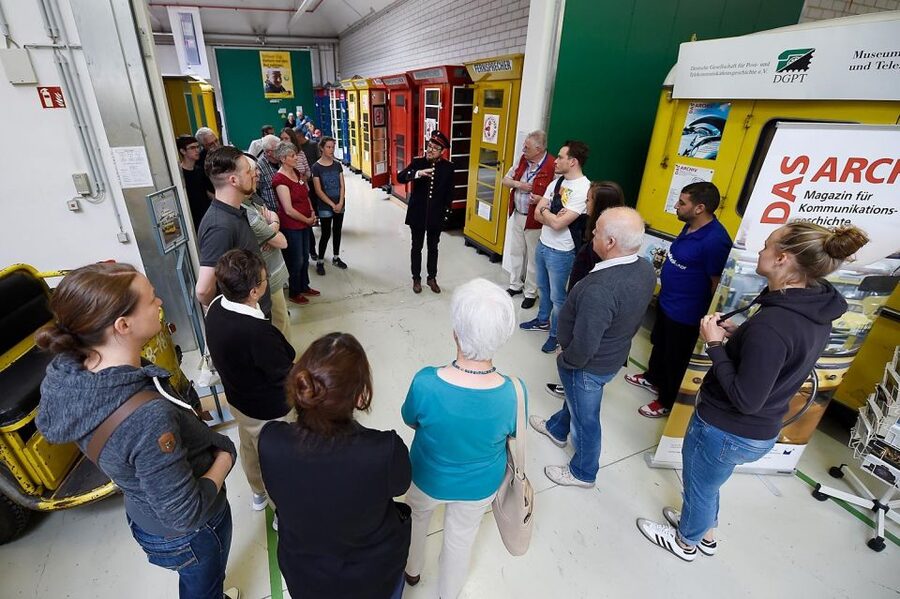
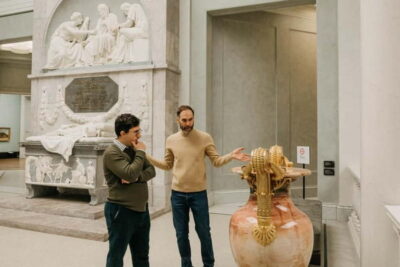
One reason this tour feels different from a standard museum visit is the mix of object sizes and formats. You are not only dealing with small electronics and labeled diagrams. You might also encounter large-scale items such as sleighs, buses, and telephone boxes.
Those big objects do more than entertain. They show the physical footprint of communication. People did not just talk on phones. Communication systems sat in streets, took up space, and became part of everyday movement and public life.
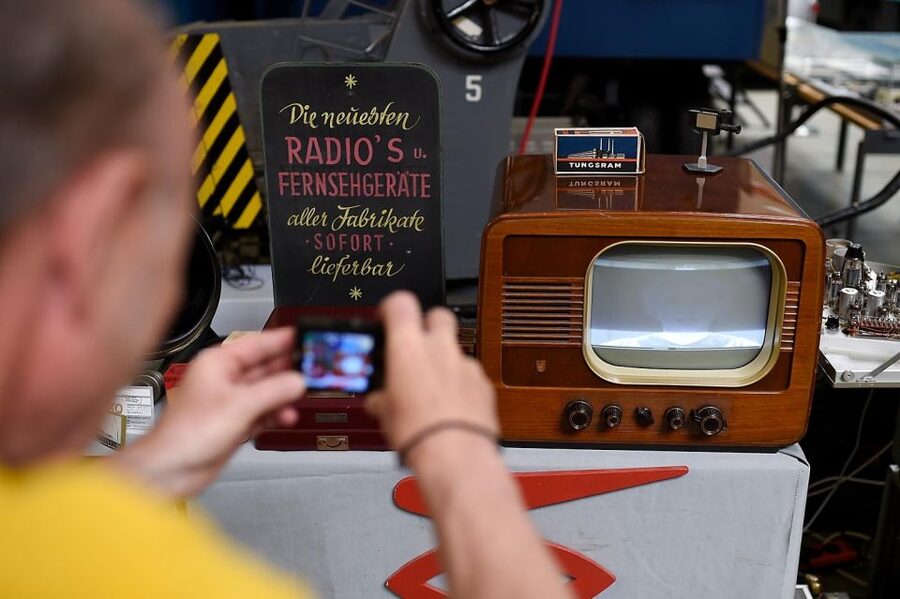
On the broadcast side, the depot includes rare television sets from the 1930s. That period is fascinating because TV was not yet the default appliance in every room. Seeing these older sets helps you understand how new media arrives first as a novelty, then slowly becomes normal once the technology, infrastructure, and design catch up.
Radio design icons are another highlight. Even when radio is working the same way in principle, the look and feel of the hardware can change a lot over time. Those design decisions often reflect what audiences were expected to do, and how companies tried to make machines feel friendly.
Photo Opportunities With Historic Vehicles: Make the Past Visible
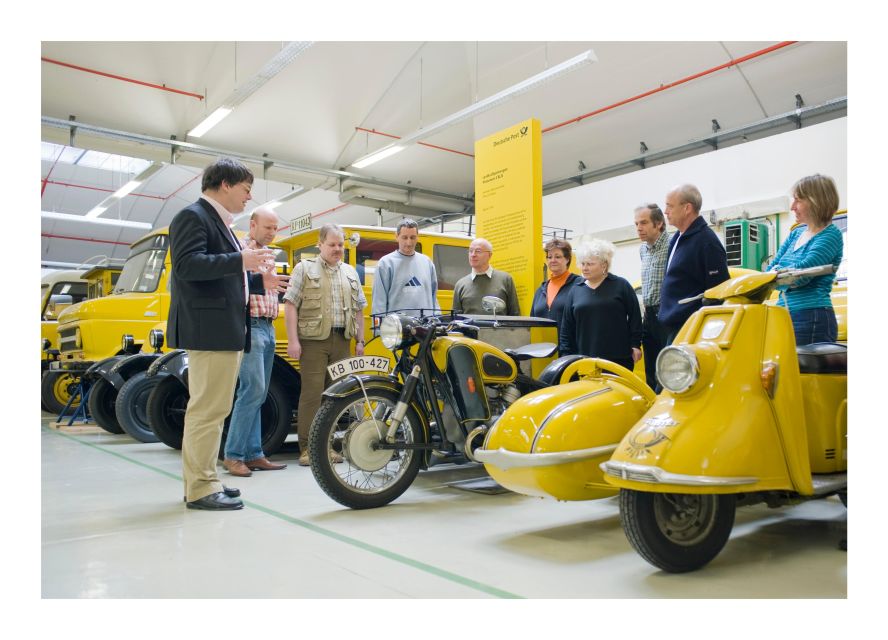
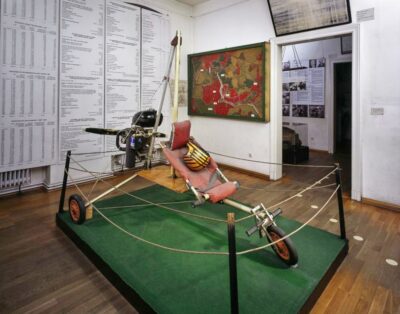
The tour includes a moment built for photos, not just for documentation. You get the chance to photograph yourself with rare historic vehicles connected to the communication story.
I love these photo stops because they solve a common museum problem. Tech history can feel abstract. A vehicle turns it into something you can picture being used, driven, delivered, or deployed. That makes the whole timeline more believable.
Practical tip: if you care about getting good shots, bring your phone fully charged and wipe the camera lens. Old objects often have interesting surfaces, glass, or metal that can pick up glare.
Same city, a different way to spend the afternoon:
- Berlin: Reichstag, Dome and Government District Guided Tour
★ 4.7 · 18,288 reviews - Hamburg: Sex and Crime in St. Pauli Tour for Ages 18 +
★ 4.7 · 17,793 reviews - Berlin: 1-Hour City Tour by Boat with Guaranteed Seating
★ 4.3 · 16,993 reviews - Berlin: TV Tower Standard Entrance Ticket
★ 4.4 · 15,883 reviews
The Art Layer: Paintings in a Technology Museum
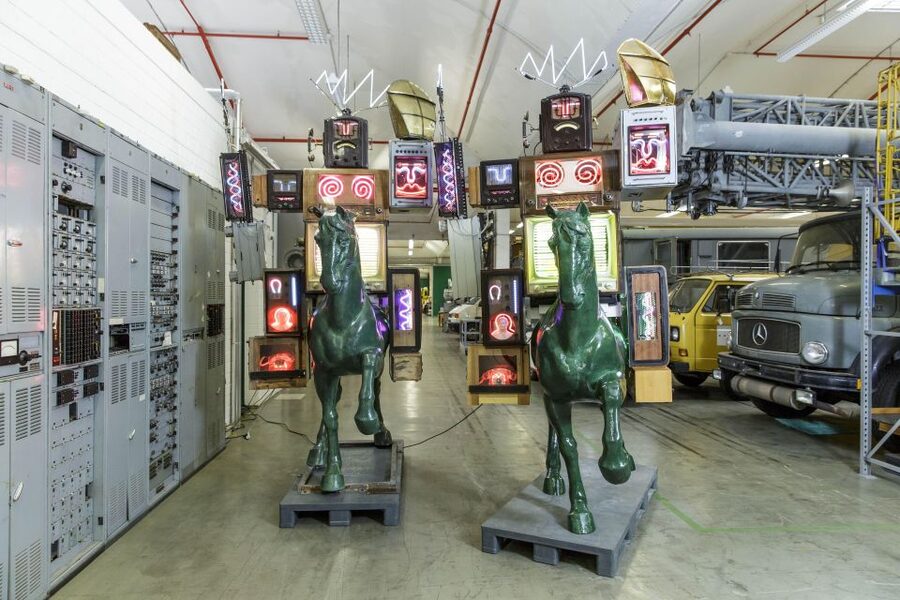
This is not only a place for gadgets. The depot’s collection also includes more than 300 paintings, spanning from the 17th century to contemporary works.
That matters because it changes the vibe. Communication history can sound like engineering and standards. With paintings in the mix, you get a reminder that people have always used technology and media to shape culture and perception.
You might not see hundreds of paintings during the 1.5-hour guided walk. But knowing the collection exists helps you understand the museum’s point. Communication is not just about signals. It is also about how messages are framed, circulated, and absorbed by society.
If you like museums that connect art and technology, you will likely appreciate this extra dimension more than you expect.
Museum of Communication Frankfurt: How the Depot Tour Fits In
Along with the depot visit, your ticket also includes admission to the Museum of Communication Frankfurt. This pairing is useful because it gives you two angles on the same theme.
The depot tour in Heusenstamm is about scale, depth, and showing you the spine of the collection. Frankfurt tends to feel more like the “public-facing” side, the part designed for browsing and longer reading time. When you combine them, you get both the big picture and the specific objects that made the big picture possible.
One point I would consider: with so many items in storage or depot collections, the public museum can only show a portion of what exists. That does not make the experience weaker. It just means you should adjust your expectations. Think of the depot as where you learn how wide the subject really is, then use Frankfurt as where you slow down.
Price and Value: What $16 Buys You for 1.5 Hours
At about $16 per person for a 1.5-hour guided tour plus entry to two museum spaces, this is strong value if you want guided context. You are not paying only for access to objects, you are paying for a guide who can connect them into a story that makes sense fast.
Because the tour is short, you also get a practical benefit: it is easy to fit into a day in the Frankfurt area without feeling like you committed to a half-day museum marathon.
Where the value may feel different is if you prefer unguided wandering, lots of time at benches, or deep label reading. The depot collection is huge, and a guided route chooses priorities. In that case, you may want to add extra time in Frankfurt after the tour so you can follow your own interests.
Timing and Arrival Tips for Heusenstamm
Logistics here matter more than you might think, because you are dealing with a walking tour and you want to arrive ready.
One useful tip: plan extra margin for Friday afternoons, when roads can get busy. If you are driving in, pay attention during the approach because the entrance area can be affected by nearby activity, including what looks like seasonal sales setups.
If you want a stress-free experience, I recommend arriving early enough to settle in before the tour starts. It helps you start with a calm head, and the guide’s context lands better when you are not rushing.
Also, if you want photos during the vehicle moment, it is worth being alert from the start. That way, you are not standing in the back of the group when the best photo angles appear.
Who Should Book This Tour (and Who Might Skip It)
This tour is a great fit if you enjoy:
- Communication history that connects everyday use with big technological shifts
- Design details, including how radios and early televisions looked and worked
- Museums where you can take photos and make memories quickly
It is also a solid choice if you like structured museum time. The live German guide adds a level of explanation that you can’t easily recreate just by reading signs.
You might skip it if you need a long, slow museum day. The depot is huge, and the tour cannot cover every corner in 1.5 hours. It is also less ideal if you want full language flexibility, since the tour is in German.
The Bottom Line: Should You Book Museum Depot Heusenstamm?
If you want a fast, high-impact introduction to communication history, I would book it. You get a clear guided storyline, rare objects like 1930s TVs, a major telephone collection focus, and a photo-friendly stop with historic vehicles. Add in a second museum ticket in Frankfurt, and you get more than one perspective in a short time.
My one caution is expectation-setting. This is a guided highlights tour of a massive subject. If you treat it like an orientation and then spend your extra time following what grabs you, you will walk away happy. If you expect to see everything in 1.5 hours, you will leave wanting more, even if the tour itself is excellent.
FAQ
How long is the guided tour in Museum Depot Heusenstamm?
The guided walking tour lasts 1.5 hours.
What is the price for this experience?
The price is $16 per person.
What languages are available for the live guide?
The live tour guide speaks German.
What is included in the ticket?
Your ticket includes entry to the Museum Depot in Heusenstamm, the 1.5-hour guided walking tour in Museum Depot Heusenstamm, and entry to the Museum of Communication Frankfurt.
Is food or drinks included?
No. Food and drinks are not included.
Can I photograph the objects and historic vehicles during the tour?
Yes. The tour includes a chance to photograph yourself with rare historic vehicles.
Is there free cancellation?
Yes. You can cancel up to 24 hours in advance for a full refund.
Newest Germany reviews on the site
- Koblenz: Sektmuseum Histor. Kelllergewölbe incl. 1 Glas Sekt★ 4.5 · 41 reviews
- Koblenz: Wein-& Sektgeschichte(n) incl. Wein/Sekt Verkostung★ 4.7 · 8 reviews
- Koblenz: The Living Vineyard, Nature & Wine Enjoyment★ 5.0 · 14 reviews
- Koblenz: Private pub crawl with insider guide & free shots★ 5.0 · 5 reviews
- Koblenz: Christmas Boat Tour with Mulled Wine★ 4.3 · 35 reviews
- Koblenz: Express Walk with a Local★ 5.0 · 4 reviews
- Koblenz: Guided tour Moselle kisses Rhine★ 5.0 · 3 reviews
- Koblenz: Rhine Valley Castle Sightseeing Cruise★ 4.6 · 98 reviews
Museums, compared.




Skip-the-Line: Berlin Wall Museum at Checkpoint Charlie
Read our review →Browse the lists this tour appears in