
Reviewed · MUSEUMS
Dresden: Albertinum Museum Entry Ticket
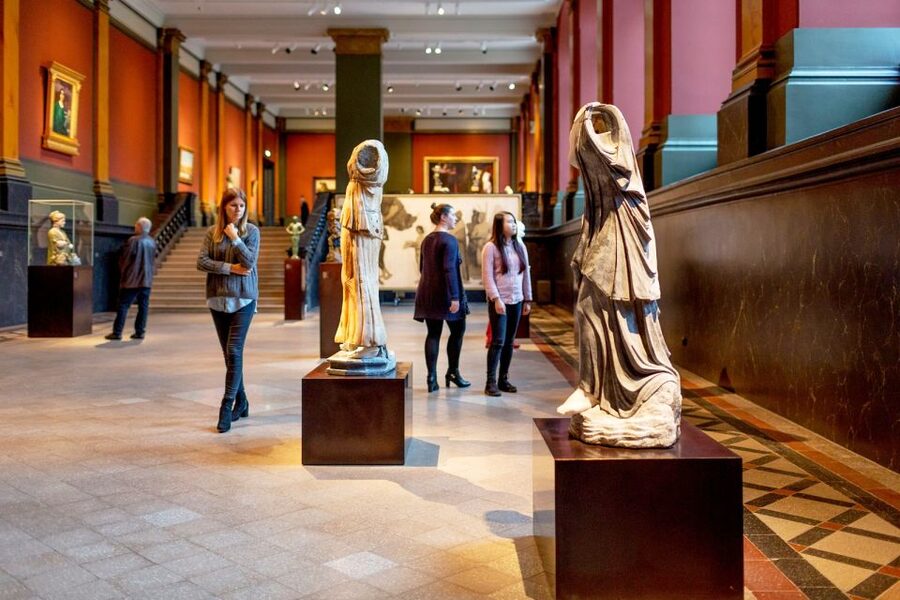
Dresden’s Albertinum is a smart stop if you want art that moves in time. This entry ticket lets you roam the Albertinum and focus on both the Galerie Neue Meister and the Skulpturensammlung, with works spanning Romanticism all the way to contemporary. I love the mix of painting and sculpture in one place, and I also like that you get major names, including Caspar David Friedrich and Auguste Rodin. The one thing to plan around is the second-floor closure from 07th April to 17th April, so some galleries may be unavailable during those dates.
For $16 per person, the value is strong because you are not paying extra for each wing or separate collection. You also get a route-friendly museum layout: the first work you’ll see is Rodin’s The Thinker, and the rest of the galleries are set up like a visual conversation between styles and eras. If you are short on time, wear comfy shoes, because art viewing can turn into a long walk before you realize it.
Before you go, check the latest opening hours on the local partner’s official website. Bring a camera, and plan on a self-paced visit since this is an entry ticket that stays valid for one day.
In This Review
- Key things to know before you go
- Albertinum Ticket: What $16 Gets You in Dresden
- First stop inside: Rodin’s The Thinker and how to use it
- Galerie Neue Meister: Romanticism to the present day
- Skulpturensammlung from 1800 onward: reading form over time
- Key artworks I would prioritize: Friedrich, Lehmbruck, Diecker, Cragg
- The place where art styles meet: painting, sculpture, East and West
- How to plan a smooth one-day visit in the Albertinum
- Practical tips: what to bring and how to enjoy the art more
- Who should book this Albertinum entry ticket
- Book it or skip it? My straight answer
- FAQ
- How much is the Dresden Albertinum museum entry ticket?
- What does the ticket include?
- How long is the ticket valid?
- Is the Albertinum wheelchair accessible?
- Is any part of the museum closed?
- Do children get free entry?
Key things to know before you go
- Timed entry by availability: the ticket is valid for 1 day, and you’ll see starting times when you book.
- Start with Rodin: The Thinker is the first work you encounter, so use it as your anchor point.
- Romantic to contemporary: expect a timeline feel from 19th-century works to modern pieces.
- The Thinker + German masters: you can line up Rodin with big German names like Caspar David Friedrich.
- Sculpture collection runs long: sculpture highlights stretch from 1800 onward.
- April 07-17 second-floor closure: plan your visit around this if your dates overlap.
Albertinum Ticket: What $16 Gets You in Dresden
This is one of those museum tickets that makes planning easier instead of harder. For $16 per person, you get entry to the Albertinum with access to two major strands of the collection: the Galerie Neue Meister and the Skulpturensammlung, covering painting and sculpture from the 19th century to today.
What makes the price feel fair is the range. A lot of museums charge you for special access or treat painting and sculpture like separate experiences. Here, the idea is closer to a combined story, where you can stand between media and notice how artists borrow ideas across forms. You are not just checking off rooms. You are watching how styles evolve.
This is also a good choice if you like museums where the highlights actually “talk” to each other. The museum description gives you the theme right away, where painting meets sculpture, and where you can sense the pull from East and West to what is happening right now.
More Museum Tours in Dresden
- Dresden: Church of Our Lady Guided Tour of Gallery
★ 4.7 · 2,421 reviews - Dresden: Zwinger Museum Entry Ticket
★ 4.7 · 1,436 reviews - Dresden: Guided Walking Tour and Chocolate Museum Ticket
★ 4.5 · 479 reviews
First stop inside: Rodin’s The Thinker and how to use it
Walk in and head straight to the first artwork listed for visitors: The Thinker by Auguste Rodin. It is positioned to set the tone fast, and it works because it is not a background piece. It feels like a mood, like a question mark that pushes you to look harder.
Here is how I’d approach it when you are inside. Use The Thinker as your “reset” moment. Take a full minute or two to see details, then move on and ask yourself what changes as you go from room to room. In a museum with both painting and sculpture, that kind of mental anchor helps you notice connections instead of getting lost in sheer volume.
Also, The Thinker matters historically in the way you’d expect from Rodin. It is described as a trailblazer for artistic styles that crystallized later in the 20th century. Even if you do not know art history, you can feel that it is not only about one sculpture. It is about motion of ideas.
Galerie Neue Meister: Romanticism to the present day
From there, you’ll shift into the Galerie Neue Meister, which is where the museum’s “time travel” really clicks. You are looking at works that run from the Romantic period into later eras, with the big focus on how German art evolved and reframed itself over the centuries.
One standout name you should plan to find is Caspar David Friedrich, a major Romantic artist. If you have only seen Friedrich through textbooks, seeing him inside a museum space changes the experience. You are not just recognizing the style. You are confronting the mood and the scale of what the artist is doing with atmosphere and feeling.
What I like about this part of the Albertinum is that it gives you continuity. You can move through rooms and still feel like the museum is building a single thread: how artists respond to their world, then to their own traditions, then to modern life. That is why it works so well for a one-day ticket. You can do it in a way that feels chronological without being stuck reading labels for hours.
Skulpturensammlung from 1800 onward: reading form over time
Next, the Skulpturensammlung brings you into the sculpture side of the Albertinum. And this is not a short stop. The sculpture collection covers works from 1800 onwards, so you’ll see how sculpture changes as artistic ideas change.
This is the part of the day where I’d slow down. Paintings can pull you in quickly, but sculpture asks you to orbit, to check angles, and to notice how the body of a work holds space. If you move too fast, you miss the key point: sculpture is physical thinking.
Look for pieces that contrast different approaches, like figure-based work versus more abstract or experimental ideas. The museum’s blend of eras makes the differences obvious. You see how artists keep solving the same question, what is the form supposed to do in the room with you.
A few more Dresden walks and trips to compare
- Dresden: Dresden Transport Museum Entrance Ticket
★ 4.6 · 189 reviews - Dresden: Semperoper and Old Masters Picture Gallery
★ 4.5 · 91 reviews - Dresden: 2 day ticket for museums of the Dresden State Art Collections
★ 4.7 · 54 reviews - Dresden: Guided City Walk and City Museum Entrance Ticket
★ 4.6 · 16 reviews
Key artworks I would prioritize: Friedrich, Lehmbruck, Diecker, Cragg
You do not need to chase every label, but you should chase the museum’s stated anchors. Here are the works that give you the most return for your time.
Caspar David Friedrich is your Romantic centerpiece. I’d give yourself a dedicated moment here. Stand back first, then move closer. Friedrich’s impact tends to show up through structure, light, and atmosphere, and the room you are in affects how it lands.
Then add Wilhelm Lehmbruck’s Kneeling Woman (dated 1911). A kneeling figure has a built-in story of weight and restraint, and Lehmbruck’s work is the kind that makes you notice how a sculptor balances emotion and geometry. This is a great “bridge” piece if you are trying to understand how art moves from Romantic emotion toward later modern approaches.
Next, seek out Birgit Diecker’s Seelenfänger. Even if you do not know the title’s nuance, the artwork is worth finding because it signals the museum’s move toward contemporary thinking. You get the feeling that modern art can still be symbolic, still be expressive, just with different tools.
Finally, don’t skip Tony Cragg’s stacked cube made of wood, fabric scraps, and loose-leaf binders. This is the kind of work that makes the museum feel current. Instead of treating sculpture as something carved from one material, Cragg treats everyday objects as building blocks. It also gives you a useful contrast with the older sculpture you already saw. Same medium family, totally different concept.
The place where art styles meet: painting, sculpture, East and West
The Albertinum’s own framing is worth paying attention to, because it shapes how you experience the collections. The museum is described as a place where painting meets sculpture, where East meets West, and where today meets tomorrow. You do not need to force that theme as you walk, but you can use it as a lens.
If you like museums with a point of view, this one gives you a guided feeling. You start with a signature modern anchor in Rodin, then you travel into Romantic painting, then you return to sculpture that stretches across time, and finally you encounter contemporary pieces that use materials and ideas that feel close to everyday life.
That “today meets tomorrow” angle is also why this ticket works well in Dresden. You are not only seeing historic art behind glass. You are seeing how artists keep remixing old problems with new methods. And because the museum blends collections, you get those “aha” moments without needing a lecture.
How to plan a smooth one-day visit in the Albertinum
Your ticket is valid for one day, and when you book you’ll see starting times based on availability. That matters, because it nudges you toward a simple plan. Pick a time, show up, and then follow a logical route instead of wandering randomly.
If you have a compact day in Dresden, I’d treat the Albertinum like your “slow museum hour” even if it ends up being longer. The best strategy is to start with The Thinker, then go through Galerie Neue Meister for the Romantic to contemporary sweep, then pivot to Skulpturensammlung for the long-running sculpture story.
One practical note that can change your route: from 07th April to 17th April, the second floor is closed due to necessary technical construction work. The ticket still works during those dates, but some parts of the museum may be inaccessible. The museum does not spell out which works are on the second floor here, so keep your expectations flexible. If your dates fall within that window, build time to focus on what is open and do not fixate on seeing every single piece listed.
Also, check the latest opening hours on the local partner’s official website. Museums can shift schedules, and it is worth doing this step before you commit your day.
Practical tips: what to bring and how to enjoy the art more
This experience is straightforward, but small choices make it better. Bring comfortable shoes because the museum walk can add up quickly once you start comparing pieces across media. Bring a camera if you like to capture what you want to remember, since the works span eras and materials.
If you are the type who reads labels, you’ll probably want to pace yourself. For a one-day ticket, use labels to confirm what you already noticed visually, not as the main event. If you enjoy art by “feeling first,” start with big impressions, then use the label info only when something grabs you.
And here’s a small mindset tip that pays off in a museum like this. When you move from painting to sculpture, stop trying to see them as separate. Instead, compare the question each artist is asking, composition in painting versus form and space in sculpture. That shift turns the museum into one continuous experience.
Who should book this Albertinum entry ticket
This ticket is ideal if you want a high-value museum visit without extra complexity. It’s a great fit for you if you like:
- Major art names alongside contemporary experimentation
- Museums that connect different media, not just one discipline
- A one-day plan with a clear sense of what to prioritize
It is also a strong option for first-time Dresden visitors who want a museum stop that feels modern and not just decorative. The Albertinum can give you a serious art experience without turning into an all-day academic project.
If you are traveling with kids, the good news is that children under 17 can enter for free when accompanied by an adult, but you must book a child ticket. That makes it easier to build a family-friendly itinerary.
Book it or skip it? My straight answer
Book it if you want a focused but wide-ranging museum day. For $16, you get a real sampling of Romantic to contemporary art, with standouts like Rodin’s The Thinker and Caspar David Friedrich, plus sculpture running from 1800 onward. The museum’s painting-meets-sculpture approach is the kind of structure that helps you actually enjoy your time instead of just moving room to room.
Skip it only if you are visiting during 07th April to 17th April and you specifically need access to the second floor for your must-see pieces. Since the second floor is closed for technical reasons, you might end up adjusting your expectations. For everyone else, this is a practical, satisfying museum ticket that gives you enough variety to feel like you made a real artistic choice in Dresden.
FAQ
How much is the Dresden Albertinum museum entry ticket?
The price is $16 per person.
What does the ticket include?
The ticket includes Albertinum entry, artworks from Romanticism to Contemporary periods, and the sculpture collection from 1800 onward.
How long is the ticket valid?
The ticket is valid for 1 day. You’ll see starting times based on availability when you book.
Is the Albertinum wheelchair accessible?
Yes, the Albertinum is wheelchair accessible.
Is any part of the museum closed?
Yes. Due to technical construction work, the 2nd floor of the Albertinum will be closed from 07th April until 17th April.
Do children get free entry?
Children under 17 can enter the exhibition for free when accompanied by an adult, but you need to book a child ticket.
Newest Dresden reviews on the site
- Historical tour of the old town including a Saxon dinner★ 4.7 · 23 reviews
- Climb the mountains together with goats★ 4.8 · 8 reviews
- Frozen Mysteries: Catch Cobra & Savor Soft Ice in Dresden★ 5.0 · 3 reviews
- From Prague: Day trip to Dresden★ 4.3 · 4 reviews
- From Dresden: Bohemian & Saxon Switzerland Day Trip★ 4.8 · 64 reviews
- Dresden: Express Walk with a Local in 60 minutes★ 4.3 · 3 reviews
- Discover Germany’s most exciting photo illusion world!★ 4.7 · 26 reviews
- Dresden with a touch of Xmas: English small group tour★ 4.7 · 41 reviews
Museums, compared.


Skip-the-Line: Berlin Wall Museum at Checkpoint Charlie
Read our review →Browse the lists this tour appears in