
Reviewed · GERMANY
Berlin: Entry to Alte Nationalgalerie
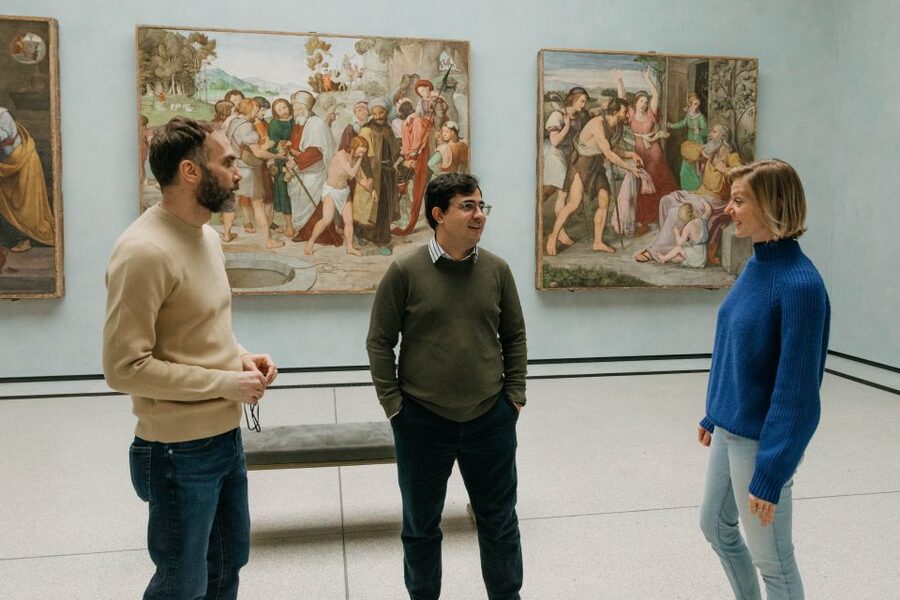
Art feels oddly dramatic in this museum. This Museum Island stop is a smooth way to see major 19th-century works, from Friedrich to early Modernity, with an included audio guide. I especially love the sheer range of styles in one building, and how the art moves like a storyline through time. One possible drawback: depending on the day, a gallery or floor may be closed, so your must-sees could shift.
The museum’s premise is part of the fun. The idea for this place as a sanctuary for art and science traces back to Friedrich Wilhelm IV, and the collection’s backbone comes from a donation by banker Joachim Heinrich Wilhelm Wagener to the Prussian state. Opened in 1876 as the third museum on the Spree Island, it later took on the role of the 19th-century Alte Nationalgalerie after the Berlin Wall fell. If you like your art with context, you’re in the right room.
In This Review
- Key things to know before you go
- Alte Nationalgalerie on Museum Island: the big art story you’re stepping into
- Timed entry, audio guide, and a simple route through the galleries
- From Friedrich to Biedermeier: Romantic works to slow down for
- Impressionists like Manet, Monet, and Renoir, plus the Sleeping Beauty sculpture
- German realism and early Modernity: Menzel, Princesses, Sezession, and a marble tomb
- Audio guide tips, pacing, and the one day-of issue to plan around
- Is it worth $14? Value, best-fit visitors, and who should consider other options
- Should you book this Alte Nationalgalerie entry ticket?
- FAQ
- Where does this activity start?
- How long is the ticket valid?
- What’s included with the ticket?
- Do I need to wait in the ticket line?
- How late can I enter after my booked timeslot?
- Are backpacks allowed inside?
- Is the Alte Nationalgalerie wheelchair accessible?
- Can I get a refund if I cancel?
Key things to know before you go
- Museum Island UNESCO setting: You’re entering one of Berlin’s most famous museum clusters, right by the Spree.
- Big 19th-century sweep: Classicism, Romanticism, Biedermeier, Impressionism, and early Modernity are all in play.
- Real anchor masterpieces: Friedrich’s The Monk by the Sea, Menzel’s Eisenwalzwerk, and the Group of Princesses are standout references.
- Sculpture plus paintings: Don’t skip the Sleeping Beauty sculpture in the mix with 19th-century art.
- A visit isn’t just eye candy: The audio guide helps you connect themes across rooms, not just bounce between works.
- Plan for possible closures: Some areas can be closed at the time you visit, so stay flexible.
Alte Nationalgalerie on Museum Island: the big art story you’re stepping into
The Alte Nationalgalerie is housed in the Old National Gallery, and it feels purpose-built for long looking. You’ll notice how the building supports a walk through art history, not just a checklist of famous paintings. The museum’s claim to fame is exactly that time span: the 19th century, with its shifting ideas about beauty, nature, industry, and modern life.
I like it because it doesn’t treat the century like one uniform style. You start with Classicism and Romanticism, move through Biedermeier, then land in the world of French Impressionists and onward to early Modernity. That structure matters, because you can spot how Berlin collections interpreted wider European trends.
The background story also adds weight. Friedrich Wilhelm IV’s vision for art and science gives the museum a larger mission than a standard picture gallery. And the collection’s origins, tied to Joachim Heinrich Wilhelm Wagener’s donation and the Prussian state, help explain why you see specific schools of painting represented. In other words, when you stand in front of a masterpiece, you’re also seeing how Berlin wanted to tell its own story of art.
More of Germany worth an hour:
- Berlin: Reichstag, Dome and Government District Guided Tour
★ 4.7 · 18,288 reviews - Hamburg: Sex and Crime in St. Pauli Tour for Ages 18 +
★ 4.7 · 17,793 reviews - Berlin: 1-Hour City Tour by Boat with Guaranteed Seating
★ 4.3 · 16,993 reviews
Timed entry, audio guide, and a simple route through the galleries
This experience is basically your museum entry ticket plus an audio guide. That’s a good deal, because the audio guide turns the visit into more than wandering. Since you skip the ticket line, you can spend your limited time actually in the galleries, not in queue mode.
You book a timeslot for the day. When you arrive, make sure you’re inside the museum within 15 minutes of your booked time. If you’re the type who enjoys a relaxed start, build in a small buffer for bag rules and security checks.
There’s also a clear practical constraint: backpacks are not allowed. If you’re traveling light, great. If not, plan to stash your bigger bag before you come in and keep only what you need.
As for your route, you’ll have the best experience if you don’t try to see everything at once. Instead, pick a theme for each section of the century and let the audio guide nudge you toward key works. For example:
- Start with Romantic mood and symbolism.
- Then switch to Impressionist light and modern scenes.
- Finish with early Modernity and the quieter, more reflective pieces.
The museum also has wheelchair access across the building, so if you use a mobility aid, you won’t need to “figure it out” room by room.
From Friedrich to Biedermeier: Romantic works to slow down for
Romanticism is where the Alte Nationalgalerie can feel like cinema, just without the popcorn. If you’re drawn to mood, distance, and symbolism, you’ll probably find yourself slowing down in the rooms devoted to German Romantic works.
A real anchor is Friedrich’s The Monk by the Sea. Even if you know it from books, seeing it in person changes the experience. The painting’s atmosphere does a lot of work, and the audio guide helps you catch why people were captivated by this kind of spiritual landscape idea. You’ll also see how Romanticism wasn’t only about dramatic skies and lonely figures. It was also a way to think.
You’ll then run into Biedermeier and related romantic-era themes. These works often feel more intimate and everyday than full-blown drama, so it’s a nice contrast. Two titles to look for include the Gothic Cathedral at the Water and the Group of Princesses. Together, they help you see how the century balanced storytelling with staging, elegance with meaning.
If you’re traveling with kids or you just like hearing art explained, keep an eye out for exhibition talks and guided tours that the museum offers with themes for children and adults. You won’t want to miss these if you like a structured guide for the big emotions in the paintings.
One more reason I like this section: the museum helps you see how different artistic languages sit side by side. You’re not just reading about the 19th century, you’re watching its ideas change room by room.
Impressionists like Manet, Monet, and Renoir, plus the Sleeping Beauty sculpture
This is the area many people come for, and it’s easy to understand why. The Alte Nationalgalerie includes French Impressionists such as Manet, Monet, and Renoir, and the way they’re displayed makes the shift in technique feel immediate.
I especially recommend you treat this part as a light-and-motion experiment. Don’t just scan for the most famous name. Spend a few minutes watching brushwork cues: how surfaces are suggested, how color carries the emotion, and how everyday life becomes worthy of close attention. The audio guide is useful here because it points out what to look for, not just what you’re looking at.
A standout sculpture in the museum is Sleeping Beauty. It adds a different texture to the visit. Paintings can sometimes dominate your attention, but the sculpture helps you feel how 19th-century art loved the boundary between classical form and emotional storytelling. If you’re only focused on paintings, you might miss that balance.
Just be aware of one practical risk: some galleries can be closed during your visit. I saw examples where Impressionist-focused rooms were not available on the day of the visit. So, if Impressionism is your non-negotiable, I’d keep your expectations flexible and arrive ready to re-route if something is offline.
Same city, a different way to spend the afternoon:
- Berlin: TV Tower Standard Entrance Ticket
★ 4.4 · 15,883 reviews - From Munich: Neuschwanstein & Linderhof Castle Full-Day Trip
★ 4.6 · 14,646 reviews - Hamburg: 1.5-Hour Harbor and Speicherstadt Day Cruise
★ 4.6 · 14,200 reviews - Dresden: Semperoper Tickets and Guided Tour
★ 4.7 · 12,102 reviews
German realism and early Modernity: Menzel, Princesses, Sezession, and a marble tomb
After the Impressionist shift, the museum pulls you toward the German side of the story, where realism and social observation start to matter more. Here’s where you can connect the art to Berlin’s industrial and cultural energy.
Menzel’s Eisenwalzwerk is one title you should try not to miss. It’s the kind of painting that makes you think about labor and modern industry, and it works well alongside works that focus on spectacle or private emotion. When you see it in the museum context, it’s not only about the subject. It’s about how the century learned to paint new kinds of modern life.
Don’t skip the Group of Princesses either. It’s a useful bridge between romantic-era staging and the later turn toward more structured presentation. It also gives you a chance to compare how different artists handled people, status, and narrative.
Then the museum moves toward early Modernity. One of the nice surprises for many visitors is how the experience can end with later 19th- and early 20th-century currents. In past visits, you might find works by Max Liebermann, Franz von Stuck, and Gustav Klimt, along with displays connected to the Sezession period (1880 to 1920). If those are on view during your date, plan extra time here, because the style shift can feel like stepping into the next chapter.
Finally, look for Shadow’s marble tomb for Count Alexander von der Mark from 1790. Even if you usually stick to paintings, this kind of sculpture changes how you experience the museum. It’s slower. It’s structural. It reminds you that the museum wasn’t only built for viewing, it was built to house ideals about art, memory, and public meaning.
Audio guide tips, pacing, and the one day-of issue to plan around
The audio guide being included is a big deal because it helps you create a coherent visit. Without it, you can end up chasing famous titles without understanding how the museum wants you to connect movements. With it, you’ll get context that makes paintings click faster.
Here’s my practical advice for pacing:
- Pick 2 to 4 must-sees per main section, then let the audio guide steer you to related works.
- Spend longer than you think you should in the Romantic rooms before you move to the Impressionists.
- Plan a final pass near the end, where later works can feel like a closing credits moment. People often talk about the way the end of the galleries organizes self-portraits and display elements, so it’s worth sticking around rather than rushing to the exit.
One day-of issue to take seriously: floor closures. Sometimes parts of the museum may not be accessible when you arrive. That’s not something you can fully predict, so the best approach is to know your priority list and accept that the museum might rearrange your personal path that day.
If you’re sensitive to crowds, consider entering right at your timeslot and moving steadily. The museum experience is best when you can stop in front of a few works and really look.
Is it worth $14? Value, best-fit visitors, and who should consider other options
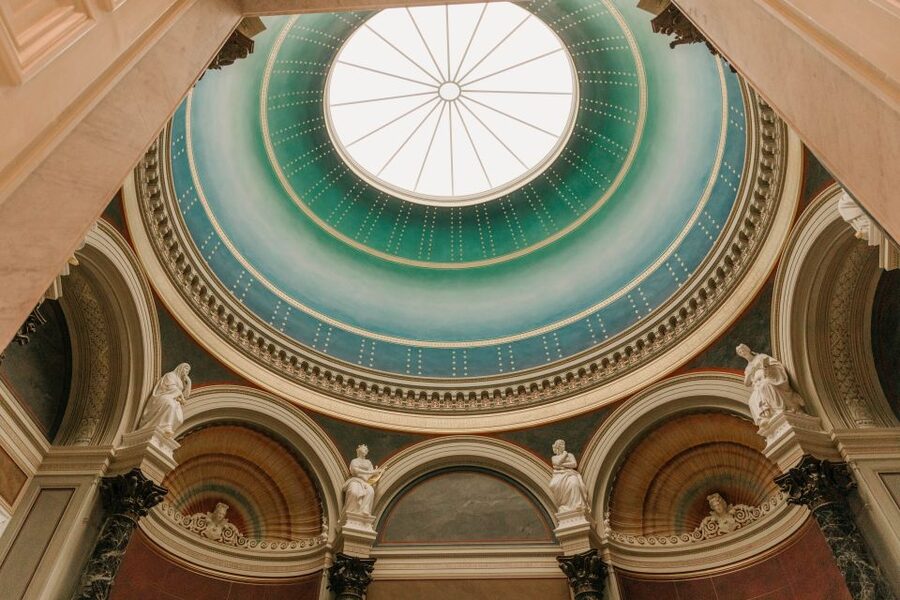
At $14 per person, this is strong value for a museum ticket that includes an audio guide and lets you skip the ticket line. The price matters most if you’re the kind of visitor who uses audio support to turn a museum stop into something you remember, not just photos you scroll past later.
This is a great fit if you:
- Want a concentrated 19th-century overview in one visit
- Care about how Berlin’s National Gallery collection shaped the way you understand Classicism through early Modernity
- Like mixing major painting names with sculpture and meaningful objects like the marble tomb
It might be less perfect if:
- Impressionism is the only thing you want, and you’d be disappointed if a gallery area is closed on your visit
- You travel with a backpack you cannot leave behind, since backpacks are not allowed
Should you book this Alte Nationalgalerie entry ticket?
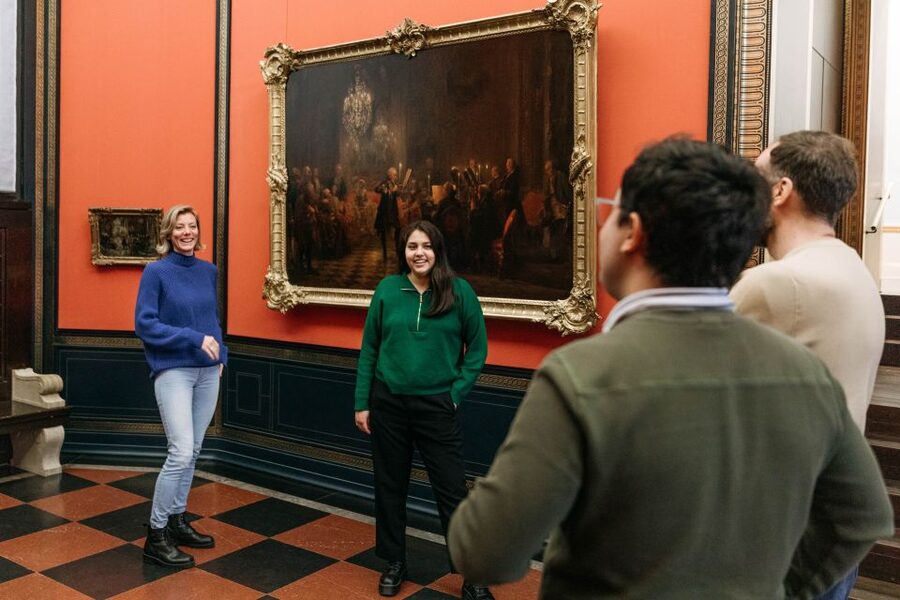
Yes, if your goal is a focused, high-value museum visit on Museum Island with an audio guide and minimal fuss. The included audio guide plus the time-efficient entry (skip the ticket line) makes it easy to have a satisfying experience even if you only have part of a day. Just go in with two or three must-sees, keep your schedule flexible in case some rooms are closed, and you’ll leave feeling like you understood the century instead of just seeing it.
FAQ
Where does this activity start?
It starts at the Visitor’s Entrance of the Alte Nationalgalerie, Bodestraße 10178 Berlin.
How long is the ticket valid?
The ticket is valid for 1 day.
What’s included with the ticket?
You get a ticket for the Alte Nationalgalerie and an audio guide.
Do I need to wait in the ticket line?
No. This activity includes skipping the ticket line.
How late can I enter after my booked timeslot?
You should enter the museums within 15 minutes of your booked timeslot.
Are backpacks allowed inside?
No. Backpacks are not allowed.
Is the Alte Nationalgalerie wheelchair accessible?
Yes. The entire building is wheelchair accessible.
Can I get a refund if I cancel?
No. This activity is non-refundable.
Newest Germany reviews on the site
- Koblenz: The Living Vineyard, Nature & Wine Enjoyment★ 5.0 · 14 reviews
- Koblenz: Sektmuseum Histor. Kelllergewölbe incl. 1 Glas Sekt★ 4.5 · 41 reviews
- Koblenz: Wein-& Sektgeschichte(n) incl. Wein/Sekt Verkostung★ 4.7 · 8 reviews
- Koblenz: Private pub crawl with insider guide & free shots★ 5.0 · 5 reviews
- Koblenz: Christmas Boat Tour with Mulled Wine★ 4.3 · 35 reviews
- Koblenz: Express Walk with a Local★ 5.0 · 4 reviews
- Koblenz: Guided tour Moselle kisses Rhine★ 5.0 · 3 reviews
- Koblenz: Rhine Valley Castle Sightseeing Cruise★ 4.6 · 98 reviews