

Reviewed · CASTLE TOURS
Berlin: Decolonial Berlin Castle/ Humboldt Forum Guided Tour
Colonial history gets a reality check here. This 2-hour guided tour takes on the Humboldt Forum with an Afrocentric and decolonial lens, so you understand the museum and the Berlin palace as part of the same story. The focus is practical, not vague, with clear links between colonialism, the ethnological collection, and how people today interpret cultural heritage.
I especially like how the guide uses a critical approach to the ethnological collection and doesn’t treat the objects like museum decoration. I also like the way the tour connects the Humboldt brothers and the palace setting to the wider colonial system, including the symbolic meaning you can actually spot on the building.
One drawback to consider: it is not a neutral, soft-focus tour. If you prefer museum history told as a simple, uninterrupted timeline, the decolonial framing may feel pointed, and the museum portion can feel a bit shorter than you might expect.
In This Review
- Key things to know before you go
- A decolonial lens on Berlin’s Humboldt Forum
- Where you start: the reconstructed Sanchi Gate and the 1-hour outdoor warm up
- 500 years of palace story, told through colonial connections
- Humboldt brothers: why German science is part of the story
- Ethnological collection audio walk: learning to read objects critically
- Tour pace, comfort, and who it fits best
- Price and what $41 buys you in Berlin
- What could be uncomfortable, and how to decide fast
- Should you book this tour?
- FAQ
- How long is the guided tour?
- What language is the tour guide speaking?
- Where do I meet the guide?
- What’s included in the price?
- Is the tour wheelchair accessible?
- What should I bring, and what can’t I bring?
Key things to know before you go
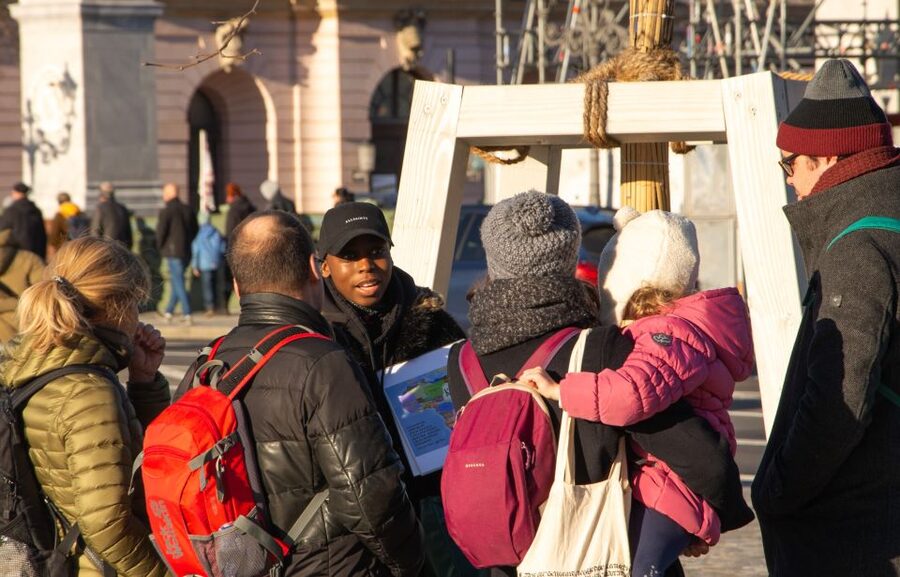
- Afrocentric perspective on the Humboldt Forum, with new ways to read the museum’s meaning
- Critical look at ethnological collections, using questions that change how you see labels and displays
- Colonial context tied to Berlin’s palace story, including missionary roles and symbolism
- Humboldt brothers in focus, explained as major German scientists with historical influence
- Audio walk inside the collection areas, designed to help you analyze, not just observe
- 1 hour seated outside first, so bring weather-smart clothing
A decolonial lens on Berlin’s Humboldt Forum

The Humboldt Forum can feel like a beautiful, modern museum sitting inside a restored palace shell. This tour helps you connect the beauty to the history underneath it. You get an Afrocentric way of interpreting what you see, plus a critical framework for understanding where colonial-era collecting practices fit into the bigger picture.
What makes this experience compelling is that it is not only about learning names and dates. You are encouraged to think about power, who got to describe other cultures, and how exhibitions can carry old assumptions forward. That matters in Berlin, where the city’s palace history is wrapped into national identity, not just museum walls.
You also get a clear promise in the tour structure: you will spend time on the palace itself and the Forum exhibitions, and then you will look at the ethnological collection with an eye for colonial legacy. If you want a guided experience that changes how you interpret the museum after you leave, this is the kind of tour that does it.
More castle visits near Berlin:
- From Munich: Neuschwanstein & Linderhof Castle Full-Day Trip
★ 4.6 · 14,646 reviews - Neuschwanstein & Linderhof Castle-Fairytale Day Tour from Munich
★ 4.5 · 7,275 reviews - Neuschwanstein Castle Tour from Munich
★ 4.5 · 5,117 reviews
Where you start: the reconstructed Sanchi Gate and the 1-hour outdoor warm up
You meet your guide near the reconstructed Sanchi Gate. There are white chairs nearby, and you can sit down before you move. Plan for about 1 hour outside before heading into the museum area.
This matters more than it sounds. Berlin weather can change quickly, especially in shoulder seasons and winter. Wear comfortable shoes and dress for the conditions, because the early portion is part of how the guide sets the context. The outdoor time also helps you get oriented, since you’re starting in a dramatic palace setting rather than in a quiet museum lobby.
If you are sensitive to cold or heat, this timing is the one part that can affect your comfort level. The tour is wheelchair accessible, but your comfort outdoors will still depend on the weather.
500 years of palace story, told through colonial connections

The tour frames Berlin’s palace with a time scale of roughly 500 years. That long stretch can feel abstract on your own, so the guide gives you the connective tissue: how colonial history links to the palace story and to what the Humboldt Forum is presenting today.
You’ll hear about why the palace matters symbolically, and how modern narratives can rewrite old structures without fully facing the harms connected to them. Instead of treating the building like a neutral backdrop, the tour treats it like a historical argument you can walk through.
You also cover specific symbolic details, including the role that missionaries played in creating colonial structures. This is not just a history lecture. You are meant to connect that context to what you see on the building, including the symbolic meaning of the cross on the roof of the museum. It is one of those details that can go unnoticed unless someone points out why it is there and what it signals.
Humboldt brothers: why German science is part of the story
The Humboldt brothers are central to the Forum identity, but they are not explained as distant heroes. The tour connects them to the wider colonial age where scientific collecting and classification often traveled with empire.
You’ll learn key facts about who the Humboldt brothers were and why they are important in German history as scientists. Then the tour ties that influence to the museum’s present role: how a collection becomes a cultural asset, and how that status can hide the violent or coercive routes that helped create it.
I like that this section doesn’t flatten everything into one moral or one villain. It shows the mechanism instead: scientific work, missionary presence, and colonial structures overlapping in ways that shaped what Europe collected, how it labeled people, and how it told those stories back home.
If you care about museums as institutions with ethics, this part is especially useful. You start noticing how easily a “science” story can turn into an “ownership” story.
A few more Berlin walks and trips to compare
- Berlin: Reichstag, Dome and Government District Guided Tour
★ 4.7 · 18,288 reviews - Berlin: 1-Hour City Tour by Boat with Guaranteed Seating
★ 4.3 · 16,993 reviews - Berlin: TV Tower Standard Entrance Ticket
★ 4.4 · 15,883 reviews - Berlin: Boat Tour Along the River Spree
★ 4.4 · 11,252 reviews
Ethnological collection audio walk: learning to read objects critically
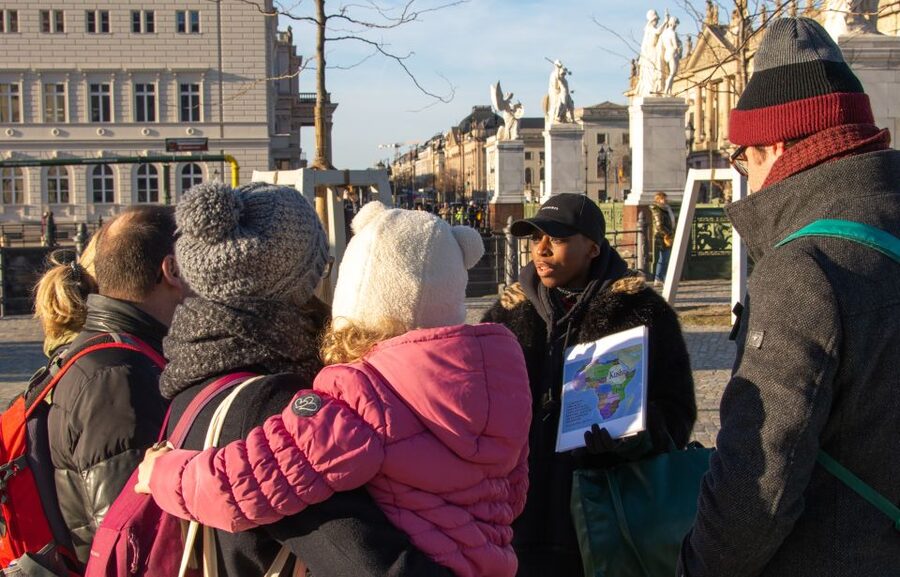
Inside the museum, the tour includes entry to the ethnological collection and uses an audio walk component. This is one of the best ways to keep the experience active for 2 hours. You are not only listening to the guide, you are also looking at displays in a structured way.
The big goal is critical analysis. You are asked to browse the collection and consider it from a colonial perspective, then measure what that legacy looks like in the present. In practical terms, that means you pay attention to what is emphasized, what is missing, and how interpretation can shift depending on who is speaking.
The guide’s approach is very much about changing your reading skills. A label is not just a label when it comes from a colonial collecting system. The tour encourages you to notice how categories and descriptions can carry a worldview that may not align with the cultures represented.
If you’re the type who likes museums but hates passive wandering, the audio walk method helps. It keeps you focused on meaning, not just appearance.
Tour pace, comfort, and who it fits best
At 2 hours, this is a focused tour. The structure is also clear: meet near the reconstructed Sanchi Gate, sit outside for about an hour, then go into the museum for the guided portion and the collection analysis.
Because it’s English, it’s a straightforward choice if you want this kind of interpretation without language friction. The tour is also wheelchair accessible, which makes it easier to include more people who want the same critical context.
This tour fits best if you:
- want museum context beyond what you can read on placards
- like discussion that connects history, politics, and symbolism
- are comfortable with a decolonial perspective that challenges everyday storytelling
It may feel less ideal if you want a purely art-and-architecture tour. The emphasis is on colonial structures, the ethnological collection, and how narratives are shaped.
Price and what $41 buys you in Berlin
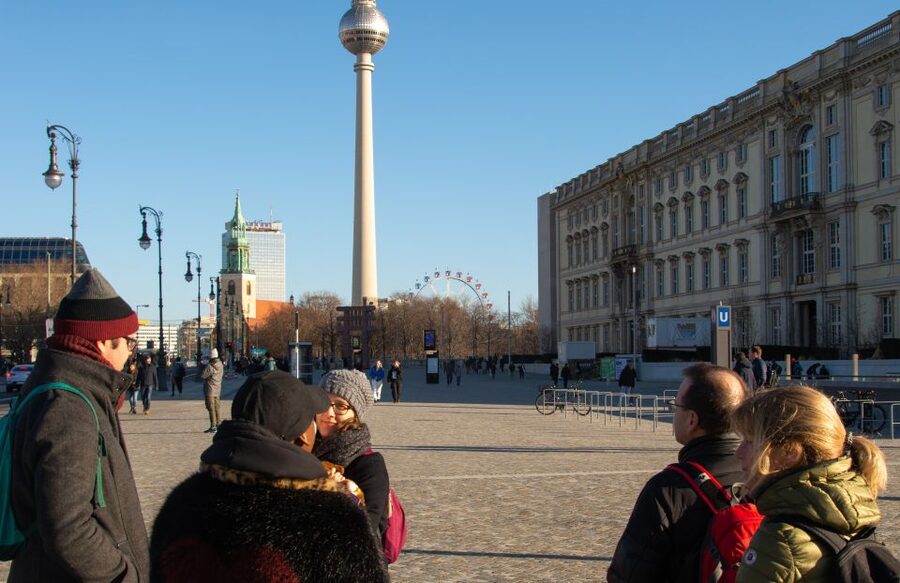
At about $41 per person for a 2-hour guided experience, you’re paying for three things: a live guide, museum entry to the ethnological collection, and a guided critical process that includes an audio walk component.
In value terms, that adds up. Museum entrance fees alone can be a meaningful chunk of the total cost, and having a guide who can connect palace symbolism, the Humboldt brothers, missionaries, and colonial legacy is the main reason to choose a tour over self-guided reading.
If your goal is to simply look around, you could do that on your own. But if you want your museum visit to change how you understand the collections and the building’s meaning, this price feels reasonable for what you get: guided interpretation plus access.
Also, the cost is small enough that you can pair it with other Berlin sights the same day. For me, that’s part of the value, because it helps you compare narratives across different stops.
What could be uncomfortable, and how to decide fast
This tour is built around decolonial framing and an Afrocentric narrative. That means it is likely to challenge your assumptions, especially if you expect museums to present history as settled facts without emotional or political weight.
A possible drawback is that the tone can feel intense. One provided note highlights how uncomfortable some people can feel with present-day interpretations of historical content, and another suggests the guided time inside the Forum can feel a little short compared with the palace framing.
So here’s a quick decision test you can use before booking:
- If you want facts plus critique, and you are open to uncomfortable context, this tour will likely land well.
- If you prefer a softer, strictly chronological museum walkthrough, you might find the decolonial approach too assertive.
Either way, you’re not wasting your time if you treat the tour as a lens. Even if you don’t agree with every angle, the guide will help you see how narratives are constructed.
Should you book this tour?
I’d book it if you plan to spend real time thinking about what museums do. The combination of palace context, colonial symbolism (including the roof cross), Humboldt brothers, missionary influence, and a critical look at the ethnological collection gives you a strong framework for understanding the Humboldt Forum beyond the surface.
I would skip or consider carefully if you’re mainly looking for architecture and a calm, neutral museum stroll. The tour’s purpose is explicitly interpretive and critical, and it takes a clear stance.
If you do book, come with comfortable shoes, expect weather-based outdoor time, and be ready to look at collections as more than objects. You’ll leave with a new set of questions, and that is exactly what makes this kind of guided tour worth your attention.
FAQ
How long is the guided tour?
The tour lasts 2 hours.
What language is the tour guide speaking?
The live tour guide is available in English.
Where do I meet the guide?
Meet your guide near the reconstructed Sanchi Gate, at the Rekonstruktion des Sanchi-Tores area, where you can also sit on the white chairs.
What’s included in the price?
Your ticket includes a tour guide, entry to the ethnological collection, and the tour includes a seated outdoor portion of about 1 hour before you go into the museum.
Is the tour wheelchair accessible?
Yes, the tour is wheelchair accessible.
What should I bring, and what can’t I bring?
Wear comfortable shoes and dress for the weather. Food and drinks are not allowed, and luggage or large bags are not allowed.
Newest Berlin reviews on the site
- Jetbike Berlin fun bike beer bike★ 5.0 · 3 reviews
- Karl-Marx-Allee Walking Tour: Berlin’s Socialist History★ 5.0 · 5 reviews
- Homeless on chic streets: city tour in Berlin from personal experience★ 4.6 · 3 reviews
- Berlin: Sachsenhausen Concentration Camp Guided Tour★ 4.9 · 42 reviews
- Historyof the Trans, Queer & Gay communities of Berlin tour★ 4.8 · 17 reviews
- Historic Berlin Pubs & History Tour★ 4.9 · 73 reviews
- Berlin: City Center Walking Tour★ 4.7 · 45 reviews
- Half-Day Berlin Highlights Segway Expedition★ 4.5 · 61 reviews
Castle Tours, compared.

Neuschwanstein & Linderhof Castle Full-Day Trip
Read our review →
Neuschwanstein & Linderhof Castle-Fairytale Day Tour from Munich
Read our review →

Premium Neuschwanstein Castle and Linderhof VIP Tour from Munich
Read our review →

Browse the lists this tour appears in