Reviewed · MUNICH TOURS
500 Years of Munich Architecture (Max. 16 Guests)
Munich’s buildings tell a 500-year story. This small-group architecture tour with Philipp connects Romanesque starts, Gothic landmarks like Frauenkirche, and modern city design into one easy route that makes the city feel logical, not random. You finish high up at the Gasteig rooftop terrace for a Munich skyline payoff, weather permitting.
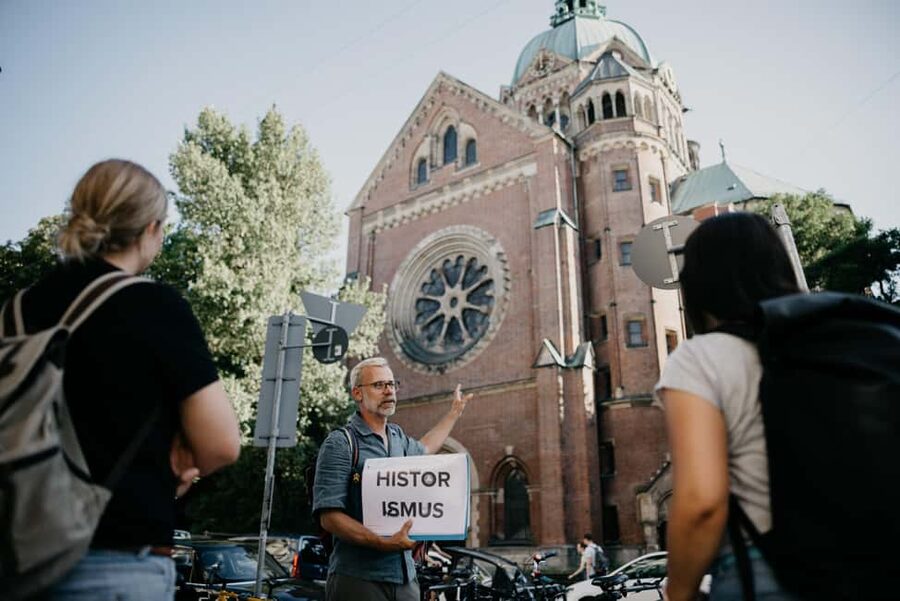
I especially like how Philipp, an architect and official guide, ties each style to real-world forces like religion and politics, so you notice details instead of just taking photos. I also like the mix of streets and open air, including time near the Isar River plus modern sights with Art Nouveau and street art flavors.
One watch-out: this is not a low-effort stroll. It lasts about 150 minutes, involves walking and standing, and it is not suitable for wheelchair users or people with mobility impairments, so plan around that and bring comfortable shoes.
In This Review
- Key highlights that make this tour work
- Starting at Frauenplatz and meeting Munich’s signature landmark
- Frauenkirche and St. Michael’s, where you learn to “read” churches
- Baroque drama at Trinity Church, plus Theatine elegance
- Bavarian State Opera and Maximilianstraße, Munich’s civic confidence
- St. Lukas and Müllersche Volksbad, where everyday Munich shows up
- Sudetendeutsches Museum and the shift toward modern themes
- Isar River walking, Art Nouveau, street art, and modern city signals
- The Gasteig Dachgarten rooftop finish, your skyline wrap-up
- Price and value, why $30 can still feel like a specialist tour
- Family-friendly for the curious, and not right for everyone
- Should you book 500 Years of Munich Architecture?
- FAQ
- Where is the meeting point?
- How long is the tour?
- How many people are in the group?
- What languages are offered?
- Is food included in the price?
- What’s included besides the guide?
- How much does it cost?
- What should I bring?
- Is smoking allowed during the tour?
- Is it suitable for wheelchair users or mobility impairments?
Key highlights that make this tour work
- Philipp’s architect perspective connects style choices to the city’s changing priorities
- Frauenkirche plus multiple church stops lets you compare details across centuries
- Opera and grand boulevards add a civic layer, not just religious architecture
- Isar River time adds nature and a breather between historic streets
- Art Nouveau, street art, and modern buildings keep the story from feeling stuck in the past
- End at the Gasteig Dachgarten terrace for wide skyline views to close the loop
Starting at Frauenplatz and meeting Munich’s signature landmark
The tour meets outside Frauenkirche, right at Frauenplatz 1. Look for Philipp with a tablet slung over his shoulder, so you can spot him fast and get going without a long search.
If you want an easy arrival, take S-Bahn or subway (U3/U6) to Marienplatz station and then walk about 10 minutes. I like meeting near a major anchor point like this, because you get your bearings quickly and the architecture starts immediately, not after a travel buffer.
Your first moments set the tone: Munich isn’t presented as one style winning forever. Instead, you’re guided through how tastes, power, and public life shaped what builders put in the streets and squares.
A few more Munich walks and trips to compare
- From Munich: Neuschwanstein & Linderhof Castle Full-Day Trip
★ 4.6 · 14,646 reviews - Neuschwanstein & Linderhof Castle-Fairytale Day Tour from Munich
★ 4.5 · 7,275 reviews - Munich: Third Reich & WWII Walking Tour
★ 4.6 · 6,181 reviews
Frauenkirche and St. Michael’s, where you learn to “read” churches
The first big stop is Munich Frauenkirche. You don’t just see the cathedral, you learn how to look at it. That matters because Munich’s most famous structures can feel like postcard backdrops if nobody points out what to notice.
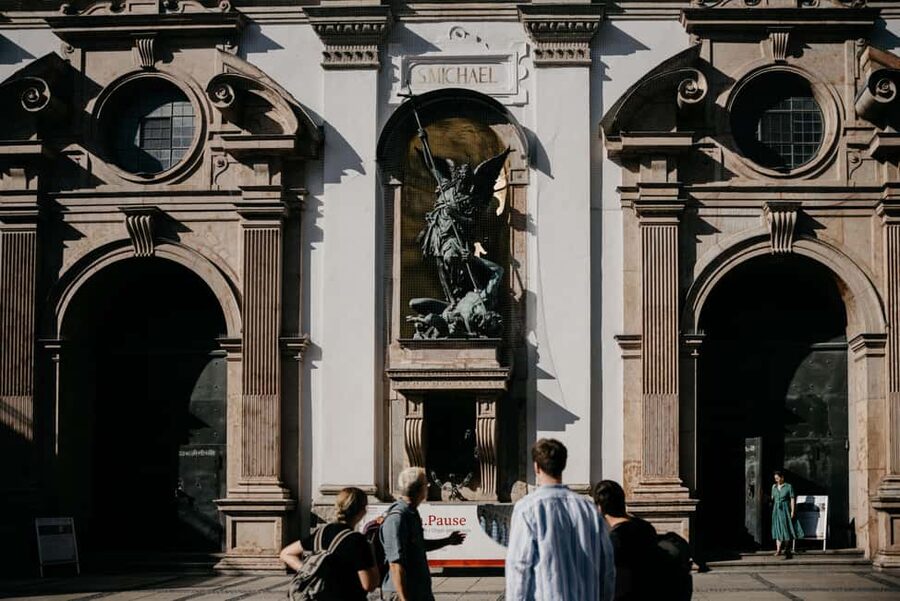
Next you visit St. Michael’s Church, Munich. This is where the tour’s century-by-century approach starts clicking. By comparing churches back to back, you can sense shifts in design choices, proportions, and the mood the builders were trying to create.
A practical tip here: bring your attention more than your camera. You’ll get more out of standing still for a few minutes and looking at edges, shapes, and ornament than sprinting for the perfect angle.
Baroque drama at Trinity Church, plus Theatine elegance
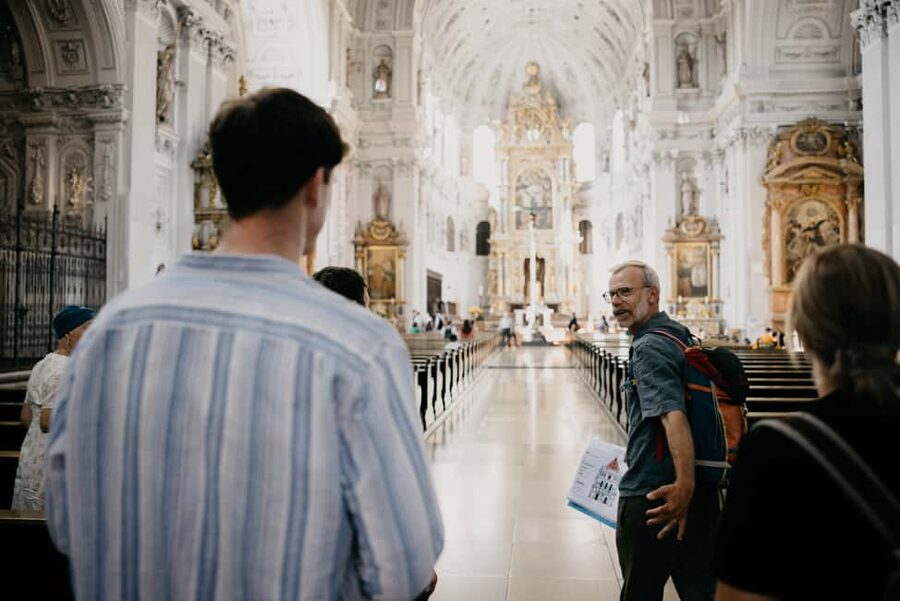
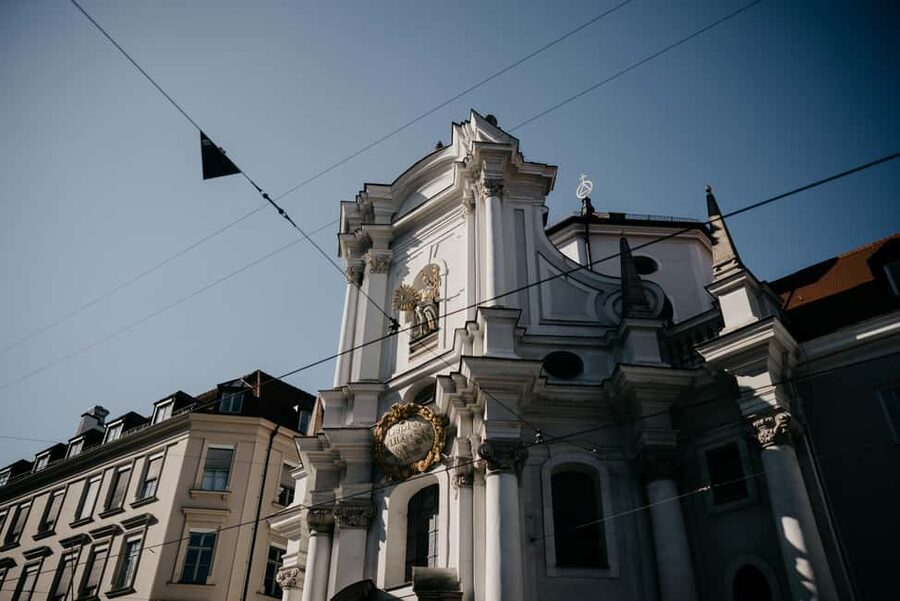
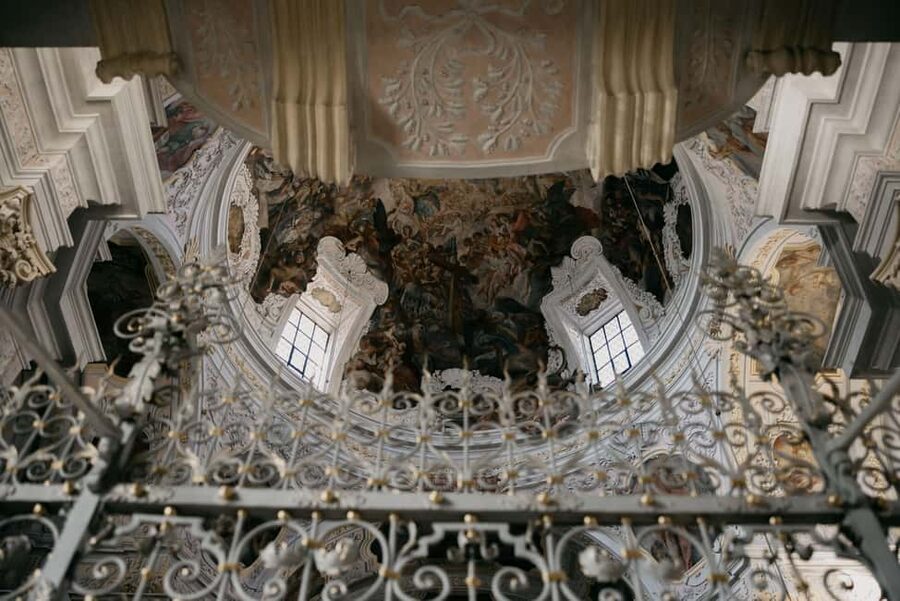
Then the tour moves into the world of Trinity Church (Trinity Church, Munich) and Theatine Church (Theatinerkirche). These stops are great if you like architecture that feels like it has a personality.
Baroque religious buildings often aim for emotional impact, and on this walk you’ll connect that feeling to the historical context behind it. It’s not just style for style’s sake. The message is tied to what communities believed mattered at that moment.
The Theatine Church stop adds another side to the story. You start noticing how certain design language repeats, while others flip to match the era’s taste. This is a good section for anyone who has ever wondered why some buildings look theatrical and others look strict.
Bavarian State Opera and Maximilianstraße, Munich’s civic confidence
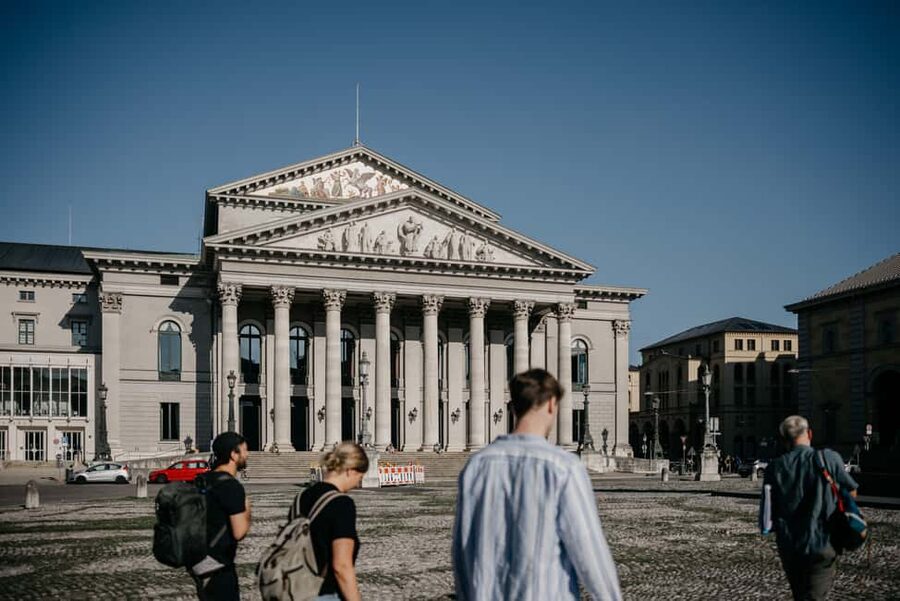
After the church cluster, you step into more civic and cultural Munich with the Bavarian State Opera. This stop helps you realize architecture in the city is not only about worship. Public institutions, performance spaces, and state identity also shape the skyline.
Then you get a guided walk along Maximilianstraße. This kind of boulevard viewing is where “architecture history” becomes something you can actually sense while walking. You begin to understand how city planning, street rhythm, and prominent buildings worked together to signal status and stability.
If you’re the type who likes to see how a city wants to present itself, this segment is worth your attention. You’ll look down the street differently by the end.
Same city, a different way to spend the afternoon:
- Dachau Concentration Camp Memorial Site Tour from Munich by Train
★ 4.5 · 5,637 reviews - Neuschwanstein Castle Tour from Munich
★ 4.5 · 5,117 reviews - Third Reich Walking Tour Munich
★ 4.5 · 4,291 reviews - Munich Hop-On Hop-Off Tour: 1-Day or 2-Day Ticket
★ 4.3 · 4,161 reviews
St. Lukas and Müllersche Volksbad, where everyday Munich shows up
The tour continues with St. Lukas and then a guided look at Müllersche Volksbad. I like these stops because they widen the definition of architecture. You’re not only chasing big famous names. You’re also seeing structures that serve the public and reflect civic priorities.
This part also gives you a more human scale. Churches and palaces can dominate your thinking, but buildings for community life show you a different kind of meaning. If you’ve ever felt that architecture tours are just a list of monuments, this section helps fix that.
You’ll also get “hidden insight” style context, focused on what these buildings reveal about how Munich functioned, not only how it looked.
Sudetendeutsches Museum and the shift toward modern themes
After the guided sequence through the city’s architectural layers, there’s time with Sudetendeutsches Museum. This isn’t just another interior stop. It gives you a checkpoint in the broader cultural story so the later modern visuals land with more weight.
The tour’s overall framing moves from earlier architectural forms through Gothic and Baroque, then into later styles like Neoclassical and Historicism, before it heads into modern expression. A museum pause helps you connect that arc to the city’s wider changes over time, not just the building styles themselves.
If you love architecture but also want context that makes you feel you understand the “why,” this museum stop plays that role.
Isar River walking, Art Nouveau, street art, and modern city signals
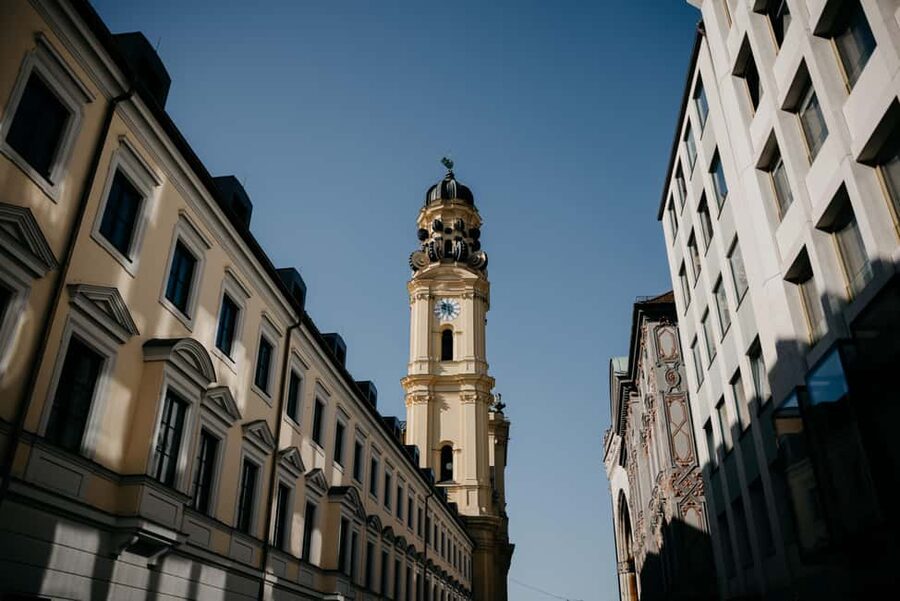
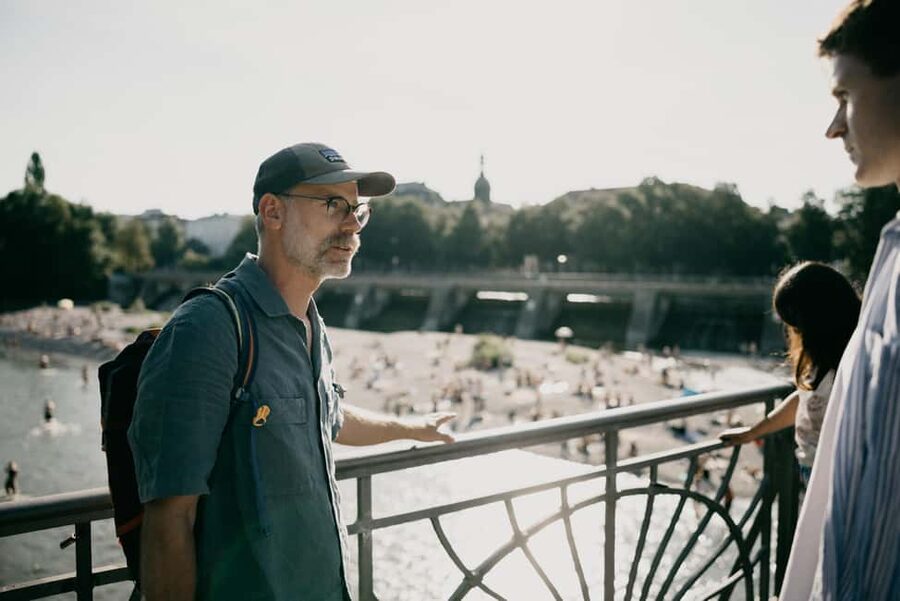
One of the smartest parts of the route is the shift to the Isar River. You get nature along the way, and it changes the pace. After concentrated old-city details, walking near water helps you reset your eyes.
This segment also includes Art Nouveau and street art. That mix matters because it prevents the tour from feeling like a museum of the past. You’re shown how the city expresses itself through different eras, including more contemporary visual language.
You’ll also see a modern museum moment as part of this shift toward present-day architecture. From the way Philipp explains it, you’re meant to notice how the city’s “today” is still shaped by decisions made decades earlier, even when materials and styles look completely different.
The Gasteig Dachgarten rooftop finish, your skyline wrap-up
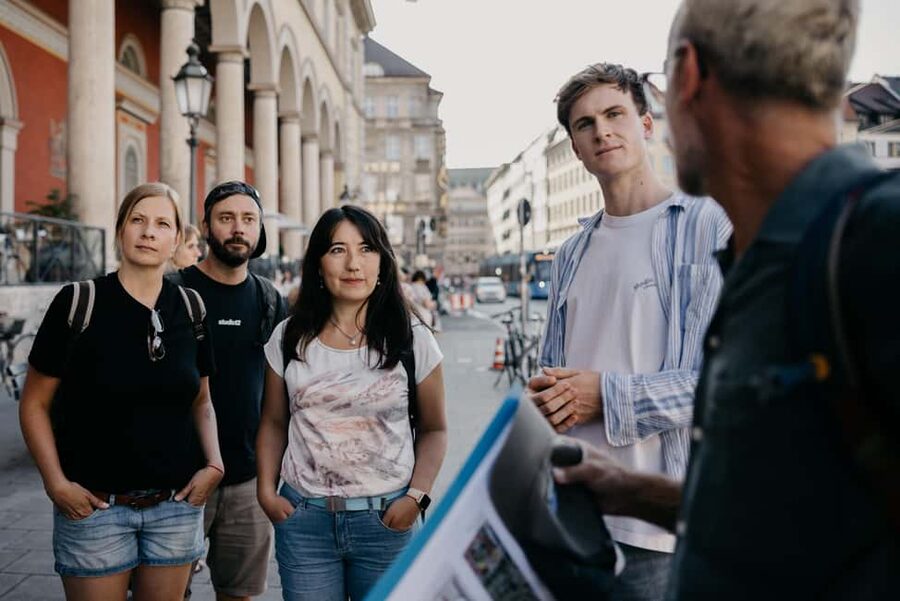
The tour ends at Dachgarten – auf dem Gasteig. This is the moment you’ve been building toward, because it turns the architecture lesson into a big-picture view.
From the rooftop terrace, you can connect what you learned on the streets to the city you see around you. You’ll notice how older cores contrast with later development, and you’ll also understand why the tour spends time moving between different types of buildings instead of focusing on only one neighborhood.
Weather permitting, this finish is a great place to ask questions while you can still compare what you saw earlier with what’s right in front of you.
Price and value, why $30 can still feel like a specialist tour
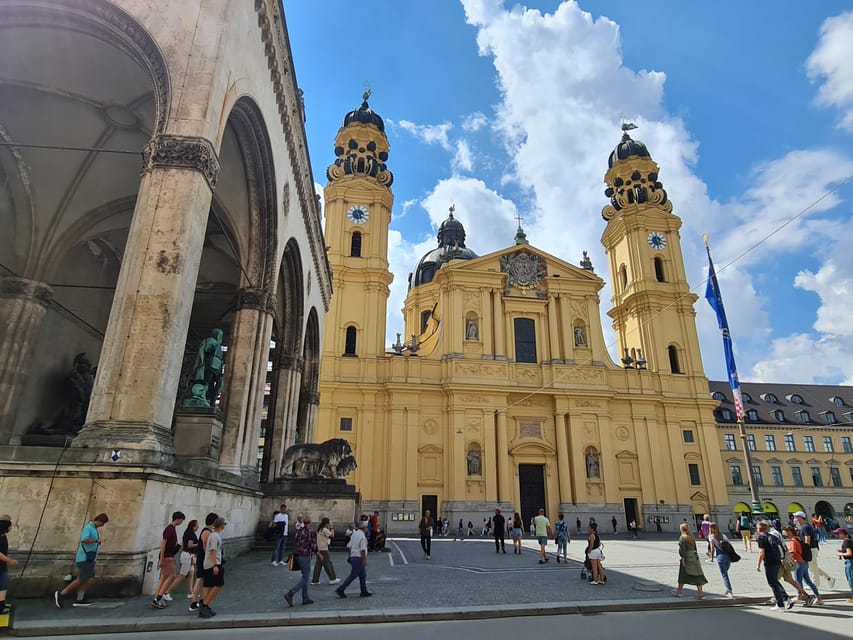
At about $30 per person for roughly 150 minutes, this tour is priced like a local small-group experience, not a big bus production. What makes it feel like value is the specialist guide you get.
You’re not only hiring someone who knows facts. You’re getting Philipp, an architect and certified official Munich tour guide, which changes the tone. Details are explained in a way that helps you see how design choices work, not just what they are called.
You also get small extras that add a personal touch, like a special postcard gift featuring a tour highlight and a digital map with Philipp’s favorite Munich spots. And you get practical orientation for future wandering, because the map isn’t generic. It’s shaped by what Philipp thinks is worth noticing.
Family-friendly for the curious, and not right for everyone
The tour is described as family-friendly, and I can see why. It’s structured enough that kids and teens can follow a clear storyline across time. At the same time, adults get the depth through architecture explanation and context.
That said, it is not suitable for wheelchair users or people with mobility impairments, and it’s also explicitly not a slow, sit-everywhere format. You’ll want to plan around walking, comfortable shoes, and some standing.
If you’re visiting Munich for the first time, this is a strong way to get your bearings through architecture. If you’re local, it can still feel fresh because it doesn’t only repeat the obvious landmarks. It also brings in civic and everyday building types, plus modern visuals.
Should you book 500 Years of Munich Architecture?
Book it if you want a small-group Munich architecture tour that explains the city’s changes from older church styles through later periods and into modern design. The combination of Frauenkirche, multiple church stops, the opera and boulevards, plus the river and the Gasteig rooftop finish is a smart full arc for an about-two-hour experience.
Skip it if you need step-free accessibility or you can’t do about 150 minutes of walking and standing. Also, if you only want one famous sight and nothing else, this is likely more than you need.
FAQ
Where is the meeting point?
Meet outside, right in front of the entrance to the Frauenkirche cathedral at Frauenplatz 1.
How long is the tour?
The duration is 150 minutes.
How many people are in the group?
The tour is a small-group experience with a maximum of 16 guests.
What languages are offered?
The live tour guide speaks English, German, and Spanish.
Is food included in the price?
No. Food and drinks are not included.
What’s included besides the guide?
You get a special postcard gift featuring a tour highlight, exclusive insights into hidden architectural gems, and a digital map with Philipp’s favorite Munich spots.
How much does it cost?
The price is listed as $30 per person.
What should I bring?
Wear comfortable shoes.
Is smoking allowed during the tour?
No. Smoking is not allowed.
Is it suitable for wheelchair users or mobility impairments?
No. It is not suitable for people with mobility impairments or wheelchair users.
Newest Munich reviews on the site
- Private day trip from Munich to Eagle’s Nest, Salzburg and back★ 4.5 · 15 reviews
- Private Tour from Munich to Salzburg with English Speaking Driver★ 4.5 · 10 reviews
- Private day trip: Munich to Neuschwanstein Castle, local driver★ 4.5 · 3 reviews
- Private day trip from Munich to Salzburg and Hallstatt★ 4.5 · 17 reviews
- Private Day Trip Munich to Harburg, Dinkelsbuhl & Rothenburg★ 4.5 · 24 reviews
- Private Day Trip from Munich to Eagle’s Nest and Hallstatt★ 4.5 · 9 reviews
- In Depth Dachau Concentration Camp Tour (Private Tour)★ 5.0 · 43 reviews
- Munich Lake Konigssee and Berchtesgaden Salt Mine Private Tour with Lake Cruise★ 4.5 · 7 reviews
Munich Tours, compared.
Neuschwanstein & Linderhof Castle Full-Day Trip
Read our review →
Neuschwanstein & Linderhof Castle-Fairytale Day Tour from Munich
Read our review →
Dachau Concentration Camp Memorial Site Tour from Munich by Train
Read our review →
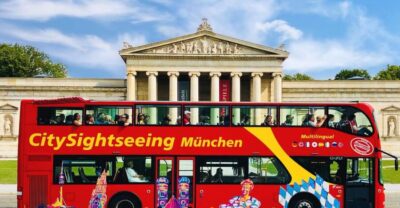
Munich Hop-On Hop-Off Tour: 1-Day or 2-Day Ticket
Read our review →