
Reviewed · HISTORICAL TOURS
Völklingen Ironworks World Heritage Site: Guided tour of the ironworks site
One place turns steel-making into a real story. You’ll walk through the UNESCO-listed Völklingen Ironworks and see how pig iron is made, with a guide who keeps the machines understandable. I especially like the close, step-by-step route from the blower hall to the blast furnace, and I also like that the ticket does not end when the tour ends. One possible drawback: the guided part is only 2 hours, so if you want a slow pace for photos and quiet reading, you may feel a bit rushed.
Logistics are simple. The meeting point is in the entrance area at the ticket office, and the live guide works in German. After the guided tour, you’re free to explore the entire site and exhibitions on your own, including the old coking plant, the science center, and the garden that grew where the industrial mess used to be.
If you like industrial sites that still have their original “bones,” this is a strong pick. The ironworks are the only fully preserved example from the heyday of industrialization, and it was the first monument of this era to be added to the UNESCO World Heritage list. That combination of authenticity and interpretation is what makes the experience click.
In This Review
- Key things to know before you go
- Why Völklingen Ironworks feels different than a usual museum
- Getting from the ticket office into the “working” story
- Blower hall to blast furnace: understanding pig iron production
- The coking plant, plus Ferrodrom® Science Center for learning that sticks
- Paradise garden and the viewing platform above Völklingen rooftops
- Price and value: what you actually get for about $25
- Language, pace, and the photo-reading tradeoff
- Ticket discounts and who should plan for reduced entry
- Who this tour suits, and who should skip it
- Should you book the Völklingen Ironworks guided tour?
- FAQ
- How long is the guided tour at the Völklingen Ironworks?
- Where is the meeting point for the tour?
- What is included with the tour ticket besides the guide?
- Is the tour accessible for wheelchair users?
- What language is the live guide?
- Is the tour suitable for people afraid of heights?
- Are there free or reduced ticket options?
Key things to know before you go
- UNESCO, fully preserved: The site preserves the industrial machinery from the era of mass iron production.
- Pig iron explained on the spot: The guide connects the process to what you’re actually seeing.
- Two-part experience: A guided 2-hour walk plus time to roam permanent and special exhibitions.
- Ferrodrom® Science Center included: You get hands-on-style learning alongside the industrial halls.
- Paradise garden access: The former coking plant area has been turned into a reclaimed landscape with flora and fauna.
- Height caution: Not suitable if you’re afraid of heights, especially with viewpoints above rooftops.
Why Völklingen Ironworks feels different than a usual museum
Most museums show you objects. Here, you mostly see systems.
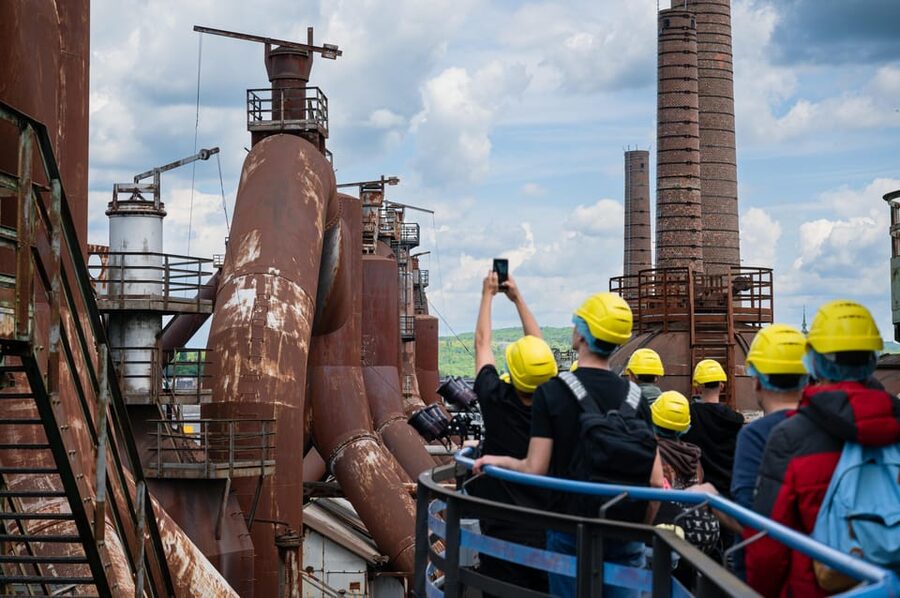
The Völklingen Ironworks is famous because it is the only fully preserved ironworks from the heyday of industrialization, and it was the first such monument from this era to enter the UNESCO World Heritage list. That matters. You’re not looking at a few restored pieces in a tidy room. Instead, you’re stepping into the world as it functioned, with halls, open spaces, and a maze of pipe systems that once powered the process.
What I like for your planning is that the site is layered. You get industrial engineering, yes, but you also get human-scale stories about the people who lived and worked there, and you get the modern re-use of the spaces. Today, the ironworks hosts international exhibitions, festivals, and concerts, which gives you a sense that the place is still alive, not frozen behind glass.
And then there’s the contrast that makes the day feel satisfying, not just informative. The former “hell” of the coking plant has become the Paradise garden, where reclaimed parts of the site now support plants and wildlife. It’s industrial history with a present-day ecological and cultural purpose.
A few more Germany walks and trips to compare
- Leipzig: City History Canal Sightseeing Tour on a Motorboat
★ 4.7 · 7,671 reviews - Berlin: Natural History Museum Entrance Ticket
★ 4.6 · 3,382 reviews - Leipzig: 1.5-Hour Historical Walking Tour in German
★ 4.7 · 2,217 reviews
Getting from the ticket office into the “working” story
The guided tour starts at the entrance area at the ticket office. That’s helpful because you can arrive, get oriented, and start moving without wasting time hunting for the group.
The guide leads you through the site’s main industrial zones and focuses on two things at once:
- how the machines worked
- how the people in Saarland were shaped by that work
The tour runs for 2 hours. That’s a nice length for first-timers because you get the structure and the explanation without burning half a day. It also means you should treat the guided time as the framework for your self-guided exploration afterwards.
Once the tour ends, you can go at your own pace through the halls and exhibitions. The site is large enough that the guide’s route helps you avoid wandering in circles. After you’ve seen the core process, you’ll recognize what you’re looking at when you come across more machinery, pipework, and interpretive displays.
Blower hall to blast furnace: understanding pig iron production
This is the heart of the experience.
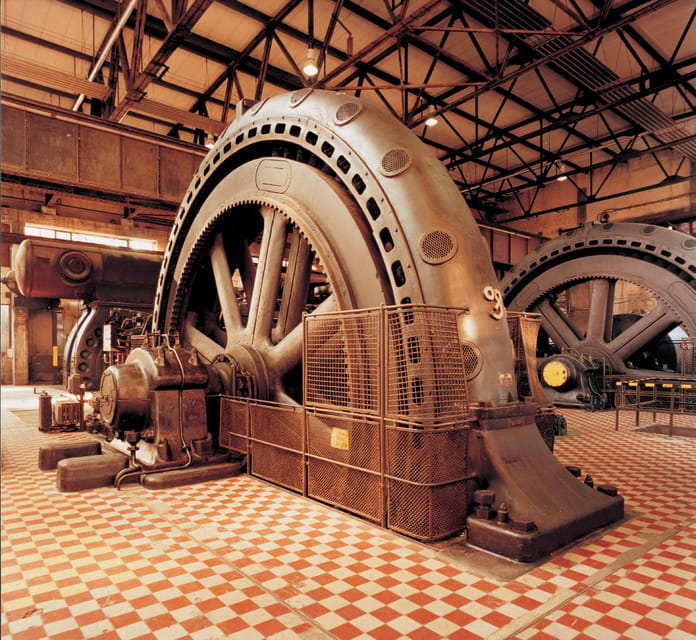
On the guided walk, you’ll move through key industrial spaces, including the blower hall and the blast furnace. Your guide explains how pig iron is produced, and the best part is that the explanation stays tied to what you see. You aren’t learning iron-making theory in the abstract. You’re watching the physical logic of the plant and understanding why each section mattered.
Here’s how to think about this section before you arrive: the plant is basically a big machine for turning raw material into metal. Pipes, pressure systems, and heated processes all connect. When the guide points out how air and heat were managed, the machinery stops looking like random metal and starts looking like a system designed for production.
If you’re the type who likes cause and effect, this will land well. If you’re less interested in the details, it’s still worth doing, because the guide also ties the process to daily life in Saarland. The machines are part of a labor story, not just a technical one.
The coking plant, plus Ferrodrom® Science Center for learning that sticks
After you’ve gotten your bearings with the core ironworks machines, the experience expands beyond pure steel.
You can visit the old coking plant and also enter the Ferrodrom® Science Center, which is included with your tour ticket. That combination is smart because it keeps you from leaving with only industrial nostalgia.
The coking plant connects to the idea of transformation. Coking was part of the broader industrial chain, and seeing it on-site helps you understand the whole workflow that fed the blast furnace era.
Then, with Ferrodrom® in the mix, you get a more playful, learning-friendly layer. You’re still inside the industrial world, but the science center approach makes it easier to absorb concepts without feeling like you’re only reading panels in silence. Even if you don’t speak German fluently, you’ll likely find plenty of visual cues and hands-on style content that helps you keep moving.
Practical tip: when you visit these indoor learning areas, set a simple goal for yourself. For example, pick one concept you want to understand, then look for it across the machines, displays, and science exhibits. It’s an easy way to turn “good enough” sightseeing into real understanding.
Same city, a different way to spend the afternoon:
- Berlin: Reichstag, Dome and Government District Guided Tour
★ 4.7 · 18,288 reviews - Hamburg: Sex and Crime in St. Pauli Tour for Ages 18 +
★ 4.7 · 17,793 reviews - Berlin: 1-Hour City Tour by Boat with Guaranteed Seating
★ 4.3 · 16,993 reviews - Berlin: TV Tower Standard Entrance Ticket
★ 4.4 · 15,883 reviews
Paradise garden and the viewing platform above Völklingen rooftops
One of the most memorable parts of the whole visit is leaving “industrial” behind while still staying on the same property.
Included with your ticket is access to the Paradise landscape garden. This garden grew from reclaimed parts of the former coking plant area. In other words, you can stand in the same general setting where heavy industry once operated, and then see it transformed into a place with plants and wildlife.
That shift is the point. It’s not only a pretty add-on. It’s a reminder that industrial sites can be repurposed, and that history can coexist with nature when there is planning and care.
You’ll also have access to a viewing platform above the rooftops of Völklingen. From there, the scale of the complex becomes clearer. You start seeing how the halls and pipe systems related across distances, not just as individual stops.
Important consideration: this portion is one reason the tour is marked as not suitable for people afraid of heights. If you know you struggle with high viewpoints, skip any part of the program that takes you onto elevated structures. You can still enjoy the halls and exhibitions at ground level.
Price and value: what you actually get for about $25
The price is $25 per person, and the value comes from the bundle.
You’re paying for:
- a guided 2-hour walkthrough with a live guide
- day admission to the World Cultural Heritage Site
- access to all permanent and special exhibitions
- access to Ferrodrom® Science Center
- access to the Paradise garden
That’s the key. If you only paid for a guided walk, the cost might feel like you were just buying interpretation. But here, your ticket essentially functions like a full site visit that starts with expert context.
To judge value for yourself, ask one question: do you want a guide to explain what you’re seeing, and do you want time to roam afterwards? If the answer is yes, then $25 is a fair deal because you get both the guided structure and the freedom to spend more time at the exhibits that grab you.
Also, because the site is UNESCO-recognized and the ironworks are fully preserved, you’re paying for a place with real material authenticity, not a partial replica. That tends to make the visit feel worth it even when you don’t go deep into every panel.
Language, pace, and the photo-reading tradeoff
The guide is live and German. Some content is shown in its original language. That’s not a dealbreaker, but it should shape how you prepare.
My advice:
- If you read German comfortably, you’ll gain a lot from the explanations and signage.
- If German is not your strongest language, consider using a translation app to turn key terms into instant understanding.
- Focus on visuals during the tour. The machines and interpretive layouts do the heavy lifting for non-fluent visitors.
Now the part that affects your expectations. The guided portion is relatively fast. You get an informative overview, but you don’t get hours and hours to stop, photograph every corner, and read every label. One practical strategy is to do the tour first with a “listen and orient” mindset, then do your photography and deeper reading during your self-guided time afterwards.
If you’re coming mainly to photograph, arrive with a plan for where you want your shots. Identify a few anchor spots, like the main halls and the areas tied to the blast furnace and viewing platform. Then let the rest be supporting material. This prevents the day from becoming a frantic scavenger hunt.
Ticket discounts and who should plan for reduced entry
There are a few free and reduced options, which can make the visit especially cost-friendly for the right group.
Here’s what you can plan around:
- free admission for under 18s
- free admission for under 27s with a valid student ID
- reduced admission for disabled persons from GdB 60%
- SaarlandCard reduced admission
- free or reduced tickets are picked up at the entrance ticket office
So if you’re traveling as a student, a young adult, or with a disability qualification, bring the right ID and plan to handle the ticket at the entrance.
If none of those apply to you, the standard price still makes sense because the ticket includes much more than the guided portion.
Who this tour suits, and who should skip it
This guided visit is a great match if you want:
- a structured introduction to a major industrial UNESCO site
- an expert explanation of pig iron production through the actual machinery
- time after the tour to explore exhibitions at your own speed
- a mix of industry and nature through the Paradise garden
It’s also wheelchair accessible, which is a big plus for many visitors who need barrier-aware routes.
On the other hand, it’s not suitable if you’re afraid of heights. The viewing platform above rooftops makes that warning practical, not theoretical. If you can manage stairs and indoor hall areas comfortably but panic at heights, you may still enjoy parts of the site, but the safest choice is to follow the guidance and avoid any elevated sections.
Best fit by mood:
- If you like hands-on learning and big machines: you’ll enjoy it.
- If you want a quiet museum with lots of time alone at every display: you’ll need extra self-guided time after the 2-hour walk.
Should you book the Völklingen Ironworks guided tour?
Yes, you should book it if you want the value of a full UNESCO site entry plus expert interpretation in a short, efficient format. The guide helps you see the plant as a working system, not just as old metal. And because your ticket includes permanent and special exhibitions, Ferrodrom® Science Center, and the Paradise garden, you’re not limited to the guided route.
I’d think twice if:
- German is a barrier for you and you hate reading translations on your phone
- you strongly prefer slow sightseeing with lots of stopping, photographing, and reading during the guided segment
- heights make you anxious, since the visit includes elevated viewpoint options
If you fit the first group, book. If you fit the caution group, adjust your expectations. Either way, this is one of those rare industrial heritage places where the setting is still doing most of the storytelling for you.
FAQ
How long is the guided tour at the Völklingen Ironworks?
The guided tour lasts 2 hours.
Where is the meeting point for the tour?
You meet in the entrance area at the ticket office, where the guided tour also starts.
What is included with the tour ticket besides the guide?
Your ticket includes day admission to the World Cultural Heritage Site, access to all permanent and special exhibitions, entry to the Ferrodrom® Science Center, and access to the Paradise garden.
Is the tour accessible for wheelchair users?
Yes, the tour is wheelchair accessible.
What language is the live guide?
The live tour guide is German.
Is the tour suitable for people afraid of heights?
No. It is not suitable for people who are afraid of heights.
Are there free or reduced ticket options?
Yes. Under 18s get free admission. Under 27s get free admission with valid student ID. Disabled persons (from GdB 60%) get reduced admission. SaarlandCard holders also get reduced admission. Free or reduced tickets are obtained at the entrance ticket office.
Newest Germany reviews on the site
- Würzburg: Private Walking Tour With Professional Guide★ 4.9 · 27 reviews
- Zell: Bike and boat tour with wine tasting and picnic★ 4.7 · 3 reviews
- Würzburg: Brückenschoppen (guided tour with wine)★ 4.3 · 3 reviews
- Würzburg: Guided Tour with Franconian wine★ 4.7 · 6 reviews
- Würzburg: Brückenschoppen Winter Edition (guided tour with mulled wine)★ 4.7 · 14 reviews
- WOODCUTTER – AXE THROWING & BAR EXPERIENCE IN FRANKFURT★ 3.4 · 8 reviews
- Worms: Historic Walking Tour With Heike★ 4.6 · 28 reviews
- Worms Private Guided Walking Tour★ 5.0 · 4 reviews
Historical Tours, compared.
City History Canal Sightseeing Tour on a Motorboat
Read our review →
Browse the lists this tour appears in