
Reviewed · WINE TOURS
Stuttgart: Taster tour of the Wine Museum incl. 0.1 l wine
A quick wine lesson, then you sip. At the Stuttgart Wine Museum in the historic wine village of Stuttgart-Uhlbach, the guide explains how local viticulture developed over centuries and how grapes become wine. I love the mix of simple visuals and practical stories, and I love that the tour ends with 0.1 l of Stuttgarter Tröpfle for a real tasting moment.
One catch is the language: the guided tour is only available in German, so if you rely on English you’ll need to plan around that.
In This Review
- Key highlights you should know before you go
- Stuttgart Wine Museum in Stuttgart-Uhlbach, and why the setting matters
- The 45-minute flow: what you do, and where it feels most useful
- How Stuttgart viticulture changed over the centuries
- What the guide covers about turning grapes into wine
- The 0.1 l tasting: Stuttgarter Tröpfle and what to expect in the glass
- Value check: why about $18 feels fair for what you get
- German-only tour, and who should skip it
- Practical tips to get more from your visit
- Should you book the Stuttgart Wine Museum taster tour?
- FAQ
- Where does the wine museum tour take place?
- How long is the tour?
- How much wine is included in the tasting?
- Is food included with the tour?
- What language is the guided tour offered in?
- Is this tour suitable for children?
Key highlights you should know before you go
- Stuttgart-Uhlbach wine village setting: You’re not just in a room with exhibits, you’re in a place tied to wine culture.
- 45 minutes, guided and focused: A short format that gives you context fast, without turning into a long lecture.
- Viticulture explained in plain terms: How grapes grow, and how they turn into wine, is the core theme.
- A real tasting at the end: You get a 0.1 l pour, not just a sniff-and-skip.
- Oak and Barrique details, if you pay attention: One standout fact to listen for, Eichenfässer used only twice for Barrique wines.
Stuttgart Wine Museum in Stuttgart-Uhlbach, and why the setting matters
Stuttgart is known for big cars, but wine is a serious second identity here. This taster tour takes you to the historic wine village of Stuttgart-Uhlbach, where the museum fits the landscape and local life. That matters, because wine isn’t presented as a museum-only hobby. You get the sense that this region has grown and shaped its vines for a long time.
The museum format is built for understanding, not intimidation. You walk with a live guide through museum areas that explain viticulture, then you finish with a drink. In other words, you don’t just learn names and dates, you connect the ideas to what’s in the glass.
I also like that this is a quick, appointment-style experience. If your day in Stuttgart is packed, you can still get a meaningful wine intro without committing to a half day or a full evening.
More Wine Tours in Stuttgart
- Stuttgart: Stuttgart Wine Museum Wine Tasting
★ 4.7 · 55 reviews - Stuttgart: Guided Wine Walk & Wine Tasting
★ 4.6 · 28 reviews - Premium wine hike Stuttgart with games and winemaker’s snack
★ 4.7 · 26 reviews
The 45-minute flow: what you do, and where it feels most useful
This is a short tour by design, lasting 45 minutes. That means you should expect a guided path with clear talking points and a tasting that comes right at the end. The museum visit part is your orientation. You learn the basics of how vineyards work and how grapes become wine, then the tour wraps with a toast.
The best way to think about it is like this: you’re getting a guided decoder ring for regional wine. When you later see bottles, tasting notes, or terms like Barrique, you’ll have an easier time sorting what those words actually mean.
Because the tour is compact, it also rewards focus. If you’re the type who likes to look around slowly, this may feel a bit quick. But if you want a structured overview plus one tasting, it’s a very efficient use of time.
How Stuttgart viticulture changed over the centuries
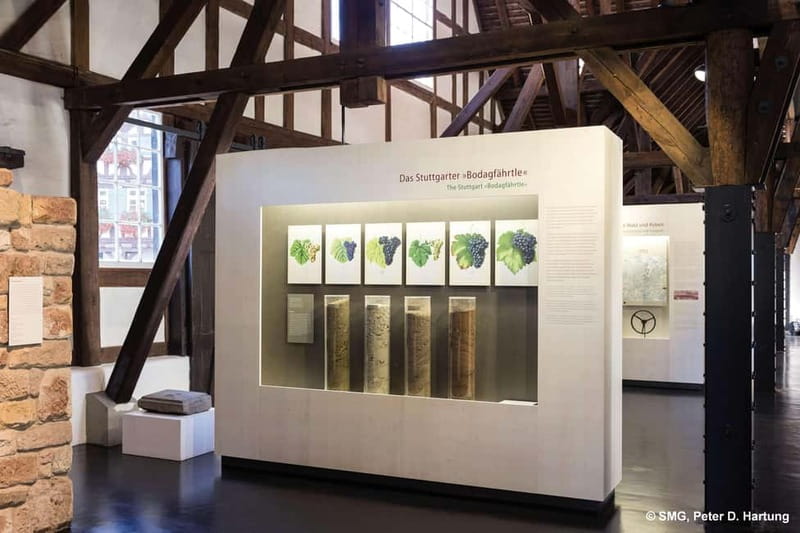
The museum tour frames Stuttgart wine as a living tradition with change over time. You’ll hear about how viticulture developed over the last few centuries, and you’ll get context for how grapes became part of Stuttgart’s identity.
What I appreciate most about this kind of overview is that it stops you from treating wine as frozen in time. Even without getting lost in technical history, you can start to see why local wine culture evolves. Climate shifts, farming practices, and regional tastes all nudge how vineyards are cared for and how wine styles show up.
You’ll also learn that the region’s reputation isn’t just marketing. It’s built on a long chain of decisions made by growers and winemakers, from vine selection to how wine is aged. The tour stays practical, so you come away with a clearer sense of what you’re looking at when you tour a vineyard or read a bottle label.
What the guide covers about turning grapes into wine
The tour’s promise is straightforward: you’ll learn how it works that grapes are turned into wine. In a 45-minute format, you won’t get an engineering manual. What you should get instead is a guided overview that explains the main steps, in the kind of language you can actually remember later.
Here’s the practical way to connect the museum lessons to the real world, and why it helps you as a visitor:
- Harvest to processing: The moment grapes are picked, the story shifts from growing to making.
- Fermentation: This is where the grape juice becomes wine, and where you can start thinking about flavors rather than just grapes.
- Aging choices: This is where oak and Barrique style come into play, and where the region’s preferences show up.
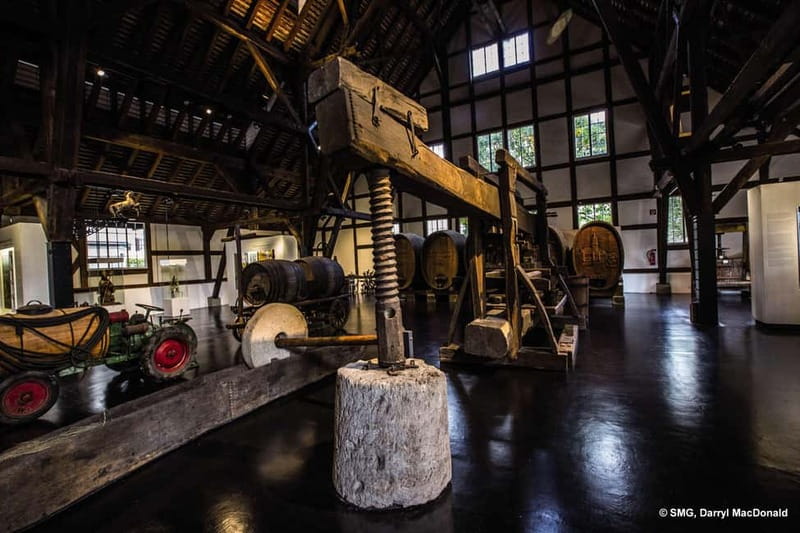
One detail I’d pay extra attention to is the oak barrel point. During the experience, I picked up a memorable explanation that Eichenfässer (oak casks) are used only twice for Barrique wines. That changes how you think about oak. It’s not treated like a disposable flavor sponge. It’s part of a controlled process that preserves quality.
More wine tastings in Stuttgart:
- Stuttgart: Wine hike with wine tasting
★ 4.0 · 21 reviews - Stuttgart: Wine Tour with wines of the best winemakers
★ 4.0 · 7 reviews - Stuttgart: Sparkling Wine Tour
★ 5.0 · 4 reviews - Trier: Guided City Walk with Wine Tasting
★ 4.8 · 979 reviews
The 0.1 l tasting: Stuttgarter Tröpfle and what to expect in the glass
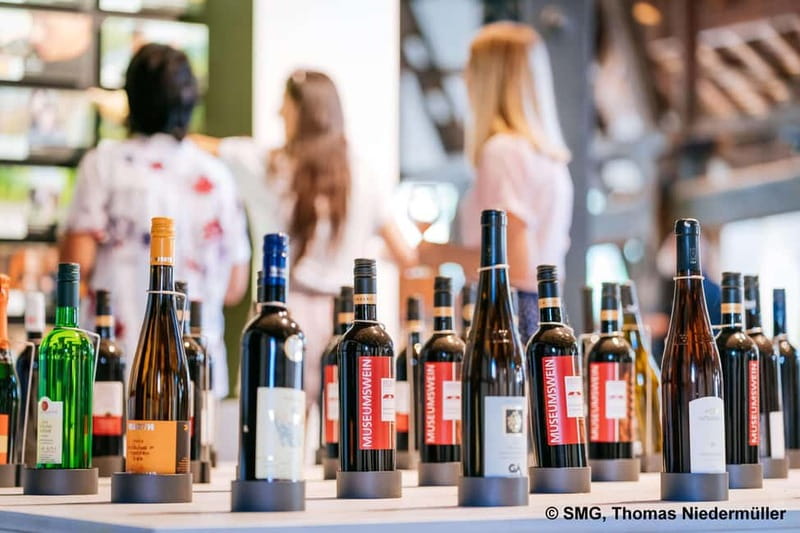
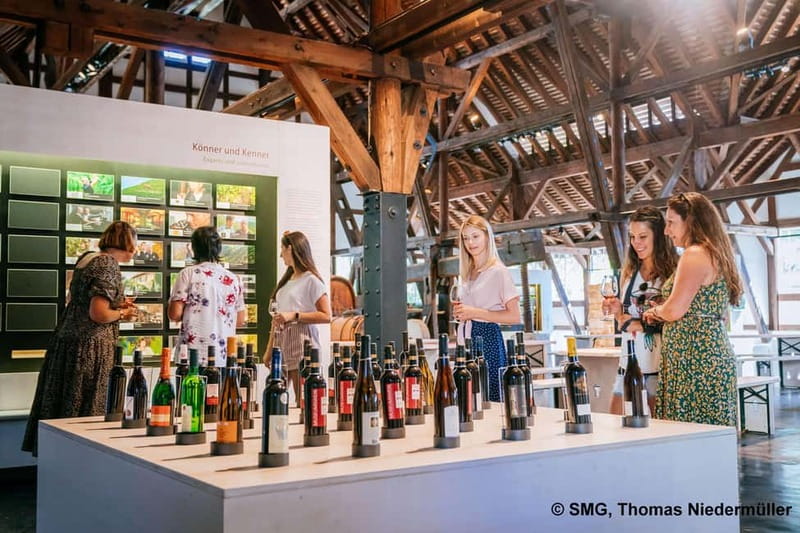
The tasting is the payoff. After the museum portion, you’ll toast and taste 0.1 l of wine. The regional star here is Stuttgarter Tröpfle, and the tour ends with a warm, simple moment that feels right for a short taster experience.
A 0.1 l pour is small on purpose. It’s enough to register aroma and taste, but it won’t derail your day. That’s a smart balance if you’re also planning to stroll Stuttgart neighborhoods, explore viewpoints, or squeeze in dinner plans afterward.
Also, don’t treat the tasting like a test. The goal is education through experience. You taste after hearing how wine is made, so you can match concepts to sensations. If you listen for the oak barrel explanation during the tour, you’ll be more likely to notice the impact oak can have on texture and flavor.
Value check: why about $18 feels fair for what you get
At $18 per person, you’re paying for three things: a guided tour, museum interpretation, and a tasting. It’s not just a product purchase, you’re buying time with a live guide plus context that helps you understand the region.
The value is strongest if you fall into one of these groups:
- You want a wine intro without spending hours.
- You like learning through a mix of visuals and conversation.
- You plan to visit shops afterward and want better sense of what you’re buying.
The only value mismatch I’d watch for is if you already know a lot about wine and you’re expecting a deep technical seminar. The tour is 45 minutes, and it’s built as a taster, not a full masterclass. Think orientation plus sip, not a total education.
German-only tour, and who should skip it
This tour runs with a live guide in German. Some museum content can also appear in its original language, so don’t count on everything being explained in English.
So here’s the simple decision rule I use: if you can comfortably follow a guided conversation in German for 45 minutes, you’ll likely enjoy this. If you cannot, skip it or plan a different wine activity that matches your language.
It’s also not suitable for children under 18, so it’s aimed at adults and older teens. That usually means the tone is more wine-focused and less kid-friendly.
On the positive side, the tour is listed as wheelchair accessible, which is a helpful factor for planning.
Practical tips to get more from your visit
A taster tour is short. Your preparation should be too.
- Arrive ready to listen: Bring curiosity, not a shopping list. The point is learning what makes Stuttgart wine distinct.
- Ask yourself what surprised you: Details like the Eichenfässer used only twice for Barrique wines are exactly the kind of fact that sticks and makes later tastings more meaningful.
- Plan your timing: With a 45-minute format, you can pair it with other Stuttgart stops the same day.
- If you want maximum comfort, use the museum time: Don’t rush through the viewing areas. Even a quick look at exhibits can help your tasting make sense.
- Take the tasting lightly: You’re getting a small pour, 0.1 l. Enjoy it, then continue your day.
One extra note that I find reassuring: the guide named Frau Pfeffer has been noted for taking care of visitors when something gets forgotten during the tour. That kind of attentive, human service matters in small museum experiences.
Should you book the Stuttgart Wine Museum taster tour?
Book it if you want a quick, guided Stuttgart wine introduction with a real tasting, all wrapped up in 45 minutes. It’s a great fit for first-time wine visitors who want context, not intimidation, and for anyone who enjoys learning while tasting.
Skip it if language is a problem. This one is German-only, and it’s not designed as an English-friendly experience. Also skip if you’re looking for food, because food is not included, just the museum tour plus wine.
If you match those basics, the tour is a good use of money and time. You’ll leave with a clearer picture of Stuttgart viticulture, plus one small but satisfying sip of Stuttgarter Tröpfle that makes the lessons real.
FAQ
Where does the wine museum tour take place?
It takes place at the Wine Museum in the historic wine village of Stuttgart-Uhlbach.
How long is the tour?
The duration is 45 minutes.
How much wine is included in the tasting?
The tour includes a wine tasting of 0.1 l.
Is food included with the tour?
No. Food is not included.
What language is the guided tour offered in?
The live tour guide speaks German only.
Is this tour suitable for children?
No. It is not suitable for children under 18 years.
More Museums in Stuttgart
- Stuttgart: Mercedes-Benz Museum Entry Ticket
★ 4.8 · 1,400 reviews - Stuttgart: Mercedes-Benz Museum Guided Tour
★ 4.0 · 5 reviews - Berlin: Jewish Museum Berlin Entrance Ticket
★ 4.5 · 8,393 reviews - Berlin: DDR Museum Tickets
★ 4.3 · 3,443 reviews
Newest Stuttgart reviews on the site
- The Tower Keeper of Ludwigsburg – a really cool city tour★ 5.0 · 3 reviews
- Stuttgart: Winter Sunday Brunch Buffet★ 4.6 · 16 reviews
- Stuttgart: Winter sleigh covered wagon tour★ 3.6 · 8 reviews
- Stuttgart: Winter BBQ – American Smoker Edition★ 4.4 · 6 reviews
- Stuttgart: VR Single Player Experience★ 4.2 · 3 reviews
- Stuttgart: Wilhelma Zoological-Botanical Garden Ticket★ 4.7 · 121 reviews
- Stuttgart: Walking Custom Tour with a Local Guide★ 3.8 · 4 reviews
- Stuttgart: Water Shoe Rental★ 3.0 · 3 reviews
Wine Tours, compared.





Advent Tour with Stollen Tasting and Mulled Wine
Read our review →Browse the lists this tour appears in