Reviewed · HAMBURG TOURS
Elbe Philharmonic Hall, HafenCity and Speicherstadt tour
Hamburg’s harbor keeps changing. This 2-hour walk links the futuristic edge of HafenCity with the UNESCO-listed Speicherstadt, with smart photo stops near the Elbphilharmonie and the traditional docks. It is the kind of tour where the city stops being abstract, you start seeing how the water, trade, and design decisions all connect.
I especially love the easy meetup at Überseequartier and the smooth, end-at-Baumwall flow. Two things I really appreciate: you get deep explanations from a real local guide (Florian is often mentioned for clear English and a cheerful, competent style), and the group stays small, max 15 people, so questions do not feel rushed.
One thing to consider is weather and timing. This experience requires good weather, and there is at least one report of a last-minute cancellation, so I suggest you have a backup plan for that afternoon.
In This Review
- Key highlights worth planning for
- A 2-hour route through Hamburg’s future and past
- Meet Florian at Überseequartier, then walk toward Baumwall
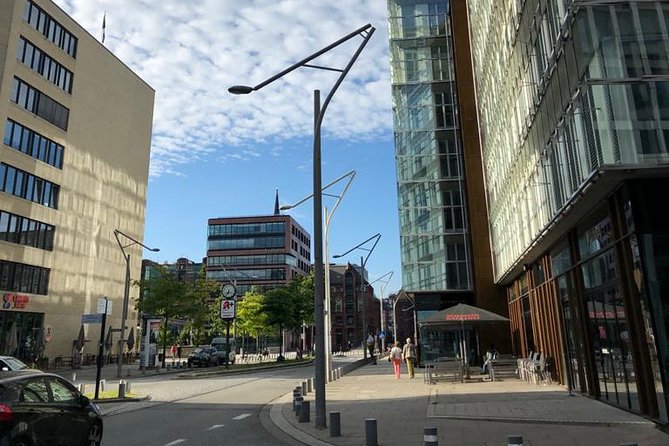
- HafenCity: the city project you can actually see
- Kibbelstegbrücke and Magdeburger Hafen: flooding logic, not just views
- Grasbrookpark and the quieter harbor edges
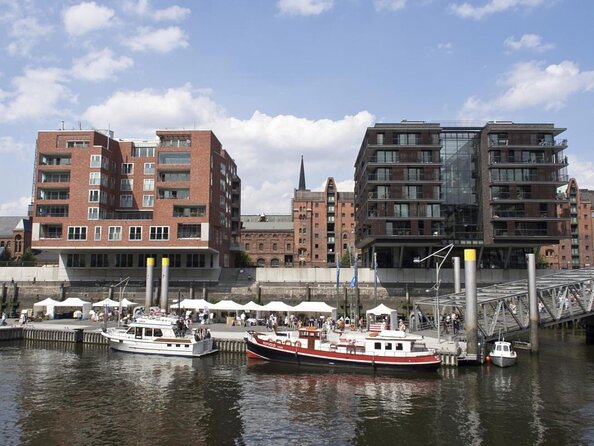
- Sandtorhafen and Traditionsschiffhafen: where maritime culture stays hands-on
- UNESCO Speicherstadt: walking through the world’s largest warehouse complex
- Miniatur Wunderland, Fleetschlösschen, Spicy’s, and WASSERSCHLOSS
- Elbphilharmonie (Elphi): what to notice even without a ticket
- Kehrwieder and Überseebrücke: the end of the loop feels like a new start
- Price and value for a 2-hour small-group walk
- Should you book the Elbe Philharmonic Hall, HafenCity and Speicherstadt tour?
- FAQ
- Where do I meet the guide, and where does the tour end?
- How long is the tour?
- How big is the group?
- Is admission included for all stops?
- Do I get a mobile ticket?
- What should I know about weather and cancellations?
Key highlights worth planning for
- Small group size (max 15), which makes the walk feel personal and flexible
- Meet at Überseequartier, then finish at Baumwall, so you are not retracing steps
- HafenCity’s scale explained in plain terms, from housing plans to daily foot traffic
- UNESCO Speicherstadt walkthrough, focusing on what you are actually looking at
- Clear dock-side stop choices, including Sandtorhafen and the bridges that show Hamburg’s flood-smart mindset
- Elbphilharmonie views from the water-adjacent angle, without needing a concert ticket
A 2-hour route through Hamburg’s future and past
This is a short walk with big scope. In about two hours you move from HafenCity’s redevelopment mindset to Speicherstadt’s warehouse-era world, then work your way toward views tied to the Elbphilharmonie. If you only have one evening or one afternoon in Hamburg, this is a practical way to cover a lot without feeling like you are speed-walking through brochures.
I like that the tour is built around “see it, then understand it.” Hamburg is a city of decisions shaped by water levels, shipping, and rebuilding after change. With a good guide, those themes show up fast, starting at the first harbor-focused stops.
Also, the start time matters. At 4:00 pm, you often get softer light than mid-day, which helps when you are looking at glass facades, brick warehouses, and the waterline. If weather turns gray or rainy, the good news is the route is still doable, but keep your layers on.
A few more Hamburg walks and trips to compare
- Hamburg: Sex and Crime in St. Pauli Tour for Ages 18 +
★ 4.7 · 17,793 reviews - Hamburg: 1.5-Hour Harbor and Speicherstadt Day Cruise
★ 4.6 · 14,200 reviews - Hamburg: 90-Minute Evening Lights Harbor Cruise
★ 4.5 · 7,728 reviews
Meet Florian at Überseequartier, then walk toward Baumwall
The meetup is straightforward: Überseequartier at 20457 Hamburg. The tour ends at Baumwall Station at 20459 Hamburg, near the top station of Bäumenall. That end point is handy because it can plug you into the rest of your day with minimal backtracking.
The tour is led by a local guide, and Florian is specifically mentioned for being well informed, friendly, and easy to understand in English. That matters more than people expect. When you are walking past architecture that can look “modern for modern’s sake,” the difference between a generic explanation and a solid one is huge.
You will also appreciate the mobile ticket. You do not need to hunt for paper vouchers mid-walk, which keeps things stress-free when you are in a working port area.
HafenCity: the city project you can actually see
HafenCity is not just a neighborhood name. It is an entire inner-city redevelopment area, roughly 157 hectares, that once belonged to the free port. During the tour you get a clear sense of what is meant by “one of Europe’s largest urban development projects.”
One of the best parts is that the guide ties the big numbers to real places. HafenCity is planned to include residential units for up to 14,000 people, up to 3,000 hotel rooms, and workplaces for up to 45,000, with a daily estimate that could reach over 120,000 people when fully active. Instead of being abstract, you see the kind of wide waterfront spaces and building placements that make that scale possible.
You also get introduced to the HafenCity University of Hamburg, the University of Architecture and Metropolitan Development (HCU). Even if you do not go inside, knowing what the campus represents helps you interpret the area as more than “new buildings.” It is a living experiment in how cities plan housing, learning, and work close to the water.
Practical note: Stop time is about 45 minutes for HafenCity in this style of route. That is enough to get oriented, take a few photos, and still keep the momentum.
Kibbelstegbrücke and Magdeburger Hafen: flooding logic, not just views
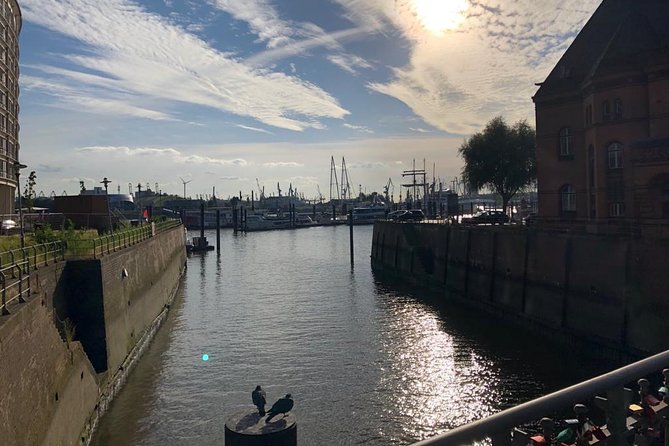
Hamburg is famous for water, but this tour makes you understand the water part in a practical way. At Kibbelstegbrücke, you learn about how routes can support evacuation during storm surges, including the idea of moving through the historic warehouse district toward the dike line. It is not scary in tone, it is just smart city engineering explained where you can see the geography.
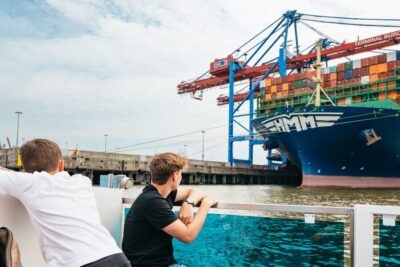
Then you head toward Magdeburger Hafen, with views toward the Maritime Museum and Elbarkaden. This is one of those stops where the “harbor still works” feeling becomes real. The surrounding modern buildings in HafenCity can seem sleek at a distance, but at dockside level you notice the functional edges, the piers, and the water access that connect the design to daily operations.
Why this segment is valuable: it gives you context for why HafenCity looks the way it does. Without it, you might treat the waterfront as scenery only. With it, you start reading it like a system.
Same city, a different way to spend the afternoon:
- Hamburg: 2-Hour XXL Port of Hamburg Cruise Tour
★ 4.7 · 6,979 reviews - Hamburg: Line A Sightseeing Hop-On Hop-Off Bus Tour
★ 4.6 · 6,958 reviews - Hamburg: Elbphilharmonie Plaza Guided Tour
★ 4.7 · 5,882 reviews - Hamburg: Hamburg Dungeon Admission Ticket
★ 4.7 · 5,745 reviews
Grasbrookpark and the quieter harbor edges
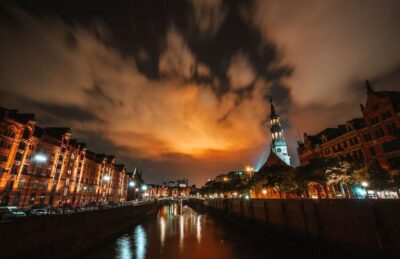
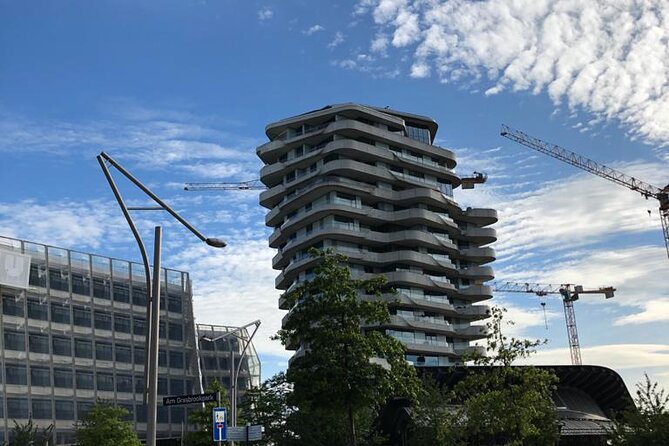
Not every stop is about major landmarks. You also get time around Grasbrookpark, a small neighborhood park at Grasbrookhafen. It sits between the Überseequartier area and the Marco Polo terraces, which means it works like a breathing space in the middle of a development-heavy walk.
I like this kind of stop because it shows the human scale. Hamburg’s big projects can feel like “plans on paper” if all you see are cranes and glass. A park gives you a clue that this is meant to be lived in daily, not just visited.
If you enjoy city walks where the guide points out small contrasts, this is a moment you will likely appreciate. It is also a good place to pause before the tour shifts gears toward traditional port heritage.
Sandtorhafen and Traditionsschiffhafen: where maritime culture stays hands-on
Sandtorhafen is described as the traditional shipping port tied to the Hamburg Maritim Foundation. This is one of the segments that makes the whole experience feel more grounded, because you are not only looking at old buildings. You are looking at the physical settings where maritime history was supported and, importantly, preserved.
The pontoon facilities and historic ships and port equipment are presented as testimonies to Hamburg’s maritime past. The foundation’s aim is preservation, restoration, and public access, so the area is less about nostalgia and more about ongoing care.
There is even a specific anchor point: Sandtorkai, described as Hamburg’s oldest quay wall, restored in 2002 with major effort. Knowing that restoration happened, and that bridges provide access into the pontoon system, helps you understand why this part of HafenCity is treated as heritage, not leftover space.
This stop is about 15 minutes, which works well. You get enough time to absorb what you are seeing and still stay on schedule for the bigger UNESCO section.
UNESCO Speicherstadt: walking through the world’s largest warehouse complex
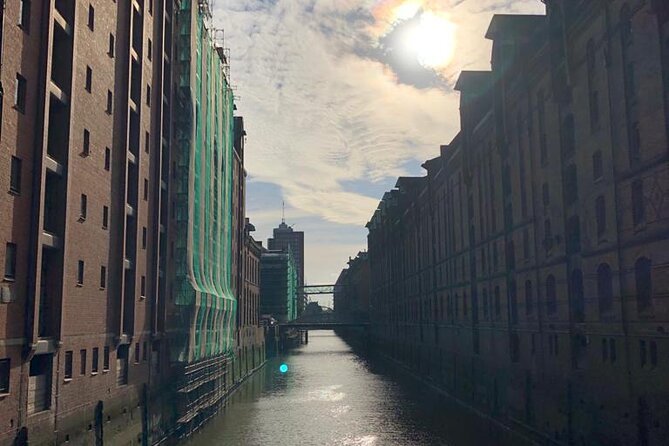
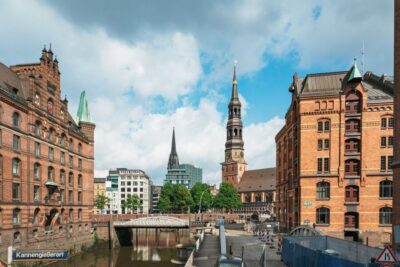
Then comes Speicherstadt. It is called the world’s largest historic warehouse complex, located in the port of Hamburg. You walk through the area between Bäumenall and Oberhafen, and it is listed since 1991 and on UNESCO’s World Heritage List since July 5, 2015, along with the Kontorhaus district.
The guide’s job here is crucial: warehouses can look repetitive until someone shows you the pattern. In Speicherstadt, you start to notice how the architecture supports trade and how the neighborhood layout keeps the port story readable. It feels like a place built for commerce, not display.
Stop pacing is about 45 minutes for Speicherstadt in this style of route. That is right for a UNESCO zone on foot, especially because the tour is also adding side sights along the way.
Miniatur Wunderland, Fleetschlösschen, Spicy’s, and WASSERSCHLOSS
As you move within the warehouse district, you pass several major attractions. A key point for planning: the tour may include views, but admission is not included for these specific places.
You will encounter:
- Miniatur Wunderland, the large model railway system in the Speicherstadt. It is described with 15,715 kilometers of tracks (at the scale 1:87), about 1,040 digitally controlled trains, on a 1,499 square meter system. If you love model worlds, it can be a major add-on day plan, but you would need separate tickets.
- Fleetschlösschen, a historic building at Brooktorkai and St.-Annen-Brücke, described as a former toilet building now used as a café and pub.
- Spicy’s Gewürzmuseum, a private spice museum founded in 1991. It is noted as one of Hamburg’s most popular museums, with 152,000 visitors in 2007.
- WASSERSCHLOSS Speicherstadt, a four-story landmark built between 1905 and 1907, described as one of the oldest buildings in the historic complex.
Even if you do not enter any of them, I find these passes useful. You get a sense of how Speicherstadt has been repurposed for today’s curiosity, not frozen as a dead museum block.
Elbphilharmonie (Elphi): what to notice even without a ticket
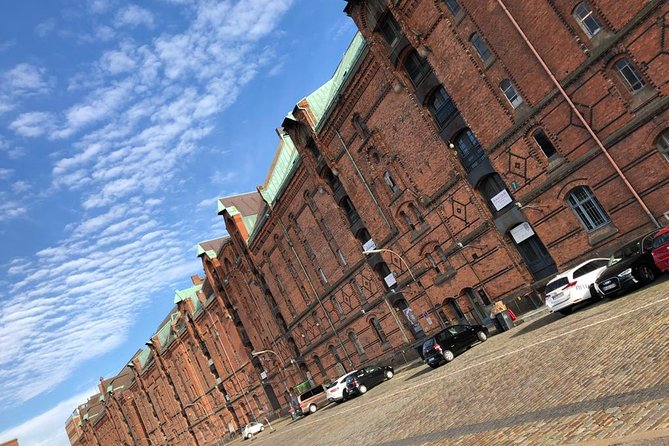
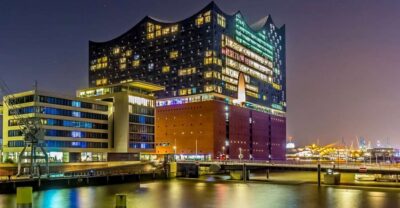
The Elbphilharmonie is often treated like a single photo moment, but on this walk you get the chance to relate it to its surroundings. The Elphi is a concert hall completed in November 2016, in the HafenCity district, on the right bank of the Norderelbe at the head of the Großer Grasbrooks.
The key idea is the building’s structure: it uses the shell of the former Kaispeicher A (built in 1963). On top of that industrial base is a modern glass facade shaped to resemble sails, water waves, icebergs, or quartz crystal. That mix of old shell and new top is one of the reasons the building feels like it belongs in Hamburg rather than landing there from another city.
Timing-wise, you get about 10 minutes for the Elphi stop in this route. That can be enough to appreciate the overall volume and the relationship to the nearby sand and harbor basins described for the area. If you do want to go inside for a show, you would need separate tickets, and this tour does not include that.
Practical advice: bring your “what am I seeing” questions. Ask yourself if you are looking at the old port architecture first or the new glass shell first. The answer changes as you walk a few steps and angle toward the water.
Kehrwieder and Überseebrücke: the end of the loop feels like a new start
The tour keeps moving westward through the historic warehouse zone and into HafenCity’s other island-like areas. Kehrwieder is described as one of the former islands in Hamburg’s city area, part of HafenCity district, and it was included in the fortified city in 1532 with neighboring Wandrahm. If you are used to thinking of city maps as fixed, this kind of detail gives you a new mental version of Hamburg, one where land has been reshaped over centuries.
Then comes Überseebrücke, a covered pedestrian bridge that leads from the flood protection system of Vorsetzen to a pontoon in the Niederhafen, at the level of the former Jonashafen, east of St. Pauli Landungsbrücken. This is a small stop, around 2 minutes, but it reinforces the theme that Hamburg’s walking paths and buildings are designed around water risk.
From there you reach the tour finish at Baumwall Station. The location near Bäumenall helps you pivot to other parts of the city easily.
Price and value for a 2-hour small-group walk
The price is $28.92 per person for about 2 hours, with a mobile ticket. Based on the format, that is not just “cheap entertainment.” You are paying for a guided walk that links multiple iconic areas that can otherwise feel disconnected: HafenCity, UNESCO Speicherstadt, harbor crossings, and key Elphi angles.
Value is highest if you:
- want the context behind architecture and urban planning
- prefer small groups (max 15) over crowded buses
- plan to do other Hamburg activities after, since this ends near public transport
Also, the fact that many of the major stop points have admission listed as free for the viewing portions helps you keep costs predictable. The tour does not include tickets for certain attractions like Miniatur Wunderland, Fleetschlösschen, Spicy’s Spice Museum, WASSERSCHLOSS, or the Elbphilharmonie. That is actually a good fit for many people, because you can choose which, if any, deserve your paid time.
One more value point: the tour is booked on average about 25 days in advance. That suggests demand, so if Hamburg is busy when you go, you will likely want to lock it in sooner rather than later.
Should you book the Elbe Philharmonic Hall, HafenCity and Speicherstadt tour?
Book it if you want a focused overview that actually teaches you what you are seeing. This is a strong choice for first-timers who want a credible local perspective, especially with the small group size and the guide quality highlighted by Florian’s clear English and positive, flexible approach.
Skip it or keep expectations flexible if you are hoping for a long indoor museum day. Several of the biggest attractions along the way are listed as not included, and the time is short by design. If you want deep time inside Miniatur Wunderland, a spice museum visit, or a concert venue experience, plan those separately.
My final take: for $28.92 and a 2-hour walk, this is a smart way to connect HafenCity’s “what’s next” energy with Speicherstadt’s “what got built” backbone, then cap it with Elphi views that make sense in context.
FAQ
Where do I meet the guide, and where does the tour end?
You meet at Überseequartier, 20457 Hamburg. The tour ends at Baumwall Station, 20459 Hamburg.
How long is the tour?
The tour duration is about 2 hours.
How big is the group?
The experience is limited to a maximum of 15 people.
Is admission included for all stops?
Admission is listed as free for several key stops, but tickets are not included for some attractions shown along the route, including Miniatur Wunderland, Fleetschlösschen, Spicy’s Spice Museum, WASSERSCHLOSS Speicherstadt, and the Elbphilharmonie.
Do I get a mobile ticket?
Yes. The tour uses a mobile ticket.
What should I know about weather and cancellations?
The experience requires good weather. If it is canceled due to poor weather, you will be offered a different date or a full refund. Cancellation is free up to 24 hours in advance for a full refund.
Newest Hamburg reviews on the site
- World War 2 Hamburg Private Guided Tour★ 5.0 · 6 reviews
- Ticket for the Emigration Museum BallinStadt Hamburg★ 4.0 · 57 reviews
- Winter Alster tour★ 4.0 · 12 reviews
- UNESCO World Heritage – Speicherstadt and Kontorhaus district★ 4.5 · 12 reviews
- The Beatles on St. Pauli★ 5.0 · 3 reviews
- hamburg Experienced differently with wish rental bike relaxed enjoy★ 5.0 · 5 reviews
- Hamburg Private Food Tours with a Local: 100% Personalized★ 5.0 · 3 reviews
- Private Romantic Urban & Street Photoshoot★ 5.0 · 69 reviews
Hamburg Tours, compared.
Sex and Crime in St. Pauli Tour for Ages 18 +
Read our review →
1.5-Hour Harbor and Speicherstadt Day Cruise
Read our review →