
Reviewed · OLD TOWN WALKING TOURS
Dresden Old Town – Guided Walking Tour in English
Dresden tells two stories at once. On this 2.5-hour guided walking tour in English, you follow the thread from a small Slavic settlement to baroque splendor, then to 20th-century loss and painstaking rebuilding. What makes it special is how a local guide connects the Elbe as a cultural meeting point to the big architectural landmarks you see in one compact loop.
I especially like the way the guide keeps the story moving with fan facts and jokes when it fits. And I like that you get a clean orientation, not just dates and names, with clear links to wider European history. One drawback to plan for: it is a walking tour with limited time to slow down at every stop, and one guest specifically wished there were a toilet stop built in.
In This Review
- Key things I’d put on your radar before you go
- Why Dresden feels like a cultural bridge on foot
- Neumarkt and Frauenkirche, led by the Martin Luther Statue
- Fürstenzug: the prince-electors gallery you can walk through
- Dresden Castle and Altmarkt, ending at Kreuzkirche
- Brühlsche Terrasse to Hofkirche, with Semperoper in the loop
- Zwinger Palace near the Elbe bridge for your final big picture
- Price and pace: is $35 good value for this kind of walking tour?
- Should you book this Dresden Old Town walking tour?
- FAQ
- What is the duration of the Dresden Old Town guided walking tour?
- Is the tour offered in English?
- Where do I meet the guide?
- What sights will I see during the walk?
- Is transportation included?
- Is the tour wheelchair accessible?
- Can I cancel and get a full refund?
Key things I’d put on your radar before you go
- Neumarkt and Frauenkirche as the starting point, anchored by the Martin Luther Statue
- Fürstenzug (the gallery of the prince-electors of Saxony) as a visual shortcut to power and prestige
- A real 20th-century reset, with the WWII destruction and the careful reconstruction approach explained in context
- An East meets Central Europe feel, framed through Germanic and Slavic history along the Elbe
- A guide-first experience, with strong English and storytelling styles noted across guides like Nicolo, Nicolas, and James
- A practical loop through major baroque landmarks, including Semperoper and Zwinger
Why Dresden feels like a cultural bridge on foot
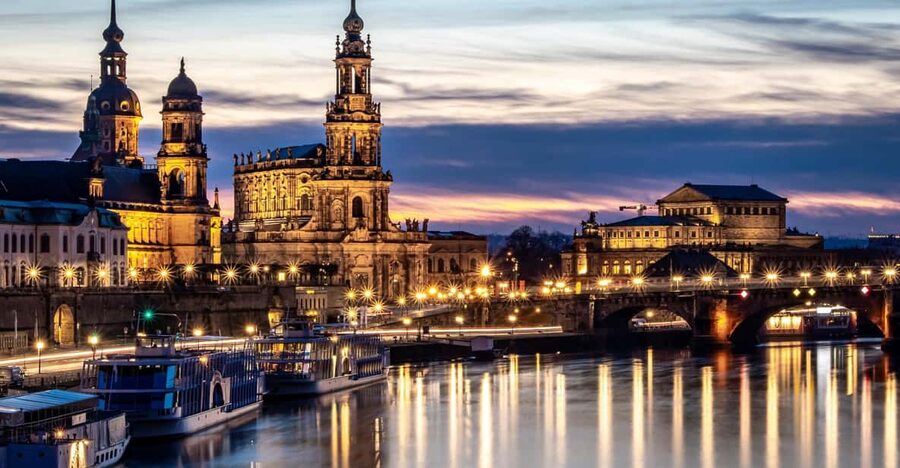
Dresden sits on the Elbe, and the guide story treats that river like more than geography. It is described as a divider in old thinking, but the tour argues it actually connects cultures. That angle changes how you read the city while you walk, because you are not just looking at pretty buildings. You are looking at why this place grew, what different groups brought, and how power shifted over centuries.
You start from a Slavic origin. The city began as a small Slavic settlement, and even the name is said to sound familiar to people speaking Czech, Slovak, Polish, or Sorbian. Then it changes shape: a village becomes a city around a castle in the 13th century, and by the end of the Middle Ages it is an important trading center in the region. You also learn how mining from the nearby Rudavy mountains helped fund prosperity, with silver and lead as key resources.
The tour’s big payoff is the push-and-pull of eras. The early 1700s are when the Saxon princes of the Wettin dynasty are described as gaining almost imperial grandeur. Later comes the rupture: the city is bombed in WWII to the point beyond recognition. The difference here is that Dresden is not left as a ruin. The center is restored using old techniques and design elements, and you may walk past cobbled streets without realizing they are reconstructed. That theme makes the architecture feel meaningful, not just decorative.
More Old Town Walking Tours in Dresden
- Dresden: Semperoper and Old Town Tour
★ 4.8 · 5,735 reviews - Dresden: Segway Tour Along the Elbe and Old Town
★ 4.9 · 392 reviews - Dresden: Old Town Self-Guided Scavenger Hunt Tour
★ 4.5 · 151 reviews
Neumarkt and Frauenkirche, led by the Martin Luther Statue
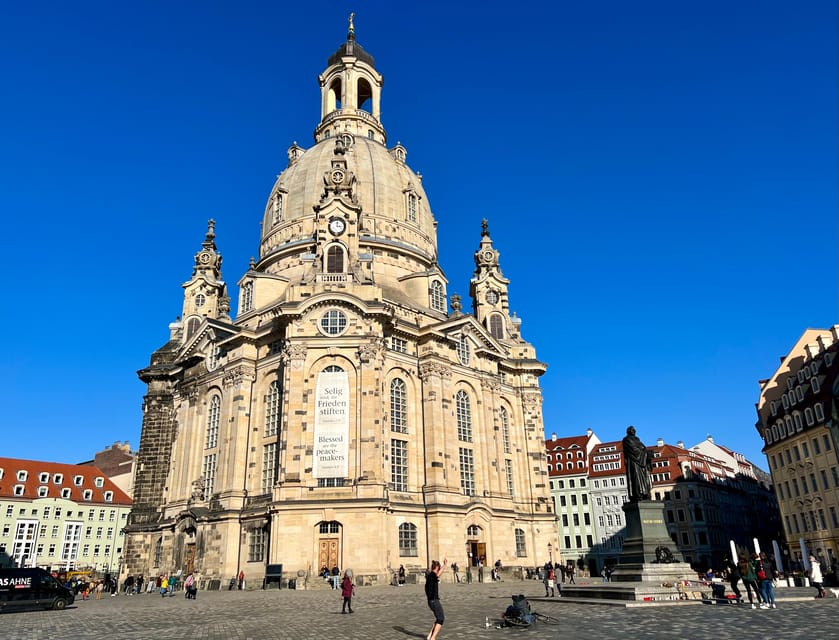
Your walk starts at Neumarkt, right by the Martin Luther Statue beside the Frauenkirche. This is a smart beginning because it sets the tone instantly. You are in the exact kind of public square where stories and monuments belong side by side.
From here, the guide frames Dresden’s identity in layers. You hear about the rise of the city, how it becomes tied to rulers and empire, and how later catastrophe forces the question of what a city chooses to rebuild. The tour’s emphasis on reconstruction matters at this stop, because the Frauenkirche sits right at the emotional center of that story.
You will also see the statue of Martin Luther during the orientation. It functions like a landmark for thinking about shifts in European religion and power, and the guide connects it back to broader history rather than treating it as a random point on a map. If you like walking tours that teach you how to read a place, this opening works well.
Practical note: plan to arrive about 10 minutes early, and look for the guide with the yellow umbrella. That small detail saves time, especially if you are trying to line up with a group right at the start square.
Fürstenzug: the prince-electors gallery you can walk through
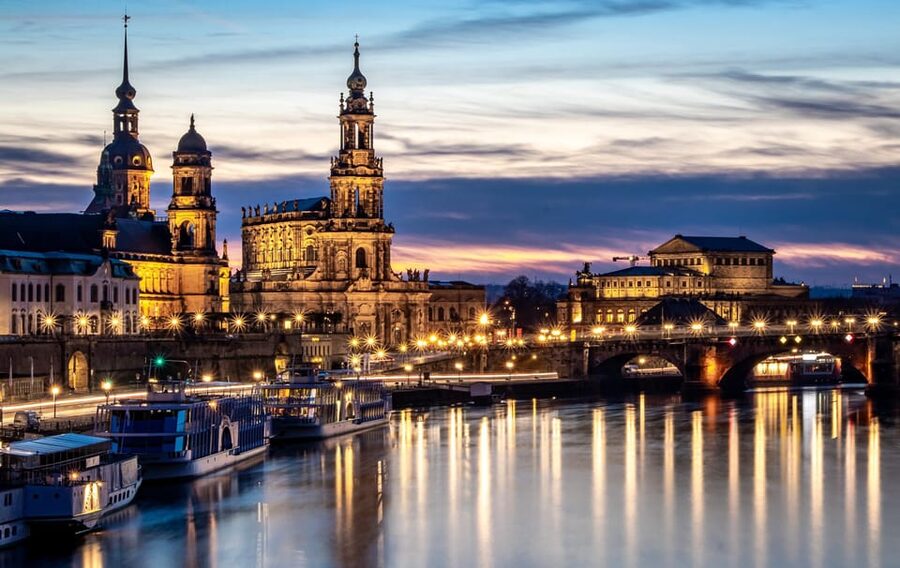
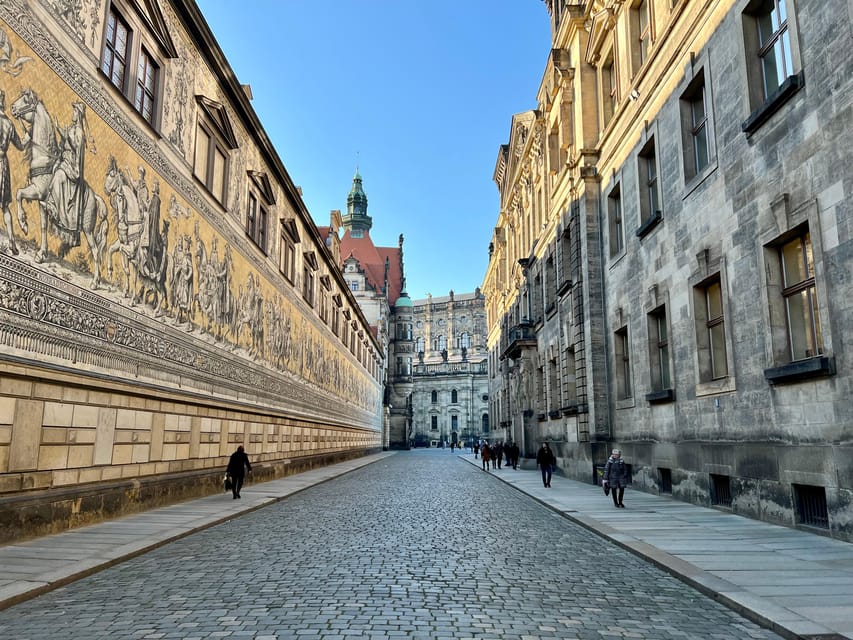
Next, you head to Fürstenzug, the gallery of the prince-electors of Saxony. This stop is a favorite kind of attraction for people who do not want museums but still want context. Instead of staring at one building and guessing what it meant, you get a visual summary of authority and lineage.
The tour explains Dresden’s climb to major influence. It connects the Wettin dynasty to the wider political map, including the detail that Dresden becomes the seat of the Holy Roman Empire’s prince-electors and later grows as the Saxon rulers are elected Kings of Poland and Grand Dukes of Lithuania. Whether you already know that or not, Fürstenzug gives you a physical way to remember it.
You are not just looking. You are listening for patterns, and the guide steers you toward why this kind of display matters in a city. These rulers were not only governing land. They were projecting identity, using art and architecture to announce status. The guide language keeps it understandable, with stories placed in European context, which multiple guests highlight when describing how guides like Nicolo and Nicolas explain the city clearly without drowning you in trivia.
Possible consideration: if your priority is pure “wow” views and you want minimal talking, this stop can feel more like a lesson. But if you like to know what you are looking at, it is time well spent.
Dresden Castle and Altmarkt, ending at Kreuzkirche
From Fürstenzug, the route moves toward Dresden Castle and the Altmarkt area, including Kreuzkirche. This is where the tour balances big-picture politics with the look and feel of everyday urban space.
Dresden Castle is part of the narrative that starts with the castle built in the 13th century. Even if you are not studying architecture here, it helps you connect the dots: early fortification, later prosperity, then the baroque shine that comes with 1700s power. This is also the period when the city’s prosperity is tied to trade and the wealth behind those ruling dynasties.
Altmarkt and Kreuzkirche bring you back to public life and sacred space. The guide frames this area as part of Dresden’s long arc, including the way rebuilding after WWII changed the center without erasing the city’s identity. One returning visitor noted that when they visited in 1993, the Frauenkirche was still a heap of stones. That kind of comparison is exactly what this tour is aiming for: helping you notice how the city can come back, carefully, and still feel coherent.
How to get the most out of this middle section: keep your ears open for the guide’s “why it matters” explanations. This is not just where you walk, it is where you learn what each place signals about the city’s shifts between empire, culture, loss, and renewal.
More Walking Tours in Dresden
- Dresden: City & Semperoper Guided Walking Tour
★ 4.8 · 2,307 reviews - Dresden: Guided City Walk
★ 4.6 · 2,075 reviews - Dresden: Complete Walking Tour with Frauenkirche Visit
★ 4.8 · 700 reviews - Dresden: Walking Tour with a Night Watchman and Meal
★ 4.4 · 487 reviews
Brühlsche Terrasse to Hofkirche, with Semperoper in the loop
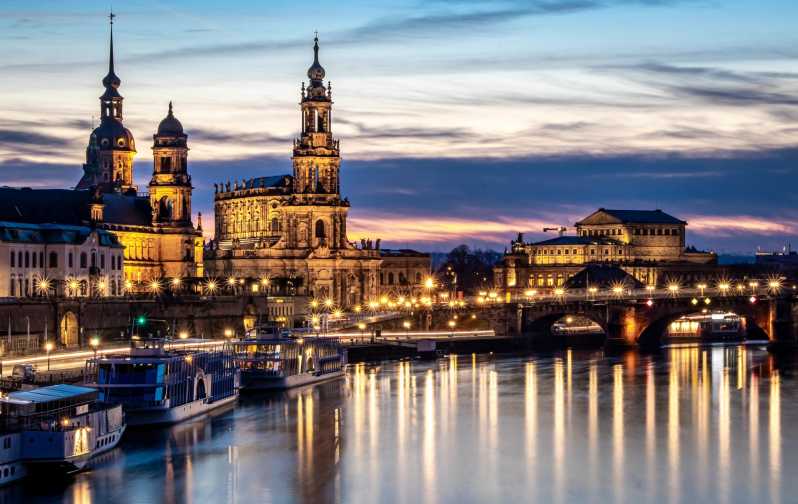
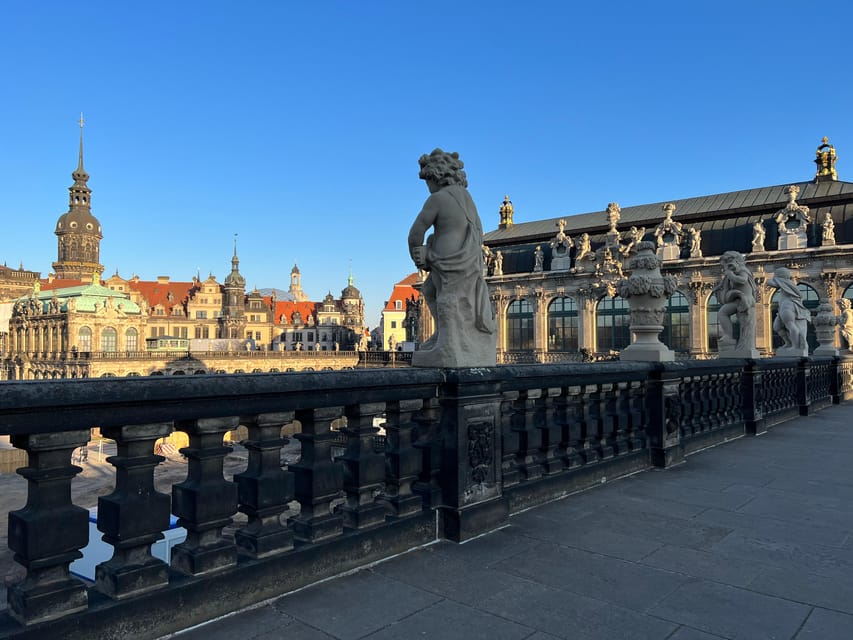
One of the best stretches is the walk that includes Brühlsche Terrasse and then goes toward Hofkirche and the Semperoper. This is the part of the tour where you see how Dresden’s baroque and ceremonial buildings line up in a way that makes the city feel grand even at street level.
Brühlsche Terrasse is a key named stop on the route, and it is a natural place for the guide to connect “imperial grandeur” to real urban scale. You hear about Dresden’s early 1700s peak, when Saxon princes gaining high rank in the broader European political system helped fuel a building boom. That is where the panorama idea matters. The city is described as decorated with dozens of baroque structures, and this section is where that promise starts to feel real.
Then you swing past Hofkirche and into the zone around Semperoper. The tour includes Semperoper by name, so it is clearly treated as a landmark rather than a quick photo stop. You likely pick up how culture, power, and public spectacle blend in a city like Dresden, especially when the guide is explaining Dresden as a fusion of Germanic organization and Slavic emotion.
One review mentioned a guide who kept the pacing engaging for a family of four adults. That is often what you want in this stretch: enough information to understand the city, without forcing you into museum-mode. If your guide is doing a good job, you will feel the story click while you walk.
A practical consideration: this part can be easier to enjoy if you wear comfortable shoes. The tour is 2.5 hours of walking, and you are moving through major sights that tend to be spread just enough to add up.
Zwinger Palace near the Elbe bridge for your final big picture
The last set of landmarks includes Zwinger Palace near the Elbe bridge. Zwinger is one of the specific “pearls” called out, along with Frauenkirche and the redesigned Dresden Castle. That matters, because it tells you this stop is not random. It is placed to help you end with the baroque shine that made Dresden famous in the first place.
Ending near the Elbe also ties the loop together. The tour’s core theme is the Elbe as a connection point between cultures, and closing with a major palace near the river makes that theme feel less abstract. It is easier to understand the city’s identity when you finish at the water where the story starts.
If you love seeing how one city answers another through rebuilding, this ending can hit hard. WWII destruction is part of the tour narrative, and the reconstruction is treated as a deliberate effort. Dresden is described as a standout example of historical reconstructions, alongside Warsaw. You do not need to remember every historical detail to benefit. You just need to notice what you are seeing: a city center that looks coherent, restored using old approaches, and now experienced through the rhythm of walking streets.
If your interest is in architecture and storytelling, this is a strong finale. It gives you a clean closing argument for why Dresden was worth rebuilding in the first place.
Price and pace: is $35 good value for this kind of walking tour?
At $35 per person for 2.5 hours, this tour is priced like an orientation plus storytelling experience. The value depends on what you want from Dresden.
Here is what you get for the money, based on the tour info: an English-speaking guide and a guided walking tour that covers the main named landmarks across the Old Town arc, starting at Neumarkt. Transportation is not included, so you will rely on your own legs or local transit. That is normal for a walking format, but it helps to plan how you will arrive and where you will go afterward.
One detail that matters for how you feel about the price: when you book, you join a general pay as you wish tour. The amount you pay covers a reservation fee and the guide’s payment. In plain terms, the guide is getting paid, and you are also encouraged to reward good guiding based on your experience. If you care about the quality of interpretation, this structure makes sense because you can react to the guide’s performance in real time.
On reviews, guides like Nicolo, Nicolas, Nikolai, James, and Dominica are praised for clear English and engaging storytelling, including humor. One guest even said the tour lasted more than two hours and they were never bored. That is the best indicator of value for a short tour. You are paying for someone to help you see the city, not just to point at it.
Potential mismatch to consider: if you prefer very quiet sightseeing, or you want long unbroken time to go inside major sites, a walking orientation may feel too structured. Also, one comment asked for a toilet stop, so if that is important to you, plan accordingly before the tour begins and consider timing.
Should you book this Dresden Old Town walking tour?
I think this is a good booking if you want Dresden explained in human terms, with a guide who links art, rulers, destruction, and rebuilds into one story you can follow while walking. The highlights are strong for a short time window: you cover Neumarkt and Frauenkirche, Fürstenzug, Dresden Castle, Altmarkt and Kreuzkirche, Brühlsche Terrasse, Hofkirche, Semperoper, and end near Zwinger Palace by the Elbe bridge.
Book it if you like guided context, especially the tour’s emphasis on Dresden as a meeting point of cultures along the Elbe and its experience of 20th-century loss followed by careful reconstruction. If you can tolerate walking for 2.5 hours and you like to learn as you go, the $35 price looks fair.
Skip or at least pair it with extra time if you need frequent breaks, want guaranteed interior access, or prefer a self-guided pace with fewer explanations. If that sounds like you, consider doing this first for orientation, then return on your own later for slower exploring.
FAQ
What is the duration of the Dresden Old Town guided walking tour?
The tour lasts 2.5 hours.
Is the tour offered in English?
Yes, the tour is guided in English.
Where do I meet the guide?
Meet your Walkative guide next to the Martin Luther Statue at the Neumarkt, next to Frauenkirche. Look for the guide with a yellow umbrella.
What sights will I see during the walk?
The tour route includes Neumarkt and Frauenkirche (with the Martin Luther Statue), Fürstenzug, Dresden Castle, Altmarkt, Kreuzkirche, Brühlsche Terrasse, Hofkirche, Semperoper, and Zwinger Palace near the Elbe bridge.
Is transportation included?
No, transportation is not included.
Is the tour wheelchair accessible?
Yes, it is wheelchair accessible.
Can I cancel and get a full refund?
Yes. You can cancel up to 24 hours in advance for a full refund.
More Old-Town Walks in Dresden
- Dresden: Old Town Scavenger Hunt for Children
★ 4.6 · 117 reviews - Dresden: Guided Beer Tour of the Historic Old City
★ 4.8 · 95 reviews - Dresden: Bootstour im Schlauchboot durch die Altstadt
★ 4.9 · 64 reviews - Dresden: Classic Old Town Tour
★ 4.4 · 33 reviews
Newest Dresden reviews on the site
- Historical tour of the old town including a Saxon dinner★ 4.7 · 23 reviews
- Climb the mountains together with goats★ 4.8 · 8 reviews
- Frozen Mysteries: Catch Cobra & Savor Soft Ice in Dresden★ 5.0 · 3 reviews
- From Prague: Day trip to Dresden★ 4.3 · 4 reviews
- From Dresden: Bohemian & Saxon Switzerland Day Trip★ 4.8 · 64 reviews
- Dresden: Express Walk with a Local in 60 minutes★ 4.3 · 3 reviews
- Discover Germany’s most exciting photo illusion world!★ 4.7 · 26 reviews
- Dresden with a touch of Xmas: English small group tour★ 4.7 · 41 reviews
Old Town Walking Tours, compared.

Old Town & Viktualienmarkt City Walk in German
Read our review →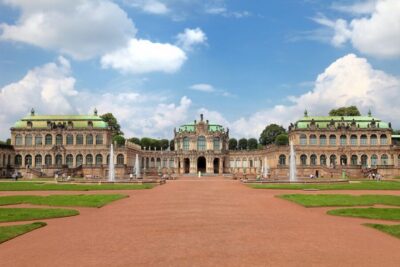

Browse the lists this tour appears in