Reviewed · HAMBURG TOURS
Down Town to Speicherstadt, HafenCity and Elbphilharmonie
Hamburg changes character with every few blocks. This guided 2-hour walk strings together Speicherstadt, HafenCity, and the Elbe Philharmonic into one clear story. I like how the guide keeps things moving, while still pointing out the details that make each place feel different.
Two things stand out for me: the chance to see Speicherstadt up close, and the strong payoff of ending at Elbphilharmonie with that big port view. One thing to plan for, though, is the tour ends at the concert hall, so you may want to schedule your next stop or ride before you start walking.
If you want a quick, walkable hit of major Hamburg sights, this is a solid way to get your bearings. You’ll cover everything from Rathausmarkt to the harbor edge in about two hours, with a professional guide in English.
In This Review
- Key highlights you should notice
- Why This Hamburg Walk Works: 2 Hours, One Tight Route, Real Context
- Rathausmarkt and Hamburg Town Hall: The Trader City in Stone
- Hygieia-Brunnen: The Fountain That Explains Survival
- Trostbrücke and Deichstraße: Where the Port Meets Everyday Merchant Life
- St. Nikolai Memorial and Operation Gomorrha: How a Ruin Teaches
- HafenCity’s 157 Hectare Transformation: Old Industry to New Streets
- Speicherstadt: Red Brick Warehouses on Wooden Piles
- Elbphilharmonie Ending: Port Views and the Concert Hall Story
- Price and Value: Getting Context for About $30
- When to Book and How to Prepare (So the Two Hours Feel Easy)
- Who This Tour Suits Best
- Should You Book This Down Town to Speicherstadt, HafenCity and Elbphilharmonie Tour?
- FAQ
- What is the duration of the tour?
- How much does the tour cost?
- What language is the tour offered in?
- Where do I meet the guide?
- Where does the tour end?
- Are the stops included free to enter?
- Is the tour limited in group size?
- Does the tour run in bad weather?
- Is transportation to and from the sights included?
- Are there any rules about cancellation?
Key highlights you should notice
- Neorenaissance Hamburg Town Hall (Rathausmarkt) and the stories it implies about trade power
- Hygieia-Brunnen as a reminder that fresh water shaped the city’s survival
- Trostbrücke and how shipping changed from sails to modern container traffic
- St. Nikolai memorial and Operation Gomorrha exhibit under the WWII ruin
- Elbphilharmonie platform view to finish the walk with the port in front of you
Why This Hamburg Walk Works: 2 Hours, One Tight Route, Real Context
This is a 2-hour walking tour that concentrates on a small section of Hamburg’s center and harbor. It runs in all weather, so build your day around your footwear and a light layer that works rain or shine.
What makes it efficient is that you do not just pass landmarks. You get quick explanations that connect them: the rich merchant city, the port that fed it, the destruction and remembrance, then the modern rebuilding you see in HafenCity. The route also stays manageable because the tour is capped at 15 people, so it does not turn into a slow-moving crowd.
The tour is offered in English with a mobile ticket, and you start at Rathausmarkt and finish at Elbphilharmonie. That start and end pattern matters, because you are not looping back where you began.
A few more Hamburg walks and trips to compare
- Hamburg: Sex and Crime in St. Pauli Tour for Ages 18 +
★ 4.7 · 17,793 reviews - Hamburg: 1.5-Hour Harbor and Speicherstadt Day Cruise
★ 4.6 · 14,200 reviews - Hamburg: 90-Minute Evening Lights Harbor Cruise
★ 4.5 · 7,728 reviews
Rathausmarkt and Hamburg Town Hall: The Trader City in Stone
The tour starts at Hamburg Town Hall, a Neorenaissance building from 1897. Even if you only catch the façade from street level, it is the kind of architecture that tells you the city wanted to look powerful and permanent.
This stop is a quick one, around 10 minutes, but it sets the tone. The guide focuses on why Hamburg became a “merchant city,” then points out how the building connects to the idea of trade wealth shaping civic pride. If you like understanding places through purpose, this is a great opener.
Practical tip: arrive ready to stand and look up. A lot of the impact is visual, and you will want a moment to take in the façade before you move on.
Hygieia-Brunnen: The Fountain That Explains Survival
Right behind the town hall is Hygieia-Brunnen, a fountain that represents the importance of fresh water. It is easy to skip a fountain when you are chasing bigger landmarks, but this one works as a reminder that cities are not just about art and buildings. They are about basics like water and health.
It is a short stop, about 5 minutes, but it makes the tour feel grounded. The guide ties it to Hamburg’s role as a trading hub, which means supplies, infrastructure, and daily living mattered as much as commerce.
If you are traveling with kids or anyone who gets tired of constant walking stops, this kind of brief, clear explanation helps keep everyone interested.
Trostbrücke and Deichstraße: Where the Port Meets Everyday Merchant Life
Next comes Trostbrücke, often linked to the origin of the port of Hamburg. The key idea the guide shares is the shift in shipping technology. Sailing ships once brought goods to the city center where merchants were waiting, then steamships and later container vessels changed the port dramatically.
You get about 5 minutes here, and that is enough if you know what to look for. Stand with the bridge area in your view, then listen for the guide’s talk about how port activity reshaped the city’s rhythm.
Then the tour walks to Deichstraße, a historic street with houses dating to the 17th century. This part is one of my favorite “feel it with your eyes” segments because the guide emphasizes how traders lived where they stored goods. It was not separate anymore than it had to be, and the home-and-work connection was practical.
Two useful notes: these houses survived a fire in 1842 and WWII. That detail changes how you see the street. You are not just looking at pretty old buildings, you are looking at structures that kept showing up after major damage.
If you are the type who likes photos, this is a strong area for pictures because you can frame the street scale and the older façades quickly as the group moves along.
Same city, a different way to spend the afternoon:
- Hamburg: 2-Hour XXL Port of Hamburg Cruise Tour
★ 4.7 · 6,979 reviews - Hamburg: Line A Sightseeing Hop-On Hop-Off Bus Tour
★ 4.6 · 6,958 reviews - Hamburg: Elbphilharmonie Plaza Guided Tour
★ 4.7 · 5,882 reviews - Hamburg: Hamburg Dungeon Admission Ticket
★ 4.7 · 5,745 reviews
St. Nikolai Memorial and Operation Gomorrha: How a Ruin Teaches
At Mahnmal St. Nikolai, you meet a WWII memorial tied to the city’s suffering. The steeple is from 1874, and underneath the ruined structure there is an exhibition about Operation Gomorrha.
This stop is about 10 minutes. That sounds short, but the value is in the way the guide gives you the context you might not otherwise connect. Operation Gomorrha is not just an abstract name. The memorial and ruin location help you understand why remembrance is built into the physical landscape.
A heads-up for your planning: if you get emotionally affected by WWII sites, you may want a quiet moment after this stop. The tour is continuous, and you may not get long breaks during the walk.
The balanced approach here is important. You are not touring a museum-style stop with tons of time. Instead, you are seeing how a city chooses to remember, right in the middle of its everyday streets.
HafenCity’s 157 Hectare Transformation: Old Industry to New Streets
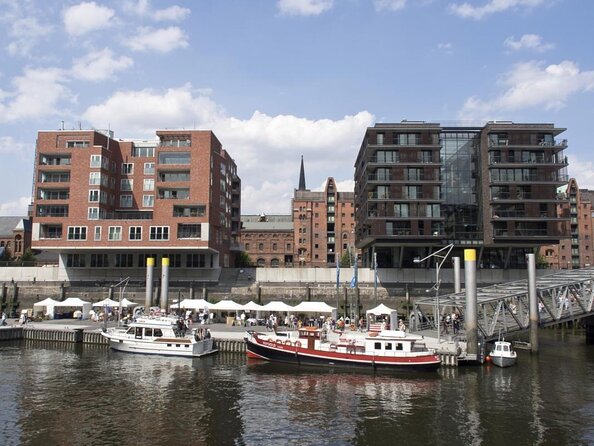
Then the tour shifts gears to HafenCity, described as Europe’s largest city planning project. The scale is big: 157 hectares of former industrial area turned into a new district.
You typically get around 10 minutes while passing through, and you need to pay attention in a different way than at older sites. The guide’s job is to help you see the planning story behind the buildings. You will hear how the area was reworked, not just redecorated.
For me, the takeaway is practical: HafenCity is a strong example of what “urban regeneration” means when you are standing in it. You can see how a former industrial footprint became streets, public spaces, and a new city layer.
If you love city design, you will enjoy this. If you prefer classic architecture over planning talk, still stick with it. The best part is connecting it to what you just learned about the port and commerce.
Speicherstadt: Red Brick Warehouses on Wooden Piles
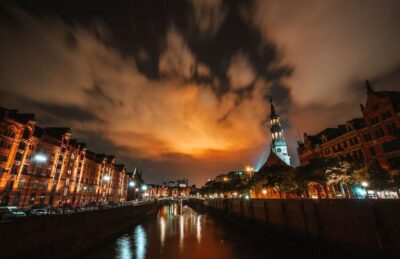
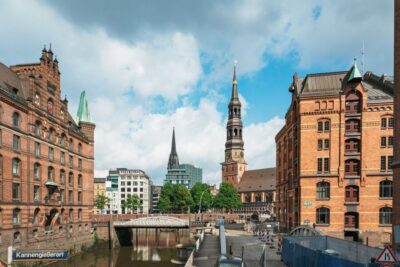
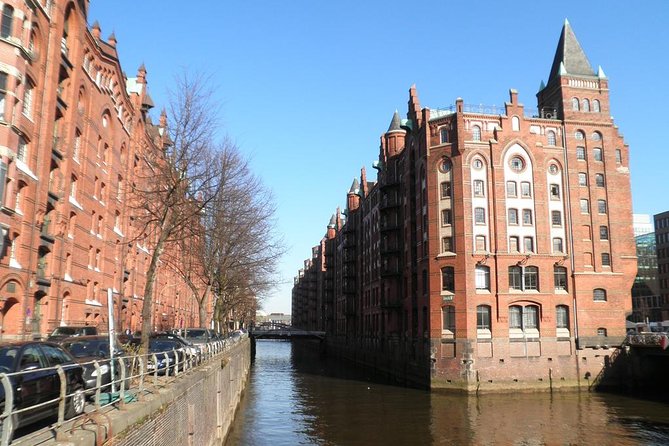
Next is Speicherstadt, the world’s largest warehouse district, and the main photo-stop feeling of the tour. The warehouses are large red brick structures built on wooden piles, inaugurated in 1888.
You also learn they were restored after WWII, and that the whole area is part of UNESCO World Heritage. That UNESCO status matters because it signals the city wants you to see the warehouses as both history and craftsmanship, not just as old storage buildings.
You get about 15 minutes here, which is a good chunk for a walking tour. You can walk enough to catch angles and textures, then listen for the guide’s explanation of why the warehouse district is such a landmark in itself.
What can be a drawback: you are on your feet, and warehouse districts can be visually repetitive if you are not given a thread. The guide helps by connecting the design to the logistics of shipping and storage, so you understand what you are looking at instead of just seeing brick.
Practical tip: if you plan on buying snacks or using the restroom later, figure it out before you leave Speicherstadt. Time gets tighter after this point.
Elbphilharmonie Ending: Port Views and the Concert Hall Story
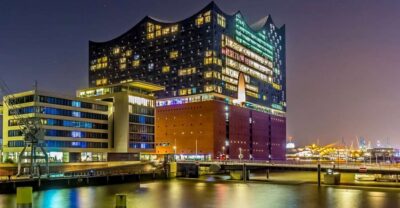
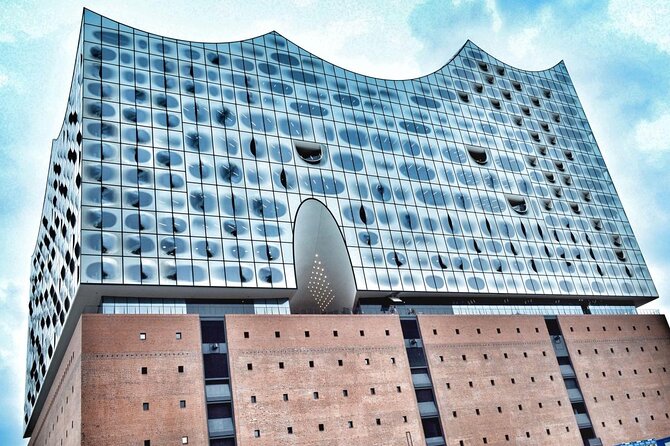
The tour finishes in front of Elbphilharmonie at the HamburgPlatz d. Deutschen Einheit area. This is a concert hall inaugurated in 2016, with the first concert held on 11 January 2017.
You will hear about its reputation for acoustics, described as nearly perfect. The guide also shares the story behind the building, which is important because Elbphilharmonie can feel like a standalone modern icon if you only see it from afar.
The best practical part is that the tour ends with the opportunity to visit the platform and enjoy the view over the port. That makes the timing feel smart. You go from warehouses and shipping history into the present-day scene, with the harbor right in front of you.
If you are planning dinner, consider staying in this area for a bit. The view is the kind of thing you do not want to rush through right before you disappear back into the city.
Price and Value: Getting Context for About $30
The tour price is $30.04 per person for roughly two hours. That is not about getting into paid attractions, because many of the stops are described as free admission.
So where does your money go? Mostly into the professional guide doing the “connective tissue” work. You are paying for someone to explain why fresh water, bridges, street houses, and memorial ruins belong in the same narrative. Without that guidance, you would likely move through these areas as separate photo stops.
Also, the group size helps. With a maximum of 15, you are more likely to hear the guide comfortably and ask quick questions if something matters to you.
One caution about value: transportation is not included to and from the sights. The tour starts at Rathausmarkt and ends at Elbphilharmonie, so you will want to handle your local transit or walking plan separately.
When to Book and How to Prepare (So the Two Hours Feel Easy)
On average, this type of tour is booked about 89 days in advance, which tells you it is popular for people doing a short Hamburg itinerary. If you have a tight schedule, I suggest booking sooner rather than later.
A few practical prep tips that will make the walk smoother:
- Wear comfortable shoes, because the tour is a continuous walk between multiple districts.
- Bring a light rain layer, because it operates in all weather and you will still be outside.
- Have your phone ready for the mobile ticket.
If your day includes other attractions, know that the tour timing is about 2 hours and you are moving through stops that range from 5 to 15 minutes. You are not getting a long sit-down museum experience. The goal is coverage with meaning.
Who This Tour Suits Best
This tour is a good fit if you want a high-impact overview without spending most of your day figuring out what you are looking at. It works well for first-time visitors who want Hamburg’s major landmarks connected in one route.
It also suits people who enjoy stories. The guide style is described as funny and engaging, with plenty of facts and short narratives. In one of the standout guide examples, Jutta is praised for being very funny, knowledgeable in a practical way, and good company, so expect an energetic tone rather than a monotone lecture.
If you prefer total silence and wandering alone, you might find a guided pace limiting. But if you like learning as you walk, this tour is designed for that.
Should You Book This Down Town to Speicherstadt, HafenCity and Elbphilharmonie Tour?
Yes, if you want a short, guided route that hits the places people actually come to see in Hamburg, and you want help understanding what connects them. The strongest reason to book is the combination of Speicherstadt, HafenCity, and the Elbphilharmonie end point, plus the memorial stop that adds real weight to the trip.
I would skip it only if you already know you do not want port history or you cannot handle WWII memorial sites. The route is also not ideal if you dislike walking, because it is a focused city stroll rather than a sit-and-watch format.
If your goal is to get oriented fast, while still learning why Hamburg looks the way it does, this is a smart use of half a day.
FAQ
What is the duration of the tour?
The tour lasts about 2 hours.
How much does the tour cost?
The price is $30.04 per person.
What language is the tour offered in?
The tour is offered in English.
Where do I meet the guide?
The meeting point is Rathausmarkt, 20095 Hamburg, Germany.
Where does the tour end?
The tour ends at Elbphilharmonie, at HamburgPlatz d. Deutschen Einheit 4, 20457 Hamburg, Germany.
Are the stops included free to enter?
The tour lists admission tickets for each of the stops as free.
Is the tour limited in group size?
Yes. It has a maximum of 15 travelers per tour, and a minimum of 8 people is required for the booking.
Does the tour run in bad weather?
It operates in all weather conditions, so dress appropriately.
Is transportation to and from the sights included?
No, transportation is not included.
Are there any rules about cancellation?
You can cancel for a full refund if you cancel up to 24 hours in advance of the experience start time.
Newest Hamburg reviews on the site
- World War 2 Hamburg Private Guided Tour★ 5.0 · 6 reviews
- Ticket for the Emigration Museum BallinStadt Hamburg★ 4.0 · 57 reviews
- Winter Alster tour★ 4.0 · 12 reviews
- UNESCO World Heritage – Speicherstadt and Kontorhaus district★ 4.5 · 12 reviews
- hamburg Experienced differently with wish rental bike relaxed enjoy★ 5.0 · 5 reviews
- Hamburg Private Food Tours with a Local: 100% Personalized★ 5.0 · 3 reviews
- The Beatles on St. Pauli★ 5.0 · 3 reviews
- Private Romantic Urban & Street Photoshoot★ 5.0 · 69 reviews
Hamburg Tours, compared.
Sex and Crime in St. Pauli Tour for Ages 18 +
Read our review →
1.5-Hour Harbor and Speicherstadt Day Cruise
Read our review →