
Reviewed · BERLIN TOURS
Delicious Deutsch: Learn German while creating German Breakfast
German breakfast is the fastest way to learn verbs. This hands-on Berlin experience pairs a market-style food hunt with real cooking talk, so your German practice happens while your hands are busy. I love how you learn from the shopping stage all the way to the meal, and I love that the host, Kit, makes it feel friendly and personal, even for families. One thing to consider: it is a language-focused class first, so if you want mostly sightseeing with zero German practice, you may feel a bit boxed in.
Expect a tight, practical setup near public transportation, with the experience starting and ending at Goltzstraße 36 in 10781 Berlin. It is a private tour, so you stay with your own group, and you get a mobile ticket. Service animals are allowed, and confirmation arrives at booking.
One quick logistics note you should double-check: the listed start time is 9:30 pm, even though the theme is breakfast. If you are planning a morning outing around it, confirm the timing in your booking message before you head over.
In This Review
- Key things to know before you go
- How a German breakfast lesson actually works in Berlin
- Price and value: what $110 buys you
- Meeting point setup at Goltzstraße 36, and why the location matters
- From the market to your ingredients: where German actually becomes useful
- Cooking at home with Kit: the language gets structured here
- The breakfast meal, tasting, and what to do with your new German
- How long is this, really, and how to plan your day
- Who this is best for (and who should skip it)
- Quick practical tips to get the most from a German cooking class
- Should you book Delicious Deutsch in Berlin?
- FAQ
- What is the location and meeting point?
- How long is the experience?
- What is included in the price?
- Is transportation included?
- What language level is this for?
- Is this a private tour?
- What time does it start?
Key things to know before you go
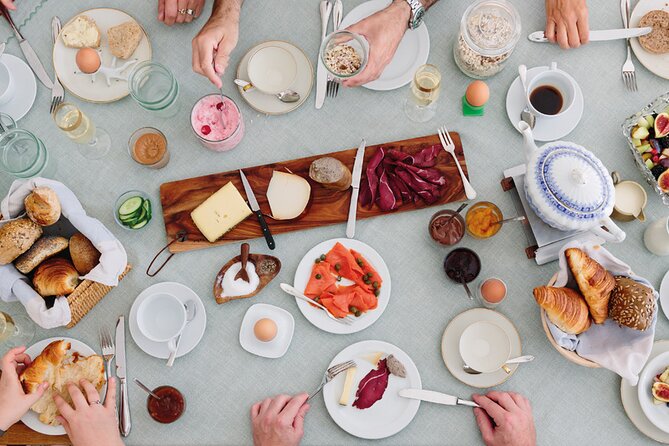
- Market-to-kitchen flow: You handle fresh produce and ingredients before you cook, not after.
- Practice speaking during real steps: Recipes and ingredient talk are used to reinforce speaking, not just vocab lists.
- Multi-sensory learning: Sight, touch, smell, taste, and hearing are part of the lesson, which helps memory stick.
- Host-led, family-friendly energy: In past classes with Kit, kids felt included and dietary needs could be handled.
- Private group format: Only your group participates, so questions and pacing feel more natural.
How a German breakfast lesson actually works in Berlin

This experience is built around a simple idea: language sticks better when it is tied to action. You are not just learning German about food. You are learning it through the full cycle of food buying, prep, cooking, and tasting.
The method is practical. As you see ingredients, pick them up, and use them in recipes, you hear the German names and instructions. Then you repeat and apply that language while you work. It is the same reason a cooking class teaches better than a workbook, and this one adds German speaking prompts so you use what you learn right away.
You also get a multi-sensory advantage. The program is designed so your senses stay involved throughout. When sight, hearing, touch, taste, and smell all get tied to new words and phrases, your brain has more hooks for recall. That is especially helpful for beginners and for anyone rebuilding confidence in a second language.
A few more Berlin walks and trips to compare
- Berlin: Reichstag, Dome and Government District Guided Tour
★ 4.7 · 18,288 reviews - Berlin: 1-Hour City Tour by Boat with Guaranteed Seating
★ 4.3 · 16,993 reviews - Berlin: TV Tower Standard Entrance Ticket
★ 4.4 · 15,883 reviews
Price and value: what $110 buys you
At $110 for about 3 hours, you are paying for more than food. You are paying for private instruction, hands-on shopping, and a hosted cooking session that includes the breakfast.
Here is why it can be good value, even though it is not the cheapest thing on the map:
- You get a full activity arc, not a quick demo.
- You practice speaking in context, while working with ingredients.
- You get a local host who can adapt to your group, including accommodating dietary restrictions based on past experience.
- You get breakfast included, so you are not paying extra for the meal.
The only reason value could be lower for you is time. If you expect a casual, purely social hangout, the class structure means you will be doing language work. Also, note that while the duration is listed as about 3 hours, at least one past session ran over 6 hours. If you hate long blocks, check how the timing works for your specific date.
Meeting point setup at Goltzstraße 36, and why the location matters

You start at Goltzstraße 36, 10781 Berlin, Germany, and you end back at that same meeting point. That round-trip setup matters because it keeps logistics easy. You do not have to plan additional transport between stops.
The area is also described as near public transportation. That is helpful in Berlin, where different neighborhoods can feel far apart even when they are not. If you are traveling on a tight schedule, being able to reach the meeting point without a private car saves time and stress.
You will receive a mobile ticket, which usually makes last-minute day planning simpler. Bring it up on your phone before you arrive, and keep it handy in case your host asks to check it.
From the market to your ingredients: where German actually becomes useful
Even though the theme is German breakfast, the experience starts with a food-finding mindset. You learn to speak German while seeing, touching, handling, preparing, cooking, and tasting fresh produce.
In practice, that means you will spend time at a market-style setting before you cook. Past experiences with Kit included shopping at an outdoor market with vendors and seasonal produce. You choose ingredients together, and you talk through what you are buying and why it fits the dishes you will prepare.
This stage is where the language gains real momentum. Food words stop being abstract. You can point at what you are choosing. You can repeat ingredient names in German while you hold them. You can ask questions while the context is right there, in front of you.
Also, this stage tends to reward curiosity. If you like hearing how locals think about fresh, local, and sustainable meat and produce, you will likely enjoy the discussion portion. One past group even brought up the idea of shared philosophies around ingredient choices, which made the market feel more like a conversation than a lesson.
Same city, a different way to spend the afternoon:
- Berlin: Boat Tour Along the River Spree
★ 4.4 · 11,252 reviews - Discover Berlin Half-Day Walking Tour
★ 5.0 · 9,624 reviews - Berlin: Government District around the Reichstag Guided Tour
★ 4.7 · 8,447 reviews - Berlin: Reichstag, Plenary Chamber, Cupola & Government Tour
★ 4.6 · 8,422 reviews
Cooking at home with Kit: the language gets structured here
After you have selected ingredients, you move into cooking. The class is hosted in a home setting, which changes the vibe in a good way. Instead of a classroom feel, you get a real kitchen workflow: prep, cook, taste, adjust.
In the cooking part, the program uses structured language practice. The host explains recipes, cooking techniques, and ingredients in a way designed to reinforce understanding and speaking. So you are not only hearing German. You are also being nudged to use it while you work.
This is also where the “feel included” factor really shows. In past feedback, Kit was described as warm and accommodating, and she made it easier for a daughter to participate. If you are traveling with a child who wants to be part of the action, that home-kitchen setting can work better than larger group cooking venues.
You may also find the cooking pace is flexible. One review described picking multiple ingredients like fruits and herbs and then preparing several dishes, taking plenty of time. Another noted dietary restrictions could be accommodated. That suggests you will not have to force yourself into a one-size-fits-all meal plan.
The breakfast meal, tasting, and what to do with your new German
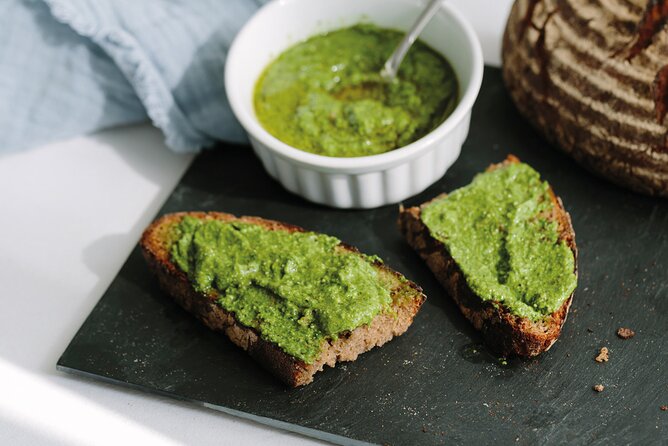
The program ends with breakfast included. Tasting is not treated as an afterthought. It is part of the language loop: you smell, taste, and talk about what you made.
For language learners, tasting is useful because it forces specific descriptions. You can practice phrases tied to flavor, texture, and preference without needing to explain long theory. You can also ask follow-up questions in German during the moment, not days later.
If you want to get more value from the lesson, do this during the tasting:
- Repeat ingredient names you used earlier in the class.
- Use simple German sentences tied to what you just tasted (instead of switching to English).
- Ask how to say a step you remember, like the action you did right before tasting.
No need to be perfect. The point is to stay in German while your senses make the words make sense.
How long is this, really, and how to plan your day
The duration is listed at about 3 hours, and the start time is listed as 9:30 pm. That combination makes it especially important to confirm your timing in your booking message.
In real life, these kinds of market and cooking experiences can run long because you are talking, selecting, and learning as you go. One past class was reported as lasting over 6 enjoyable hours, which sounds like a more expanded session than the 3-hour estimate.
So plan with a little margin. If you have a strict dinner reservation or a theater start time, build in buffer time and double-check the expected end time the day before.
Also remember, it is not marketed as a silent cooking demo. You will be speaking, asking, and participating. If you are the kind of person who likes to observe from the sidelines, you might feel less in your comfort zone here.
Who this is best for (and who should skip it)
This experience is ideal if you want German that feels practical. It is designed for beginner to intermediate language levels, which means it should meet you where you are, as long as you are willing to try speaking.
You are likely a great fit if you:
- Want to learn German through food vocabulary and real conversation.
- Enjoy market time and ingredient selection.
- Like hands-on cooking more than lectures.
- Are comfortable with a small group setting where your questions matter.
You might want to pass if you:
- Want a pure sightseeing day with minimal language focus.
- Are only interested in advanced grammar or fluency drills.
- Need strict timing for the rest of your night and do not want a possible longer session.
Quick practical tips to get the most from a German cooking class
A few smart habits can turn this into a standout day instead of just another activity.
- Bring a pen and small notebook if you like writing down phrases. The class talks about recipes, techniques, and ingredients, so you will have plenty of useful terms.
- If you have dietary restrictions, mention them clearly when booking. Past experiences with Kit indicated dietary accommodations can be handled.
- Wear shoes you can stand in for a while. Markets and kitchen work both mean time on your feet.
- Arrive a few minutes early at Goltzstraße 36 so you can start calmly.
And if the start time on your booking looks off for breakfast, do not ignore it. Confirm before you commit to a morning or evening plan.
Should you book Delicious Deutsch in Berlin?
If you want German learning that actually feels alive, I think this is a strong pick. You get a full food experience, shopping into cooking into breakfast, with German speaking practice woven through every step. I also value the human side here, especially the reports of a welcoming host, the warm way participation works for kids, and the ability to handle dietary needs.
Book it if:
- You are a beginner to intermediate German learner.
- You enjoy markets and hands-on cooking.
- You want language practice that is tied to real tasks, not just memorization.
Consider skipping if:
- You want to spend your time mostly sightseeing.
- You dislike interactive language practice.
- Your schedule cannot tolerate a session that might run longer than the estimate.
FAQ
What is the location and meeting point?
The tour starts at Goltzstraße 36, 10781 Berlin, Germany, and it ends back at the same meeting point.
How long is the experience?
The duration is listed as approximately 3 hours.
What is included in the price?
Breakfast is included.
Is transportation included?
No. Private transportation is not included.
What language level is this for?
The program is designed for beginner to intermediate language levels.
Is this a private tour?
Yes. It is a private tour or activity, and only your group participates.
What time does it start?
The listed start time is 9:30 pm. You should double-check the time in your booking confirmation.
Newest Berlin reviews on the site
- Berlin Private Half-Day Walking Tour: Discover the German Capital’s History★ 5.0 · 244 reviews
- Private Berlin Custom Half-Day Tour with Private Driver and Guide★ 5.0 · 59 reviews
- Get In: The Ultimate Berlin Club Tour★ 5.0 · 28 reviews
- Berlin Highlights in 2 Hours: Express Walking Tour★ 5.0 · 120 reviews
- Private Transfer from Berlin to Prague with 2h of Sightseeing★ 4.5 · 17 reviews
- Potsdam Day Trip from Berlin with a Local: Private & Personalized★ 4.0 · 11 reviews
- Berlin Wall: Greatest Escapes Self-Guided Walking Adventure★ 4.5 · 27 reviews
- Dark Berlin Criminal Tour★ 4.0 · 5 reviews
Berlin Tours, compared.

Reichstag, Dome and Government District Guided Tour
Read our review →
1-Hour City Tour by Boat with Guaranteed Seating
Read our review →

Government District around the Reichstag Guided Tour
Read our review →
Reichstag, Plenary Chamber, Cupola & Government Tour
Read our review →