
Reviewed · HISTORICAL TOURS
Braunschweig: Private Tour through the history of crime
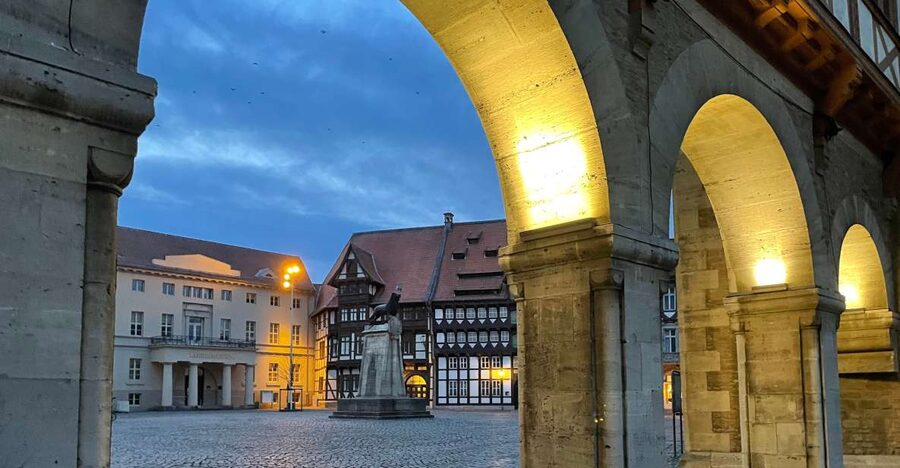
Braunschweig has a darker side worth seeing. This private walking tour through Lower Saxony turns everyday streets into crime-scene storytelling, starting in the Middle Ages and moving toward more modern cases, with clues at the locations where things happened. I love the way the walk links real places to specific themes like witch trials, murders, and organized crime, then balances it with major sights like Brunswick Cathedral, established in 1173.
The only real drawback to plan around is that the tour guide works in German, so you’ll want at least some comfort with German, or be ready to rely on body language and key place names. Also, it is not a light topic, so if you want carefree sightseeing, this one may feel heavy.
In This Review
- Key highlights you will actually notice
- Why Braunschweig’s crime history feels real on the street
- The route, from witch trials to criminal law at Altstadtmarkt
- The clue hunt: how “crime scenes” teach you to look differently
- Brunswick Cathedral (founded 1173): Romanesque beauty with a darker lens
- The execution location: where punishment became a public message
- Altstadtmarkt and organized crime near the red light district
- How the tour works in practice: private group, 1.5 km, and a real guide
- What to bring, what to expect on timing, and the recording rule
- Price value: $113 per group up to 25, and who benefits most
- Who should book this Braunschweig history of crime tour
- FAQ
- FAQ
- How long is the Braunschweig history of crime private tour?
- How much walking is involved?
- What is the price?
- Is this tour private?
- What language is the guide?
- Where do I meet the guide?
- What if I am late?
- Can I record video or audio during the tour?
- Does the tour run in the rain?
- Is it suitable for young children?
- Should you book this private crime history tour?
Key highlights you will actually notice
- Crime-scene clue hunt on original locations tied to historical cases
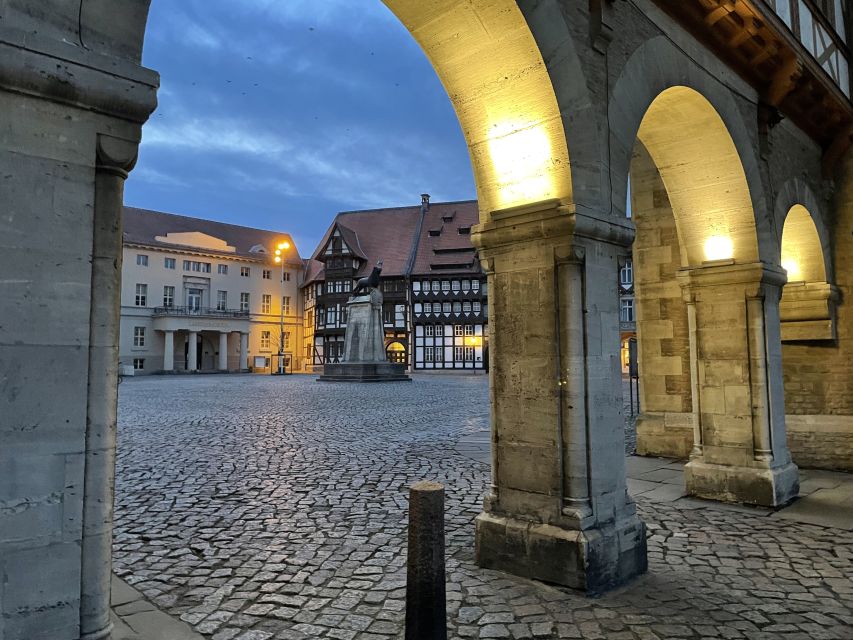
- Middle Ages to modern crimes: witch trials, organized crimes, and murders
- Execution location stop tied to punishment for serious crimes
- Brunswick Cathedral, founded in 1173 viewed through its darker context too
- Altstadtmarkt criminal-law story plus a look at organized crime areas
- Private group feel with a certified local guide and a conversational pace
Why Braunschweig’s crime history feels real on the street
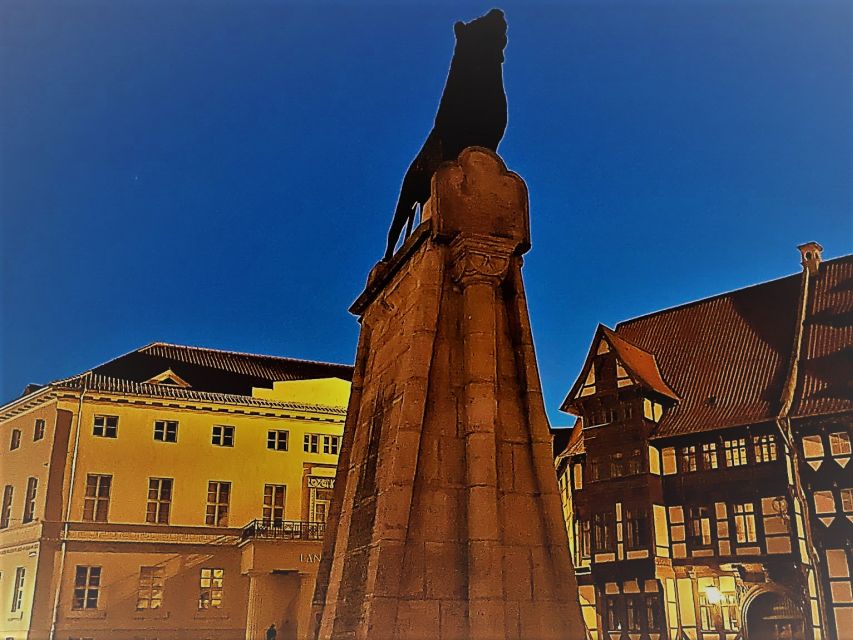
This tour is built around a simple idea: history lands differently when you are standing where it happened. In Braunschweig, you start seeing the city as more than postcard views. You get a guided thread that runs from dark medieval justice to patterns that show up in later criminal history.
I like how the experience is not only about facts. It is about interpretation at street level. Your guide points you to places where the story turns, like the execution grounds tied to punishment, and central squares connected to criminal law. That approach makes the grim subject easier to follow, because you are not absorbing it from a book. You are watching it unfold as you walk.
You also get a built-in contrast. Brunswick Cathedral brings in the classic Romanesque beauty factor, while the guide keeps nudging you toward the darker meanings people would have associated with the era. It is a strong combo: gorgeous stone above, hard history below.
A few more Brunswick walks and trips to compare
- Leipzig: City History Canal Sightseeing Tour on a Motorboat
★ 4.7 · 7,671 reviews - Berlin: Natural History Museum Entrance Ticket
★ 4.6 · 3,382 reviews - Leipzig: 1.5-Hour Historical Walking Tour in German
★ 4.7 · 2,217 reviews
The route, from witch trials to criminal law at Altstadtmarkt
The pacing is straightforward. Plan on about 1.5 hours of walking and storytelling, covering around 1.5 km total. The tour is rain or shine, so bring a rain-ready layer and comfortable shoes.
You begin with the Middle Ages, where the guide sets up the themes: witch trials, organized crimes, murders, and the victims and perpetrators involved. Then you shift into a clue-style format, where you follow your guide from one real location to the next, linking what you see on the street to what was happening there.
As the walk progresses, you move into major landmarks and civic spaces. You will spend time with Brunswick Cathedral, described as a Romanesque 12th-century church founded in 1173, and then continue toward key sites tied to justice and punishment. Two place names matter for context: the execution location connected to many criminals, and Altstadtmarkt, where you hear about criminal law. The tour also references organized crime linked to an area described as the red light district, giving you a more modern social angle to pair with medieval fear and punishment.
The clue hunt: how “crime scenes” teach you to look differently
One of the best parts of this tour is the way the guide frames the walk like a search. Instead of treating the city as a backdrop, your guide pushes you to notice details and connect them to the story themes: who was targeted, how justice worked, and why certain cases mattered to the community.
You will hear about witch trials and murders as part of a bigger pattern, not just isolated scandals. The tour also covers organized crimes, which helps you see that Braunschweig’s criminal history is not only about medieval superstition or one-off violence. The guide’s goal is to show continuity and change, from older systems of punishment to more structured legal handling.
This is the moment where the tour’s “dark side” promise becomes practical. Standing at actual locations makes the narrative stick. You leave with mental images tied to specific streets, squares, and landmark views, rather than a vague impression of gloom.
If you dislike grim themes, you might still enjoy the mechanics of the storytelling. It is structured and guided, not shock-first.
Brunswick Cathedral (founded 1173): Romanesque beauty with a darker lens
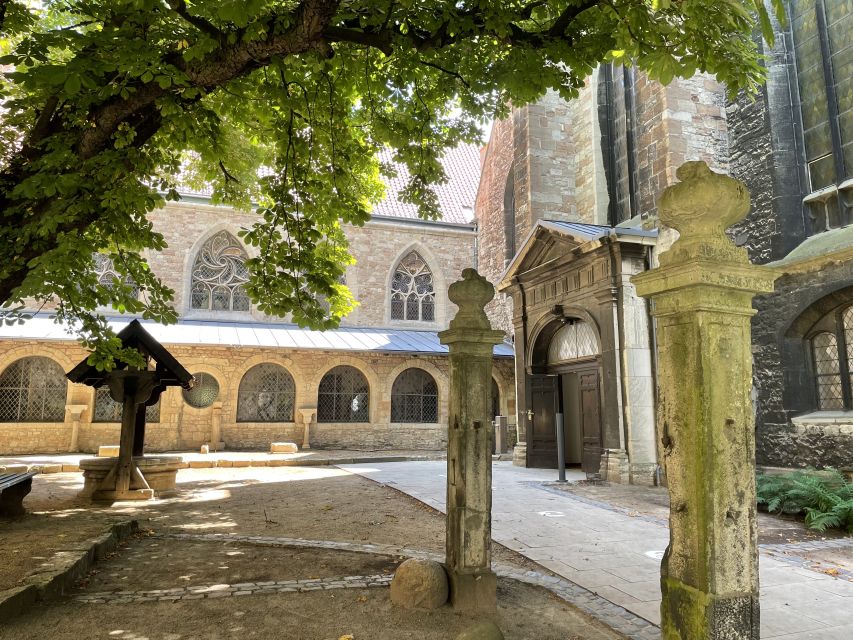
Brunswick Cathedral is a highlight for a reason. Even if you are not a cathedral person, it is hard not to pause. The building is described as a Romanesque 12th-century church founded in 1173, so you get both the architectural wow factor and the historical weight that goes with it.
What makes this stop more than a photo break is the way the guide connects architecture to meaning. You are not just admiring stone. You are hearing about the darker side of the cathedral’s era, which turns your attention to what people likely feared, believed, or expected from authority back then.
This stop is also useful for your own pacing. The tour is only about 1.5 km, but the subject matter is heavy. A major landmark gives your brain a place to reset while still staying on theme. You can take in the scale, then re-enter the story with fresh focus.
Photography is not mentioned as required, but note the rule: video recording and audio recording are not allowed. Still, you can look closely and take in details visually.
Same city, a different way to spend the afternoon:
- Braunschweig: Guided Walking Tour with Food Tastings
★ 4.8 · 68 reviews - Braunschweig: Scavenger Hunt Self-Guided Walking Tour
★ 4.6 · 35 reviews - Braunschweig: Private City Walking Tour with Certified Guide
★ 4.8 · 35 reviews
The execution location: where punishment became a public message
The tour includes a grim, specific location tied to executions for many criminals. This is one of the most direct “crime history” moments, because it is not an abstract topic. You are guided to the place associated with punishment and told about its role in criminal justice.
The value here is not only learning what happened. It is understanding the purpose behind public punishment. Execution sites worked as warnings. They shaped community behavior and reinforced the power of legal and religious authority.
Because the tour covers victims and perpetrators, you should expect language and framing that may feel disturbing. This is not the type of walk to treat as casual entertainment. If you are sensitive to the subject of crime and punishment, go in with your eyes open.
That said, the tour’s structure keeps it grounded. You move from location to location with your guide explaining how each site fits into the broader history, so you are not left staring at the ground with no context.
Altstadtmarkt and organized crime near the red light district
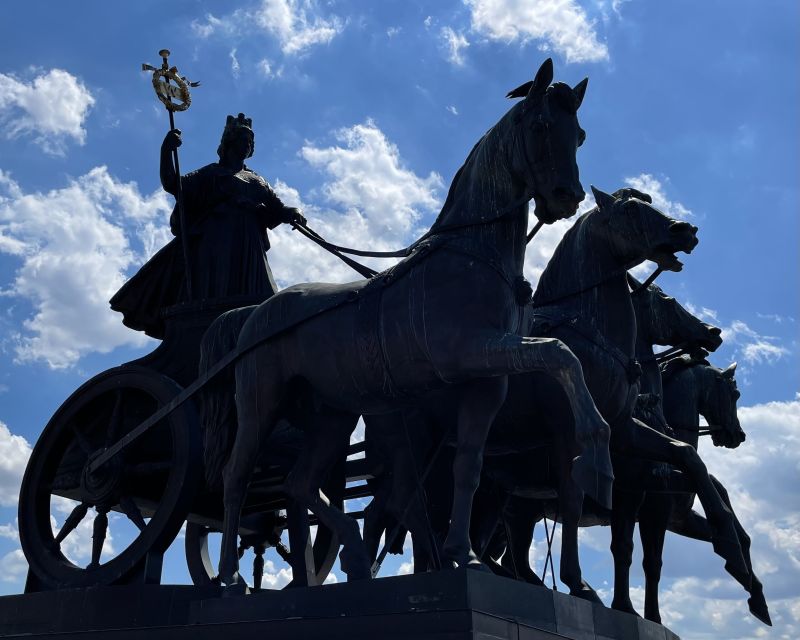
Two other story stops are anchored to civic space. One is Altstadtmarkt, where you learn about criminal law. The other thread connects organized crimes to an area described as the red light district.
Altstadtmarkt matters because it is tied to how law was practiced. Criminal law stories give you a framework. They help you understand that the city’s crime history was not only about individuals, it was about systems: how cases were handled, how rules were applied, and how communities responded.
The organized crime angle, including what the tour describes as the red light district, shifts the focus to social realities that show up later in history. Even without you needing deep background knowledge, this part of the tour helps you connect themes across time. Fear and punishment exist in the Middle Ages, but organized crime suggests something different: networks, opportunities, and repeat patterns.
If you prefer tours that cover only medieval topics, this might still be worth it because it ties the medieval start to later developments. But if you are mainly interested in architecture and landmarks, the crime-law and organized-crime sections might be the most intense parts of your walk.
How the tour works in practice: private group, 1.5 km, and a real guide
This is a private group tour. Price is listed as $113 per group up to 25 people. That pricing structure can be a great deal if you have a small group of friends or a family cluster, because you are not paying per person.
The walk is about 1.5 km total in roughly 1.5 hours. That means you can comfortably do it without turning the day into a long hike. Your main effort will be staying on pace during repeated storytelling stops.
Your guide is a certified local guide, and you meet them at a clearly described spot. The guide will wear an LED-Display backpack with the words Get Your Guide and Braunschweig. Arrive about 5 minutes early. The guide waits up to 30 minutes at the meeting point, and the tour ends back at the same meeting point.
Language note matters for planning: the tour guide is German only. There is no mention of an English guide. If your German is basic, the stop names still help you follow along, but you will have less detail than a fluent listener.
What to bring, what to expect on timing, and the recording rule
For comfort, bring comfortable shoes and comfortable clothes. That is not just generic advice. You will be walking around 1.5 km total and standing at multiple stops. The subject matter is also intense, so you will likely want stable footing and the ability to pause.
The tour operates rain or shine. Plan layers, not fashion. Even a light drizzle can slow groups, so shoes with grip are worth it.
Two “heads up” rules are clearly stated:
- Video recording is not allowed.
- Audio recording is not allowed.
So if you rely on saving audio for later, make a different plan. Bring a notebook or rely on memory and what your guide highlights.
One more practical point: it is not suitable for children under 8 years. The content is focused on crime, witch trials, murders, and executions, so think of it as an adult-oriented history walk.
Price value: $113 per group up to 25, and who benefits most
At $113 per group up to 25, the value depends on how you travel. If you are one person or a couple, the per-person cost can feel higher than a standard group tour. But if you have a small group that can share the booking, it becomes a bargain.
You also get the payoff of a private guide experience. With a smaller group, the guide can tailor the pace and answer your questions in a way that big mass tours often cannot. I especially like this format for history themes where you might wonder how something worked or why it mattered. The tour’s subject lends itself to questions, and the guide is described as answering them.
If you are traveling with older kids or adults who like true stories, legal history, and medieval justice, this price is likely to feel fair. If your priority is only quick photos of landmarks, you might prefer a lighter walking tour instead.
Who should book this Braunschweig history of crime tour
I think this works best for travelers who enjoy:
- walking tours that explain real places
- historical crime and justice themes
- medieval to modern connections
- architectural stops, especially when paired with context
It may not be for you if you want a cheerful “see the city” route. The whole point here is the grim side of Braunschweig, from witch trials to execution locations to organized crime references.
Because the guide speaks German, you should feel comfortable with a German-led format. A basic understanding of place names can still carry you, but the richest details will go to someone who can follow German explanations more smoothly.
Finally, if you are planning around mobility, it is wheelchair accessible and barrier-free. The tour is also short in distance, so it is easier to manage than longer city walks.
FAQ
FAQ
How long is the Braunschweig history of crime private tour?
It lasts about 1.5 hours.
How much walking is involved?
The tour involves 1.5 kilometers of walking.
What is the price?
The price is $113 per group up to 25 people.
Is this tour private?
Yes, it is a private group tour.
What language is the guide?
The live tour guide is German.
Where do I meet the guide?
You meet at the designated start meeting point. Arrive about 5 minutes early and look for a guide wearing an LED-Display backpack with the words Get Your Guide and Braunschweig.
What if I am late?
The guide will wait up to 30 minutes at the meeting point.
Can I record video or audio during the tour?
No. Video recording and audio recording are not allowed.
Does the tour run in the rain?
Yes, it operates rain or shine.
Is it suitable for young children?
It is not suitable for children under 8 years.
Should you book this private crime history tour?
Book it if you want Braunschweig to feel more than scenic. This is a short, guided walk that connects major landmarks like Brunswick Cathedral with uncomfortable history, and it does it from the street rather than from a classroom.
Skip it if you want cheerful sightseeing, or if German-only guiding would be a problem for you. Also think twice if crime and executions are topics you would rather avoid, because the tour is explicitly built around those themes.
If you match the vibe, you should feel satisfied. You get a private guide, a manageable 1.5 km route, and a clear story arc from medieval fear to later criminal law and organized crime locations, all with a guide who takes questions seriously.
Newest Brunswick reviews on the site
- Braunschweig: Private Tour to Ghosts, Witches & Vampires★ 5.0 · 4 reviews
- Braunschweig’s Mystery Morning: Breakfast & Escape Game★ 4.4 · 18 reviews
- Braunschweig: Guided Walking Tour with Food Tastings★ 4.8 · 68 reviews
- Braunschweig: Scavenger Hunt Self-Guided Walking Tour★ 4.6 · 35 reviews
- Braunschweig: Private City Walking Tour with Certified Guide★ 4.8 · 35 reviews
- City tour Braunschweig: diverse and full of surprises.★ 5.0 · 35 reviews
Historical Tours, compared.
City History Canal Sightseeing Tour on a Motorboat
Read our review →
Browse the lists this tour appears in