
Reviewed · STREET ART
Alternative Hamburg Private Alternative Street Art Tour
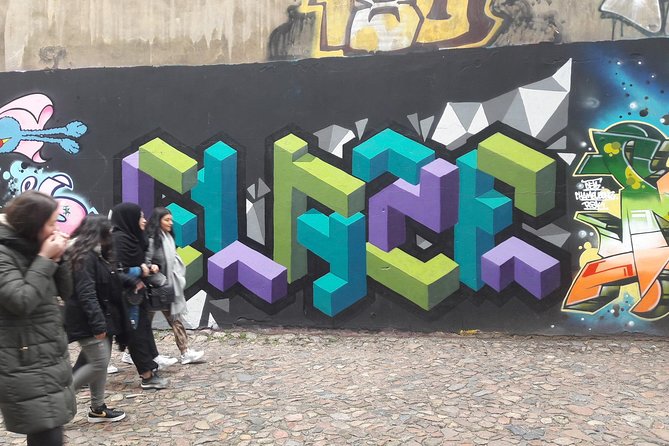
Graffiti is storytelling, not just paint. In this Hamburg street art walk, you follow a guide through Schanzenviertel and St. Pauli while the walls turn into a real lesson on subcultures, local tensions, and why some art sparks debate. I especially love how the tour connects artwork to gentrification and political inspiration, and how the neighborhoods themselves shape what you see. One drawback to plan for: it is a short, mostly walking-focused outing, so you will want comfy shoes and a bit of stamina.
The route is built for a quick hit, about two hours, and it ends near Gänsemarkt so you can keep exploring after. You will start near Sternschanze S-Bahn, get moving through multiple districts, and finish close to public transit, which makes it easy to fit into your day. If you prefer big set-piece sights over street-level details, this may feel more like a guided neighborhood walk than a typical sightseeing tour.
A big part of the appeal is the guide factor. In the same way I like great museum docents, guides such as Adrian, Teresa, and Tobi are praised for mixing art talk with city context and for adjusting the pace so it stays readable, not like a lecture. Do keep one consideration in mind: one booking experience in the past had a mix-up where no guide showed, so I recommend double-checking your meeting time and meeting spot in your confirmation message close to departure.
In This Review
- Key things that make this street art tour worth your time
- Street art in Hamburg is never just street art
- Your 2-hour route: Sternschanze S-Bahn to Gänsemarkt
- What your guide does that you cannot DIY
- Schanzenviertel and St. Pauli: how the art changes as you walk
- Political inspiration, gentrification, and the human side of graffiti
- Timing, pace, and group size that keep it comfortable
- Price and value: $347.05 per person for a guide-led walk
- A rare booking hiccup, and how to protect your schedule
- Should you book this Hamburg street art tour?
- FAQ
- What neighborhoods does the street art tour cover?
- How long is the Hamburg street art tour?
- Where do I meet the guide, and where does it end?
- Is the tour private, and how many people are there?
- What is included in the price?
- Does it run in bad weather?
Key things that make this street art tour worth your time
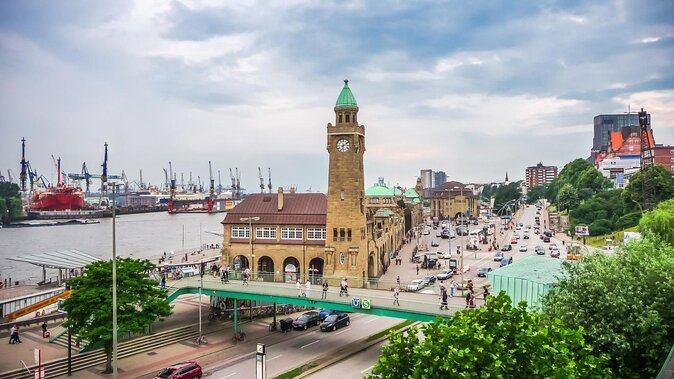
- Schanzenviertel and St. Pauli on foot, so you see how the art changes as neighborhoods change
- Politics explained in plain language, including inspiration behind specific pieces
- Gentrification and subcultures, not just style spotting
- Short duration, roughly two hours, with time to continue sightseeing afterward
- Small-group feel (private, with a maximum of 15 people per booking) so you are not lost in a crowd
- Guides with real street art perspective, and the tour includes their stories, not just photos on a screen
Street art in Hamburg is never just street art
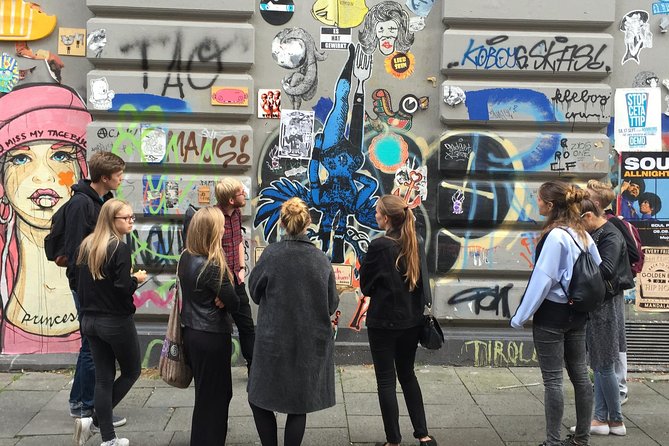
Hamburg street art works best when you know what to look for. Up close, you start seeing layers: tags and crews, political slogans, references to local events, and the way artists respond to whoever controls the walls today. That is what I like about this tour, you do not only spot murals, you also get the reasons behind them, including the subcultures that made certain styles popular in the first place.
The neighborhoods chosen for this walk are a key part of the payoff. Schanzenviertel and St. Pauli have long had a reputation for alternative scenes, youth culture, and creative protest. Walking through them with someone who can point out the why behind the what changes the whole experience. Instead of thinking, cool painting, you start thinking, what was going on here, who was pushing back, and who might benefit from the change.
You also get a mix of local, national, and international artists. Even if you do not know an artist by name, you will start noticing how different backgrounds and styles collide on the same streets. That variety helps you avoid the trap of judging only one kind of graffiti, you see how street art can function as art, messaging, and community identity all at the same time.
A few more Hamburg walks and trips to compare
- Alternative Hamburg / Street Art Private Tour
★ 4.7 · 8 reviews - Berlin: City Street Art Guided Walking Tour
★ 4.8 · 1,051 reviews - Berlin: 3-Hour Street Art Tour
★ 4.7 · 778 reviews
Your 2-hour route: Sternschanze S-Bahn to Gänsemarkt
This tour is designed to be compact. You meet your guide near the Sternschanze S-Bahn area and you finish near the Gänsemarkt metro station. In other words, you are not stuck traveling across the city for a tiny payoff, you are walking a sequence of districts close enough to keep momentum.
Here is the practical flow. You start in the Schanzenviertel area and then move toward Sankt Pauli, before continuing through Katoviertel toward the city centre. As you go, the guide helps you read what is around you, including different graffiti and street art styles, plus the historical context that shaped them. Because this is a walking tour, the route matters. You get to watch how the neighborhood mood shifts, and that helps you understand why artists target some locations more than others.
Timing is short, about two hours. The materials you get can include a meeting time shown as 1pm with an approximate end time around 3pm, but there is also a start time shown as 10:00am. Since those two pieces of info conflict, I would treat the confirmation message from the operator as the truth. If you are planning your day tightly, give yourself extra buffer time to avoid missing the start.
The ending near Gänsemarkt is also a smart touch. You finish near a transport hub and in an area where you can pivot into other plans. That makes this a good add-on after lunch, or a first step before dinner when you still have energy for one more neighborhood wander.
What your guide does that you cannot DIY
If you try street art spotting on your own, you can still have a great time. But you will miss the context that turns a photo into a story. The guide is doing the heavy lifting here, sharing the background and explaining why certain pieces connect to political inspiration, subcultures, and debates around gentrification.
One reason this tour works so well is that it is not only art spotting, it is art interpretation. You learn how street art can function like a public bulletin. Some pieces are commentary, some are identity building, some are reactions to power, and some are simply artists claiming space. When your guide explains the inspiration and the setting, you start seeing patterns. You might notice how certain messages appear where a crowd, community, or controversy overlaps.
The best-guided tours also manage pace. In the past, guides such as Teresa have been praised for giving the right amount of information, not overwhelming you, and keeping it at a walking-friendly speed. Tobi has been praised for using his own experience as an artist to make the work feel more authentic and easier to see with new eyes. That is exactly what you want here, a guide who helps you look better, not someone who just recites a syllabus.
There is also a social value to this type of tour. In St. Pauli and nearby districts, the art is tied to people and local identity. A guide helps you avoid treating street art like random decoration. Instead, you understand it as a conversation between artists and the neighborhood.
Schanzenviertel and St. Pauli: how the art changes as you walk
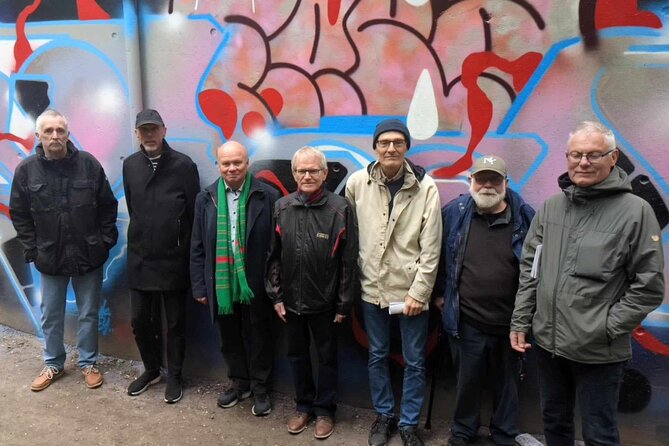
This tour takes you through two districts that feel different even when the walls look busy. That difference is part of the experience.
In the Schanzenviertel area, you will likely see a mix of styles that reflect the district’s alternative energy. The art can feel more layered, with references that make sense only if you understand the local scene. As you move toward St. Pauli, the tone can shift. You start noticing how the art relates to the neighborhood’s broader identity, including how street art fits into subcultures and how artists choose places that will be seen.
Then the walk continues toward Katoviertel and into the city centre. This is where context helps most. Street art can be less uniform as you approach more central zones, and you might notice how the same style choices are treated differently depending on who lives nearby and what changes are happening around them.
Even without knowing any specific artist, you will be learning how to read street art visually:
- Look for repeated symbols, colors, and writing styles, they often signal community or a theme
- Notice whether pieces look commissioned, repurposed, or left as a raw statement
- Pay attention to where the art is placed, corners, underpasses, building fronts, and long walls all send different messages
Same city, a different way to spend the afternoon:
- Hamburg: Sex and Crime in St. Pauli Tour for Ages 18 +
★ 4.7 · 17,793 reviews - Hamburg: 1.5-Hour Harbor and Speicherstadt Day Cruise
★ 4.6 · 14,200 reviews - Hamburg: 90-Minute Evening Lights Harbor Cruise
★ 4.5 · 7,728 reviews - Hamburg: 2-Hour XXL Port of Hamburg Cruise Tour
★ 4.7 · 6,979 reviews
Political inspiration, gentrification, and the human side of graffiti
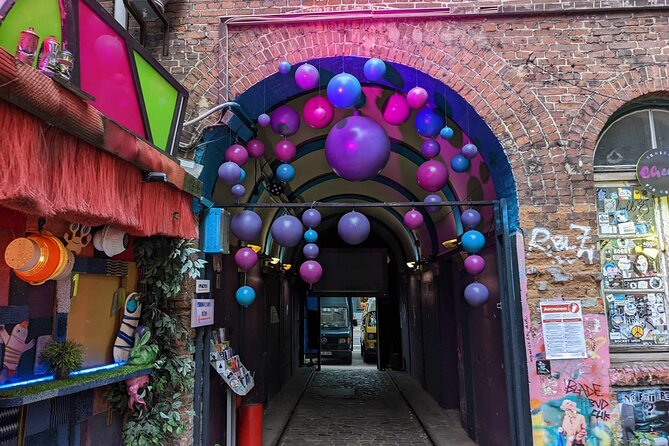
One of the most valuable parts of this walk is the focus on what drives the art. The guide explains historical background and highlights political inspiration behind some works. That helps you understand why graffiti can feel personal and why certain pieces can feel controversial.
Gentrification comes up directly. That matters because street art often gets used as both a marker of neighborhood change and a reaction to it. Sometimes it is the art that signals culture before redevelopment. Other times it becomes part of the rebranding process, which can frustrate artists who want their work understood as protest or community expression, not a trendy decoration.
I like that this tour does not treat street art as either pure rebellion or harmless fun. It treats it as human expression. That makes it easier to enjoy the art even if you do not share the politics. You can appreciate the craft, then you can also respect the message and the context that shaped it.
If you are the type of traveler who likes to understand what people are reacting to, this will fit you well. If you prefer only Instagram-friendly pictures without any social context, you may find the political discussion heavier than you expect. Still, it is presented as part of the street art story, not a detour.
Timing, pace, and group size that keep it comfortable
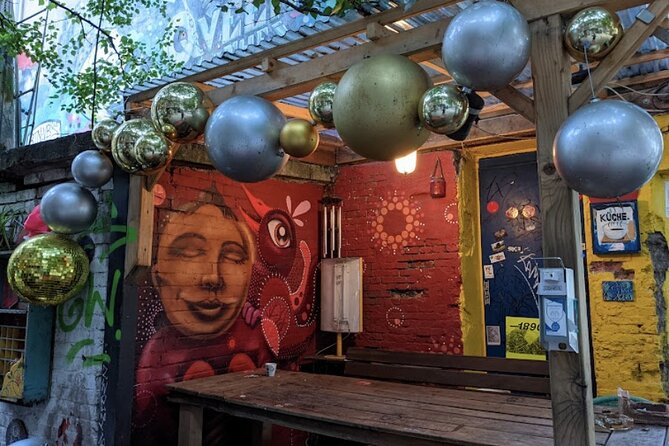
This is a private tour, meaning it is only your group. It also caps at 15 people per booking, which helps with a walking tour. With a smaller group, you are less likely to get stuck behind someone trying to read every tag at once.
The tour is designed to take about two hours. That is a sweet spot for a street art theme, long enough to feel like you have a real arc, short enough that you do not dread the finish. The pace also matters because the subject is visual. If you go too fast, you miss details. If you go too slow, you get tired and the experience starts to feel like homework.
Most travelers can participate, and the tour runs in all weather conditions, so dress for reality, not fantasy weather. You will be outside for the duration, so bring layers and shoes that handle uneven pavement and wet sidewalks.
One more practical note: service animals are allowed, and the tour is near public transportation. That makes it easier to start and finish without adding extra taxi time to your day.
Price and value: $347.05 per person for a guide-led walk
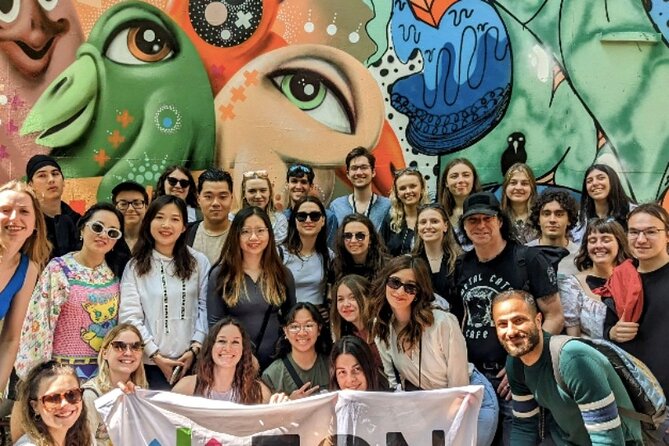
At $347.05 per person, this is not a budget street art stroll. So the question is value, not just cost. Here is what you are paying for.
You are paying for a guided interpretation of multiple neighborhoods in a short time. That includes the guide’s time, their ability to connect artwork to local history and politics, and the convenience of having an efficient route ending near transit. You are also paying for a small group cap, not a big herd walk where you get only partial attention.
If you love street art and you want context, this price can feel fair because it saves time. You avoid the trial-and-error phase where you wander hoping to find the best pieces while guessing the stories behind them. You also avoid spending your vacation hours reading background online instead of walking and looking.
If you are more casual about graffiti, or you mainly want photos with minimal reading, then you might feel the cost more sharply. In that case, consider whether you will actually use the guide’s explanation. This tour is most satisfying when you enjoy learning why a piece exists.
One last value check: you get enough time before or after the tour for more sightseeing. That matters because the tour price is easier to justify when it slots into a broader day, not when it replaces other plans.
A rare booking hiccup, and how to protect your schedule
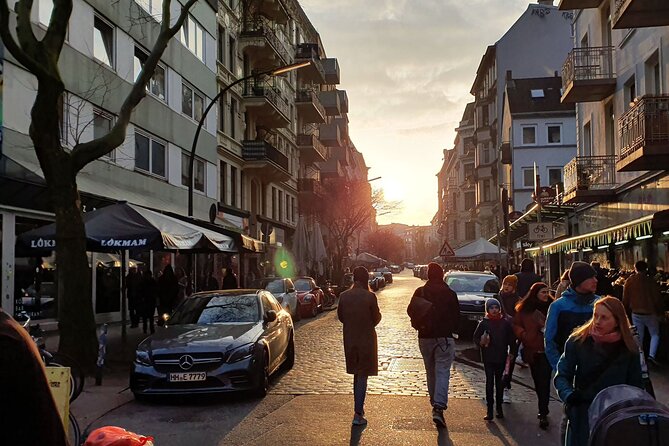
There is one caution worth mentioning. One booking in the past had a mix-up where a guide did not show up despite written confirmation, and the company later apologized for the error. That is not the norm you should expect, but it does raise a common-sense point.
If you book any guided walk, confirm the meeting spot and time right before you leave. Keep your operator contact handy. And if you are coming from somewhere else in the city, give yourself a bit of buffer so you are not rushing through a transit change while trying to find the meeting point.
This is still the kind of experience that can be very smoothly run. The best insurance is simple, show up ready, check your message, and treat the start time as something to verify that day.
Should you book this Hamburg street art tour?
I think you should book it if you like your travel with a point of view. This tour is for people who want to look at street art and also understand the stories behind it, especially the political inspiration and the role of gentrification in shaping what you see. If you enjoy alternative neighborhoods and you want a guided walk that does not drag on, the roughly two hours is a practical fit.
Skip it if you want a purely scenic, low-context experience. The tour centers on meaning, not just aesthetics, and the neighborhoods involve real subculture history and debate. If that sounds like effort, you might prefer self-guided wandering with a photo-first approach.
If you do book, double-check the start time shown in your confirmation, since the info provided can show 1pm in one place and 10:00am in another. If you get that right, you are set up for an efficient walk that helps you see Hamburg’s street art with new eyes.
FAQ
What neighborhoods does the street art tour cover?
The tour walks through Schanzenviertel and St. Pauli districts, then proceeds toward the city centre near Gänsemarkt and through Katoviertel.
How long is the Hamburg street art tour?
It is approximately a 2-hour walking tour.
Where do I meet the guide, and where does it end?
You meet near the Sternschanze S-Bahn station and the tour ends back near the meeting area, at about Gänsemarkt metro station around 3pm.
Is the tour private, and how many people are there?
It is a private tour/activity, with only your group participating. The maximum per booking is 15 people.
What is included in the price?
The tour includes a guide. Transportation to and from the attractions is not included.
Does it run in bad weather?
Yes. It operates in all weather conditions, so dress appropriately for the conditions.
Newest Hamburg reviews on the site
- World War 2 Hamburg Private Guided Tour★ 5.0 · 6 reviews
- Ticket for the Emigration Museum BallinStadt Hamburg★ 4.0 · 57 reviews
- Winter Alster tour★ 4.0 · 12 reviews
- UNESCO World Heritage – Speicherstadt and Kontorhaus district★ 4.5 · 12 reviews
- The Beatles on St. Pauli★ 5.0 · 3 reviews
- hamburg Experienced differently with wish rental bike relaxed enjoy★ 5.0 · 5 reviews
- Hamburg Private Food Tours with a Local: 100% Personalized★ 5.0 · 3 reviews
- Private Romantic Urban & Street Photoshoot★ 5.0 · 69 reviews
Street Art, compared.

Neustadt District Street Art Guided Walking Tour
Read our review →

East Meets West: Berlin Food Culture & Street Art
Read our review →
Browse the lists this tour appears in