
Reviewed · GERMANY
Oberhausen: The Last Days of Pompeii Immersive Experience
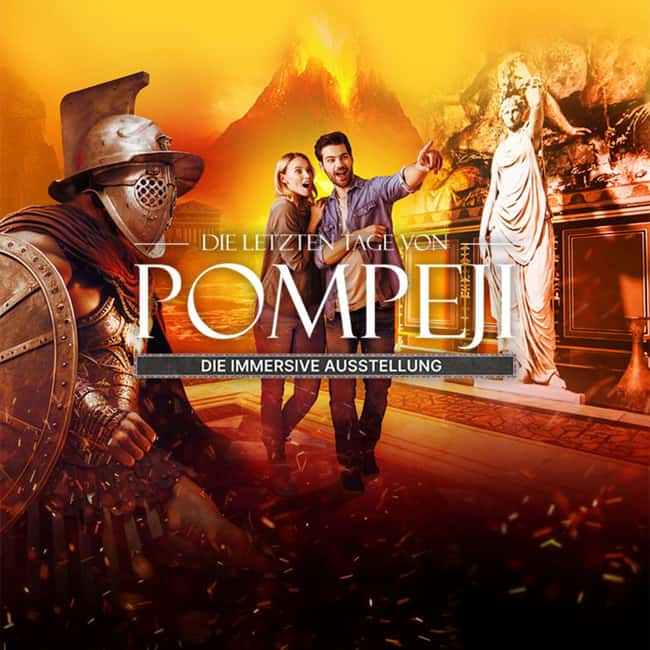
Pompeii goes cinematic in Oberhausen. You get a 360º city tour of the Vesuv outbreak and a VR gladiator and Naumachia segment that turns Roman drama into something you feel in your body.
The best parts, for me, are the way the show blends space, projections, and tech into one story, and the chance to stand in the world of Pompeii, not just read about it. One thing to consider is that a few people have flagged audio dropouts during the video sections, so go in with a little tolerance for technical glitches.
In This Review
- Key things that make this experience worth your time
- Pompeii in Oberhausen: what this show is really doing
- What’s included, and why the mix of formats has value
- The main 360º city tour and the Vesuvius outbreak
- Metaversum: Villa of the Mysteries and Pompeii traditions
- VR gladiators: the fight inside the amphitheater vibe
- Naumachia VR battle and the charging car moment
- The final drama: how the story frames Pompeii’s end
- Practical tips for getting the best experience out of it
- Price and parking: when value depends on what you want
- Who should book, and who might pass
- Should you book The Last Days of Pompeii in Oberhausen?
- FAQ
- Where does The Last Days of Pompeii experience take place?
- What is included in the 360º immersive show?
- What can I do in Metaversum?
- What does the VR part include?
- Is there a gift voucher option?
- Can I reserve now and pay later?
- What is the cancellation policy?
- Who operates the experience?
Key things that make this experience worth your time
- 360º Vesuv eruption projections that stage the last moments as a sweeping visual sequence
- Metaversum access to the Villa of the Mysteries and scenes tied to daily Pompeii life
- VR gladiator fights with a close-up, high-energy feel inside an amphitheater setting
- Naumachia battle simulation that swaps single-combat drama for large-scale spectacle
- Charging car moment with gladiators, aimed at putting you in the action
- Gift voucher option if you want to give this story experience to someone special
Pompeii in Oberhausen: what this show is really doing
If you think you already know Pompeii, this experience is a nudge to rethink it. Instead of treating history like a museum label, it treats it like a sequence of moments: streets, crowds, theater, and then the end. The format matters because you are not just looking at artifacts. You are walking through an organized narrative built from projections, VR, and room-to-room storytelling.
You’ll start with the main show built around a tour of the ancient city and the outbreak of Mount Vesuvius. The key detail is the 360º projection approach, which gives you an all-around sense of scale. Then you move into Metaversum for the Villa of the Mysteries and Pompeii-specific traditions. Finally, you hit VR for gladiator action and a Naumachia battle, plus a ride-style moment inside an amphitheater environment.
The result is a full-on entertainment-and-learning mix. If you love Roman culture and want a “feel it” version of the story, you’ll likely enjoy the flow. If you are the type who needs a perfectly academic, slow, artifact-first pace, this may feel more theatrical than scholarly.
More of Germany worth an hour:
- Berlin: Reichstag, Dome and Government District Guided Tour
★ 4.7 · 18,288 reviews - Hamburg: Sex and Crime in St. Pauli Tour for Ages 18 +
★ 4.7 · 17,793 reviews - Berlin: 1-Hour City Tour by Boat with Guaranteed Seating
★ 4.3 · 16,993 reviews
What’s included, and why the mix of formats has value
This is one ticket that strings together three types of experience, and that matters for how you’ll remember it.
First, you get the immersive show with the ancient city tour and the Vesuvius outbreak, delivered through 360º projections. This format is best for big visual events, like a city-scale catastrophe, because it can place you inside the scene.
Second, you get Metaversum. It focuses on the Villa of the Mysteries and helps you discover Pompeii through what the Romans did and how they lived. It’s the part that keeps the story from being only spectacle. Even if you do not catch every detail, you get a clearer sense of place.
Third, you get VR. You watch a gladiator fight, experience a Naumachia battle, and do a charging car moment with gladiators into an amphitheater. The VR portion is the adrenaline chapter. It’s also the part most likely to stick with you, because it turns “Roman entertainment” into something interactive.
You can think of it like this:
- Projections teach the setting and disaster
- Metaversum adds culture and architecture
- VR turns Roman spectacle into a personal experience
The main 360º city tour and the Vesuvius outbreak
The heart of the show is the ancient city tour, and it builds toward the outbreak of Vesuvius. What I like about this segment is how it uses room setup and wraparound visuals to make the city feel like a space you can move through, even though you are indoors.
The story is staged so you follow the city and then watch the end unfold. You’re not asked to do anything complex, which is a plus if you just want to focus on the narrative. Also, the production leans hard into atmosphere, with visuals designed to convey crowd density and the scale of panic.
One practical consideration: because it’s projection and video heavy, audio quality matters. Some people have mentioned sound dropouts during moving picture sections. If sound is key for you, it’s worth arriving with the expectation that you might need to rely on visuals as backup.
Metaversum: Villa of the Mysteries and Pompeii traditions
After the main city sequence, you step into Metaversum for the Villa of the Mysteries. This is a smart change of pace. It shifts the focus away from catastrophe and into a place where Roman culture and belief systems can be discussed through what you see.
The Villa of the Mysteries is the standout here. The experience is framed around exploring this villa and discovering the traditions of the Pompejans. In other words, it’s not just architecture as a pretty backdrop. You’re guided toward meaning, connected to Roman life and ritual traditions.
Why this part is valuable: after a disaster-themed main show, your brain can get stuck in fear and drama. Metaversum pulls you back into context. It gives you a reason to care about what gets lost, because you see that Pompeii wasn’t only a tragic headline. It was people with daily patterns, spaces with purpose, and traditions that shaped how they made meaning.
If you enjoy visual storytelling and want a break from the “big event” structure, you’ll likely appreciate this segment.
Same city, a different way to spend the afternoon:
- Berlin: TV Tower Standard Entrance Ticket
★ 4.4 · 15,883 reviews - From Munich: Neuschwanstein & Linderhof Castle Full-Day Trip
★ 4.6 · 14,646 reviews - Hamburg: 1.5-Hour Harbor and Speicherstadt Day Cruise
★ 4.6 · 14,200 reviews - Dresden: Semperoper Tickets and Guided Tour
★ 4.7 · 12,102 reviews
VR gladiators: the fight inside the amphitheater vibe
Then comes VR, and it’s designed to deliver Roman spectacle in full volume. You get a gladiator fight, staged to feel like you are in a densely occupied amphitheater setting.
What makes this work is how VR handles perspective. Instead of watching from a distance, you get a more personal point of view. Even if you’re not a gamer, the basic idea is easy to grasp. You look, you react, and the scene plays out around you.
A small watch-out: VR can be intense for some people, especially if you are sensitive to motion or bright visuals. The experience includes action scenes, so if you tend to get motion sickness, take that into account before you commit.
Still, this is the segment that most people tend to call out as a highlight because the experience turns historical entertainment into something you feel right in the middle of.
Naumachia VR battle and the charging car moment
The VR portion doesn’t stop at gladiators. You also get a Naumachia battle, which is the Roman-style naval combat spectacle. It’s a shift from one-on-one drama to something bigger, louder, and more chaotic in feel.
Then you get the charging car moment with gladiators, driving into an amphitheater environment. This is a bold production choice. It’s meant to push you from passive watching into a more active role, even if you’re still standing in place with a headset.
Why I think this is a good value move: VR is expensive to produce well, and not every show uses it for more than one wow moment. Here, VR covers multiple Roman spectacle types. You’re more likely to walk out feeling like you got your money’s worth of tech, not just one short scene.
The final drama: how the story frames Pompeii’s end
The show’s climax is the Vesuvius breakout and the ancient city being buried under ash and lava. That ending is the emotional core, and the way it’s presented matters.
Some people felt the storytelling did not fully capture how residents were handled during the eruption, meaning it could have focused more on the human side rather than only the spectacle. If you want a more serious, people-first tragedy angle, you might find the balance a little tilted toward dramatic visuals.
My advice: treat this as a production that aims for impact and clarity, not a slow historical seminar. Go in knowing you’ll get story beats and big visuals. If you like history told through scenes and timing, you’ll probably feel satisfied. If you only trust learning that comes directly from artifacts and deep explanation, you may want to pair this with additional reading or a follow-up visit to a museum.
Practical tips for getting the best experience out of it
A few practical ideas will help you enjoy this more, regardless of your history level.
First, plan to stay present during the transition moments between rooms. This kind of show works because it keeps moving. When you dawdle, you can miss how one segment leads into the next.
Second, if you are sensitive to audio or sound effects, keep your expectations flexible. There have been reports of sound cutouts, especially during moving image parts. Even if that happens, the visuals and VR content usually carry the moment, so you can still follow the story.
Third, expect some modern-looking staging details in at least a couple of spots. One person mentioned that certain props did not fit the visual world in a couple rooms. That sounds minor, but in a world of projections and VR, your brain notices anything that feels out of place. If you are very “set designer picky,” keep that in mind.
Finally, if you’re going with friends or family, pick your strategy: do you want to talk and compare notes, or do you want everyone to watch closely without interruptions? This show rewards attention, especially during the 360º segments and the VR action.
Price and parking: when value depends on what you want
The data you have says the ticket includes the show, Metaversum, and VR components. That’s the basic value proposition. You’re paying for multiple experiences under one umbrella, not just one theater segment.
Still, value can feel different depending on your priorities. One person thought the entry price was already high and then got hit with a separate parking cost of 6€. That doesn’t necessarily mean every visit has the same situation, but it tells you one thing: budgeting for the whole outing matters.
Here’s how I’d judge whether it’s worth it for you:
- If VR and 360º projections sound like your kind of learning, it can feel like good value.
- If you prefer traditional museums and are not into tech, you may feel it’s priced for entertainment rather than pure archaeology.
- If parking is a concern, plan ahead so you do not get an unexpected add-on that ruins the day’s math.
Who should book, and who might pass
This is best for people who like Roman history, theater, and tech. You’ll probably fit right in if:
- You enjoy “story-first” experiences
- You want a family-friendly day with visual action and short, punchy segments
- You like VR experiences that do more than one single scene
- You want a big emotional climax instead of slow academic pacing
It may be less satisfying if:
- You want a quiet museum-like experience with lots of artifact reading
- You are especially sensitive to sound quality and can’t handle audio dropouts
- You want the human side of the disaster handled very explicitly, rather than more focused on catastrophe visuals
If you’re somewhere in the middle, go in with a balanced mindset. Think of it as a high-impact production that teaches through visuals.
Should you book The Last Days of Pompeii in Oberhausen?
I’d book it if you want a Roman story that uses tech to make the setting feel real. The 360º Vesuv eruption projections plus Metaversum’s Villa of the Mysteries add context, and the VR gladiator and Naumachia segments give you the memorable wow factor. That combination is hard to beat for a one-stop history-and-entertainment day.
I’d hesitate only if you are picky about audio, deeply prefer traditional museums, or need a heavy focus on the human tragedy angle. In those cases, you might still enjoy parts, but you might not feel the experience matches your learning style.
Also, if you’re buying for someone else, the included gift voucher can be a simple way to share the experience as a present.
FAQ
Where does The Last Days of Pompeii experience take place?
It takes place in Oberhausen, northern Germany, Germany.
What is included in the 360º immersive show?
You get a tour of the ancient city and you experience the outbreak of the Vesuvius and the last moments of the city through 360º projections.
What can I do in Metaversum?
You can explore the Villa of the Mysteries and discover traditions of the Pompejans.
What does the VR part include?
The VR experience includes a gladiator fight, a Naumachia battle, and a drive on a charging car with gladiators into an amphitheater.
Is there a gift voucher option?
Yes, you can buy a gift voucher for the last few days of Pompeii immersive exhibition.
Can I reserve now and pay later?
Yes, you can reserve and pay later, with the option to book your spot and pay nothing today.
What is the cancellation policy?
You can cancel up to 24 hours in advance for a full refund.
Who operates the experience?
The experience provider is FKP Scorpio Entertainment GmbH.
Newest Germany reviews on the site
- Private day trip from Munich to Eagle’s Nest, Salzburg and back★ 4.5 · 15 reviews
- Private Tour from Munich to Salzburg with English Speaking Driver★ 4.5 · 10 reviews
- Private day trip: Munich to Neuschwanstein Castle, local driver★ 4.5 · 3 reviews
- Private day trip from Munich to Salzburg and Hallstatt★ 4.5 · 17 reviews
- Private Day Trip Munich to Harburg, Dinkelsbuhl & Rothenburg★ 4.5 · 24 reviews
- Private Day Trip from Munich to Eagle’s Nest and Hallstatt★ 4.5 · 9 reviews
- In Depth Dachau Concentration Camp Tour (Private Tour)★ 5.0 · 43 reviews
- Munich Lake Konigssee and Berchtesgaden Salt Mine Private Tour with Lake Cruise★ 4.5 · 7 reviews