
Reviewed · OLD TOWN WALKING TOURS
Münster: Old Town Highlights Guided Tour
Münster history turns physical on this walk. In 1.5 hours, you follow how a small Saxon settlement became Münster, and you see how later conflicts still show up on churches and towers. I especially love the way the guide frames St. Paul’s Cathedral and Münster’s early roots, and I like how the k3 stadtführungen guide keeps things lively and answers questions as you go.
One catch: this is a live tour in German, so if you do not read or speak German well, you may miss some of the finer points even though the sights are easy to enjoy.
In This Review
- Key highlights worth your attention
- A 1.5 hour layout that actually helps you see Münster
- St. Paul’s Cathedral and the Mimigernaford origin story
- Cathedral immunity, merchants, and why the old conflicts still shape the streets
- Überwasserkirche and the Anabaptist era written in stone
- Cages on St. Lambertus: learning how a symbol becomes a landmark
- Prinzipalmarkt and Lamberti Church, where the guide ties landmarks to events
- Historic City Hall and the Peace of Westphalia, explained in place
- Schlaun’s Baroque buildings: Erbdrostenhof and Clemenskirche
- What the guide does well, and why it matters for value
- Price and timing: $16 for a meaning-rich shortcut
- What to expect on the ground, and how to get the most from it
- Who this tour suits best
- Should you book this Münster Old Town Highlights guided tour?
- FAQ
- How long is the Münster Old Town Highlights guided tour?
- How much does the tour cost?
- Is the tour guided, and what language is it in?
- Where do I meet the guide?
- Are children allowed, and do they pay?
- Can I cancel for a refund?
- Can I reserve now and pay later?
Key highlights worth your attention
- St. Paul’s Cathedral and Mimigernaford: how Münster’s beginnings connect to the city you walk today
- Cathedral immunity explained: learn the power struggle behind parts of the city layout
- Anabaptist clues you can still see: Überwasserkirche’s missing spire, headless saints, and the story of the cages
- Historic City Hall and the Peace Hall: the Peace of Westphalia is more than a date, it’s place-based
- Principälmarkt and Lamberti Church: local landmarks tied to specific events, not just postcard descriptions
- Family-friendly timing: kids aged 0 to 5 join for free
A 1.5 hour layout that actually helps you see Münster
This tour is built for people who want the good stuff without losing a whole day. You cover the key old-town stops in a tight 1.5 hour circuit, which is perfect when you want context fast, especially if Münster is one stop in a longer Germany trip.
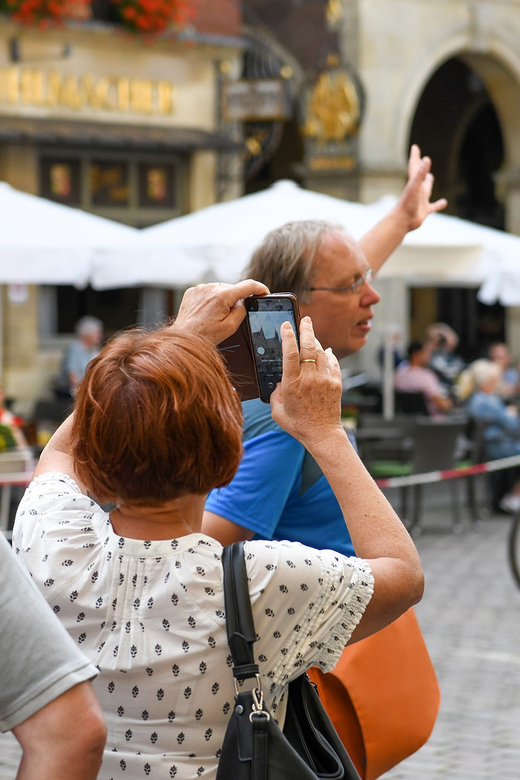
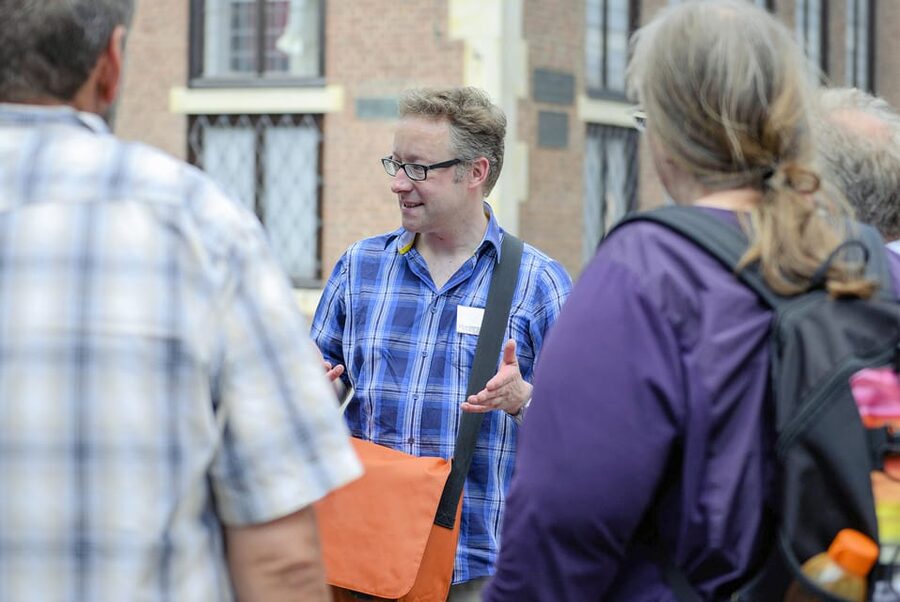
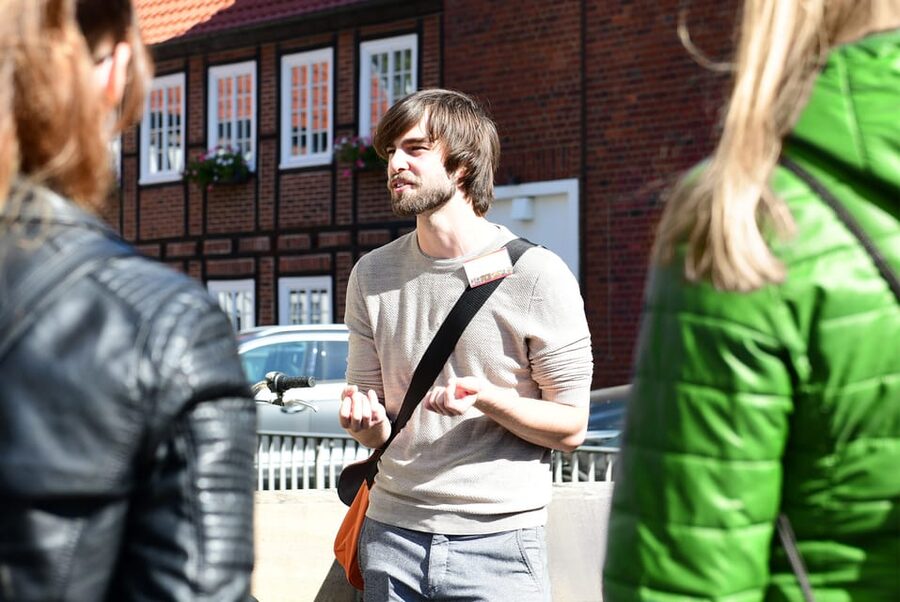
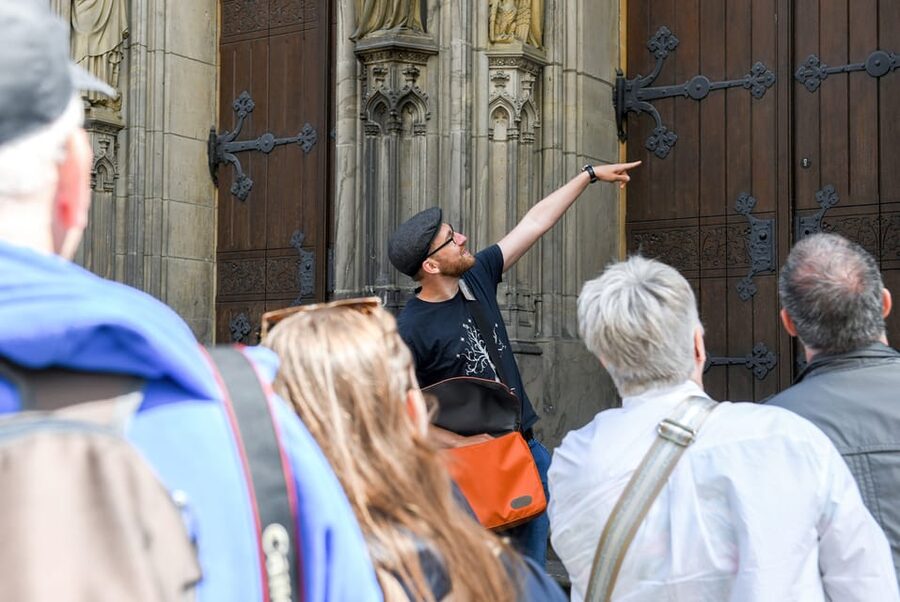
I also like the meeting setup because it is easy to find. You meet your guide opposite the historic town hall, under the sign Michaelisplatz, near the Rathausrelief. The guide carries an orange bag with the k3 sign, which saves you from the usual awkward “are you the tour?” guessing game.
The biggest practical plus: you do not just look at buildings, you learn what to look for. The guide explains why certain details exist, and that changes how you notice the next square or church tower.
More old-town walks in Munster:
- Dresden: Semperoper and Old Town Tour
★ 4.8 · 5,735 reviews - Nuremberg: Old Town Guided Walking Tour
★ 4.6 · 2,416 reviews - Munich: Old Town & Viktualienmarkt City Walk in German
★ 4.7 · 2,304 reviews
St. Paul’s Cathedral and the Mimigernaford origin story
The walk begins with the city’s early origin, anchored at St. Paul’s Cathedral (often called the Dom). You learn how the small Saxon settlement of Mimigernaford became Münster. That might sound like basic founding-history, but the value is in the cause and effect.
Instead of memorizing names, you start building a mental map of how Münster grew. When you understand that this place began as a small settlement and later gathered power around religious institutions, the rest of the tour makes more sense. Buildings and streets stop feeling random. You start reading the city like it has chapters.
Also, cathedral sites are great for orientation. Even if you already know the basics, you get a clear starting point for the stories that follow, especially the next sections about immunity and disputes.
Cathedral immunity, merchants, and why the old conflicts still shape the streets
Next comes one of the more interesting threads of the whole tour: cathedral immunity. You hear what it meant, and how earlier disputes between merchants and clergy still affect the cityscape today.
This is the kind of explanation that sounds abstract until you link it to what you are standing near. Cathedral immunity mattered because it created boundaries of authority. When different groups compete for legal and economic power, the city often “locks in” those conflicts through where people can work, gather, and operate.
On this tour, you do not just hear that there were disputes. You learn that those disputes can still be felt in the patterns around key places. That is what makes the walk more than a sightseeing list. You walk with a reason for why the city looks the way it does.
If you like city history that explains real-world layout, this part is a strong reason to book.
Überwasserkirche and the Anabaptist era written in stone
Then the tour shifts to the 16th century and the rule of the Anabaptists. This section is vivid without needing theatrics, because the city itself provides the clues.
You learn about the Überwasserkirche tower standing without a point to this day. You also hear why some of the saints there remain headless. These are not just odd architectural details. The guide connects them to the end of that movement and what followed.
One of the smartest things the tour does here is show you how conflict leaves physical marks. You stand in front of something visually noticeable, and the guide gives you the historical explanation that makes it “click.” After that, you will likely start seeing similar motifs elsewhere in Europe and understanding what you are looking at.
It is also a helpful reminder that Münster’s story is not only about peace and negotiation later on. The city has sharp chapters too, and this tour does not try to smooth them out.
A few more Munster walks and trips to compare
- Münster-Highlights-Tour with Rickshaw-Guide
★ 4.8 · 244 reviews
Cages on St. Lambertus: learning how a symbol becomes a landmark
The Anabaptist story continues at the market church of St. Lambertus. Here you hear about cages that still remain visible on the tower, tied to the end of the Anabaptist movement.
This is the kind of detail that travelers often miss because it looks like decoration unless you know what it is. On this tour, you learn how the cages symbolize the end of the movement, and you also hear that the tower keeper worked there. That human detail matters. It helps the symbol feel connected to daily life rather than just a distant story.
St. Lambertus also matters because it sits in the space where people gathered and moved through town. When you combine that setting with the guide’s explanation, the church tower becomes a timeline marker. You can stand there and understand what changed, not just that something happened.
If you enjoy tours where you leave with a few “I will never forget this” details, this is one of those tours.
Prinzipalmarkt and Lamberti Church, where the guide ties landmarks to events
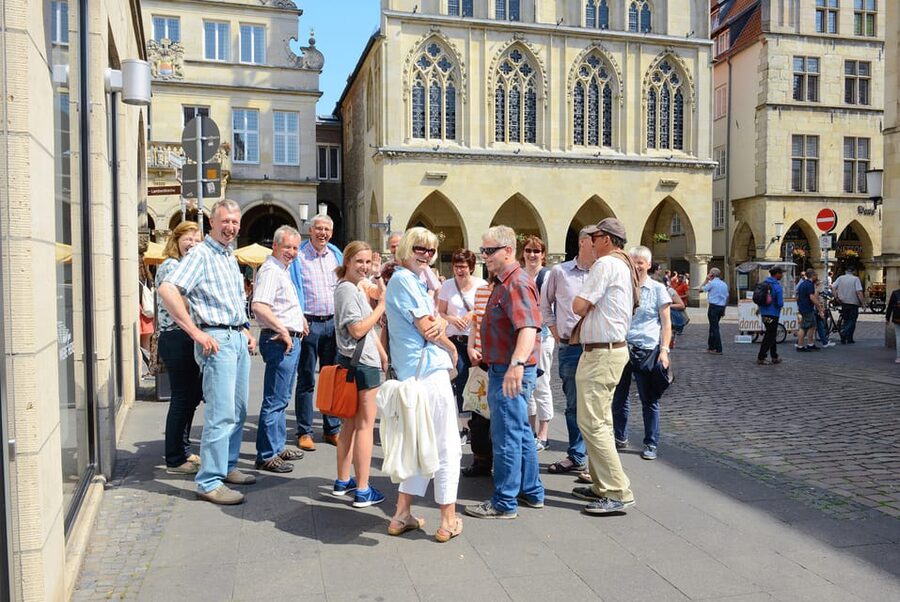
From here, the tour keeps pulling you from sight to meaning. You get to enjoy Münster’s highlights such as Prinzipalmarkt and Lamberti Church.
What I like about this approach is that Prinzipalmarkt is more than a pretty square. It becomes a place where you understand local history, including the merchant and religious tensions that the tour has been building up toward. Even if you have seen photos of the market square, you will get a different experience when you hear how power and trade intersected there.
At Lamberti, the guide’s explanations help you treat the church as a historical document. You start noticing details as evidence. That can make your sightseeing feel more active and less like “walk, look, move on.”
Historic City Hall and the Peace of Westphalia, explained in place
One of the tour’s anchors is the Historic City Hall. This is where the Westphalian peace negotiations were held, and where the peace was signed between the Dutch and the Spaniards in the Peace Hall. The guide explains how the Peace of Westphalia helped end the horrors of the Thirty Years’ War in 1648.
This topic can turn into a date lecture if you are not careful. The payoff here is location-based storytelling. When you stand near the historic halls where decisions were made, the peace agreement feels less like a textbook concept and more like a human turning point.
Practical benefit for you: the tour gives you a simple way to remember the significance of Münster’s town hall beyond its architecture. You can later connect it to other Central European history, and you can also recognize why people treat Münster as a symbol of peace.
Even if you are not a history nerd, you will likely appreciate that the tour shows how the city earns its reputation. It is not just branding. It happened here.
Schlaun’s Baroque buildings: Erbdrostenhof and Clemenskirche
To balance the heavier chapters, the tour also spotlights Baroque Münster through Johann Conrad Schlaun. You see two exemplary buildings connected to his style: the Erbdrostenhof and the Clemenskirche.
The point of including Schlaun is not to turn your walk into an architecture textbook. It’s to show how later periods reshaped the look of the city. By bringing you to these buildings, the guide helps you understand that Münster did not freeze at one moment in time. It adapted, rebuilt, and expressed its identity through later design choices.
And because the tour frames Schlaun as a master builder whose style is still characteristic of the city, you leave with a sharper eye for the Baroque elements you might spot on your own afterward.
If you like walking tours that include both symbolism and style, this is a good mix.
What the guide does well, and why it matters for value
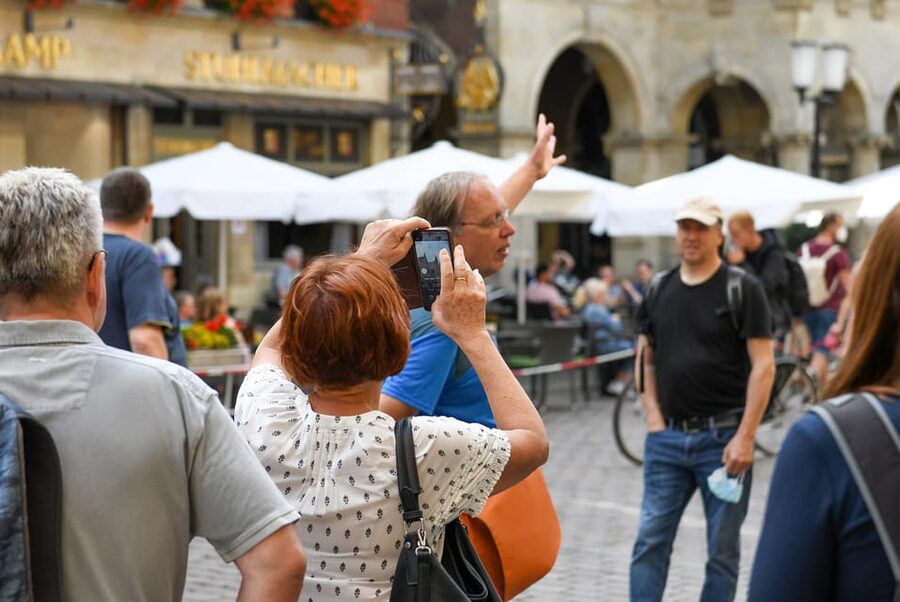
The tour is led by k3 stadtführungen, and the guide’s performance is a major part of what makes it work. The tone is entertaining, and the guide is described as friendly, punctual, and ready to answer questions. That combo matters on a short tour.
In 1.5 hours, you cannot afford a lesson that goes off-track. A good guide keeps the story moving and still makes time for real curiosity. In your case, that means you can ask something and get an answer that fits the setting you are standing in, not a generic response.
You should also know this is a German-language tour. That is the biggest limitation, but it is also part of the experience. You hear the place described with local phrasing and the proper historical names, which can make the story feel more precise.
Price and timing: $16 for a meaning-rich shortcut
At $16 per person for 1.5 hours, this is strong value if you want context without committing to a longer tour day. The price makes sense because the guide covers several major highlights, including Dom, Lamberti Church, Prinzipalmarkt, and Historic City Hall, plus the key historical storylines that connect them.
Here is how I think about value on tours like this:
- You pay for time savings, because you get explanations in one concentrated walk
- You pay for interpretation, because details like headless saints or a tower without a point are hard to decode on your own
- You pay for coherence, because the guide links merchant and clergy disputes to later events and to the peace legacy
Add in the family-friendly policy, children aged 0 to 5 can join for free. That makes the tour easier to justify for families who want a structured outing that still feels like a real walk through town.
What to expect on the ground, and how to get the most from it
This is a walking tour through the old town highlights, so wear comfortable shoes. You are moving between churches, towers, and central squares where you will want to stop and look up as the guide references details.
A simple tactic for better understanding: listen for the visual clues the guide points out. When the guide mentions things like the Überwasserkirche tower feature or the cages on the St. Lambertus tower, pause mentally to locate the object. That way the explanation sticks.
Because the tour is in German, you may find it helps to learn a few keywords before you go, like Dom for cathedral, and names tied to the story periods. You will not need a full language course, but even small prep can reduce frustration.
If you like asking questions, do it. The guide is reportedly good at answering, and in a short tour that can be the difference between a decent walk and a memorable one.
Who this tour suits best
I think this tour fits best if you are:
- doing a first visit to Münster and want the big story beats quickly
- interested in how historical conflicts show up in everyday places
- traveling with limited time but willing to take a guided walk seriously
It also works well if you want a family outing, since kids ages 0 to 5 go free. For older kids, the story of how symbols and buildings preserve history can be a fun way to make the city feel like a living book.
The main mismatch is language. If you do not speak German, you might feel like you are watching the scenery more than reading the story. You will still see impressive places, but the tour’s main value is the explanation.
Should you book this Münster Old Town Highlights guided tour?
If you want a focused, story-driven walk through Münster’s center, I would book it. The pricing is reasonable for what you get: multiple top landmarks plus clear explanations that connect early settlement origins, religious conflict, and the Peace of Westphalia to specific places you can stand in front of.
Book it especially if you like tours that explain why details exist. The headless saints, the missing spire point, and the cage symbolism are exactly the kind of “how did that happen?” moments that feel better with a guide.
Skip it if German is a deal breaker for you. Because the tour is German-only, you will get the most from it when you can follow the guide’s historical connections.
FAQ
How long is the Münster Old Town Highlights guided tour?
The tour lasts 1.5 hours.
How much does the tour cost?
It costs $16 per person.
Is the tour guided, and what language is it in?
Yes, it is a live guided tour, and it is held in German.
Where do I meet the guide?
Meet your guide opposite the historical town hall beneath the sign Michaelisplatz, close to the Rathausrelief. The guide wears an orange bag with the k3 sign.
Are children allowed, and do they pay?
Children aged 0 to 5 years can join for free.
Can I cancel for a refund?
Yes. You can cancel up to 24 hours in advance for a full refund.
Can I reserve now and pay later?
Yes. You can reserve your spot and pay later, keeping your travel plans flexible.
Newest Munster reviews on the site
- Private Christmas Tour in Münster including Glühwein★ 4.9 · 54 reviews
- Crime show city tour by rickshaw including guide★ 4.8 · 105 reviews
- Münster-Highlights-Tour with Rickshaw-Guide★ 4.8 · 244 reviews
- Münster: Nachtwächter-Führung (Erlebnistour)★ 4.4 · 213 reviews
Old Town Walking Tours, compared.

Old Town & Viktualienmarkt City Walk in German
Read our review →

Browse the lists this tour appears in