
Reviewed · OLD TOWN WALKING TOURS
Mainz: guided evening tour of the Rhine riverbank/old town in German and English
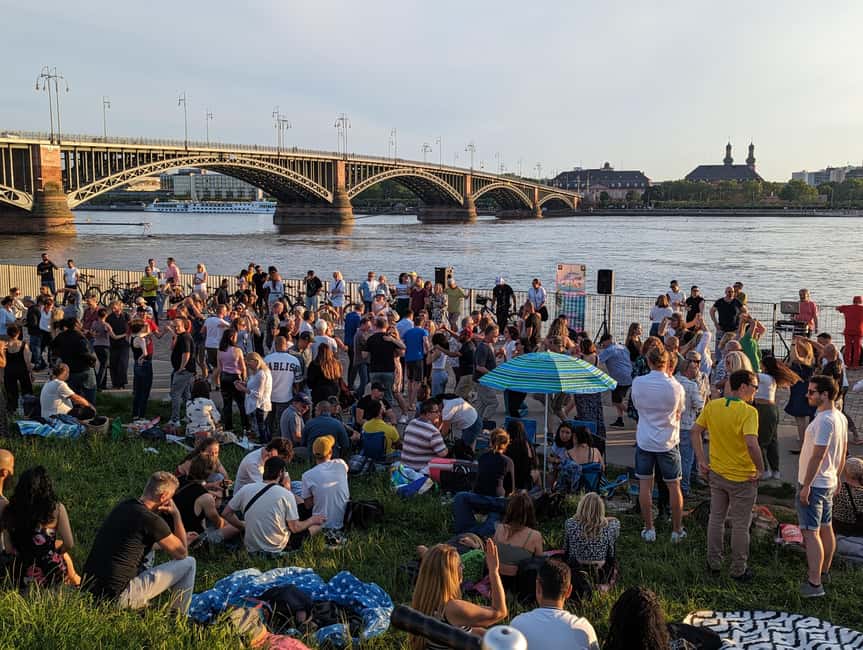
Mainz looks different when the Rhine goes dark. This 90-minute evening walk ties together Rhine river views and old-town landmarks with a guide who explains what you are seeing, in both German and English. I especially like the mix of history plus real anecdotes, from Roman-era Mainz references through stops connected to Gutenberg and Napoleon. One possible drawback: you will admire the churches from the outside, because you cannot go inside at night.
You meet right on the water, on the Hilton terrace facing the bridge, so the whole start feels easy even if you have worked all day. The pace stays leisurely, and it is built as a walking tour rather than a bus sprint. If you prefer a super-clear meeting point, check which Hilton terrace faces the Rhine, because there can be more than one terrace at the hotel.
In This Review
- Key Things To Know Before You Go
- Starting at the Hilton Terrace, Where the Rhine Sets the Tone
- Theodor Heuss Bridge and Riverfront Highlights: Your Evening View Map
- From the River to Cathedral Hill: Why St. Martin Dominates the Skyline
- Old St. Johannis and the Leichhof Area: Sensing the Medieval Layering
- Liebfrauenplatz and the Market Square Pause: Learning Street Life, Not Just Monuments
- Heiliggeist and Eisenturm Stops: Medieval Texture You Can Walk Through
- Kirschgarten Finish: Half-Timbered Streets and a Cherry-Orchard Mood
- Price and Timing: Is $20 Worth It for 90 Minutes?
- Who This Tour Is Best For, Based on the Experience Style
- Should You Book This Mainz Evening Tour?
- FAQ
- How long is the Mainz guided evening tour?
- Where do I meet the guide?
- What languages are offered?
- Is it possible to visit the churches inside during the tour?
- What are the main sights covered?
- Is the tour wheelchair accessible?
- Is there time to get refreshments after the tour?
- How much does the tour cost?
Key Things To Know Before You Go
- Bilingual guide (German and English) makes it feel smooth and inclusive.
- Rhine to old town route keeps the walk interesting from start to finish.
- Illuminated landmarks at night help everything click faster than daytime sightseeing.
- Churches are outside-only since they are closed after dark.
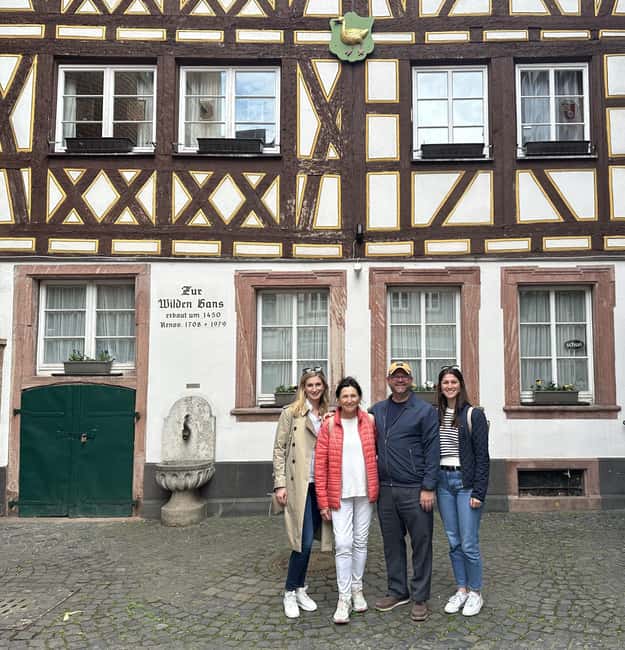
- Finish in Kirschgarten where half-timbered houses and a cherry-orchard vibe set the mood for a nightcap.
Starting at the Hilton Terrace, Where the Rhine Sets the Tone
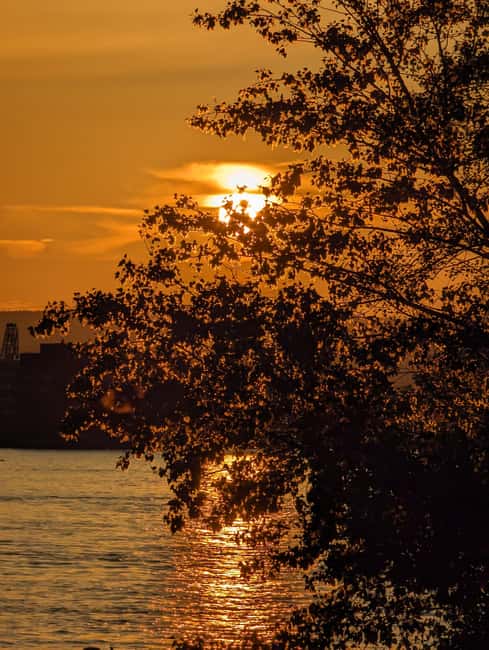
The tour begins on the Rhine bank in front of the Hilton Hotel, on the terrace facing the water, the bridge, and the boat-landing area. This matters because the first minutes are not just logistics. They are your orientation, so you can understand how Mainz is laid out along the river before the walk turns upward into the old town.
Give yourself a few extra minutes to confirm you are at the right Hilton terrace. One practical detail you should know: the hotel can have more than one terrace area, and the right one is the side that looks toward the Theodor Heuss Bridge and the riverfront promenade. Once you are in the right spot, the whole experience becomes easier, because you start with a visual reference point.
And yes, the timing is designed for an evening. You get that “after-work Mainz” feeling, where locals and the city’s evening lighting take over, without the crowds you might see at peak hours.
More old-town walks in Mainz:
- Dresden: Semperoper and Old Town Tour
★ 4.8 · 5,735 reviews - Nuremberg: Old Town Guided Walking Tour
★ 4.6 · 2,416 reviews - Munich: Old Town & Viktualienmarkt City Walk in German
★ 4.7 · 2,304 reviews
Theodor Heuss Bridge and Riverfront Highlights: Your Evening View Map
Your walk kicks off with a short guided stop by the Theodor Heuss Bridge. Even though it is only about 10 minutes, it is a smart place to start because the bridge frames the Rhine in a way that is hard to “get” until you see it from the riverbank.
Then the route moves along the waterfront to a cluster of riverfront landmarks where your guide adds quick context. You spend around five minutes at the Rheingoldhalle Mainz, plus additional brief stops at points like Jockel-Fuchs-Platz and the Eisenturm Mainz area. This is one of the strengths of the tour format: you do not linger too long, but you do not rush past without explanation either.
At night, these stops play two roles at once. First, they give you a clean path to follow visually. Second, they help your guide connect past and present as you move along the same corridor that has shaped Mainz for centuries. If you like learning while walking, this section is where the tour really earns its keep.
What I like here for practical travelers: the route stays close enough to the riverfront that you can constantly “read” the city. That reduces the mental load of navigating a new place in the dark.
From the River to Cathedral Hill: Why St. Martin Dominates the Skyline
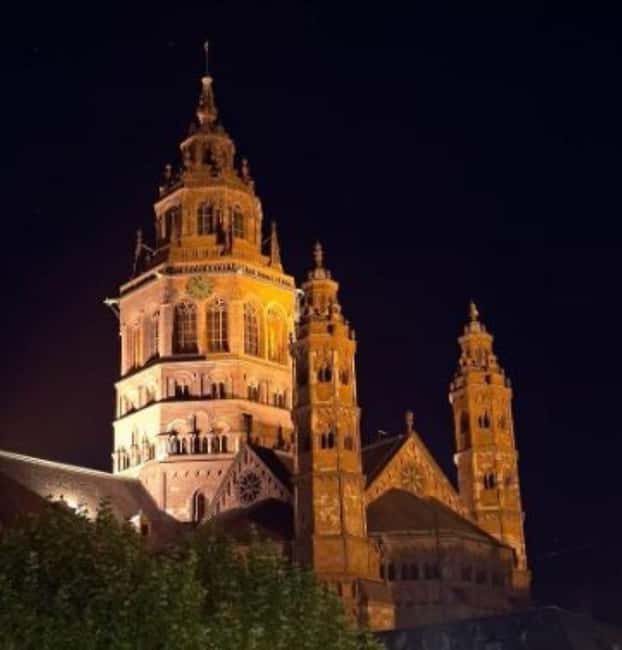
After the riverfront lead-in, the walk climbs into the heart of old Mainz. One of the main anchors is the High Cathedral of St. Martin and cathedral hill. This is where the evening visuals do a lot of work for you. Cathedral silhouettes look especially dramatic after dark, and the city’s lighting tends to make the shapes easier to understand even from street level.
From a storytelling point of view, this stop is useful because it is a shift. You move from the Rhine’s trade and movement into a religious and civic center. Your guide ties what you are seeing to the broader sweep of Mainz, including mentions that connect to major figures like Johannes Gutenberg and Napoleon Bonaparte as the route unfolds.
Because you are on foot, you also get a better sense of scale. You notice how the cathedral hill changes the feel of the streets, how sightlines open up, and how the old town sits above the river. That is hard to replicate if you only do quick photo stops.
One small heads-up: the churches are not visited inside at night. So plan on exterior views and interpretive narration rather than interior highlights.
Old St. Johannis and the Leichhof Area: Sensing the Medieval Layering
Next you pass Old St. Johannis Cathedral (Alter Dom St. Johannis) and head toward the area connected with Leichhof. This portion is around 10 minutes guided, which is short enough to keep momentum, but long enough for your guide to explain what makes this zone feel different from the cathedral hill above it.
At night, these older church spaces can feel more atmospheric, even when you cannot go inside. The light catches stone and street textures, and the surrounding streets help you picture how the area would have worked in earlier centuries. If you have been to historic cities where everything feels disconnected, this is the type of stop that helps you connect dots.
The tour keeps referring back to Mainz as a layered city, from Romans to modern times. That theme matters here. You are not just seeing “another pretty building.” You are watching the city’s evolution happen across neighborhoods and elevations as you walk.
Liebfrauenplatz and the Market Square Pause: Learning Street Life, Not Just Monuments
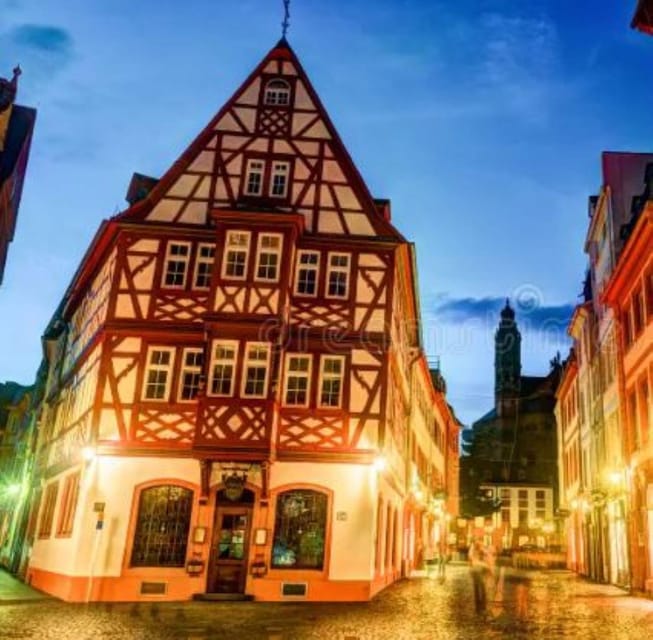
Around mid-tour, you reach Liebfrauenplatz, plus a stop at Wochenmarkt Mainz Domplatz (about 10 minutes for the market area). Even if you are there at a time when stalls are not operating, your guide still uses these spaces for what they represent: public gathering points where the city’s daily rhythm played out.
This is one of the most practical parts of the tour for first-timers. Monuments teach scale, but squares teach how people actually live in a place. You can learn the layout of Mainz in a way that helps you later when you are wandering on your own. You understand where people meet, where streets funnel, and how the squares connect back toward the cathedral zone.
And because the tour is about an evening experience, the lighting helps these squares feel like “real life” rather than a museum loop. If you like to end the day with a good sense of a city’s personality, this is the middle section that gives it to you.
Heiliggeist and Eisenturm Stops: Medieval Texture You Can Walk Through
Before you fully settle into the square areas, the walk includes stops such as Heiliggeist (about 15 minutes) and earlier the Eisenturm area. These are not just name-drops. They are part of the tour’s goal: give you a route through Mainz that feels like a chain, not a set of unrelated photos.
This is where half-understood details become real. When your guide ties a tower or churchyard-style area to the bigger story of Mainz, you start noticing the patterns in street design and building placement. You also learn how the old town evolved in relation to its river connection.
I like this segment because it makes the tour feel “guided” rather than scripted. You are not stuck waiting for a single big moment. You get several smaller narrative beats that keep the walk engaging over the full 90 minutes.
Kirschgarten Finish: Half-Timbered Streets and a Cherry-Orchard Mood
You end in Kirschgarten, where you get views of half-timbered houses from the late Middle Ages and the cherry-orchard atmosphere tied to the neighborhood. This final stretch (about 15 minutes) is a strong way to close an evening tour because it gives you something to remember visually and emotionally.
There is also a practical benefit to finishing here: it is a good launch point for continuing your night. Your guide will be happy to recommend a place to stop for refreshments after the walk. That is the kind of local nudge that saves you time later, because you do not have to guess where to go next.
From a “value for money” perspective, finishing in Kirschgarten helps justify the ticket price. You do not end with a random stop at a transit point. You end in a place that is itself an experience, so the tour keeps delivering even at the end.
Price and Timing: Is $20 Worth It for 90 Minutes?
At about $20 per person for a 90-minute guided evening walk, you are paying for three things that add up fast: real-time interpretation, a structured route, and access to nighttime viewing of Mainz without having to plan every turn yourself.
Here is how I think about the value. If you spent that amount on a self-guided walk, you might see the same general areas, but you would likely miss the connections your guide makes across time periods, including Roman references and the way Gutenberg and Napoleon get woven into the story. The guide also keeps the route manageable and paced at a leisurely speed, which is ideal if you want to work on a plan rather than work on navigation.
This tour also has good “timing efficiency.” Instead of using half a day in Mainz, you use the evening, when lighting does some of the heavy lifting and when you still get a clear overview. That makes it a great add-on if you are staying only a short time, or if you already did museums earlier and want a calmer walk to close the day.
Who it suits best:
- First-time visitors who want an old-town orientation fast
- Travelers who like learning as they walk, rather than sitting in one place
- Couples and small groups who want an easy evening plan
- Anyone who appreciates bilingual guidance, especially if your group mixes languages
Who might find it less ideal:
- People hoping for inside visits of churches (the tour is outside-only at night)
- People who hate walking (it is a walking tour for about 90 minutes at a leisurely pace)
Who This Tour Is Best For, Based on the Experience Style
The overall feel is “friendly and structured.” You get multiple short, guided stops, so you are not stuck with long explanations at each location. You also get a guide who brings the city’s history to life with anecdotes, not just dates and names.
One detail that sticks with me from what the guide-driven experience seems to deliver: recommendations. A guide can talk history, but it is the practical advice after the tour that helps you get more value out of your evening. In this case, your guide is specifically set up to point you toward a good place for refreshments at the end.
Language support is another plus. The tour is offered in German and English, so you can follow along even if you are not fully confident in the local language. And since some content is shown in its original language, it is helpful to stay alert for key terms and allow the guide to translate the most important parts.
Mobility-wise, it is wheelchair accessible, which is a meaningful factor for a walking tour. Still, you will want to use your own judgment about comfort level on uneven historic streets, even when a route is described as accessible.
Should You Book This Mainz Evening Tour?
If you want an easy, guided way to see Mainz after dark, I think this tour is a strong booking choice. It delivers exactly what you would hope for from an evening format: illuminated river views, a clear walk into the old town, and a story that connects Mainz from earlier eras to modern associations.
Book it if:
- You want a guided route with history and anecdotes rather than just photos
- You value a bilingual guide and a relaxed pace
- You like finishing your day in a charming area like Kirschgarten
Skip it if:
- Inside church visits are a must for you (you cannot go in at night)
- You want a long, stop-at-each-place style tour rather than a guided walking circuit
If you are choosing only one Mainz guided experience, this one is a good bet because it covers the right balance of Rhinefront orientation and old-town highlights, without eating up your whole day.
FAQ
How long is the Mainz guided evening tour?
The tour lasts about 90 minutes, paced leisurely.
Where do I meet the guide?
You meet on the terrace in front of the Hilton Hotel in Mainz, on the side facing the Rhine and the Theodor Heuss Bridge.
What languages are offered?
The live tour guide offers German and English.
Is it possible to visit the churches inside during the tour?
No. The churches are closed at night, so you cannot visit them inside.
What are the main sights covered?
Key stops include the Theodor Heuss Bridge, the High Cathedral of St. Martin, the cathedral hill, Kirschgarten with half-timbered houses, and Old St. Johannis Cathedral and the Leichhof area.
Is the tour wheelchair accessible?
Yes, the tour is wheelchair accessible.
Is there time to get refreshments after the tour?
Yes. The guide will be happy to recommend a place to stop for refreshments in Mainz at the end.
How much does the tour cost?
The price is listed as $20 per person.
Newest Mainz reviews on the site
- Guided tour in Mainz on the Rhine in german and english★ 4.9 · 163 reviews
- Small Group Rheingau Vineyards Tour with Castles and Abbeys★ 5.0 · 100 reviews
- Wiesbaden: Sparkling Winemaking Tour with 3-Glass Tasting★ 4.8 · 155 reviews
Old Town Walking Tours, compared.

Old Town & Viktualienmarkt City Walk in German
Read our review →

Browse the lists this tour appears in