
Reviewed · LEIPZIG TOURS
Leipzig: Mendelssohn House Entry Ticket
A composer home you can walk into.
The Mendelssohn House in Leipzig lets you step into Felix Mendelssohn Bartholdy’s world through his surviving private residence and smart, hands-on exhibits. You can see how music life worked in 19th-century Leipzig, not just as a wall of facts. The ticket price is also refreshingly fair for what you get.
I especially like the way the bel étage recreates his last home, the rooms restored and richly furnished to make the years 1845 to 1847 feel real. I also like the Effektorium, where you can conduct a digital orchestra and experiment with how acoustics shape sound. One thing to consider: there’s no guided tour included, so you’ll want to pace yourself and read at your own speed.
In This Review
- Key things to know before you go
- Mendelssohn House in Leipzig: easy to reach and easy to understand
- The bel étage and Mendelssohn’s final home, 1845 to 1847
- Music salon details: objects, sketches, and manuscripts that make the story click
- Effektorium on the ground floor: conduct a digital orchestra and test acoustics
- Fanny Hensel and Kurt Masur exhibits: the wider Leipzig music network
- Historical garden and interactive spaces: a calm pause with purpose
- Getting the most from a self-guided entry in one day
- Price and value: what $11 gets you in Leipzig
- Who should book this Mendelssohn House ticket
- Should you book the Mendelssohn House entry ticket?
- FAQ
- How much does a Mendelssohn House entry ticket cost?
- How long is the experience ticket valid?
- Is a guided tour included?
- Where do I check in on arrival?
- What exhibitions are included?
- Is the Effektorium included?
- What is the Effektorium experience?
- Is the museum wheelchair accessible?
- Are children and teens free?
- Is smoking allowed inside?
Key things to know before you go
- Only surviving private residence of Felix Mendelssohn Bartholdy in Leipzig
- Bel étage recreation of his last home (1845 to 1847)
- Effektorium digital orchestra with conductor baton controls and acoustic experiments
- Upstairs focus on Fanny Hensel and composer legacy connections
- Exhibition ties to Kurt Masur, including the International Kurt Masur Institute
- Historical garden plus interactive spaces that work well for families
Mendelssohn House in Leipzig: easy to reach and easy to understand
Leipzig is one of those cities where you can wander and keep finding cultural stops without getting trapped in a “tour bus only” vibe. The Mendelssohn House sits within a short walk of the city center, so you can pair it with other sights without stress. Your practical starting point is the Museumkasse right at the entrance, where you’ll pick up entry and get your bearings quickly.
What makes this stop work well is its clear focus. You’re not bouncing between dozens of unrelated rooms. Instead, you’re guided by the story of Mendelssohn’s life, his home, and the music world around him. That structure matters because self-guided museums can sometimes feel overwhelming. Here, the flow is easier to follow.
You’ll also appreciate the visitor setup: the site is fully wheelchair accessible, with elevator access. That means you can plan a smooth route through the rooms and exhibitions without doing mental math about stairs.
A few more Leipzig walks and trips to compare
- Leipzig: City History Canal Sightseeing Tour on a Motorboat
★ 4.7 · 7,671 reviews - Leipzig: 1.5-Hour Public Tour with Night Watchman Bremme
★ 4.6 · 3,116 reviews - Combo Tour in Leipzig: Guided City Tour & City Sightseeing
★ 4.7 · 2,317 reviews
The bel étage and Mendelssohn’s final home, 1845 to 1847
The core experience is the composer’s residence. This is the only surviving private residence of Felix Mendelssohn Bartholdy, and that alone gives the visit a weight that you do not get from replicas or general exhibits. The museum recreates what the last home felt like, because the historical bel étage stands in for the home he lived in from 1845 until his death in 1847.
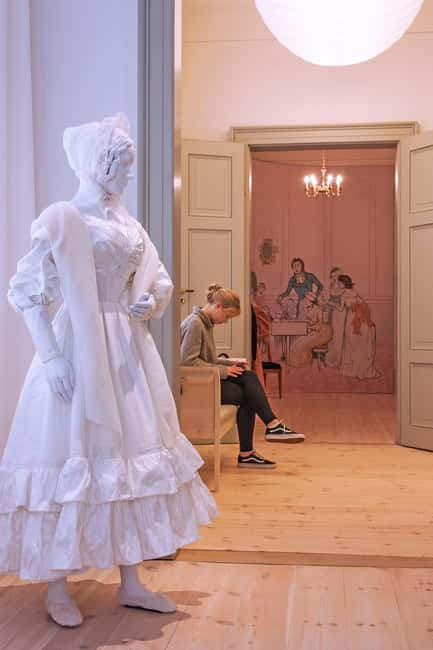
When you walk into these rooms, think of it as stepping into a finished chapter rather than an empty set. The spaces are described as lovingly restored and richly furnished, which helps you connect objects to everyday life. That matters because Mendelssohn’s story is not just dates and titles. You get a sense of where creativity happened, where visitors might have gathered, and how a household supported music making.
A great detail here is the way the rooms link to his work. The museum notes the creation of major pieces in this home, including the famous oratorio Elijah. Even if you only know Mendelssohn through a few famous melodies, seeing his home connected to major compositions gives you a more grounded picture of how a composer’s working life can be tied to place.
Music salon details: objects, sketches, and manuscripts that make the story click
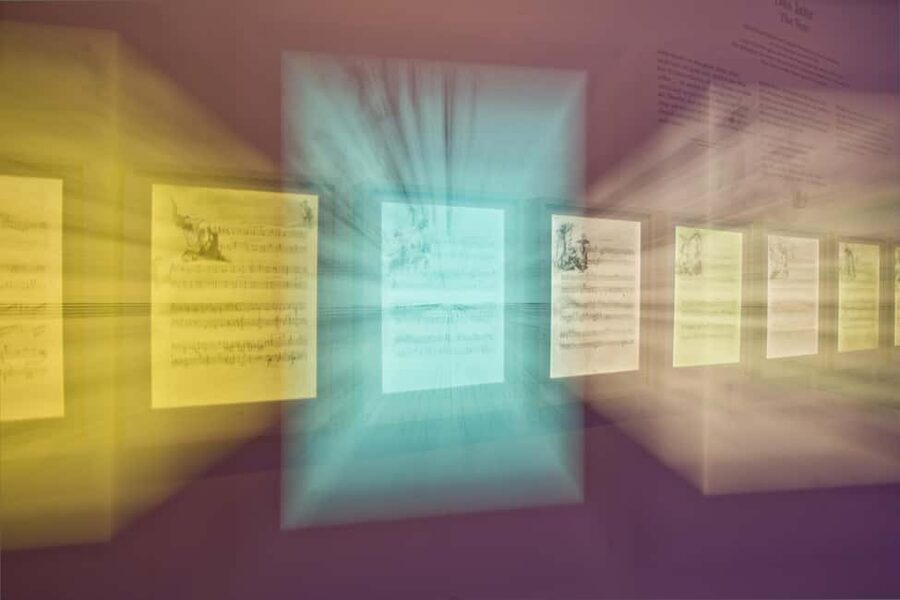
In the Mendelssohn House, the music salon is the “how it happened” zone. This is where the museum leans into personal items, sketches, and manuscripts, so you can connect the composer to tangible traces of thought.
I find this approach useful because it helps you stop treating music history like something floating in the abstract. When you can see sketches and manuscripts, you start to imagine decisions: revisions, drafts, and the slow work behind a finished score. The museum’s setup is designed to keep you moving from one kind of clue to another, rather than forcing you to read a single long panel.
If you like interactive or modern displays, you still get value here, because the upstairs and ground-floor parts build on what you see in the rooms. The home shows the human side, and then the exhibits help translate it into music, sound, and legacy.
One practical tip: don’t rush the salon. If you skim everything, you may miss the little “aha” moments where a document or object explains more than its label suggests. Give yourself enough time to look twice.
Effektorium on the ground floor: conduct a digital orchestra and test acoustics
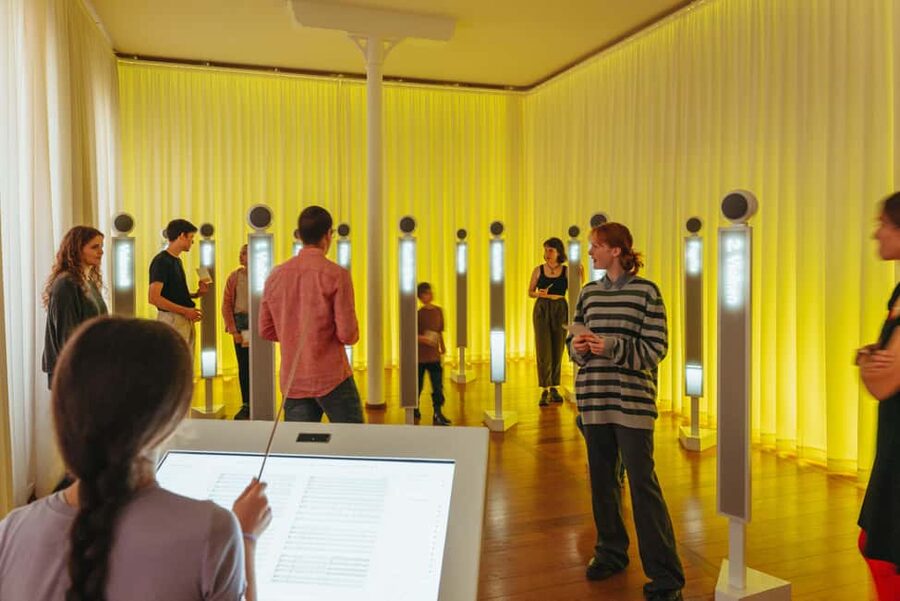
If you want one part that feels made for real engagement, it’s the Effektorium. Located on the ground floor, it’s built around a digital orchestra experience where you take the conductor’s baton and lead a performance.
Here’s how it works in plain terms. You choose your instruments, set the tempo, and explore acoustics. That last piece is key. Instead of only letting you hear music, you learn how changing conditions can reshape what you think you’re hearing. It turns “music as an art” into “music as sound physics,” without getting lost in formulas.
This is the area I’d prioritize if you’re traveling with children. The experience is described as an extraordinary interactive stop for all ages, and the baton-and-instrument format is exactly the kind of thing young visitors can control and repeat. It’s also a good match for music lovers who enjoy understanding why things sound the way they do.
For tech-savvy visitors, the Effektorium offers a hands-on bridge between classic music and modern presentation. Even if you’re not a sound engineer, you’ll likely enjoy how easy it is to experiment, then connect the results back to what you’ve seen upstairs and in the rooms.
Same city, a different way to spend the afternoon:
- Leipzig: 1.5-Hour Historical Walking Tour in German
★ 4.7 · 2,217 reviews - Leipzig: 2-Hour Guided Walking Tour in German
★ 4.8 · 1,612 reviews - Leipzig: 13-Stop Hop-on/Hop-off Bus Ticket
★ 4.6 · 1,468 reviews - Leipzig: Bus Tour
★ 4.5 · 1,457 reviews
Fanny Hensel and Kurt Masur exhibits: the wider Leipzig music network
Upstairs, the museum expands beyond Mendelssohn’s life and points to related legacies. One highlight is Fanny Hensel, Mendelssohn’s sister. The exhibition honors her life as a pianist and composer, and it explicitly frames her as a gifted creative figure whose influence is often overlooked.
This matters because it changes the story from “one famous man” into “a creative network.” Leipzig is full of musical names, but the museum focuses on how family ties and shared artistic worlds shaped careers. You get a more complete picture of who contributed to the music culture around Mendelssohn.
The other major connection is Kurt Masur. The museum presents his legacy as a long-time Gewandhaus conductor and co-founder of the museum. That connection is more than a credit line. It links the building to ongoing work through the International Kurt Masur Institute, which is housed in the same building since 2016.
That combination, Fanny Hensel plus Kurt Masur, gives you two useful lenses. One looks backward into the 19th century through Mendelssohn and his sister. The other brings the story forward through a later conductor who helped shape the museum’s survival and mission.
Historical garden and interactive spaces: a calm pause with purpose
A museum doesn’t need to be nonstop to be memorable, and the Mendelssohn House includes time to breathe. You can visit a historical garden on site, plus special exhibition space and interactive areas.
The garden helps because it breaks up the “inside, read, repeat” pattern that can happen in house museums. After spending time with rooms full of documents and furniture, a green outdoor pause can reset your attention. It also gives you a different way to imagine daily life, even if you can’t recreate the exact 1840s atmosphere.
If you’re visiting with family, the interactive spaces are the glue. The home tells the story, the Effektorium lets you do something with it, and the garden offers a slower moment. That balance is why this ticket can work for mixed ages and mixed interest levels.
Getting the most from a self-guided entry in one day
This entry ticket experience is designed for self-paced exploration. A guided tour is not included, so your best strategy is to build a simple route in your head and then adjust based on your interests.
A good flow, if you want structure, is this:
- Start with the Mendelssohn home rooms and salon spaces, so you understand the people and objects first.
- Then shift to the Effektorium to turn what you learned into sound experiments.
- Finish upstairs with the Fanny Hensel and Kurt Masur exhibits, so you leave with the broader Leipzig and legacy picture.
- Add the garden and interactive areas when you want a slower pace.
Because you’re not on a strict guide schedule, you can also spend extra time where you care most. If you’re more music-focused, linger in the salon and Effektorium. If you’re more history-focused, slow down in the restored rooms and object displays. If you want balanced content, the downstairs-to-upstairs arc makes it natural.
Also, plan your time around the museum’s sound experiences. When you’re conducting a digital orchestra and exploring acoustics, you’ll want a moment where you can focus. That’s easier if you’re not rushing between sections.
Price and value: what $11 gets you in Leipzig
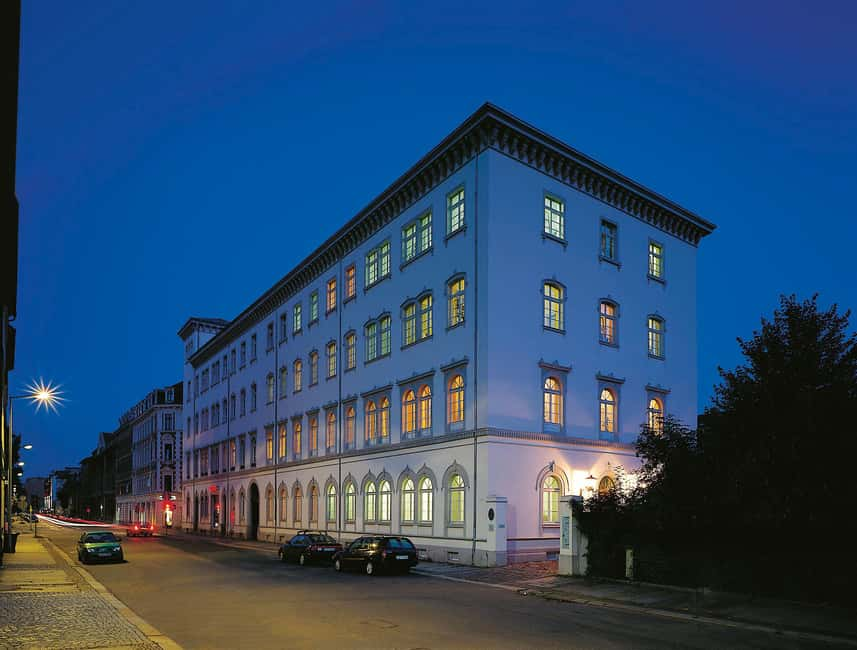
At $11 per person, this is strong value if you care about more than one type of experience. You’re not paying for a single room or a quick stop. The ticket includes access to the Mendelssohn House, the Effektorium, exhibitions on Fanny Hensel and Kurt Masur, and access to the historical garden and special exhibition.
That matters because it spreads your time across several “ways of learning.” House museum rooms help you connect to place. The salon and documents help you connect to the person. The Effektorium helps you connect to sound and acoustics. Then the upstairs exhibits broaden the story through family legacy and later cultural influence.
There’s also free admission for children and teens under 18, which improves the value for families. If your group includes younger visitors, this can become one of the most budget-friendly cultural stops in Leipzig that still feels substantial.
The only real drawback tied to value is that you won’t get a guided interpretation included. If you love being walked through stories by a specialist, you may find yourself reading more and enjoying the experience at your own pace instead.
Who should book this Mendelssohn House ticket
This is a smart pick if any of these sounds like you:
- You love classical music and want a tangible connection to Mendelssohn, not just a concert program.
- You enjoy museums that mix restored interiors with modern hands-on elements.
- You’re traveling with children who can handle interactive exhibits and repeat activities.
- You’re interested in Leipzig’s musical legacy and the people connected to Mendelssohn, especially Fanny Hensel and Kurt Masur.
- You want an accessible museum visit with elevator access and full wheelchair accessibility.
It’s also a good option for students and musicians because the home-room context plus manuscripts-style displays can make the historical material feel less abstract.
If you only want a quick photo stop, you may find it slower than you’d like. But if you want meaningful context, this ticket gives you a well-rounded day.
Should you book the Mendelssohn House entry ticket?
Yes, book it if you want a focused Leipzig experience that mixes a real composer home with hands-on learning. The standout strengths are the restored bel étage and salon atmosphere, plus the Effektorium’s digital orchestra and acoustic experiments. Together, they make the visit feel both personal and playful.
Consider skipping or adjusting expectations if you specifically need a guided explanation. Since guided tours are not included, you’ll get more out of the experience if you enjoy reading exhibits and setting your own pace.
If you’re building a classic-culture day in Leipzig and want something authentic that still feels interactive, the Mendelssohn House ticket is a strong choice.
FAQ
How much does a Mendelssohn House entry ticket cost?
The ticket price is listed as $11 per person.
How long is the experience ticket valid?
The ticket is valid for 1 day. You should check available starting times.
Is a guided tour included?
No. A guided tour is not included.
Where do I check in on arrival?
Your meeting point is the Museumskasse directly at the entrance.
What exhibitions are included?
Included are exhibitions about Mendelssohn, Fanny Hensel, and Kurt Masur, plus access to special exhibition space.
Is the Effektorium included?
Yes. Access to the Effektorium is included.
What is the Effektorium experience?
In the Effektorium, you can take the conductor’s baton, lead a digital orchestra, choose instruments, set the tempo, and explore acoustics.
Is the museum wheelchair accessible?
Yes. It is fully wheelchair accessible, and there is elevator access.
Are children and teens free?
Yes. There is free admission for children and teens under 18.
Is smoking allowed inside?
No. Smoking is not allowed.
Newest Leipzig reviews on the site
- first electrical carriage in town – guided City Tours – Leipzig★ 5.0 · 17 reviews
- Private guided tour of the historic south cemetery in Leipzig★ 5.0 · 10 reviews
- The classic – experience Leipzig’s city centre★ 5.0 · 13 reviews
- Wittenberg Private Walking Tour With A Professional Guide★ 5.0 · 12 reviews
- Segway city tour in Leipzig★ 5.0 · 33 reviews
- Motorboat tour ”Little Venice Tour” Gustav★ 4.5 · 19 reviews
- Leipzig’s Communist Past: A Self-Guided Audio Tour★ 5.0 · 16 reviews
- City game scavenger hunt Leipzig city center – independent city tour★ 5.0 · 6 reviews
Leipzig Tours, compared.

City History Canal Sightseeing Tour on a Motorboat
Read our review →
1.5-Hour Public Tour with Night Watchman Bremme
Read our review →
Combo Tour in Leipzig: Guided City Tour & City Sightseeing
Read our review →




Browse the lists this tour appears in