
Reviewed · CITY TOURS
Leipzig City Tour 2.0: entertaining on the go mobile projections
Leipzig history shows up as moving light. Leipzig City Tour 2.0 uses mobile projection storytelling so the city center feels like it is shifting between past and present as you walk.
I love the mobile projections that bring each stop’s meaning into focus, and I love the modern headsets that keep you free to look around and take photos without losing the narration. The whole setup is paced for a tight 1 hour 30 minutes, so you get a lot of clarity without spending your day in lines.
One thing to consider: this is a guided route with you on the move between highlights. If you like long, slow pauses for independent wandering, the timing may feel a bit brisk.
In This Review
- Key highlights worth planning for
- A time-travel style walk through Leipzig’s center
- Meeting at Richard-Wagner-Straße and finding your pace
- From the start city view to Leipzig’s long-distance rail roots
- Passages, courtyards, and why the city feels connected
- 1989 on the street, with context you can actually use
- The column mystery and spotting Leipzig’s early vertical ambition
- Leipzig’s largest inner city square and the stories behind the facades
- Corridors between Augustusplatz and Markplatz, and the passenger system link
- Stock market history and the marketplace layers in front of the Old Town Hall
- Guide energy and the modern equipment touch
- Price and value for an 90-minute projection-guided city walk
- Who should book this, and who may prefer something else
- Should you book Leipzig City Tour 2.0?
- FAQ
- How long is the Leipzig City Tour 2.0?
- What ticket type does the tour use?
- Where do I meet the guide, and where does the tour end?
- What is included during the tour?
- Is there a maximum group size?
- Do we visit a church during the tour?
- Is the tour near public transportation?
- Can I cancel and get a full refund?
Key highlights worth planning for
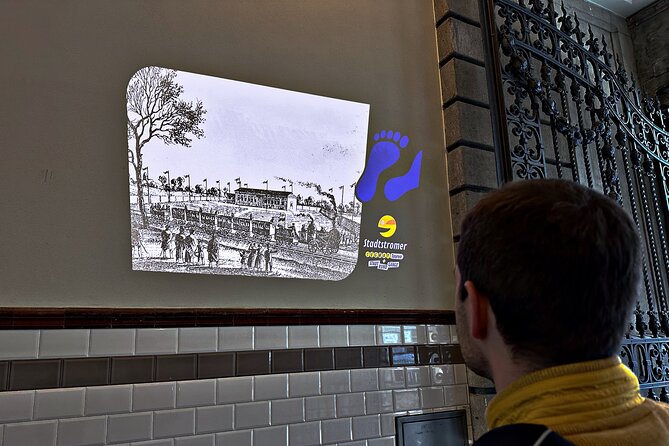
- Mobile projections on the go that turn landmarks into time-shift scenes
- Headsets so you can look freely and still catch the story
- A 1989 peaceful revolution stop with clear context, and no church visit
- Leipzig’s “passages and courtyards” focus that most first-time visitors miss
- Big center-square moments including the largest inner city square in Germany
- Historic layers in the marketplace from old foundations to the stock market era
A time-travel style walk through Leipzig’s center
What makes City Tour 2.0 different is that it does not treat Leipzig like a museum you only stand in front of. Instead, it uses mobile projections to show you why a place matters, then points your attention to what you can still see today. You keep moving, but the story sticks because it is tied to specific streets and spaces.
The format also makes the city easier to read. Leipzig has a lot of architectural “clues” in plain sight: passages, courtyards, columns, squares, and building details that look ordinary until someone explains the purpose. This tour leans into that. You end up noticing more than you would on your own, especially around the city’s center links.
And if you are trying to pack a first-time visit into a short window, the timing works. About 1 hour 30 minutes is long enough to connect the dots, but short enough that you still have energy for dinner afterward.
A few more Leipzig walks and trips to compare
- Leipzig: City History Canal Sightseeing Tour on a Motorboat
★ 4.7 · 7,671 reviews - Leipzig: 1.5-Hour Public Tour with Night Watchman Bremme
★ 4.6 · 3,116 reviews - Combo Tour in Leipzig: Guided City Tour & City Sightseeing
★ 4.7 · 2,317 reviews
Meeting at Richard-Wagner-Straße and finding your pace
You start at Richard-Wagner-Straße 13, 04109 Leipzig, and the tour finishes back at the same meeting point. That round-trip setup is useful when you are balancing other plans, like a museum stop or a dinner reservation later.
The group size is capped at 30 people, which usually helps keep the tour from turning into a noisy stampede. You are also close to public transportation, so it is easier to fit into a day without relying on a car. Service animals are allowed, and the tour is set up so most people can participate.
One detail I like a lot is the role of the headsets. They are modern and designed so you can look around and take photos while still hearing the guide. That matters in Leipzig, where many of the most interesting things are not always directly in your line of sight.
From the start city view to Leipzig’s long-distance rail roots

The tour begins with a broad orientation. You start by seeing the city of Leipzig in a unique way, then you move toward one of the big “this mattered long before you arrived” stories: the origin of the first German long-distance railway.
This is the kind of stop that can feel abstract unless someone frames it for you. The point here is not just dates. It is how a rail breakthrough helped shape where people moved, where commerce grew, and why the city center developed the way it did. Once you understand that foundation, nearby buildings and streets feel less random.
Next you focus on passages and courtyards, which are part of Leipzig’s identity. These semi-hidden spaces are not just charming. They were practical. You get a sense of how they shape the cityscape, how they affect foot traffic, and why they are still an active part of the urban experience today.
If you are the type who likes small-scale exploration, this section is a good match. The tour is not just pointing at one monument, it is training you to see the in-between places.
Passages, courtyards, and why the city feels connected
Leipzig’s passages and courtyards can be easy to walk past if you are sightseeing by postcard. City Tour 2.0 treats them as key features instead of background scenery.
What you gain from this approach is a better “map in your head.” Even without a formal map in front of you, you start connecting how movement through Leipzig works. Corridors, courtyards, and passageways act like shortcuts, social spaces, and commercial spaces all at once.
A small practical tip: wear comfortable shoes for this part of the route. The stops are close, but the tour keeps you moving, and courtyards and passages often involve short turns and uneven spots.
Same city, a different way to spend the afternoon:
- Leipzig: 1.5-Hour Historical Walking Tour in German
★ 4.7 · 2,217 reviews - Leipzig: 2-Hour Guided Walking Tour in German
★ 4.8 · 1,612 reviews - Leipzig: 13-Stop Hop-on/Hop-off Bus Ticket
★ 4.6 · 1,468 reviews - Leipzig: Bus Tour
★ 4.5 · 1,457 reviews
1989 on the street, with context you can actually use
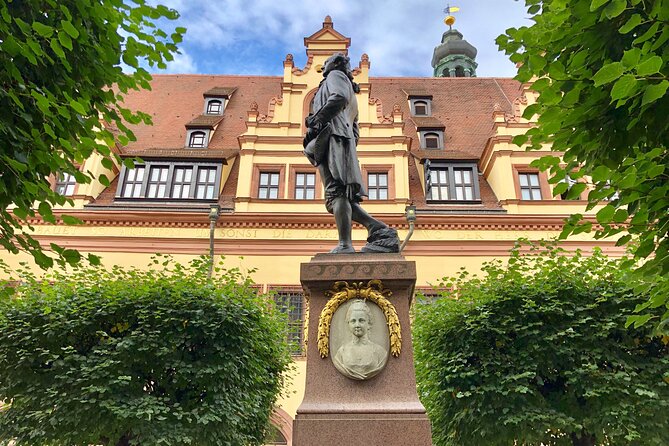
One of the most meaningful segments is the stop focused on the origin of the peaceful revolution 1989. This is history you can feel in Leipzig, not history trapped behind glass.
The tour format helps because it does not treat the story like a lecture. It gives you the essentials at the right moment, then lets the surrounding urban layout do the rest. When you understand the why and what, the city feels less like a set of buildings and more like a place where people acted.
Also, pay attention to the tour’s boundaries. The tour explicitly states that it does not go to church. So if you were hoping for a religious landmark, it is not that kind of route. What you do get is street-level civic history, tied to squares and city points rather than a single interior visit.
The column mystery and spotting Leipzig’s early vertical ambition
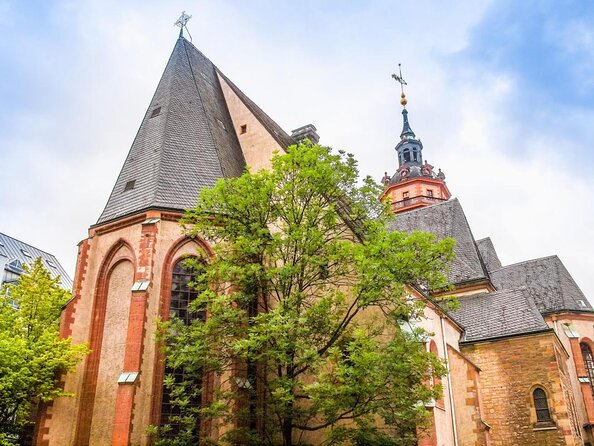
After the 1989 stop, you move into explanations of urban “why is that there” moments, starting with why the column is there. These are the sorts of details that are easy to miss on your own. A guide-led projection story helps you see the column as a clue, not just a piece of stonework in a plaza.
Then you reach another eye-catching highlight: the city’s first skyscraper, which still offers something special today. You are not just hearing that it is the first. You get a sense of why Leipzig would try vertical prominence early, and how that ties into broader city growth.
If you are a fan of architecture, this section is strong because it mixes scale with meaning. A tower reads differently when you understand the era that produced it. And projections are especially good at showing how a place may have looked when it was new.
Leipzig’s largest inner city square and the stories behind the facades
Next comes a major space: the largest inner city square in Germany. Big squares can be tricky for guides, because they risk becoming “stand here and look at it” time. City Tour 2.0 uses this stop to explain what the square means in the city’s everyday flow and how it fits into the bigger story of Leipzig’s center.
From there, the tour keeps connecting meaning to details. There is a stop about what the house has to do with robes, and another that explains an astonishing sculpture that was erected during the GDR era and still stands today.
This is where the mobile projections do their best work. When a guide tells you about the symbolism or the practical reason behind an object, the explanation sticks more if the story feels like it belongs to the exact spot you are standing in. The design of the route keeps you from losing the thread.
Corridors between Augustusplatz and Markplatz, and the passenger system link
Leipzig has a lot of “in-between” geography, and this tour takes you through it. You will learn about more than just a connection between Augustusplatz and Markplatz, and you will also connect today’s routes to the Leipzig Passenger System and its connection to Hansa-Hof.
That might sound overly specific, but it is actually the point. Leipzig’s center is shaped by how people move, not only by what they pose in front of. When you understand that the passenger system ties key parts together, the city starts to feel navigable. You will be less likely to wander in circles later.
You also get a stop where you can enjoy a snack even now. I like when tours include at least one moment of real-world life, because it turns sightseeing into something closer to how the city actually feels day to day.
Stock market history and the marketplace layers in front of the Old Town Hall
Commerce is a big theme in Leipzig, and the tour brings it to life with stops that connect economics to place. One highlight explains why, in a city of commerce, the stock market was irreplaceable.
Then you head right in front of the Old Town Hall, where the marketplace also has hidden layers. This is not just “look at the building.” It is more about understanding how the public space operated. You learn how important civic buildings and commercial functions shaped everyday life.
You will also get a stop about structures built on old foundations, where you can see that history in the layout. And later, the route connects the market square with the tin can, which the tour uses as another clear landmark in the walking story.
This is the kind of ending that helps you when you go off on your own. Once you see the marketplace as a layered space, it stops feeling like a single square and starts feeling like a network of eras.
Guide energy and the modern equipment touch
A big part of why this experience works is the way the guide handles the flow. The tour is associated with Mario Jung, and he represents a hands-on approach that matches the tech-heavy format. Reviews also highlighted the welcoming start and that the timeframe feels spot-on, and that tracks with the structure: the narration and projection points are timed to keep you engaged, not stuck waiting.
The equipment matters too. Modern headsets are a practical upgrade. When audio is clear and narration is easy to follow while you look around, you are more likely to enjoy the experience instead of fighting with headphones or missing key explanations.
If you like city tours that feel friendly and efficiently run, this one is built for that. Warm welcome and modern setup are not just nice extras here, they directly support the story delivery.
Price and value for an 90-minute projection-guided city walk
At $18.97 per person, this tour sits in a reasonable range for what you get: a guided walk of about 1 hour 30 minutes, plus mobile projection storytelling and headset audio. You are not paying mainly for walking through streets. You are paying for a structured narrative tied to specific landmarks, and the tech is part of how the story is delivered.
For value, I look at three things: how well it uses your time, how clearly the experience is shaped, and whether it adds understanding beyond self-guided wandering. City Tour 2.0 hits the time factor well. It is a manageable length that covers a lot of key center themes without exhausting you.
It also clearly targets explanation. The route includes civic history like 1989, city-shaping infrastructure like long-distance rail, and practical urban features like passages and courtyards. Those are exactly the topics where a guided story can beat a casual stroll.
And because the group is limited to 30 people, the pacing stays human. That helps justify the price versus a larger, more chaotic group tour where you spend more effort keeping up than absorbing the content.
Who should book this, and who may prefer something else
This tour is a strong fit if you want a first pass at Leipzig’s center that teaches you how to read the city. You will like it if you enjoy history that connects to street layout, and if you appreciate explanations that focus on why details exist, not just what they are.
It is also a good option if you like modern presentation without sacrificing walking. The headsets and mobile projections help you keep moving, while still feeling like you are getting a guided experience.
If your travel style is very slow and you prefer to linger in museums, churches, and indoor spaces, this might not be your match. Remember, it explicitly does not go to church, and it is designed to cover multiple stops in a set route.
Should you book Leipzig City Tour 2.0?
Book it if you want Leipzig center understanding fast, and you like tours that use mobile projections and headsets to connect history to real locations. This format is built for clarity, not just sightseeing.
Skip it if you are only interested in one or two major monuments and you want total freedom to wander without a set route. The tour is structured, and it moves.
If you are trying to get more out of a short visit, I think this one is a smart choice. It turns everyday-looking streets into story points, and it does it in a time window that leaves you with energy to explore Leipzig again on your own afterward.
FAQ
How long is the Leipzig City Tour 2.0?
The tour lasts about 1 hour 30 minutes.
What ticket type does the tour use?
It uses a mobile ticket.
Where do I meet the guide, and where does the tour end?
The tour starts at Richard-Wagner-Straße 13, 04109 Leipzig, Germany and ends back at the same meeting point.
What is included during the tour?
You can expect guided stops with mobile projections and narration through modern headsets.
Is there a maximum group size?
Yes. The tour has a maximum of 30 travelers.
Do we visit a church during the tour?
No. The tour does not go to church.
Is the tour near public transportation?
Yes, it is near public transportation.
Can I cancel and get a full refund?
Yes. You can cancel up to 24 hours in advance for a full refund.
Newest Leipzig reviews on the site
- first electrical carriage in town – guided City Tours – Leipzig★ 5.0 · 17 reviews
- Private guided tour of the historic south cemetery in Leipzig★ 5.0 · 10 reviews
- The classic – experience Leipzig’s city centre★ 5.0 · 13 reviews
- Wittenberg Private Walking Tour With A Professional Guide★ 5.0 · 12 reviews
- Segway city tour in Leipzig★ 5.0 · 33 reviews
- Motorboat tour ”Little Venice Tour” Gustav★ 4.5 · 19 reviews
- Leipzig’s Courtyards and Passages – Guided Tour for a Private Group★ 5.0 · 20 reviews
- Leipzig’s Communist Past: A Self-Guided Audio Tour★ 5.0 · 16 reviews
City Tours, compared.

1-Hour City Tour by Boat with Guaranteed Seating
Read our review →
City History Canal Sightseeing Tour on a Motorboat
Read our review →


Browse the lists this tour appears in