
Reviewed · GERMANY
Kaßberg – die schönste Seite von Chemnitz
Kaßberg is where Chemnitz turns architectural nerdy fast. In just 90 minutes, you get a guided look at one of Europe’s biggest contiguous Art Nouveau and Wilhelminian residential areas, plus stories that connect buildings to the city’s industrial and political past.
What I really like here is the focus on street-level details and the way the guide’s anecdotes bring the neighborhood to life. The second big plus is the variety built into the route, from grand facades to the Kaßberg Prison Memorial.
One consideration: the tour is in German only, and if you’re hoping for very deep background on specific eras, you might want to follow up on your own.
Quick picks before you go
- One of Europe’s largest contiguous Art Nouveau and Wilhelminian districts
- Decorative facades with real attention to detail along whole streets
- A clear street plan (orthogonal grid adapted to the slope) that makes the district easy to read
- Green squares like Kaiserplatz, Stephanplatz, Wielandplatz, and Andréplatz
- History beyond pretty buildings, including the Kaßberg Prison Memorial
- Great value for 90 minutes, at $23 per person with a live German guide
In This Review
- Kaßberg’s Art Nouveau streets: what you’re really paying for
- How the Kaßberg grew after Johann Friedrich Stahlknecht dared to build
- The street grid on a slope: why the layout is easier than it looks
- Green squares and residential life: what to notice while you walk
- The industrial edge: factories and institutions that shaped the map
- Kaßberg Prison Memorial: reading the darker layers respectfully
- What 90 minutes feels like, and how to get more from it
- Price, value, and who this Kaßberg tour suits best
- A small caution about tone and topic focus
- Should you book the Kaßberg tour? My call
- FAQ
- How long is the Kaßberg guided tour?
- What is the price per person?
- Is there a live guide?
- What language is the tour conducted in?
- Where in Germany does this experience take place?
- What will I see during the tour?
- Is the tour suitable for families?
- Can I cancel for a full refund?
- Can I reserve now and pay later?
- Are there different starting times?
Kaßberg’s Art Nouveau streets: what you’re really paying for
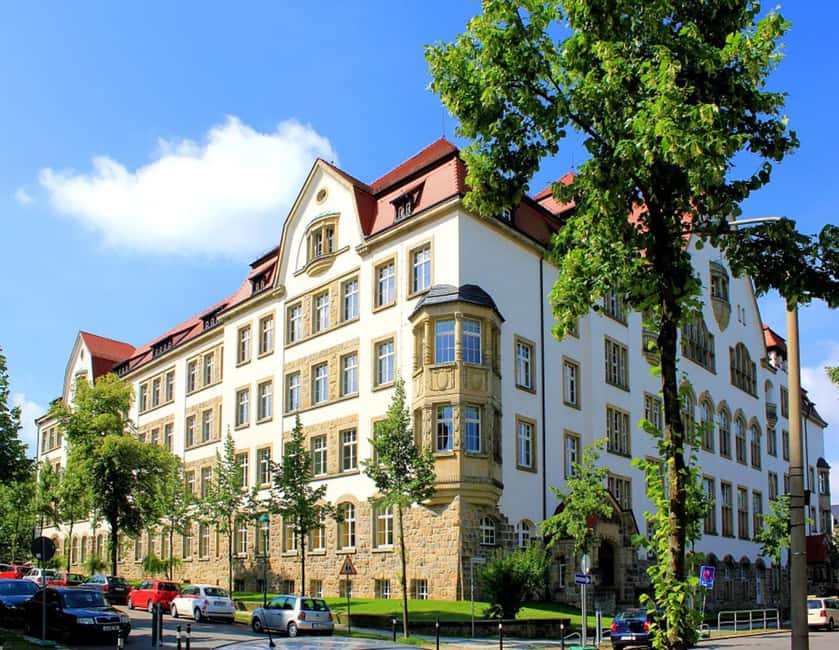
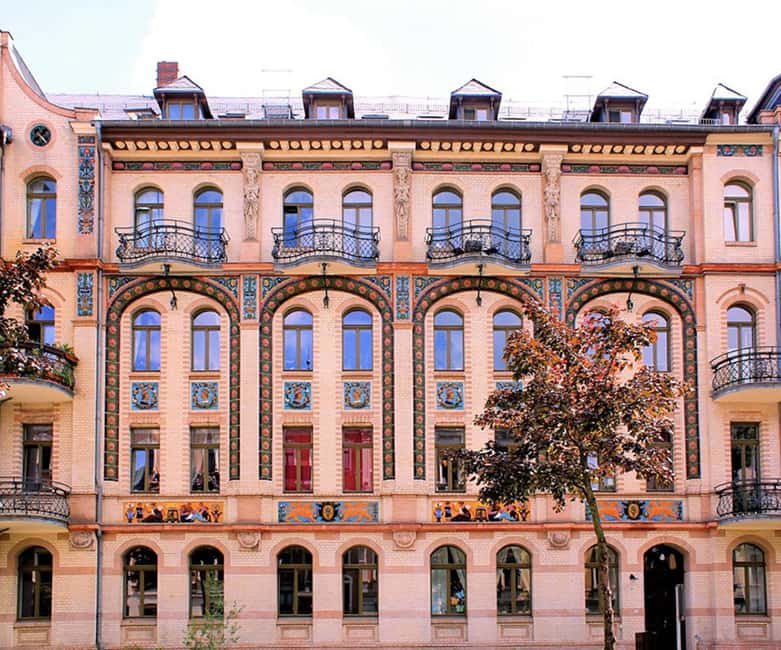
The Kaßberg is famous for one thing in particular: the way entire streets look designed, not just individual buildings. You’re not walking through a few standout facades. You’re walking through a whole neighborhood where the architectural language stays consistent, and where decoration is treated like part of everyday city life.
The neighborhood is also protected as an area monument since February 1991. That matters because it explains why you can still take in so many original features as a continuous experience. It’s not a museum-like selection of buildings. It’s around 480 buildings, mostly multi-storey residential blocks, along with municipal administration and schools. And the styles shift across time: historicism, Art Nouveau, and New Objectivity. That mix is exactly what makes a guided walk worth it, because you need someone to point out what you’re looking at and why it matters.
For the $23 price, the value is that the tour turns architecture into something you can interpret quickly. You’re paying for a local guide’s sense of what to notice in the limited time you have.
How the Kaßberg grew after Johann Friedrich Stahlknecht dared to build
The Kaßberg story starts with a bold early decision in 1855. Chemnitz teacher Johann Friedrich Stahlknecht built the first house on the Kaßberg, on property that later became associated with what was named Hohe Straße. At the time, the area was still relatively undeveloped, so the move was considered daring enough that the builder left a fourfold inscription: I dared.
Here’s what I find useful about this detail: it explains the Kaßberg mindset. It wasn’t just luck or a random building boom. It was a calculated belief that the location and planning could outperform the rest of the city. Later, as industrialization accelerated, that logic got reinforced.
Why? The Kaßberg heights were seen as a better residential choice because the air was less polluted than in other parts of Chemnitz. So you can read the development as a practical response to real city problems, not only as a style story. That makes the neighborhood feel more grounded, even when the architecture is dramatic.
By the time construction really took off, most of the district was built roughly between 1870 and 1930, so you get that long arc of growth in one walk.
More of Germany worth an hour:
- Berlin: Reichstag, Dome and Government District Guided Tour
★ 4.7 · 18,288 reviews - Hamburg: Sex and Crime in St. Pauli Tour for Ages 18 +
★ 4.7 · 17,793 reviews - Berlin: 1-Hour City Tour by Boat with Guaranteed Seating
★ 4.3 · 16,993 reviews
The street grid on a slope: why the layout is easier than it looks
A neighborhood can look confusing until someone explains the logic behind it. Kaßberg is helpful that way. Its streets follow an orthogonal network, meaning lines run parallel or at right angles, but they were adapted to the terrain. Since the area slopes, the plan adjusts while still staying orderly.
This is the kind of urban design you’ll appreciate on foot. You can quickly understand where you are and how the district is structured, instead of getting lost in a maze. It also means the guide can point out relationships between buildings and spaces without you needing a map obsession.
As part of that planning, several green spaces were inserted directly into the street network: Kaiserplatz, Stephanplatz, Wielandplatz, and Andréplatz. I like this because it breaks up the facades with pauses that feel intentional. It also helps with family pacing. If you’ve got kids or older relatives, these little public pauses matter, since 90 minutes can feel longer if you’re staring at walls the whole time.
Green squares and residential life: what to notice while you walk
Once you’re moving through the grid and reaching the squares, pay attention to how the neighborhood shifts from “streetscape” to “shared space.” The presence of multiple squares suggests the Kaßberg was imagined as more than housing blocks stacked together. It was meant to feel livable day to day.
This is where a guided tour earns its keep. A good guide doesn’t only recite dates. They point out patterns: how facades relate to the street lines, how decoration often repeats in a rhythm, and how the squares function like breathing spaces. Even if you’re not an architecture expert, you’ll leave with a mental checklist of what makes this district distinct.
Also, since the Kaßberg is now one of Chemnitz’s most popular residential areas, you’re not only seeing history. You’re seeing what the city kept. That living continuity makes the walk feel less like a distant past and more like a neighborhood that still has a pulse.
The industrial edge: factories and institutions that shaped the map
The Kaßberg isn’t only residential. Its story includes industry and administration, especially along the edges. As Chemnitz companies operated around the district, the Kaßberg became tied to employment and civic life.
Some of the named industrial presences around the Kaßberg include:
- Sächsische Maschinenfabrik, formerly Richard Hartmann
- Maschinenfabriken Germania, formerly J. S. Schwalbe & Sohn
- Union and C. G. Haubold
- The Baum safe factory
- Presto-Werke
- The brothers’ textile factory Goeritz et al. m.
Why should you care as a visitor? Because these businesses help explain why a high-quality residential district could grow alongside industrial power. You’re looking at a city that organized itself. Housing, work, courts, and schools weren’t separated into different worlds. They were part of one urban system.
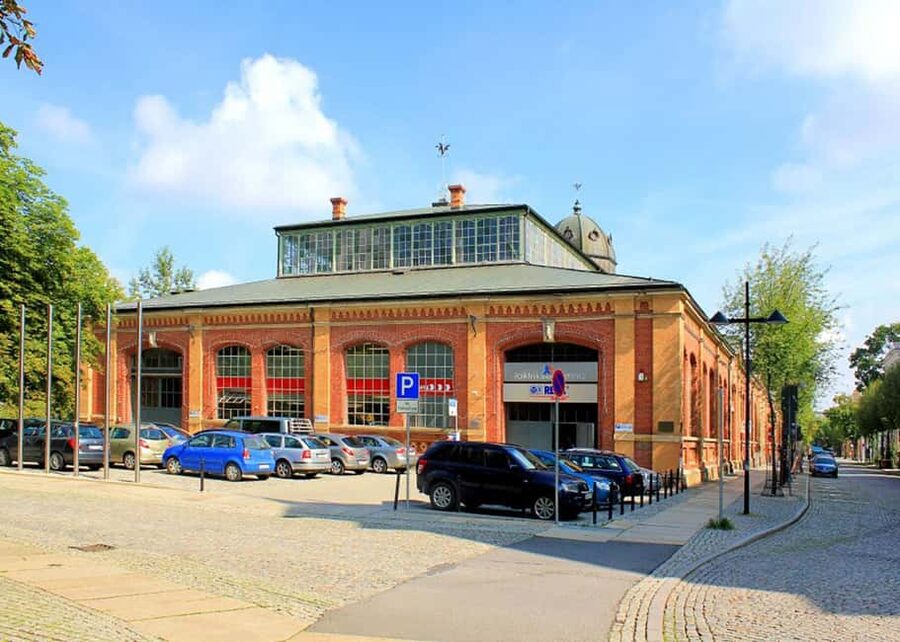
And the Kaßberg’s role as a civic center is clear from the buildings the city administration built there. Examples include the Royal District and Regional Court, the Royal Tax Authority, the Imperial Post Office, the Royal Prison, the Royal Gymnasium, and the Higher Secondary School. When you see these in context, the architecture makes more sense. It wasn’t only about style. It was also about status, administration, and the authority of the period.
Same city, a different way to spend the afternoon:
- Berlin: TV Tower Standard Entrance Ticket
★ 4.4 · 15,883 reviews - From Munich: Neuschwanstein & Linderhof Castle Full-Day Trip
★ 4.6 · 14,646 reviews - Hamburg: 1.5-Hour Harbor and Speicherstadt Day Cruise
★ 4.6 · 14,200 reviews - Dresden: Semperoper Tickets and Guided Tour
★ 4.7 · 12,102 reviews
Kaßberg Prison Memorial: reading the darker layers respectfully
This part of the Kaßberg tour is important, and it’s also where the guide’s approach really matters. The Kaßberg Prison Memorial commemorates the ransom of prisoners in the GDR and the time of National Socialism.
Even if you’re mostly there for the beautiful streets, this stop shifts the meaning of what you’ve been seeing. It reminds you that the same neighborhood landscape can hold very different kinds of stories. Residential dignity and institutional power can share the same geography.
For me, the takeaway is simple: don’t rush this section. Give it your full attention, even if you’d rather stay with the facades. A good guided walk balances beauty with honesty, and here that balance matters.
What 90 minutes feels like, and how to get more from it
A 90-minute guided walk is long enough to learn the story, but short enough that you should plan to focus. Your best move is to let the guide lead you through the “what to notice” part, then keep your own eyes busy.
Since the tour is guided by a live German guide, you’ll likely get more out of it if you’re comfortable with basic German (or if you can catch key terms about architecture and local history). The experience is positioned as culture for the whole family, so it should be readable at multiple levels. Still, if you want deeper historical context on every era, you might need extra reading afterward.
One practical tip: wear comfortable shoes. Kaßberg’s charm is in the continuous streetscape. You’re not doing a stop-and-photo-only route. You’ll spend real time looking, walking, and processing details.
Also, if you’re the kind of person who likes to repeat the route later on your own, this kind of guided walk helps. Once you understand the grid and the major landmarks, you can come back and experience it without feeling like you’re starting from zero.
Price, value, and who this Kaßberg tour suits best
At $23 per person for 90 minutes, this tour is priced like a solid local guide experience rather than a big ticket attraction. The value comes from three things you get in that window:
1) architecture with a coherent focus,
2) street-level context and anecdotes, and
3) a meaningful historical stop that doesn’t ignore the hard parts.
It’s also worth noting that the overall feedback is strong, with an average rating of 4.2 out of 5 across 15 reviews. The positive comments point to how well the guide connects historical knowledge with current relevance, and how interesting the route can be even beyond the immediate architecture.
Who should book?
- If you want authentic neighborhoods, not just a photo sprint through a historic center
- If you enjoy architecture, but you also want the human story attached
- If you’re traveling with family and want culture that fits a short outing
- If you want a “first orientation” experience for Chemnitz’s wider character
Who might hesitate?
- If you only speak English, the tour language is German, and you’ll have less control over comprehension
- If you prefer strictly academic history with a heavy dose of specific era background, you may want more follow-up time outside the tour
A small caution about tone and topic focus
Every guide has a style. The Kaßberg tour’s appeal includes a lively storytelling approach, and in some cases the humor can be dry and playful. That can be a plus because it keeps attention up on a 90-minute walk.
The potential drawback is that topic balance can vary. Some visitors are looking for more dedicated historical background on the founding period and the Gründerzeit era, while others want the guide to avoid side commentary that pulls attention away from the neighborhood itself. If you personally prefer one over the other, that’s your cue to check what you expect from a guided walk and decide if your preference matches the likely storytelling style.
The good news is that the Kaßberg itself does a lot of the work. Even when you’re not sure about every historical nuance, the streets and facades keep giving you visuals to anchor the story.
Should you book the Kaßberg tour? My call
If you want a short, guided way to understand why Chemnitz’s Kaßberg is considered one of Europe’s major contiguous Art Nouveau and Wilhelminian districts, I think it’s an easy yes. For $23, you get a live German guide, a coherent neighborhood arc, and enough variety to avoid the “just buildings” problem.
I’d book it if you’re excited by residential streets, architectural details, and the idea that history shows up in everyday corners. It’s especially smart for first-timers who want to get oriented quickly, because the district layout and the major landmarks make it easier to return later on your own.
I would skip it only if language is a deal-breaker or if you strongly prefer deep, era-by-era lecture style history with minimal storytelling tone.
FAQ
How long is the Kaßberg guided tour?
The tour lasts 90 minutes.
What is the price per person?
The price is $23 per person.
Is there a live guide?
Yes, the tour includes a live tour guide.
What language is the tour conducted in?
The tour is available in German.
Where in Germany does this experience take place?
It takes place in Chemnitz, in northern Germany, Germany.
What will I see during the tour?
You’ll explore the Kaßberg district, known for its large contiguous Art Nouveau and Wilhelminian architecture, decorative facades, green squares, and you’ll also cover major historical elements including the Kaßberg Prison Memorial.
Is the tour suitable for families?
The experience is described as culture for the whole family, so it’s designed with family interest in mind.
Can I cancel for a full refund?
Yes. You can cancel up to 24 hours in advance for a full refund.
Can I reserve now and pay later?
Yes. There’s a reserve now & pay later option.
Are there different starting times?
The duration is set to 90 minutes, and you can check availability to see starting times.
Newest Germany reviews on the site
- Koblenz: The Living Vineyard, Nature & Wine Enjoyment★ 5.0 · 14 reviews
- Koblenz: Sektmuseum Histor. Kelllergewölbe incl. 1 Glas Sekt★ 4.5 · 41 reviews
- Koblenz: Wein-& Sektgeschichte(n) incl. Wein/Sekt Verkostung★ 4.7 · 8 reviews
- Koblenz: Private pub crawl with insider guide & free shots★ 5.0 · 5 reviews
- Koblenz: Christmas Boat Tour with Mulled Wine★ 4.3 · 35 reviews
- Koblenz: Express Walk with a Local★ 5.0 · 4 reviews
- Koblenz: Guided tour Moselle kisses Rhine★ 5.0 · 3 reviews
- Koblenz: Rhine Valley Castle Sightseeing Cruise★ 4.6 · 98 reviews