
Reviewed · LEIPZIG TOURS
Guided tour of the Federal Administrative Court in Leipzig
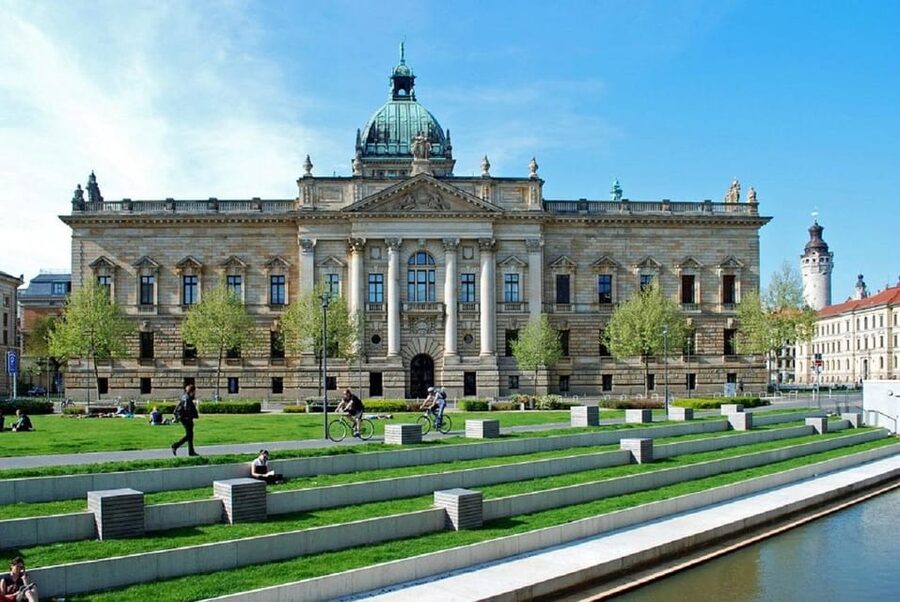
A courthouse that actually feels like a monument. This guided visit lets you see Germany’s largest Palace of Justice from the inside, with a certified guide walking you through what you’re looking at. You get the building’s full legal and architectural story, not just a quick hallway tour.
I especially like how the stops are designed around real functions, so the rooms make sense as you move. You’ll visit the domed hall and historic courtrooms, then continue into ceremonial spaces connected to today’s Federal Administrative Court (BVerwG). One thing to plan for, though: the tour is German-only, and you must arrive about 10 minutes early since entry stops once the tour begins.
In This Review
- 6 Key Reasons This Court Tour Feels Worth It
- Why This Building in Leipzig Is More Than Pretty Stone
- The Imperial Court of Justice to the BVerwG: What Changed, What Stayed
- Meeting in the Foyer: How to Prepare So You Don’t Miss Entry
- Domed Hall and Courtrooms: Where Architecture Explains Authority
- The Hall Connected to the Reichstag Fire Trial
- The Judges’ Ancestral Gallery: Tradition You Can See
- The President’s Apartment Ceremonial Hall: A Glimpse of Court Power
- What You Get for $16: Value That’s About Access and Context
- Practical Tips Before You Go (So It Stays Enjoyable)
- Who Should Book This Court Tour
- Should You Book This Court Tour?
6 Key Reasons This Court Tour Feels Worth It
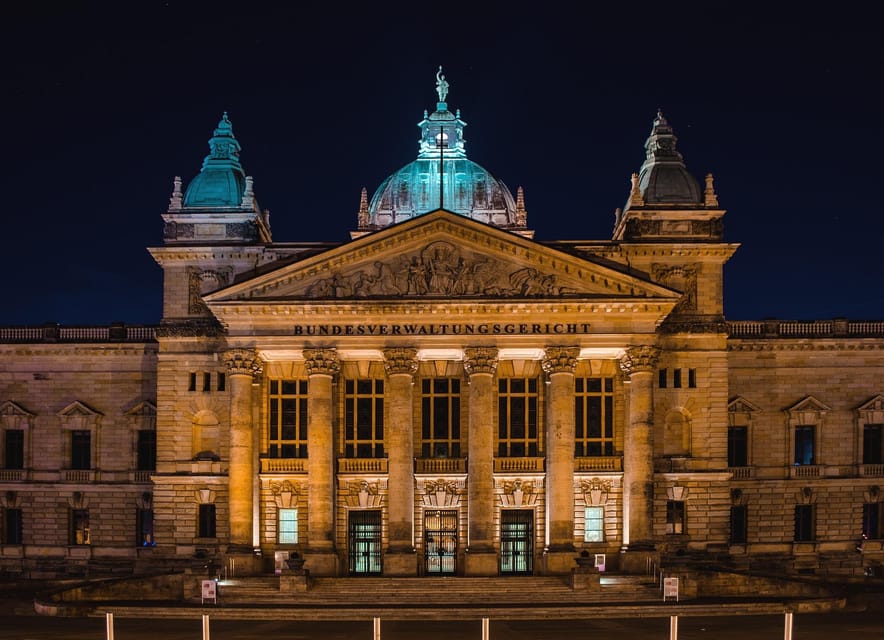
- Germany’s largest Palace of Justice, accessed from the inside, not just through a facade photo
- Certified, live guidance in German that ties architecture to legal purpose
- Domed hall plus historic courtrooms, including spaces linked to major trials
- The president’s apartment ceremonial area, a look at how court authority is staged
- The judges’ ancestral gallery, showing tradition as part of the institution
- A 1.5 hour format for $16, which is solid value for an organized inside visit
Why This Building in Leipzig Is More Than Pretty Stone
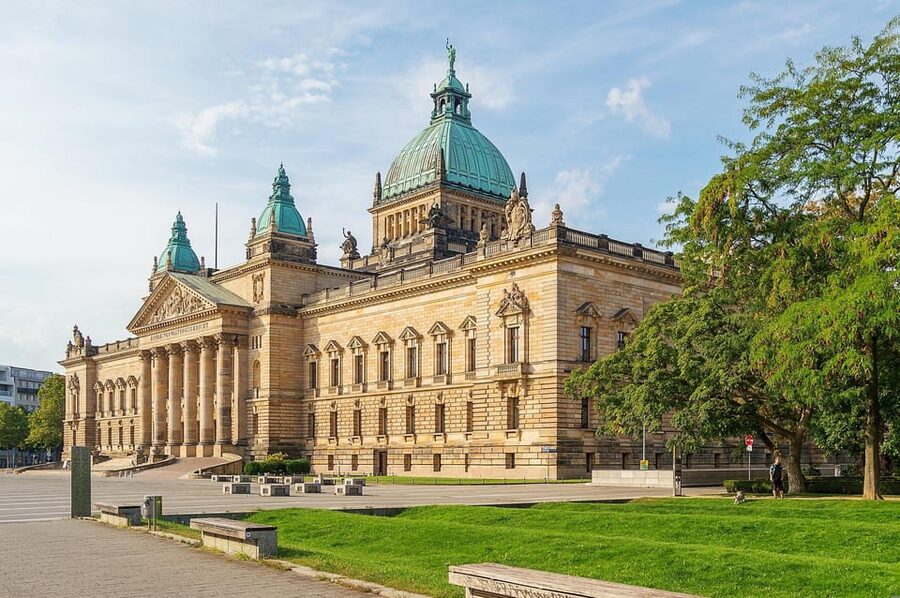
The Federal Administrative Court in Leipzig lives in a structure that was built for a higher purpose than government offices and paperwork. This is the former Imperial Court of Justice, created for the supreme court of the German Reich. That original mission is still legible in the architecture, from the formal rooms to the way space supports authority and procedure.
What I like most is that you do not have to be a law student to follow along. The guide frames what you see as a set of systems, how a court works, and why the building was designed the way it was. It turns a monument into something practical, almost like a guided “how it functions” lesson, with the added bonus that you’re standing where German legal history played out.
And yes, the building is impressive. But the best part is that you get access to the interior, where the scale and layout tell the story more clearly than exterior viewpoints ever could.
A few more Leipzig walks and trips to compare
- Leipzig: City History Canal Sightseeing Tour on a Motorboat
★ 4.7 · 7,671 reviews - Leipzig: 1.5-Hour Public Tour with Night Watchman Bremme
★ 4.6 · 3,116 reviews - Combo Tour in Leipzig: Guided City Tour & City Sightseeing
★ 4.7 · 2,317 reviews
The Imperial Court of Justice to the BVerwG: What Changed, What Stayed
Since 1879, this site has carried a courtroom mission. The Imperial Court of Justice was founded in 1879 as the supreme court of the German Reich, and the representative building was created for that role. When the building houses the Federal Administrative Court since 2002, the identity shifts, but the court tradition remains in the design.
During the tour, the BVerwG’s role is presented in a way that helps you place it in the German system. The Federal Administrative Court is the highest administrative court in the Federal Republic of Germany, meaning it rules on disputes in the field of administrative law. Even if administrative law sounds abstract, the tour approach makes it concrete: you learn what the court actually handles and how its most important work connects to the rooms around you.
I find that this “then and now” angle is the value. You’re not only looking at a historic shell. You’re seeing a building that still functions as part of Germany’s present-day legal system.
Meeting in the Foyer: How to Prepare So You Don’t Miss Entry
Your tour starts in the foyer of the Federal Administrative Court and ends back at the same meeting point. It runs about 1.5 hours, so you’re getting a focused hit of architecture and judicial history without a half-day commitment.
Plan around one strict detail: arrive roughly 10 minutes early. Once the tour has started, it is not possible to enter the courthouse. That rule is common for security in working institutions, and it’s especially important here because the interior is the whole point. If you’re running late, you may lose your spot entirely.
There’s also a practical item for storage. A 1 euro coin is required for the luggage compartment. Bring it ahead of time so you do not arrive scrambling at the last minute.
Finally, this tour is wheelchair accessible, so it’s worth considering if mobility access matters in your plans.
Domed Hall and Courtrooms: Where Architecture Explains Authority
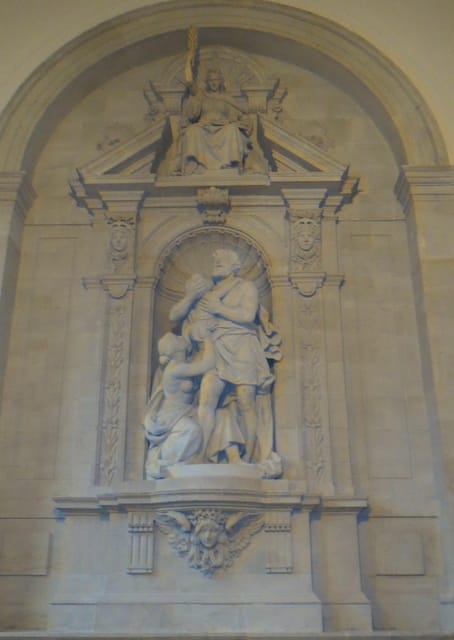
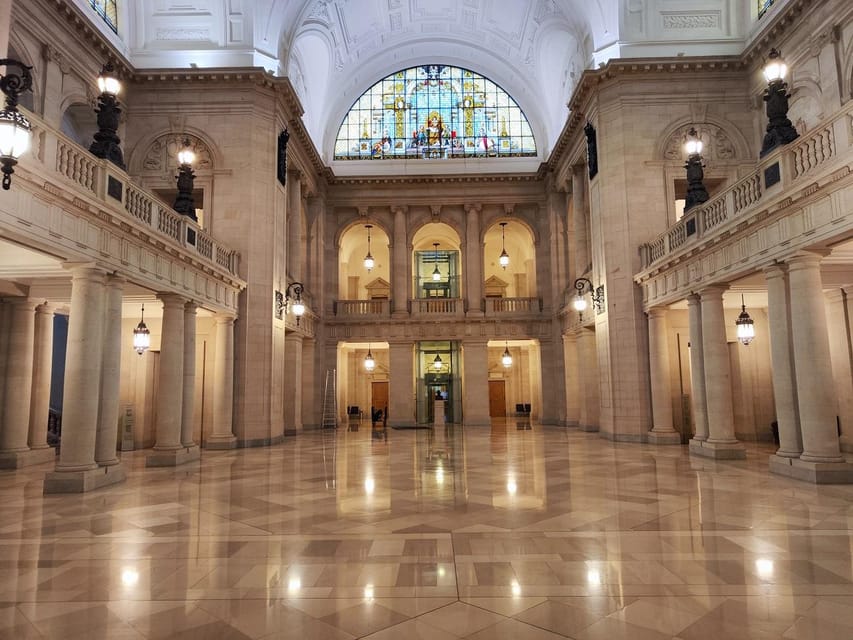
One of the core stops is the domed hall and the historic courtrooms. This is where the tour earns its keep, because you finally see how the building’s design supports courtroom culture.
In broad terms, the domed space helps create a sense of scale and ceremony. You’re in a large interior volume, and the guide’s explanation helps you connect that feeling to the court’s function: public legitimacy, formal procedure, and the seriousness of decision-making. You are not just admiring curves and ceilings, you’re learning how those shapes set the tone of institutional authority.
Then you move into the historic courtrooms. These rooms matter because they are built for the reality of hearings: the layout supports communication, order, and the idea that justice needs structure. The tour uses these spaces to show how the tradition of justice works both inside and outside, meaning the building doesn’t only serve the moment of a ruling. It represents the institution’s identity every day it stands.
If you like architecture that has a job, not just a look, this part of the tour is likely to be your favorite.
Same city, a different way to spend the afternoon:
- Leipzig: 1.5-Hour Historical Walking Tour in German
★ 4.7 · 2,217 reviews - Leipzig: 2-Hour Guided Walking Tour in German
★ 4.8 · 1,612 reviews - Leipzig: 13-Stop Hop-on/Hop-off Bus Ticket
★ 4.6 · 1,468 reviews - Leipzig: Bus Tour
★ 4.5 · 1,457 reviews
The Hall Connected to the Reichstag Fire Trial
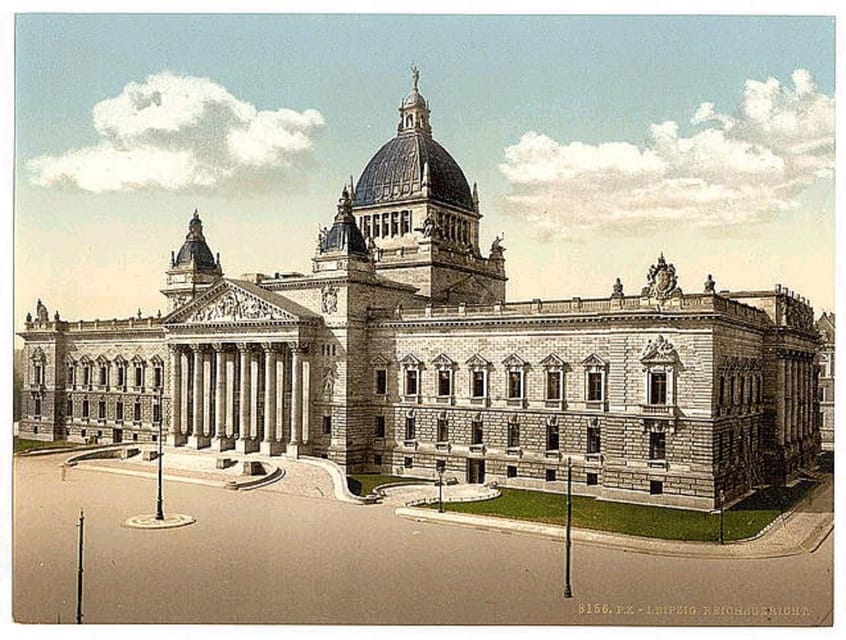
The tour includes a visit to the large hall where the Reichstag Fire Trial took place. This is the kind of detail that makes a building feel heavier in your hands, because the space is tied to a dramatic moment in German political and legal history.
The guide’s framing helps you understand why that trial still gets mentioned: it was not simply a courtroom event, it was linked to state power, accusations of high treason, and the way legal proceedings can shape public narratives.
Even if you only know the basics of the Reichstag fire story, the fact that you are standing in the room gives context you cannot get from reading alone. The interior scale and layout help you imagine how events unfolded, and you start to see how the court environment can amplify significance.
Karl Liebknecht also comes up in the tour narrative. He is noted for defending himself here against accusations of high treason. That mention adds a human angle, and it helps connect legal procedures to the individuals caught inside them.
The Judges’ Ancestral Gallery: Tradition You Can See
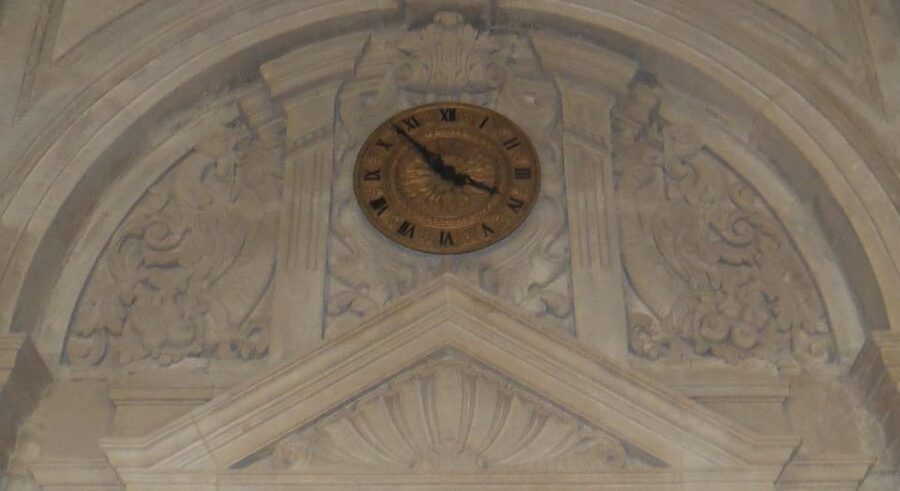
Another standout stop is the ancestral gallery of the judges. This is one of those details that might sound like a decorative add-on until you’re actually there.
In practice, it shows how the court presents continuity. Justice in Europe often builds on long legal traditions, and institutions like this one reinforce their legitimacy by showing lineage and long-standing roles. When you’re in this space, it makes more sense why the building is designed with ceremonial hierarchy in mind. The court does not just do cases. It signals identity, memory, and authority through architecture and room use.
I like that this part of the tour helps you understand the cultural side of institutions. It’s not only law as text. It’s law as a practiced system with symbols, rituals, and visual cues.
The President’s Apartment Ceremonial Hall: A Glimpse of Court Power
You also get to visit areas connected to the president of the court, including the president’s apartment and a ceremonial hall inside it. This is a fascinating contrast point.
In many public buildings, the private or semi-private spaces are off limits. Here, you’re allowed inside to see how the court’s leadership is framed through room design and ceremonial function. The guide’s explanation helps you connect what you’re seeing to the court’s everyday role and the way formal authority is communicated.
This is also where the tour feels most “institutional.” You’re not just touring courtrooms where hearings happen. You’re shown how the court presents itself through spaces built for formal settings, decisions, and representation.
If you’re curious about how modern institutions balance function with ceremony, this stop delivers.
What You Get for $16: Value That’s About Access and Context
At $16 per person for about 1.5 hours, the price feels reasonable because it buys you two things that are hard to DIY. First, you get access to interior spaces that are not just open sightseeing rooms. Second, you get context from a live certified guide that connects architectural details to legal history and the present-day work of the BVerwG.
This matters in a working courthouse. Without a guide, you might see the shape and size of the building but miss why rooms matter. With a guide, you learn how the spaces connect to justice as a system, from the Imperial Court era to the BVerwG today.
Also worth noting: the tour has a 4.8 rating with a substantial number of ratings behind it. That does not guarantee you personally will love it, but it usually suggests the experience is well run and the content lands for many people.
Practical Tips Before You Go (So It Stays Enjoyable)

This tour is simple, but a few details can make or break your experience.
- Arrive early. Entry is not possible once the tour starts. Give yourself breathing room, especially if you need the luggage compartment coin.
- Bring a 1 euro coin for luggage storage. It’s a small requirement, but it’s the kind that can cause stress at the door.
- Plan for German language. The live guide is German, so your enjoyment will depend on your comfort level with German.
- Stick to the allowed group rules. Party groups are not allowed, and bachelor and bachelorette groups are not allowed. Pets are not allowed either, though assistance dogs are allowed.
- Keep expectations focused. This is an inside architectural and judicial history walk. It is not a broad city history tour.
Also, if you care about mobility access, the tour is wheelchair accessible, which is a genuine plus in a building with older architectural features.
Who Should Book This Court Tour
I think this is a great fit if you:
- Like architecture with function, especially formal institutional design
- Want a structured look at Germany’s legal system, not just landmarks
- Enjoy history that is tied to specific rooms, like the hall connected to the Reichstag Fire Trial
- Prefer a guided experience where someone connects details you might otherwise miss
If you only want casual sightseeing, you might find the legal focus heavier than expected. The tour is about courts, court history, and the BVerwG’s work, so bring curiosity for institutions and procedure.
Should You Book This Court Tour?
If you can do the German-only tour, I’d say book it. The mix of domed hall, historic courtrooms, ceremonial president spaces, and the Reichstag Fire Trial hall makes it feel like more than a single-idea visit. You also get the present-day connection through the Federal Administrative Court, so it does not stop at old stones.
The main reason you might skip is if German language access is a dealbreaker for you, or if you struggle with arriving on time. Everything here works best when you treat the entry rules seriously and show up prepared with the luggage coin.
For $16 and about 1.5 hours, it’s a high-value inside look at Leipzig’s justice history, the kind of stop that gives your trip a real point of view.
Newest Leipzig reviews on the site
- House of Banksy Leipzig – An Unauthorized Exhibition★ 4.6 · 14 reviews
- Halle (Saale) : Die Altstadt-Tour★ 4.6 · 71 reviews
- Halle (Saale): The Court Tour★ 5.0 · 5 reviews
- Halle (Saale) : Halle Card 2-Tages-Ticket★ 4.5 · 5 reviews
- Halle (Saale) : Die Stadtrundfahrt mit dem Bus★ 4.1 · 79 reviews
- Mulled wine ride in the Leipzig New Zealand★ 4.6 · 12 reviews
- Federal Administrative Court Leipzig: A journey into the heart of German justice★ 4.8 · 189 reviews
- Der Leipziger Passagen-Rundgang in der Altstadt★ 4.8 · 124 reviews
Leipzig Tours, compared.
City History Canal Sightseeing Tour on a Motorboat
Read our review →
1.5-Hour Public Tour with Night Watchman Bremme
Read our review →
Combo Tour in Leipzig: Guided City Tour & City Sightseeing
Read our review →




Browse the lists this tour appears in