
Reviewed · GOSLAR TOURS
Goslar: Hinter den Rathaustüren
Old walls, new light tricks.
In Goslar, behind the town hall doors, you get a rare mix of late Gothic room art and practical city context. I love the Huldigungssaal, where painted walls, ceiling, and even window niches are protected by modern safety and climate systems, then brought back to life with a multimedial presentation. I also love the quick stop that frames it all, the UNESCO Harz exhibition in the Welterbe-Infozentrum in the cellar. One drawback to plan for: the town hall has a lot of stairs, so it is not suitable for rollators or wheelchair users.
This is a short tour, around 1 hour, led live in German. The focus stays tight on what you can see and why it matters, from the way the Rathaus grew for centuries to how today’s tech keeps the art from fading. If you are in Goslar for a day and want something more meaningful than another photo stop, this is a strong pick.
In This Review
- Key points I’d plan around
- Goslar Rathaus Behind Closed Doors: what the 1-hour tour actually covers
- Entering the Rathausdiele and seeing the Sternenhimmel
- The Huldigungssaal: late Gothic wall paintings, protected by modern tech
- UNESCO Harz in the Kellergeschoss: why the basement stop matters
- Beinkeller and the Baugeschichte of the Rathaus
- Price and logistics: $10 worth it for the art and the context
- Who will enjoy this most, and who might want to adjust expectations
- Should you book Goslar: Hinter den Rathaustüren?
- FAQ
- How long is the tour?
- What is the price?
- Is there a live guide?
- What does the tour include?
- Where do the UNESCO Harz materials happen?
- Is the town hall accessible for rollators or wheelchairs?
- Can I cancel for free?
Key points I’d plan around
- Sternenhimmel on the Rathausdiele: a striking floor or entry space effect that sets the mood fast.
- Huldigungssaal (1505 to 1520): a late Gothic council chamber where panel paintings cover nearly everything.
- Modern protection for fragile art: security, climate, and light technology help preserve the paintings.
- Multimediale Inszenierung: the room becomes easier to experience, not just to look at.
- UNESCO Harz context below ground: the Welterbe-Infozentrum gives you the bigger picture in the kellergeschoss.
- Baugeschichte in the Beinkeller: a dedicated spot for how the Rathaus was built and expanded over time.
Goslar Rathaus Behind Closed Doors: what the 1-hour tour actually covers
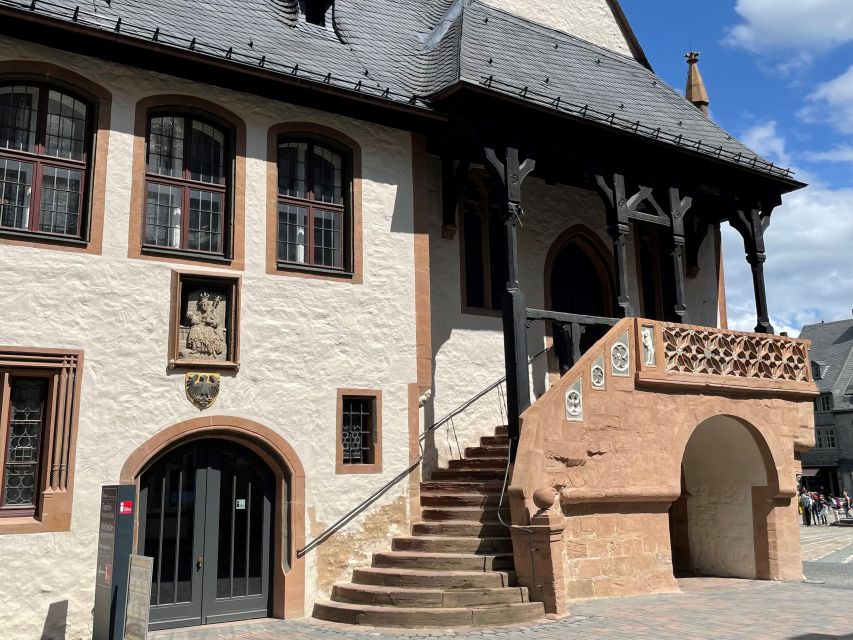
Think of this visit as a guided walk through the Rathaus story, told in rooms, materials, and measured details. The town hall is not one single building moment. It started in the 15th century, grew for more than 400 years, and the tour helps you read that growth instead of guessing it from the outside.
You’ll spend your time inside three main zones. First, you move through the Rathaus area where you can take in the Rathausdiele and its spectacular Sternenhimmel effect. Then you step into the star space, the Huldigungssaal, set up between 1505 and 1520 as a council seating hall. Finally, you head to the cellar level for two content-focused stops: the Welterbe-Infozentrum for UNESCO Harz and the Beinkeller, which presents the Rathaus building history.
At about 1 hour, it is ideal for fitting into a sightseeing day without burning the whole afternoon. The guide is live and the tour is in German, which matters because you will understand more if you can follow a normal conversation pace.
A few more Goslar walks and trips to compare
- Goslar: Tausend Schritte durch die Altstadt
★ 4.7 · 417 reviews - Goslar: Führung durch die Kaiserpfalz
★ 4.5 · 50 reviews - Goslar: On the road with the night watchman’s wife
★ 4.6 · 34 reviews
Entering the Rathausdiele and seeing the Sternenhimmel
The Rathausdiele is your mood setter. Before you even reach the painted hall, you get an immediate visual hook: the Sternenhimmel. It is one of those details that makes the interior feel less like a hallway and more like a staged space, designed to impress when people gathered.
What I like about starting here is that it gives your eyes a reference point. You are not walking in cold. You arrive already primed for the idea that the Rathaus is built for ceremonies and public moments, not just administration.
Practical tip: take a few seconds to actually look around rather than rushing straight ahead. These effects work best when you give them a quick visual scan, because the next room’s art is intense in its own way and you want your bearings before the full visual overload.
The Huldigungssaal: late Gothic wall paintings, protected by modern tech
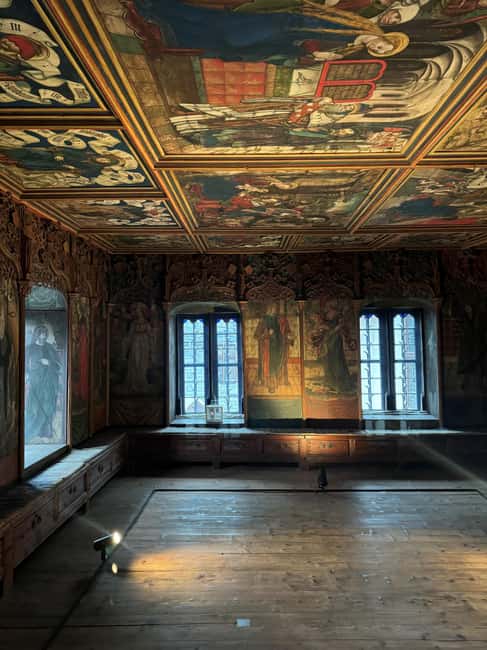
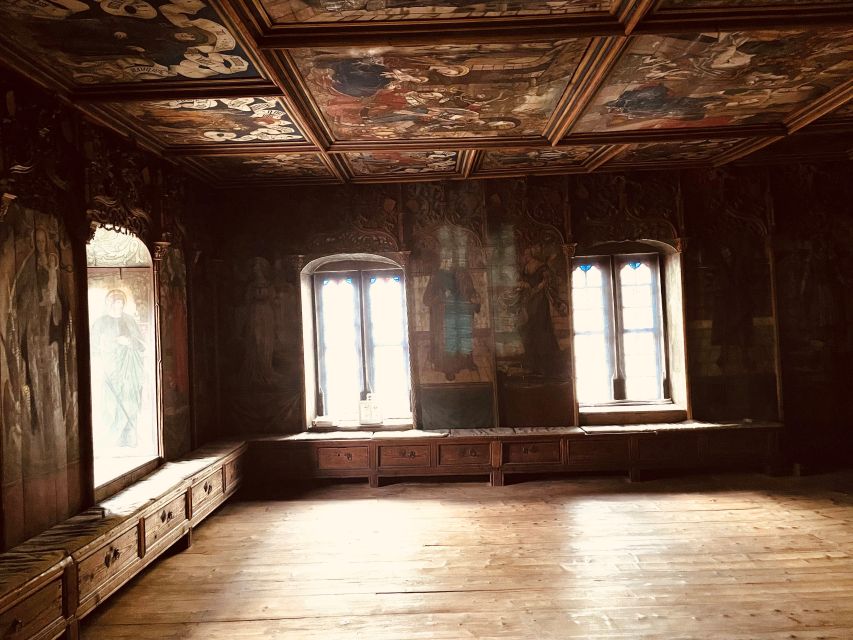
Now the main event. The Huldigungssaal was prepared between 1505 and 1520 as a council sitting room. In late Gothic room design, small changes in materials and surfaces can feel like big changes to the viewer, because the space is treated as one unified artwork. That is exactly what you see here.
The walls are covered with Tafelgemälde, panel paintings, and it goes beyond that. The ceiling and even the window niches are fully lined with paintings as well. When a room does this, it stops being a simple background. The paintings become architecture in their own right, shaping how light, depth, and attention work.
Here is the modern part that makes a real difference for you today. After restoration, the hall is kept safe from deterioration through security, climate, and lighting technology. That means you can experience the paintings in a controlled environment instead of watching them slowly fade or crack from temperature swings and light exposure.
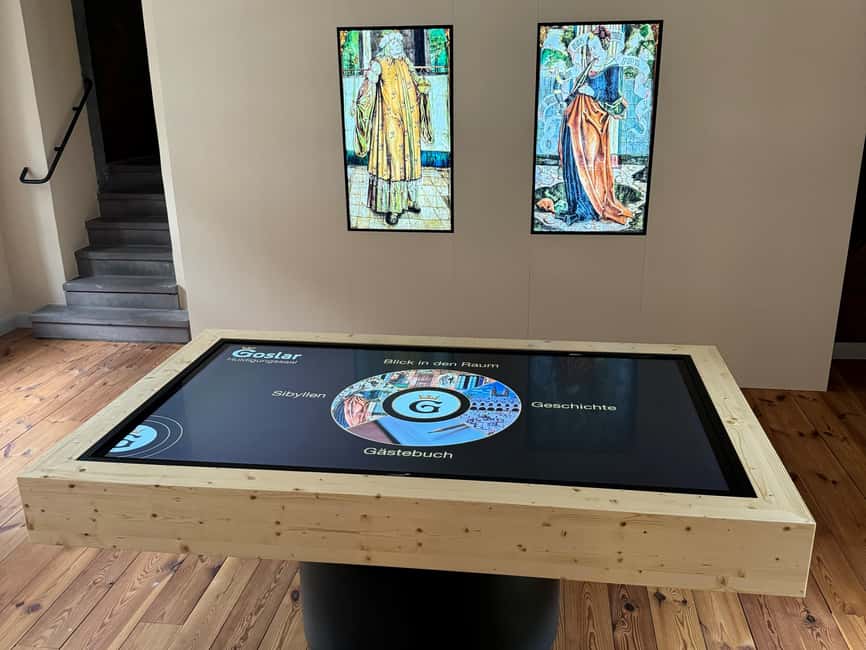
Then comes the element that changes how you experience it: a multimediale Inszenierung. Instead of treating the art like something distant behind glass, the presentation helps you reconnect the room to what it likely felt like when it was in active ceremonial use. If you are visiting in a season with special lighting, this kind of multimedia treatment tends to feel especially fitting, because it matches the room’s original purpose: making moments feel formal, meaningful, and slightly theatrical.
What to expect in your visit: you’ll get a guided look at the hall’s painted surfaces and the idea behind the restoration and the safety systems. It is not just, look at this painting. It is, here is what the room was built to do, and here is why it needed careful protection to survive.
UNESCO Harz in the Kellergeschoss: why the basement stop matters
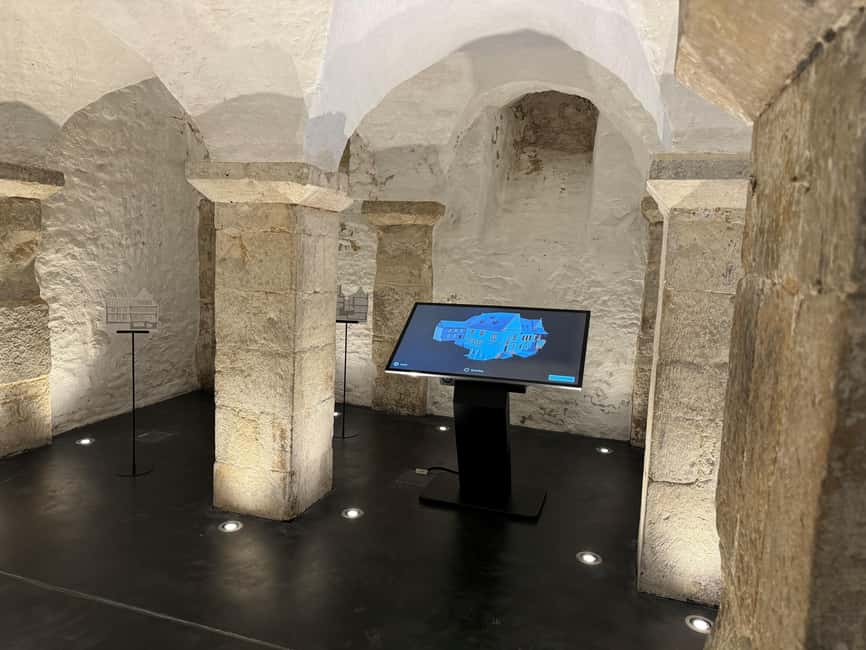
Most people rush through cellars. Don’t. The stop in the kellergeschoss is part of the tour for a reason: it turns the Rathaus from a standalone monument into a clue about the region.
Next to the Tourist Information area, you’ll find the World Heritage Info Center, and the tour includes a free exhibition there. It focuses on UNESCO World Heritage Harz, so you get context beyond Goslar’s walls.
Here is the value for you: when you understand what makes an area worthy of UNESCO status, you start noticing cultural patterns and landscapes that connect to what you just saw. The Rathaus is a civic statement. UNESCO Harz is a broader statement about heritage, preservation, and the shape of the region’s story. Even if the exhibition is shorter than a full museum visit, it gives you an anchor for later reading or exploring nearby.
If you like travel that connects big ideas to specific places, this is the part that keeps the tour from being only decorative. You walk out knowing what to look for next.
Same city, a different way to spend the afternoon:
- Goslar: Ganz schön gruselig – das Mittelalter wird lebendig!
★ 4.2 · 26 reviews - Goslar: Witches – From delusion to myth
★ 4.7 · 16 reviews - Goslar: Executioner Caspar Kruse III. – If you dare!
★ 4.8 · 12 reviews - Goslar: Hall of Homage – 1-day ticket
★ 4.3 · 3 reviews
Beinkeller and the Baugeschichte of the Rathaus
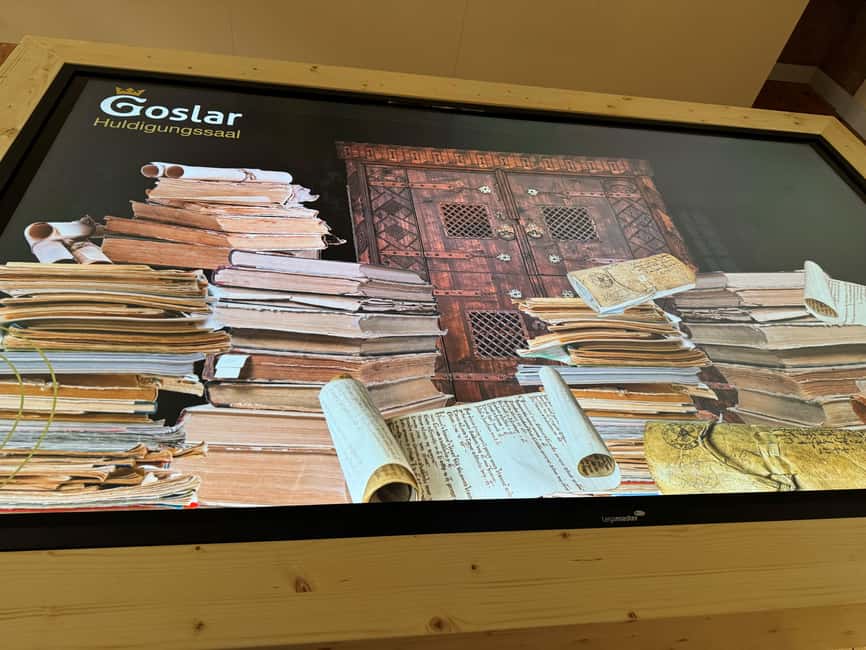
Then you go one step further from “what it looks like” into “how it came to be.” In the Beinkeller, the tour presents the Baugeschichte of the Rathaus, the building history and evolution.
This matters because Goslar’s town hall is described as a century-spanning project, and the building process is part of its character. It began in the middle of the 15th century with the Ostflügel (east wing), whose arkaden open toward the Marktplatz. Over more than 400 years, new additions kept expanding the complex. So you do not just see a building. You see layers of time.
In practical terms, the Beinkeller is where the guide helps you interpret what your eye might otherwise miss. You start to understand why different parts of the Rathaus feel different, why growth over centuries changes how spaces are arranged, and why a “single landmark” is really a long conversation between generations of builders.
If you enjoy architecture you can read, not just admire, this is a satisfying final intellectual step. And because the tour is only about an hour, it’s also efficient. You finish with a clear story in your head, not just snapshots on your phone.
Price and logistics: $10 worth it for the art and the context
At about $10 per person, this tour is good value if your priorities include both craftsmanship and interpretation. You are paying for access to meaningful interiors and for a guided explanation that helps you understand what you are seeing, especially in the Huldigungssaal, where the protection and multimedia setup are not random gimmicks. They are part of why the room can still be experienced.
Time-wise, it is also efficient. With 1 hour, you can slot it between other Goslar sights without feeling rushed or having to commit to a half-day plan.
A few things to keep in mind before you go:
- The tour is in German, so plan on listening carefully or bringing basic familiarity if you do not speak the language fluently.
- The Rathaus has a variety of stairs. If you use mobility aids, this is important to know up front because it affects how comfortable the visit will be.
- The tour is tight and focused. That is a plus if you want an organized experience, but it also means you will not have long independent time inside each room.
Who will enjoy this most, and who might want to adjust expectations
This tour fits best if you like:
- Architectural interiors where you can see how design choices affect perception
- Art preservation stories, like the idea that climate, light, and security systems are part of experiencing cultural heritage
- A short, guided overview that connects local history to a UNESCO theme
You might also enjoy it if you are traveling in a smaller group. In that setting, a guide can often slow down and shape the explanations to what people are noticing.
Who might adjust expectations:
- If you only want outdoor sights or you prefer long free time inside museums, this may feel short.
- If stairs are a challenge for you, you may find the tour difficult due to the building’s many steps.
- If you do not follow German well, you might understand less of the interpretation, even though the visual highlights are still impressive.
Should you book Goslar: Hinter den Rathaustüren?
If you are spending limited time in Goslar and want a high-impact interior experience, I think you should book it. The reason is simple: you get one of the town hall’s most important rooms, the Huldigungssaal, with its wall-to-ceiling painted surfaces, plus a practical pairing of context through the Welterbe-Infozentrum and the Rathaus Baugeschichte in the Beinkeller. For roughly one hour and around $10, that is a lot of meaningful content per minute.
Book it if you like guided interpretation and you are comfortable with a German-language tour. Skip it or rethink it if stairs are a barrier for you, or if you need a fully accessible route. If you can handle those two realities, this is a smart, focused way to see why Goslar’s Rathaus feels like more than a building, it feels like a living time capsule.
FAQ
How long is the tour?
The duration is 1 hour. You should check starting times for what works best with your schedule.
What is the price?
The price is listed as $10 per person.
Is there a live guide?
Yes, the tour includes a live tour guide. The tour is in German.
What does the tour include?
It includes entry to the town hall, a view of the Huldigungssaal, and access to the World Heritage Information Center with a free exhibition on the ground floor.
Where do the UNESCO Harz materials happen?
The UNESCO World Heritage Harz exhibition is in the Welterbe-Infozentrum in the cellar level (kellergeschoss) of the town hall.
Is the town hall accessible for rollators or wheelchairs?
Unfortunately, no. The town hall has a variety of stairs and is not suitable for rollators or guests in a wheelchair.
Can I cancel for free?
Yes. There is free cancellation if you cancel up to 24 hours in advance for a full refund.
Newest Goslar reviews on the site
- Goslar: Witches – From delusion to myth★ 4.7 · 16 reviews
- Goslar: Hall of Homage – 1-day ticket★ 4.3 · 3 reviews
- Goslar: Ganz schön gruselig – das Mittelalter wird lebendig!★ 4.2 · 26 reviews
- Goslar: Lecker Speys un lange Danz★ 5.0 · 3 reviews
- Goslar: Executioner Caspar Kruse III. – If you dare!★ 4.8 · 12 reviews
- Goslar: Führung durch die Kaiserpfalz★ 4.5 · 50 reviews
- Goslar: On the road with the night watchman’s wife★ 4.6 · 34 reviews
- Goslar: Tausend Schritte durch die Altstadt★ 4.7 · 417 reviews
Goslar Tours, compared.
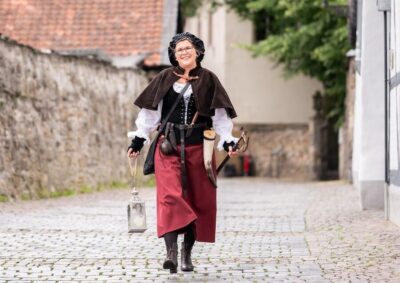
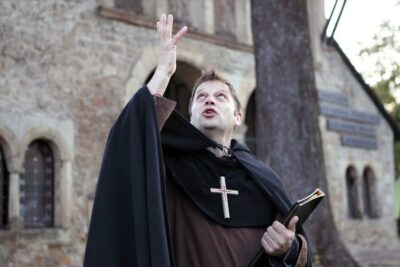
Ganz schön gruselig – das Mittelalter wird lebendig!
Read our review →
Browse the lists this tour appears in