
Reviewed · FRANKFURT TOURS
Frankfurt – Private tour with Licensed guide
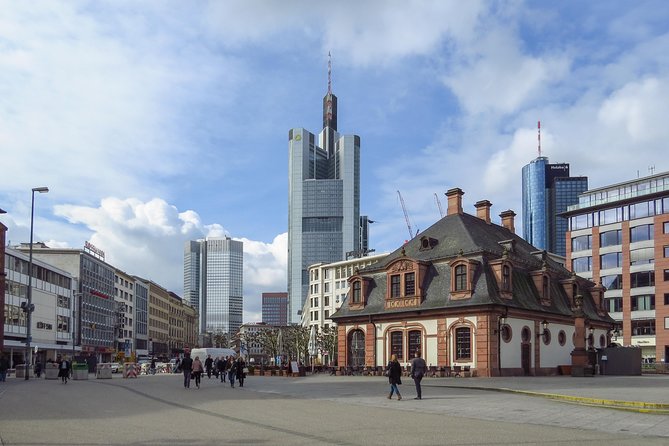
Frankfurt can feel like two cities in one. You get Old Town drama and modern Germany’s story in a tight, private 3-hour walk. It’s designed for first-time visitors who want the main hits without stitching together buses and schedules.
What I like most is that a licensed guide keeps the route clear and the details human, not just dates. You’ll see big landmarks like the Frankfurt Cathedral, the Old Opera House, the Goethe House, and more, all connected by what they mean in the city’s bigger picture.
One possible drawback: it’s a walking-focused route, so if you prefer lots of sit-down time, you may want to pace yourself. Also, a couple of key stops depend on day and time, like the market hall (closed Sundays and holidays) and the exchange trading floor (only trading hours on weekdays).
In This Review
- Key reasons this private Frankfurt walk works
- Where your tour really begins, Römerberg’s medieval heart
- Old Town houses, the half-timber survival story, and a 1868 footbridge
- Churches that track Germany’s changes, from 12th-century beginnings to a cathedral transformation
- Memory stops you can’t skip, Wollheim Memorial and the Warsaw Ghetto story
- The market hall stop, when food is part of the city story
- Frankfurt Stock Exchange and Thurn und Taxis, business history in plain sight
- Fortifications, the Old Opera House, and why renovations matter
- Goethe House and St. Paul’s Church, ideas that shaped modern Germany
- How the private format changes your day (and why it’s worth paying for)
- Logistics that matter in real life: start point, mobile ticket, and walking pace
- Who should book this tour?
- Should you book Frankfurt – Private tour with Licensed guide?
Key reasons this private Frankfurt walk works
- Private, licensed guiding for a flexible, question-friendly pace
- 3 hours on foot that cover major sights without wasted transit
- Römerberg to St. Paul’s Church gives you a natural old-to-modern story arc
- Memory stops like the Wollheim Memorial add real context, not just sightseeing
- Market hall and stock exchange timing can make the difference, especially on weekdays
- Some guides (noted as Alexander or Alexsa) are praised for answering questions and helping wheelchair users
Where your tour really begins, Römerberg’s medieval heart
You start at Römerberg, the core of Frankfurt’s medieval old town. This place is not subtle. The 15th-century Römer building complex sets the tone right away: gabled facades, old-stone solidity, and that distinct feeling that Frankfurt has been “in the mix” for centuries.
From here, you’ll look at the three stepped gable facades structure, a classic piece of German civic architecture. If you’ve ever stared at a historic photo and wondered why it looks so sharp, this is where you start noticing how details like stepped shapes and facade rhythm were used to project importance.
Practical tip: plan to take photos early. By mid-walk, you’ll be looking at more than buildings, and your feet may start bargaining with you.
A few more Frankfurt walks and trips to compare
- Frankfurt: River Main Sightseeing Cruise with Commentary
★ 4.3 · 5,127 reviews - Frankfurt: Hop-On, Hop-Off Grand or Express Bus Ticket
★ 3.9 · 2,088 reviews - Frankfurt: 1-Hour Panorama Boat Cruise on the river Main
★ 4.4 · 1,822 reviews
Old Town houses, the half-timber survival story, and a 1868 footbridge
The route moves from the civic square into older residential fabric. You’ll see a half-timbered house built in 1600 that survived the air raids of World War II. That’s a heavy line to carry on a casual walking tour, but it’s exactly the point. Architecture here isn’t just pretty. It’s resilience you can point to with your own eyes.
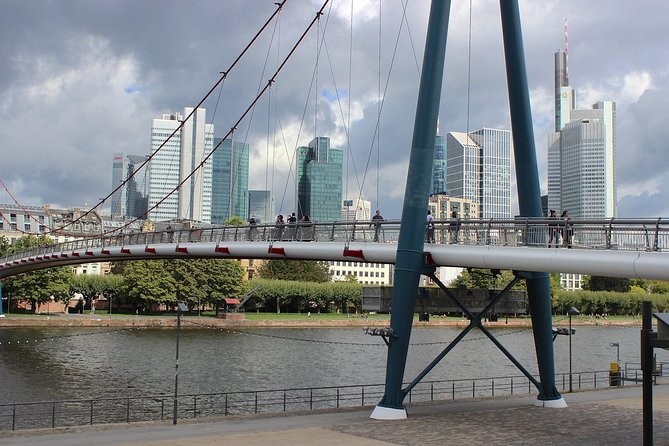
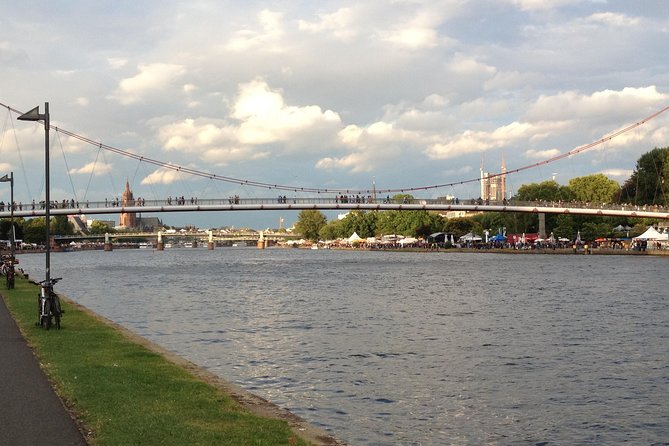
You also cross the footbridge that was the first wrought iron bridge built in 1868. That detail is a fun shift in gears: you move from medieval style to industrial-age engineering, and you start seeing Frankfurt as a city that keeps evolving while still keeping pieces of its past.
If you’re the kind of person who likes to understand why cities look the way they do, this part pays off fast. You’ll start noticing how different materials and construction periods create different “voices” across the same neighborhood.
Churches that track Germany’s changes, from 12th-century beginnings to a cathedral transformation
Frankfurt’s religious landmarks are not just religious landmarks. They’re time machines.
You’ll visit a medieval Lutheran church with its first chapel built in the mid 12th century. Then the route takes you to a Gothic church established in 1295, later transformed into the cathedral in 1993. That shift from Gothic church to today’s cathedral status is a reminder that buildings can outlive the purposes people imagine for them.
You’ll also see the largest religious wall paintings from the 1500s in the Karmeliter Kloster. When you think of church art, it’s often stained glass or altarpieces. Wall paintings hit differently because they’re part of the space itself. They help you understand the “visual language” people would have lived with.
Practical tip: if art and symbolism are your thing, bring your curiosity. This is the section where listening and looking together really matter.
Memory stops you can’t skip, Wollheim Memorial and the Warsaw Ghetto story
This is the part of the walk where the tour becomes more serious and, honestly, more meaningful. You’ll see the Wollheim Memorial, honoring a concentration camp survivor. Then you’ll learn about the Warsaw Ghetto, established by German authorities in November 1940, where over 400,000 Jews were imprisoned. From there, people were deported to Nazi concentration camps and mass killing centers.
It’s not presented as a vague history lecture. It’s anchored to specific places you can stand in front of. That’s what makes these stops feel real instead of academic.
A consideration: if this subject matter feels emotionally intense for you, tell your guide upfront. A good private guide can adjust pacing while still giving you the facts and context.
Same city, a different way to spend the afternoon:
- From Frankfurt: Rhine Valley Day Trip
★ 4.4 · 1,317 reviews - Frankfurt: New Old Town and Highlights German-Language Tour
★ 4.7 · 1,316 reviews - Frankfurt Highlights English Walking Tour
★ 5.0 · 1,203 reviews - Rhine Valley Trip from Frankfurt including Rhine River Cruise
★ 4.0 · 1,179 reviews
The market hall stop, when food is part of the city story
You’ll visit an indoor market hall with stalls of fresh fruits, vegetables, and regional specialties. This is a great counterweight to the heavier memorial stops. It also lets you experience daily life, not just monuments.
The catch is the calendar: the market hall is closed on Sundays and holidays. So if you’re traveling on a weekend, you might want to plan your expectations. The rest of the walk still hits major sights, but this particular taste-of-the-city moment won’t be the same.
Practical tip: even if you don’t buy anything, use this stop to reset your energy. Frankfurt rewards calm walking and steady time on your feet.
Frankfurt Stock Exchange and Thurn und Taxis, business history in plain sight
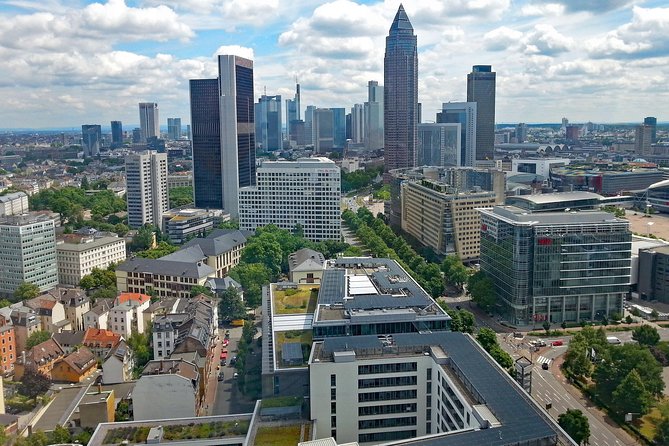
Next you’ll move into a more modern Frankfurt story. You’ll see the exchange trading platform of the Frankfurt Stock Exchange, where trading is a continuous auction from 8:00 to 20:00 CET Monday to Friday.
Even if you do not trade a thing, it’s valuable to see where the city’s finance energy becomes physical. This is Frankfurt as a working city, not just a postcard city.
You’ll also see 18th-century Baroque architecture in the Princely House of Thurn and Taxis. That’s a fun contrast: power, wealth, and taste show up in architecture as clearly as they do in markets.
Practical tip: if your tour time lands outside trading hours, you’ll still get the historical context, but don’t expect the same “live trading” feel. Weekday timing matters here.
Fortifications, the Old Opera House, and why renovations matter
Frankfurt didn’t just “keep buildings.” It had to rebuild. You’ll visit late-medieval fortifications of a landmark built in the 1400s. This is one more reminder that the city’s shape was influenced by defense needs long before today’s skyline existed.
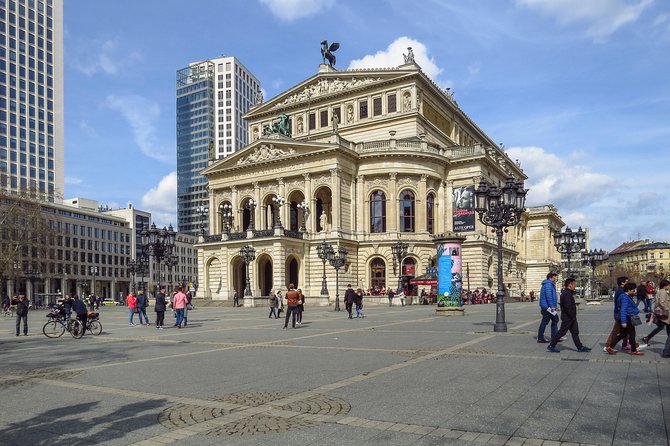
Then the tour turns to culture with the Old Opera House. You’ll see it after it was renovated following destruction from World War II bombings. This matters more than you might think. Renovations are often where a city decides what it wants to preserve and what it wants to honor as part of its identity.
If you’re a theater or music fan, this stop gives you a useful way to read the building’s meaning without needing a separate museum ticket.
Goethe House and St. Paul’s Church, ideas that shaped modern Germany
You’ll visit the family residence of Johann Wolfgang von Goethe, who was born here. Goethe is not only a famous name on a book spine. Seeing his birthplace in context helps you connect literature to place and time. The setting reinforces why a city like Frankfurt became a magnet for ideas.
Then you’ll end at St. Paul’s Protestant Church (Paulskirche), a political symbol of Germany. This ending point is smart: it gives you a clean finish that connects the city’s past and Germany’s national story.
Practical tip: since you end at St. Paul’s Church, plan to linger nearby if you have time. You’ll leave with a stronger sense of what you’ve just walked through.
How the private format changes your day (and why it’s worth paying for)
This is priced at $450 per group (up to 15) for about 3 hours. That’s not cheap on paper, but private guiding is often the best value when you count what you save: time, confusion, and the cost of “figure it out yourself” mistakes.
For a group, the math gets friendlier fast. With up to 15 people, you can split the cost and still get a licensed guide who can tailor pacing. For couples and small groups, it can still be a good trade if you want the main highlights plus real context without spending hours planning routes.
What you’ll feel on the ground is personalization. People mention guides like Alexander and Alexsa for being able to answer questions and being accommodating, including support for a wheelchair user. That’s the kind of practical flexibility you only get with a private format, not a generic group bus tour.
Logistics that matter in real life: start point, mobile ticket, and walking pace
You meet at Römerberg (60311 Frankfurt am Main-Innenstadt) and finish at St. Paul’s Church (Paulskirche, Paulsplatz 11, 60311 Frankfurt am Main). You’ll use a mobile ticket. Public transportation and private transportation are not included, but the start point is near public transit.
Multiple daily departure times are available, which is useful because it lets you pick a schedule that fits your day and the timed stops like the Frankfurt Stock Exchange trading hours.
Because it’s mostly on foot, wear shoes you trust. This is a “keep moving” kind of tour. You do get stops to look and listen, but the experience is built around walking connections between places.
One more note that affects planning: the experience is non-refundable and can’t be changed for any reason. So if your dates are shaky, you’ll want to double-check everything before you book.
Who should book this tour?
I’d book this if you:
- Are in Frankfurt for a short time and want the core sights in a single, coherent route
- Prefer a private guide who can answer your questions instead of following a script
- Want a mix of architecture, literature, civic history, and modern memory stops like the Warsaw Ghetto context
- Value comfort and adaptability, especially if you need support for mobility needs (a guide is specifically noted for wheelchair accommodation)
I’d think twice if you:
- Want a mostly seated experience, or you dislike walking
- Are visiting on a Sunday or holiday and really care about the market hall stop, since it’s closed then
Should you book Frankfurt – Private tour with Licensed guide?
If you want an efficient Frankfurt day with context, this is a strong choice. You get a focused 3-hour route, a private licensed guide, and a good mix of landmarks that tell a fuller story than sightseeing alone. The route also includes memory and history stops, so it’s not just about what’s photogenic.
Book it if your priority is clear guidance and you’d rather pay for a well-run walk than spend hours building your own plan. Skip it only if you’re not comfortable with walking or if your schedule is so tight that a fixed, non-changeable booking could stress you out.
Newest Frankfurt reviews on the site
- from Frankfurt: historic treasure Rothenburg, private 1 day Tour★ 5.0 · 9 reviews
- magnificent historic Heidelberg, private Tour, from Frankfurt★ 4.5 · 15 reviews
- from Frankfurt: Heidelberg, Mercedes Museum / Schwetzinger Schloß★ 5.0 · 35 reviews
- The Tales of Frankfurt’s New Old Town: A Self-Guided Audio Tour★ 5.0 · 7 reviews
- from Frankfurt – romantic Black Forest & brewery, private tour★ 5.0 · 13 reviews
- Fairytale Rüdesheim and Monastery Eberbach Tour★ 5.0 · 9 reviews
- Frankfurt PubCrawl Weekend Pass (Fri + Sat) – Shots & Party★ 5.0 · 5 reviews
- Private German Beer Tasting Experience in Frankfurt Old Town★ 5.0 · 14 reviews
Frankfurt Tours, compared.
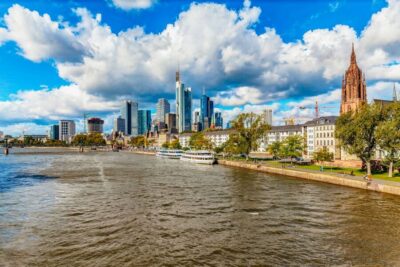
River Main Sightseeing Cruise with Commentary
Read our review →
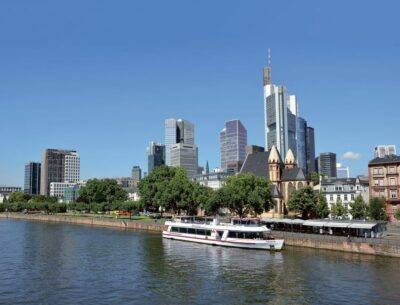
1-Hour Panorama Boat Cruise on the river Main
Read our review →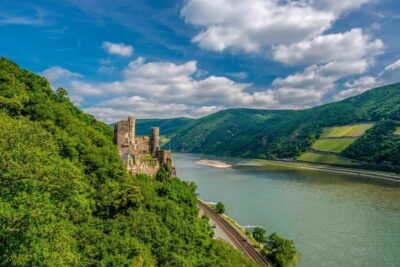
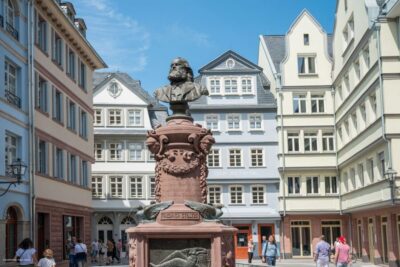
New Old Town and Highlights German-Language Tour
Read our review →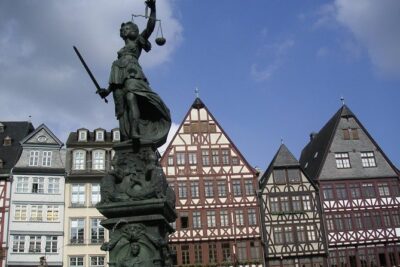
Rhine Valley Trip from Frankfurt including Rhine River Cruise
Read our review →
Browse the lists this tour appears in