

Reviewed · LEIPZIG TOURS
Federal Administrative Court Leipzig: A journey into the heart of German justice
German justice has serious wow-factor. This 1.5-hour tour feels special because you get the historic meeting rooms and the case history behind famous decisions, all tied to the Imperial-era building that still functions as a working court, but the time can feel a bit tight if you like slow, extra-deep explanations.
I like that the focus stays practical: you see how German administrative justice developed, from Wilhelmine foundations to today’s Federal Court. The tour is guided in German (English is available on request), and you’ll walk through places that are normally out of reach, including courtroom spaces and the former president’s apartment.
In This Review
- Key moments you will not forget
- Why Germany’s top administrative court is worth seeing in person
- Simsonplatz meeting point and what to know before you go
- Wilhelmine architecture from 1879: coats of arms, ceremony, and power
- Exploring historic meeting rooms and the big courtroom moments
- Reichstag fire trial (1933): how famous courtroom history is explained
- October 1907 and Karl Liebknecht: legal defense tied to publication
- Crimson robe and beret: why judicial dress still matters
- From GDR art museum to Federal Court seat in 2002
- The former president’s apartment visit: a human scale to an institutional place
- Price and value: is 14 dollars for 1.5 hours fair?
- Who should book this Leipzig justice tour?
- Should you book the Federal Administrative Court tour?
- FAQ
- Where is the meeting point for the tour?
- How long does the tour last?
- How much does it cost per person?
- What is included in the guided experience?
- What languages is the tour offered in?
- Is the tour wheelchair accessible?
- Is it suitable for children?
- Are pets allowed?
- What is the cancellation policy?
Key moments you will not forget
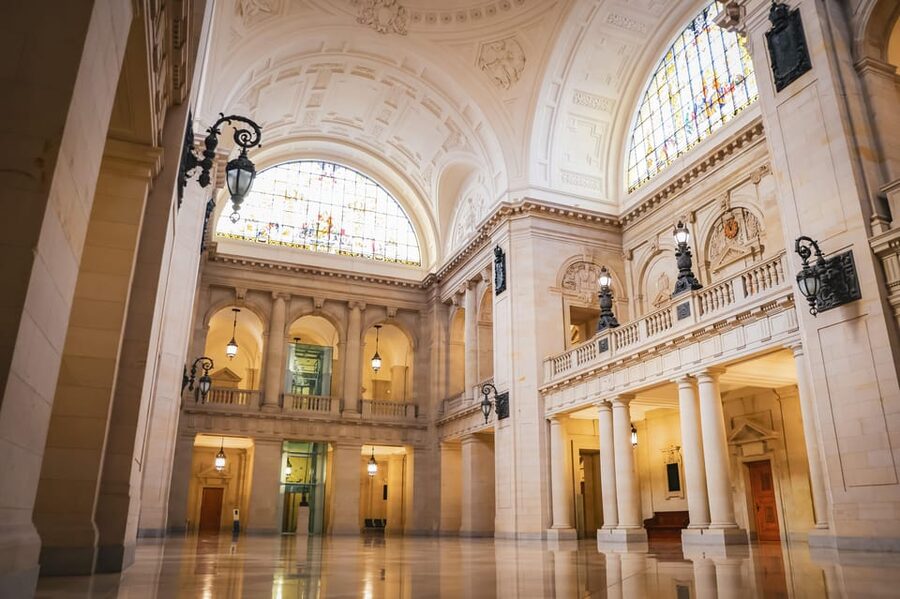
- Historic meeting rooms where you connect today’s law to the past.
- Courtroom visuals like national coats of arms and Imperial paintings in the main hall.
- Reichstag fire trial history (1933) explained in context, not as random trivia.
- Official judge dress details, including the crimson robe and beret.
- A building with three lives, built in 1879, used as a GDR art museum, then returned as a federal seat in 2002.
- A rare home-quarters stop in the former president’s apartment area.
Why Germany’s top administrative court is worth seeing in person
The Federal Administrative Court in Leipzig is the highest court for administrative law in Germany. That means its judges handle disputes over how the state applies regulations and public administration, and they also help shape how the law evolves.
What makes this tour compelling is the way it treats justice as something physical, not abstract. You are not just hearing about legal principles. You’re looking at a building designed for authority, procedure, and ceremony, and then you’re pairing that with real decisions and courtroom stories from different eras. It is history with structure.
You also get a clear sense of scale. The court operates across 14 senates, so you can imagine the range of cases behind the scenes, even though the tour focuses on a curated slice of history.
A few more Leipzig walks and trips to compare
- Leipzig: City History Canal Sightseeing Tour on a Motorboat
★ 4.7 · 7,671 reviews - Leipzig: 1.5-Hour Public Tour with Night Watchman Bremme
★ 4.6 · 3,116 reviews - Combo Tour in Leipzig: Guided City Tour & City Sightseeing
★ 4.7 · 2,317 reviews
Simsonplatz meeting point and what to know before you go
Plan on arriving 10 to 15 minutes early at Simsonplatz 1, right in front of the court. It matters because this is a timed guided experience, and you want to start without stress.
A few rules shape the vibe inside:
- No pets are allowed (assistance dogs are fine).
- Alcohol and drugs are not permitted.
- Party groups, including bachelor and bachelorette groups, are not allowed.
- Children under 14 are not suitable.
Two practical notes that can affect your enjoyment:
1) The tour is conducted in German, with English only on request.
2) Some content may be shown in its original language, so people who prefer English narration should ask early.
If you are comfortable reading the room, and you like history plus architecture, this format works well.
Wilhelmine architecture from 1879: coats of arms, ceremony, and power
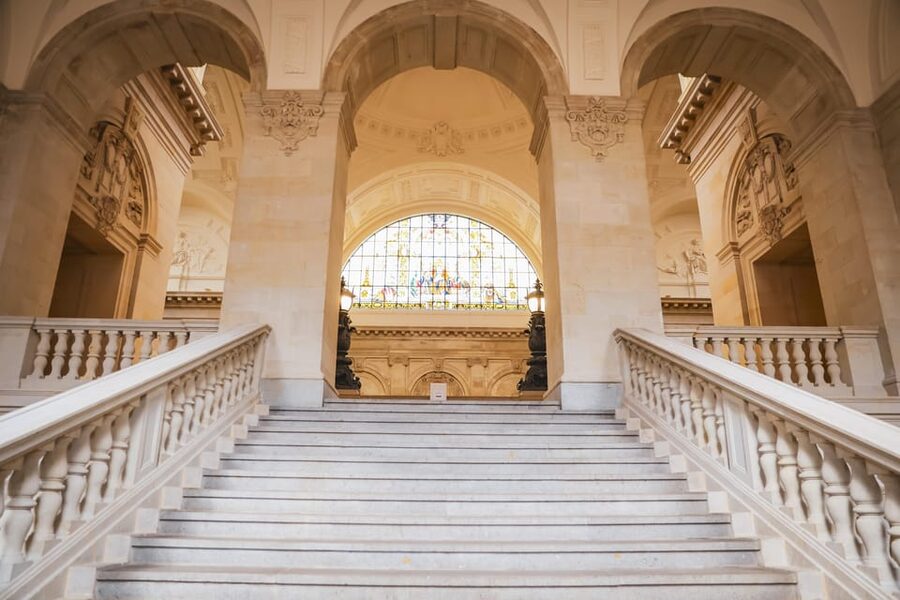
The building was constructed in 1879 as the Imperial Court of Justice, during the Wilhelmine era. In other words, it was designed for a specific kind of state authority: formal, visible, and meant to command respect.
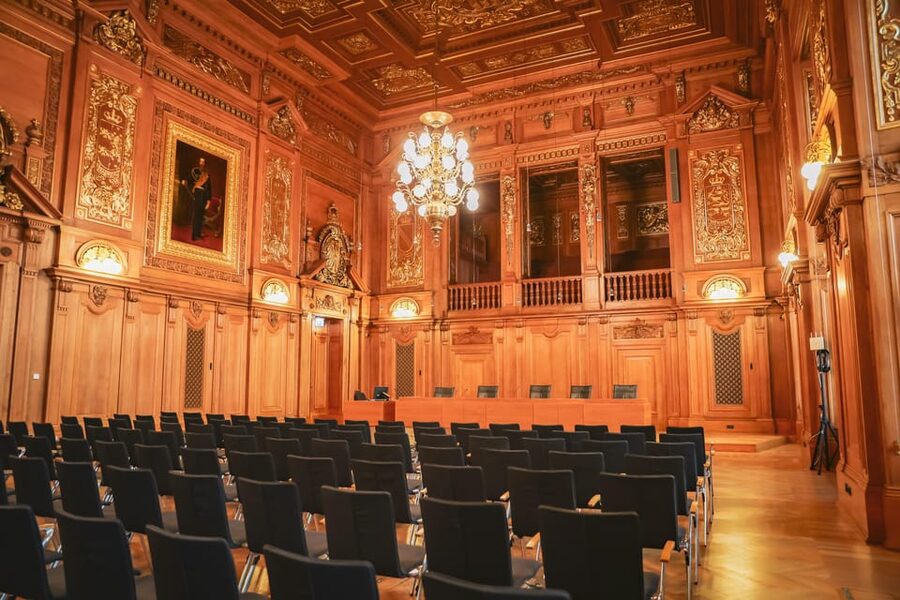
Inside, that intent comes through in details you can actually see. You will encounter impressive national coats of arms and Imperial paintings in the large courtroom. These are not decorative afterthoughts. They help communicate legitimacy and continuity, which is part of why courts have long leaned into ceremony.
Even if you are not an architecture fanatic, these features make the history easier to grasp. When you see the symbols and paintings, the shift from Imperial era to modern federal justice stops feeling like a vague timeline. It becomes a story told in stone, paint, and layout.
The court’s official function also adds meaning. The place is still a working seat of jurisdiction, not a museum set dressed to look real. That blend of old design and current purpose is one of the big reasons this tour feels worth your time.
Exploring historic meeting rooms and the big courtroom moments
One of the best parts is the walk through the historic courtrooms and meeting rooms. These are the spaces where decisions were made, arguments were heard, and procedure mattered as much as the content.
This is where the tour’s structure pays off. You start to recognize what you are looking at: where a courtroom directs attention, how a meeting room changes the tone of discussion, and how physical layout supports procedure. That helps you connect the legal stories to the setting, instead of treating the history like separate facts.
The large courtroom is a standout. You will see the national coats of arms and Imperial paintings there, and the tour ties them to the building’s original judicial role in the Wilhelmine era. It is the kind of space that makes you understand why justice has always had theater. Even today, the court’s purpose depends on public trust and formality, and the building is part of that message.
A small consideration: since you are guided through multiple rooms in a set time, you will likely move at a steady pace. If you love photography and want long stops, keep expectations realistic.
Same city, a different way to spend the afternoon:
- Leipzig: 1.5-Hour Historical Walking Tour in German
★ 4.7 · 2,217 reviews - Leipzig: 2-Hour Guided Walking Tour in German
★ 4.8 · 1,612 reviews - Leipzig: 13-Stop Hop-on/Hop-off Bus Ticket
★ 4.6 · 1,468 reviews - Leipzig: Bus Tour
★ 4.5 · 1,457 reviews
Reichstag fire trial (1933): how famous courtroom history is explained
A major thread in the tour is the Reichstag fire trial from 1933. Even if you know the headline history, the value here is in the courtroom connection. You are not just hearing dates and names. You are learning what the court environment and official process meant in practice during that period.
Because the tour frames the story within the court’s long judicial tradition, you can see how 1933 fits into the broader arc of German legal development, rather than feeling like a standalone tragedy.
This is also the kind of topic that benefits from a guided explanation. It can be heavy, and the guide’s job is to keep it clear and understandable without oversimplifying. The tour’s general feedback style you will want to look for is that it stays engaging and not dry, which matters a lot when discussing politically charged legal history.
October 1907 and Karl Liebknecht: legal defense tied to publication
Another specifically mentioned case is the October 1907 trial involving Karl Liebknecht. The key detail is that he had to defend himself for the publication of his writings.
This stop is valuable because it shows justice working at the boundary between authority and speech. Even though the exact case details are not for you to memorize, the tour uses it to illustrate how legal systems respond to political expression and public writing.
When you stand in historical rooms while hearing a story like this, it lands differently. You can imagine the courtroom atmosphere, the formality, and how the law was applied in real conflict. It turns abstract ideas like freedom, responsibility, and legal interpretation into something more concrete.
Crimson robe and beret: why judicial dress still matters
One of the most practical and memorable pieces is the explanation of official judge dress, still used today in identifiable form. You will learn about the crimson robe and the beret that make federal judges recognizable.
This is not just a trivia moment. It speaks to how courts maintain authority and continuity across time. Clothing becomes a visual code that signals role, impartiality, and institutional gravity.
I like this part because it breaks the history into something you can picture instantly. It also gives you a lens for noticing judicial authority when you encounter it elsewhere in Germany. After this, you will probably look at photos and official images differently.
From GDR art museum to Federal Court seat in 2002
The building’s life changed a lot over the years. During the GDR era, it was used as an art museum. Then, in 2002, it returned as the seat of the Federal Court.
This matters because it shows how buildings can outlast the systems that created them. The architecture remains, but the meaning changes. Art museum use reshapes what visitors expect from the space, while a federal court use reshapes expectations again.
On a personal level, I think this is one of the most honest ways to understand German history in one place. You are not only hearing about political shifts. You are standing in a structure that physically absorbed those shifts.
The tour connects this change of use to how judicial tradition is maintained. That helps you see the court as part of a long continuity, not as a sudden modern invention.
The former president’s apartment visit: a human scale to an institutional place
A highlight is the visit to the historic former presidential apartment area, described as a home visit to the former president. This stop adds a human angle that keeps the tour from becoming only about law and architecture.
It also helps you understand that courts are institutions run by people with routines, responsibilities, and offices. Even though you are in a place of high formality, the apartment visit reminds you the court system is also managed day to day.
You should expect this part to be quieter and more intimate than the large courtroom spaces. It is a good contrast, and it often makes the tour feel more varied in a short 1.5-hour window.
Price and value: is 14 dollars for 1.5 hours fair?
At $14 per person for a 1.5-hour guided tour, this is strong value for what you get. You are paying for:
- Guided access to historic courtrooms and meeting rooms
- The architectural and historical storytelling that connects court decisions to space
- A stop that many typical sightseeing options do not offer, the former president’s apartment area
In Europe, official guided access to institutions can cost much more, especially when it includes interior court spaces. Here, the low price makes it a smart choice for people who want meaningful context without paying museum-admission-level prices.
The main tradeoff is time. At 1.5 hours, you get a curated route, not endless conversation. If you want a slower pace or lots of discussion, you might feel it ends quickly. But if you like focused, well-told highlights, it fits.
Who should book this Leipzig justice tour?
This tour is a great fit if you like any of the following:
- Legal history or political history that connects to real places
- Architecture that has purpose, not just beauty
- Courtroom stories, especially the kind that show law colliding with major events
- A guided experience that explains symbols, procedures, and context in plain terms
It is also ideal for travelers who like short tours with high meaning. You can do it even if you have limited time in Leipzig, because the duration is 1.5 hours.
It is probably less ideal if:
- You only want English-language narration and cannot request it
- You need a longer, slower pace for heavy topics
- You are traveling with children under 14, since it is not suitable
Should you book the Federal Administrative Court tour?
Book it if you want a practical, story-driven look at German justice, in a building that still does the job. The combination of courtroom access, Wilhelmine-era design, and concrete case history like the Reichstag fire trial of 1933 and Karl Liebknecht’s October 1907 defense makes it feel more grounded than a typical cultural stop.
Skip it if language access is a deal-breaker for you, or if you prefer very long, unhurried museum-style visits. Also, be realistic about the time limit, because the route is designed as highlights.
If you are the kind of traveler who likes your history with context, and your sightseeing with purpose, this is a very sensible ticket.
FAQ
Where is the meeting point for the tour?
Meet at Simsonplatz 1 in front of the Federal Administrative Court.
How long does the tour last?
The duration is 1.5 hours.
How much does it cost per person?
The price is $14 per person.
What is included in the guided experience?
You get a guided tour of the Federal Administrative Court, visits to historic courtrooms, and a visit to the former presidential apartment.
What languages is the tour offered in?
The tour is held in German. English may be available on request, and some content can be shown in its original language.
Is the tour wheelchair accessible?
Yes, it is wheelchair accessible.
Is it suitable for children?
No, it is not suitable for children under 14.
Are pets allowed?
Pets are not allowed, though assistance dogs are allowed.
What is the cancellation policy?
Free cancellation is available if you cancel up to 24 hours in advance for a full refund. There is also a reserve now and pay later option so you can book without paying immediately.
Newest Leipzig reviews on the site
- House of Banksy Leipzig – An Unauthorized Exhibition★ 4.6 · 14 reviews
- Halle (Saale) : Die Altstadt-Tour★ 4.6 · 71 reviews
- Halle (Saale): The Court Tour★ 5.0 · 5 reviews
- Halle (Saale) : Halle Card 2-Tages-Ticket★ 4.5 · 5 reviews
- Halle (Saale) : Die Stadtrundfahrt mit dem Bus★ 4.1 · 79 reviews
- Guided tour of the Federal Administrative Court in Leipzig★ 4.8 · 54 reviews
- Mulled wine ride in the Leipzig New Zealand★ 4.6 · 12 reviews
- Der Leipziger Passagen-Rundgang in der Altstadt★ 4.8 · 124 reviews
Leipzig Tours, compared.

City History Canal Sightseeing Tour on a Motorboat
Read our review →
1.5-Hour Public Tour with Night Watchman Bremme
Read our review →
Combo Tour in Leipzig: Guided City Tour & City Sightseeing
Read our review →


Browse the lists this tour appears in