
Reviewed · CITY TOURS
Discover the Heart of Frankfurt – City Tour in German
Frankfurt clicks in two hours. With Dimitri, a local guide who has lived in the Main metropolis for 35 years, you’ll get humor plus smart wayfinding through Paulskirche, the Römer, the Iron Footbridge, and the Neue Altstadt, with Dimitri’s humor and street-level detours doing most of the work.
My favorite part is how the route keeps you moving without feeling rushed, while also explaining why each landmark matters, even when you only see it from the outside. One consideration: most stops are exterior views, and only short interior access is possible if certain spaces are open, so plan for extra self-guided time if you want lots of museum or church interiors.
In This Review
- Key highlights worth knowing
- Why this 2 hour Frankfurt walk is a smart start
- Meet Dimitri at Paulskirche, then get oriented fast
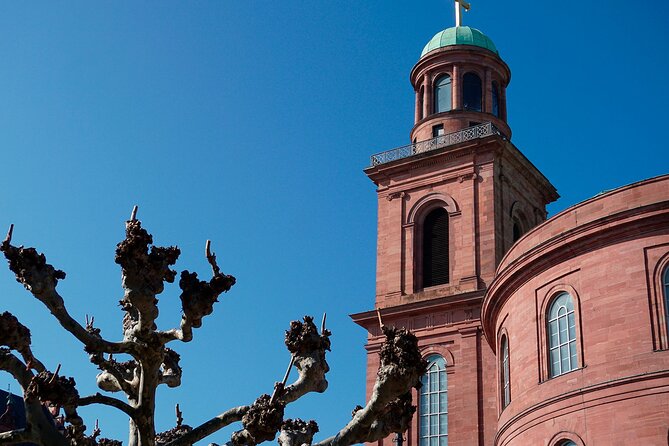
- St. Paul’s Church (Paulskirche): democracy that you can see
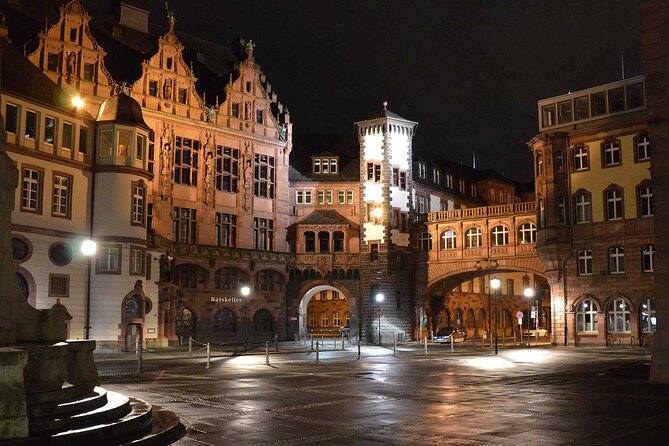
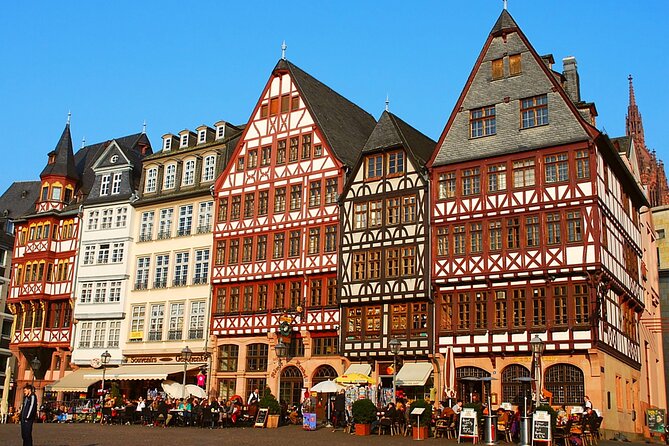
- The Römerberg and the Römer: the city hall that shaped power
- Inside the Kaisersaal: when you get access
- Mainkai and Eiserner Steg: river Frankfurt has its own logic
- Haus Wertheym: sweet stories in a surviving half-timbered building
- A brief museum peek: the Staufer wharf moment
- The art and cathedral corridor: Schirn and St Bartholomew from the outside
- Alte Nikolaikirche and the Neue Altstadt: old church bells and new building choices
- Price and value: what $21.97 gets you in the real world
- Practical tips to make your tour smoother
- Should you book this Frankfurt highlights tour?
- FAQ
- What language is the tour in?
- How long does the Frankfurt city tour last?
- Where does the tour start and where does it end?
- Is the tour mostly outside?
- Will I be able to go inside any buildings?
- Is the tour ticket mobile?
- What is included in the price?
- Are food and drinks included?
- Are pets allowed?
- Can I get a full refund if I cancel?
Key highlights worth knowing
- Dimitri leads with energy and often uses printed pictures so you can compare old Frankfurt before rebuilding with what you see now
- Paulskirche ties to democracy through the 1848 Frankfurt National Assembly and the Peace Prize connection
- Römerberg and the Römer town hall give you the political power center of the city, plus coronation-era context at the Kaisersaal when accessible
- Mainkai and Eiserner Steg explain the city’s citizen-driven spirit, from river life to the Iron Bridge’s history
- Haus Wertheym mixes architecture and snacks, with quick stories around classic Frankfurt sweets like Frankfurter Kranz and Bethmännchen
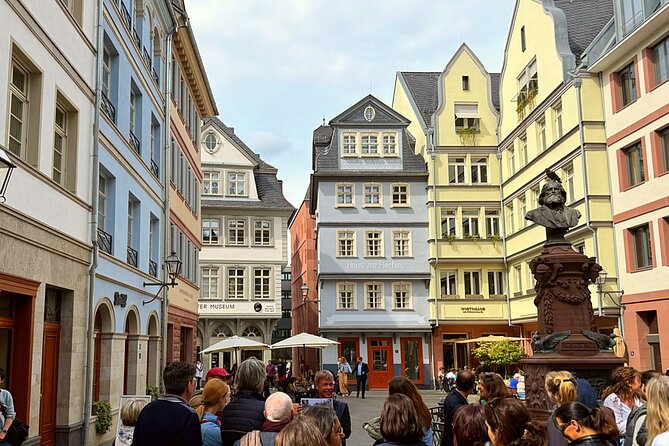
- The Neue Altstadt shows modern reconstruction choices, where faithful historic copies sit next to newer buildings in the Dom Römer Quartier
Why this 2 hour Frankfurt walk is a smart start
If you only have a little time in Frankfurt, this format works because it’s built like a guided “story route.” In about two hours, you cover the old core plus a couple of river and architecture pivots, so you leave with a mental map that makes the rest of the city easier.
The guide’s style is also practical. You’ll get short stops, clear explanations, and plenty of room for questions, including quick answers about what you’re looking at right then. The group stays small, with a maximum of 25 people, which helps the pace feel human.
A few more Frankfurt walks and trips to compare
- Frankfurt: River Main Sightseeing Cruise with Commentary
★ 4.3 · 5,127 reviews - Frankfurt: Hop-On, Hop-Off Grand or Express Bus Ticket
★ 3.9 · 2,088 reviews - Frankfurt: 1-Hour Panorama Boat Cruise on the river Main
★ 4.4 · 1,822 reviews
Meet Dimitri at Paulskirche, then get oriented fast
Your tour starts at Paulsplatz 11, by St. Paul’s Church (Paulskirche). That’s a smart meeting point because it instantly frames Frankfurt’s role in German history, not just banking and trade.
Dimitri’s pitch is simple: Frankfurt is the “smallest city in the world,” and you’ll only see why if you walk it like a neighborhood. He’s lived here for decades, so the tour feels less like a checklist and more like a guided walk through local perspectives, with humor that keeps things light.
St. Paul’s Church (Paulskirche): democracy that you can see
Most of the Paulskirche experience here is exterior, which is fine because the building already carries meaning. It was built between 1789 and 1833 as a central church for the Evangelical Lutheran community, then became the meeting place of the Frankfurt National Assembly in 1848, described as the first freely elected parliament in Germany.
Paulskirche was destroyed during World War II and rebuilt in 1948, and today it functions as an exhibition, memorial, and meeting place. There’s also a modern cultural tie-in: it is well known for the annual awarding of the Peace Prize of the German Book Trade.
A useful heads up: the guide notes that the interior visit is typically separate, so if you want to go inside, plan to do it after the tour rather than expecting a long interior stop.
The Römerberg and the Römer: the city hall that shaped power

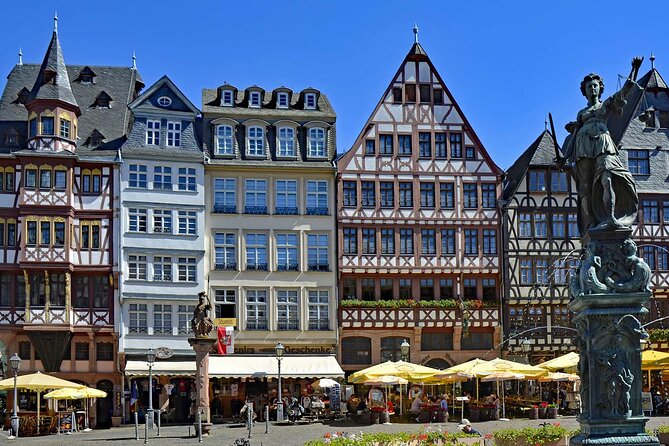
From Paulskirche, you move into the older civic heart. Römerberg is the historic core, once a central market square in the Middle Ages and a stage for major events, including imperial coronations. In the 16th century it was considered one of the most beautiful squares in the Holy Roman Empire, so this wasn’t just a practical place, it was a proud one.
World War II damage changed everything, but the square was rebuilt after the war, and you’ll see today’s mix of rebuilt context and living city use. Römerberg is also where you’ll find the annual Frankfurt Christmas market, which adds a seasonal layer if your timing lines up.
Then comes the Römer, the historic town hall complex in Frankfurt’s old town. It has served as the town hall since 1405, and the stepped gable façade is the landmark look of the Römerberg area. During the tour, you’ll focus on the complex from key vantage points, including time at the inner courtyard areas when part of the route allows, with short storytelling moments.
Same city, a different way to spend the afternoon:
- From Frankfurt: Rhine Valley Day Trip
★ 4.4 · 1,317 reviews - Frankfurt: New Old Town and Highlights German-Language Tour
★ 4.7 · 1,316 reviews - Frankfurt Highlights English Walking Tour
★ 5.0 · 1,203 reviews - Rhine Valley Trip from Frankfurt including Rhine River Cruise
★ 4.0 · 1,179 reviews
Inside the Kaisersaal: when you get access
The highlight here is the Römer Kaisersaal, the ceremonial hall in the Römer complex. It’s associated with coronation ceremonies of Roman-German emperors, and the room’s status as a place for official receptions continues today.
One note for your planning: interior access is described as short and conditional on opening status. So if you catch it while open, great, and if not, don’t panic. The exterior views still communicate the structure and the civic importance, and the guide’s explanation is built to work even when you can’t go inside.
Mainkai and Eiserner Steg: river Frankfurt has its own logic
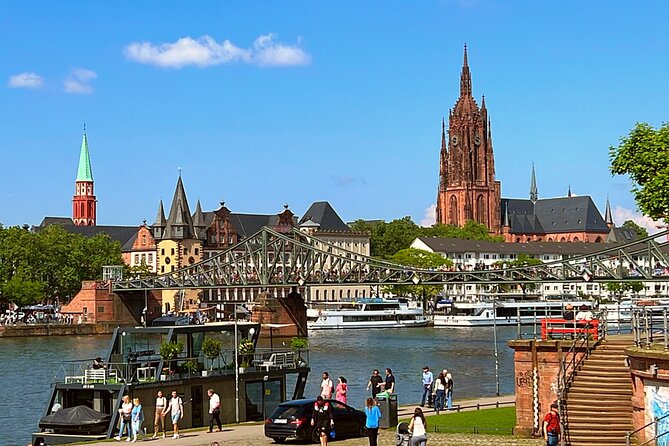
After the civic center, the tour pivots to the Main River. Mainkai is a promenade on the right bank, stretching between the Old Bridge and the Untermainbrücke. In the Middle Ages, it was used for mooring and landing, and then in 1826 it was transformed into a more modern street by filling in and widening.
It’s a good area for a short breather because the setting makes it obvious why Frankfurt built life around the river. You’ll hear about sights along the way, including the Saalhof and Rententurm, and the Mainkai also serves passenger shipping and connects to river cruises. In summer, it becomes a cultural runway for events and festivals.
Next is the Iron Footbridge (Eiserner Steg). It opened in 1869 and was financed by a citizens’ initiative, because the Old Bridge couldn’t handle growing traffic. It was destroyed in World War II, rebuilt in 1946, then adjusted in 1993 by raising it slightly for modern requirements.
This stop is more than a photo op. It’s a neat example of Frankfurt being practical and community-minded, then upgrading systems as the city changes. If you like strong viewpoints, this is a good moment to pause and frame a shot of the river crossing.
Haus Wertheym: sweet stories in a surviving half-timbered building

The tour then shifts to Haus Wertheym, where you’ll take an exterior look and get quick background tied to Frankfurt’s classic sweets. The house is a half-timbered structure built around 1600, and what makes it special is that it is described as the only half-timbered house in the old town that survived World War II air raids almost unscathed.
It originally served as a customs house and lodging for the city guard. After renovation in 1926, the first floor became a café and restaurant, and today it’s listed and popular with visitors who like architecture that survived history rather than only recreations.
The tour’s sweet-focused storytelling is handy because it turns a building exterior into a mini-food culture lesson. You’ll hear short explanations connected to treats like Frankfurter Kranz and Bethmännchen, which is useful if you plan to snack later.
A brief museum peek: the Staufer wharf moment
You’ll also pass by the Historisches Museum Frankfurt, but this isn’t about a full museum visit during the tour. The route includes a quick look at the Staufer wharf connected to the “Stauferhafen” archaeological story.
Even as a short stop, this works well because it gives you a concrete archaeological anchor for Frankfurt. You’re not just dealing with medieval architecture; you’re seeing evidence that the city has been layered for a very long time.
The art and cathedral corridor: Schirn and St Bartholomew from the outside
As you continue, you walk past Schirn Kunsthalle Frankfurt, a major contemporary art exhibition space opened in 1986. The tour keeps this exterior, but it still matters because the location sits right in the center between the Römer area and Frankfurt Cathedral.
Just as important is the street approach: you’ll pass through Saalgasse, a historic street parallel to the Main that was redesigned after World War II as part of the old town reconstruction. The street is known for modern, colorful facades, which means this stretch shows how the city mixes old patterns with newer design choices.
Then you reach the Cathedral of St. Bartholomew (Dom St Bartholomaus) viewpoint. Like the other big monuments, you mainly see it from the outside, but that’s still valuable because the cathedral is one of the defining skyline features in this part of Frankfurt. The guide’s explanations help you read what you’re seeing instead of just treating it like a backdrop.
Alte Nikolaikirche and the Neue Altstadt: old church bells and new building choices
The route includes Old Nicholas Church (Alte Nikolaikirche) from the outside. This late Gothic church was originally built as a court chapel in the 12th century and became the city council chapel in the 15th century. It served as a place of worship for the Hohenstaufen emperors.
A World War II detail matters here: the church is described as largely undamaged, while the surrounding old town was destroyed. After the war, it was restored, and today it’s both a monument and a venue for church services and cultural events.
One practical detail to watch for is the carillon with 51 bells, which can be heard regularly. Even if you don’t catch the bells exactly during your visit, it’s a strong clue that this area is still actively used, not just staged for photos.
Finally, you end at Neue Altstadt, also known as the Dom Römer Quartier. This is a key stop for understanding modern Frankfurt’s relationship with the past. The project was completed between 2012 and 2018 on about 7,000 square meters, building 35 buildings. The mix is described as 15 faithful reconstructions of historic houses and 20 modern new buildings.
You’ll specifically spend time around standout structures, including Haus zur Goldenen Waage, plus the Rote Haus and Goldene Lämmchen. What I like about this final stretch is that it doesn’t pretend reconstruction is the same as untouched history. Instead, it shows how the city chooses what to recreate and where to add new.
The tour route ends at Römerberg, so you’ll also finish in the same central pocket that makes it easy to keep exploring on your own, whether you want to linger at the square or branch toward cafes and shops nearby.
Price and value: what $21.97 gets you in the real world
At $21.97 per person, this is priced like a focused neighborhood experience, not a long bus tour. You’re paying mainly for two things: the guide time and the “how to see it” approach that turns landmarks into an understandable story.
The tour includes a guided walking tour in German with a certified German-speaking guide, plus short access to the Imperial Hall in the Roman Empire and the Palatinate Franconofurd only if those spaces are open. You also receive a mobile ticket, which keeps logistics simple.
What you do not get is transportation or food and drinks. That’s normal for walking tours, but it changes how you should plan your day. I’d treat this as a morning or early afternoon anchor for your Frankfurt sightseeing, then budget time for a proper meal afterward.
If you’re deciding quickly: a small group size, strong guide energy, and a tight route that covers major reference points in under two hours is a good value. It also helps that the experience is widely rated at 5 out of 5 based on 14 reviews, which usually signals consistent guide quality.
Practical tips to make your tour smoother
Come in with comfortable shoes. This is a city walk, and even when stops are short, your legs will do most of the work.
If you care about interiors, ask early what might be open that day. Interior moments are conditional, but you can often plan how to use your extra time once the tour ends.
Because the tour is in German, it helps if you’re comfortable following spoken German at a basic level. If your German is limited, you can still enjoy the visual explanations, but you’ll get the most out of it when you can catch the finer details.
Photo-wise, you’ll get repeated chances in the old town core, especially around the Römerberg area and the Iron Footbridge. I’d also look for the contrast views Dimitri’s route encourages, old town angles next to newer reconstructions.
Should you book this Frankfurt highlights tour?
I think you should book if you want a fast, guided introduction to Frankfurt’s old center that actually explains what you’re seeing. This tour is especially good for first-timers and for anyone who thinks they know Frankfurt but hasn’t focused on the old town redevelopment stories, the river bridges, and the meaning behind civic buildings.
Skip it, or at least pair it with extra self-guided time, if you want long interior visits. Since most stops are exterior views and only certain rooms are accessed when open, this works best as orientation and storytelling, not as a full museum or full church program.
If you’re ready for a compact walk with a passionate local, Dimitri’s approach is exactly the kind of guide you want in your first half-day in Frankfurt.
FAQ
What language is the tour in?
The tour is guided in German by a certified German speaking guide.
How long does the Frankfurt city tour last?
It lasts about 2 hours.
Where does the tour start and where does it end?
It starts at St. Paul’s Church (Paulsplatz 11, 60311 Frankfurt am Main) and ends at Römerberg (60311 Frankfurt am Main Innenstadt I).
Is the tour mostly outside?
Yes. Key sights are generally viewed from the outside, including Paulskirche, the Römer area viewpoints, Haus Wertheym, the Alte Nikolaikirche, Schirn Kunsthalle, and the cathedral area.
Will I be able to go inside any buildings?
There can be short tours of the Imperial Hall in the Roman Empire and the Palatinate Franconofurd if they are open. Paulskirche is usually only visited from the outside during the tour.
Is the tour ticket mobile?
Yes, the tour uses a mobile ticket.
What is included in the price?
You get the German guided walking tour with the certified German speaking guide, plus the short interior options when open.
Are food and drinks included?
No. Food and drinks are not included.
Are pets allowed?
Pets are not allowed, except for assistance dogs or medical assistance dogs.
Can I get a full refund if I cancel?
Yes, free cancellation is available. You can cancel up to 24 hours in advance for a full refund, and cancellations within 24 hours are not refunded.
Newest Frankfurt reviews on the site
- from Frankfurt: historic treasure Rothenburg, private 1 day Tour★ 5.0 · 9 reviews
- magnificent historic Heidelberg, private Tour, from Frankfurt★ 4.5 · 15 reviews
- from Frankfurt: Heidelberg, Mercedes Museum / Schwetzinger Schloß★ 5.0 · 35 reviews
- The Tales of Frankfurt’s New Old Town: A Self-Guided Audio Tour★ 5.0 · 7 reviews
- from Frankfurt – romantic Black Forest & brewery, private tour★ 5.0 · 13 reviews
- Fairytale Rüdesheim and Monastery Eberbach Tour★ 5.0 · 9 reviews
- Frankfurt PubCrawl Weekend Pass (Fri + Sat) – Shots & Party★ 5.0 · 5 reviews
- Private German Beer Tasting Experience in Frankfurt Old Town★ 5.0 · 14 reviews
City Tours, compared.
1-Hour City Tour by Boat with Guaranteed Seating
Read our review →
City History Canal Sightseeing Tour on a Motorboat
Read our review →
Browse the lists this tour appears in