
Reviewed · GERMANY
About Vikings, kings and cheeky monks (Medieval Schleswig)
Medieval Schleswig, minus the busywork. This 1.5-hour guided stroll strings together Schleswig Cathedral exteriors, the old town’s quiet details, and the Holm fishing settlement with its specific medieval fishing privileges. It has that calm, Nordic hygge feel, so history doesn’t feel like homework.
I especially like how the tour makes the city’s trading past feel real, not just dates on a plaque. You also get a cozy angle on the water, with the harbor atmosphere doing half the storytelling. One thing to consider: the cathedral interior is not included, so if you want inside views, you may need an add-on depending on timing.
In This Review
- Key points before you go
- Starting at Rathausmarkt, where Schleswig feels like a real town
- Schleswig Cathedral from the outside: what the Danish kings wanted
- Old town lanes and the city harbor, where the water sets the pace
- Holm fishing settlement and the Schleibrief of 1480
- St. John’s Monastery, best preserved, and the mystery of reputations
- Price and logistics for a $17, 1.5-hour history hit
- Should you book this medieval Schleswig tour?
- FAQ
- How long is the Medieval Schleswig tour?
- What will we see during the tour?
- Is the cathedral interior included?
- What language is the tour guide?
- Where is the meeting point?
- Is there free cancellation?
Key points before you go
- Outdoor first, inside optional, so you should not plan on cathedral interior time.
- A guided path through three “time zones” of Schleswig, cathedral, town lanes, then Holm fishing history.
- Holm rights explained, including the significance of the Schleibrief from King Christian I in 1480.
- St. John’s Monastery gets real context, not just a photo stop.
- You’ll learn by asking, since the guide is set up to work with your questions.
- Good for adults and older kids, but if you’re bringing very young children, you might prefer a shorter or more hands-on activity.
Starting at Rathausmarkt, where Schleswig feels like a real town
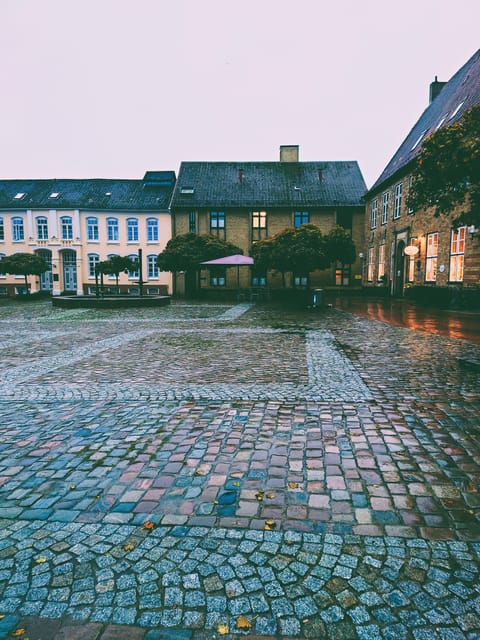
The tour begins at Rathausmarkt, right in the heart of Schleswig, in front of the local place called Alte Apotheke. That matters more than it sounds. From this central point you can quickly orient yourself, and you’re already stepping into the mix of old and everyday life.
In 90 minutes, this route stays focused. You are not sent sprinting across the city. You move at walking pace from one meaningful stop to the next, with the guide explaining why these places mattered when Schleswig was bigger and busier in medieval trade networks than many people expect.
You will notice the tone right away. The tour has that hygge style, calm and comfortable, which helps when the topic is medieval politics and maritime commerce. The guide keeps it readable and conversational, and the best part is that questions get folded into the plan rather than dismissed.
Practical note for planning your day: the tour is live, guided in German, and the duration is 1.5 hours. If you want to pair it with other sights, you can usually still fit in a self-guided wander afterward, because the route stays in central areas.
Wheelchair accessibility is supported, which is a big plus for a small city tour like this. Just remember that you’re walking a route in older streets, so bring comfortable shoes.
More of Germany worth an hour:
- Berlin: Reichstag, Dome and Government District Guided Tour
★ 4.7 · 18,288 reviews - Hamburg: Sex and Crime in St. Pauli Tour for Ages 18 +
★ 4.7 · 17,793 reviews - Berlin: 1-Hour City Tour by Boat with Guaranteed Seating
★ 4.3 · 16,993 reviews
Schleswig Cathedral from the outside: what the Danish kings wanted
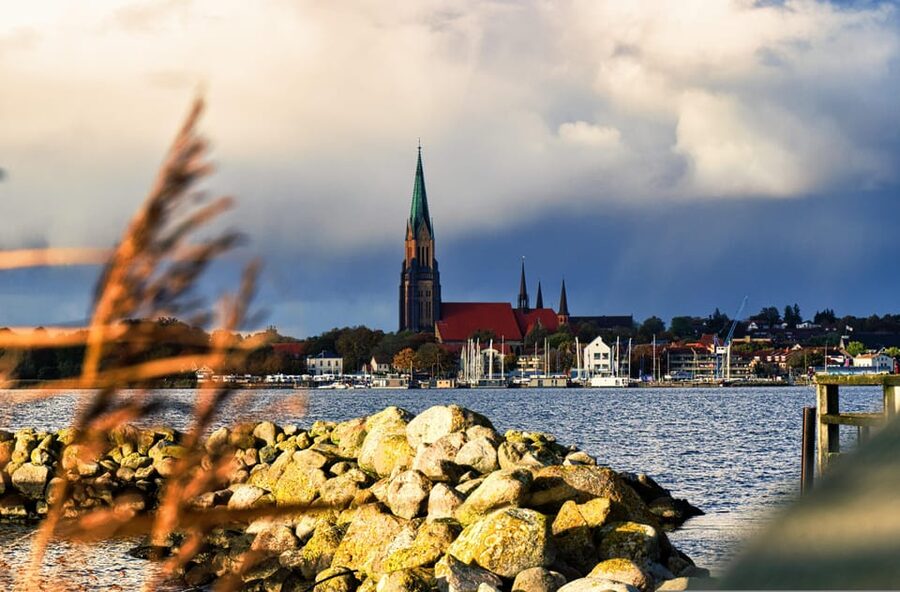
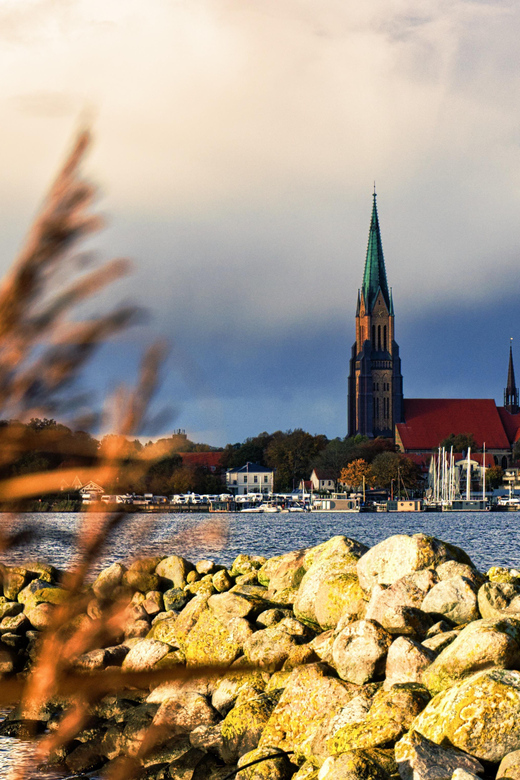
Your first major landmark is the historic Schleswig Cathedral, and yes, it’s an exterior visit. That can sound limiting, but I actually think it’s smart. The guide uses the exterior setting to talk about what the cathedral meant politically, especially in connection with Danish kings.
Schleswig’s early Middle Ages were built around trade, and the shipping corridor along the Schlei helped turn the city into a known name beyond the region. This is where the cathedral enters the story. You’re not just looking at a landmark, you’re seeing why power would want to plant its symbol here. The exterior viewpoint gives you a clear sense of the site’s presence in the cityscape, and you can link it to the port and town areas that come next.
Even better, the tour doesn’t stop at simple praise for the building. You’re asked to connect two questions: Why did Schleswig lose its top spot in the trade network over time, and what changed in the city? When you hear those ideas while standing near the cathedral, it feels less like a history lesson and more like city logic.
If you care about interior architecture, plan with flexibility. The cathedral interior tour is not included, but it can be booked at an additional charge depending on the time of day. So consider this an exterior-focused history walk, with an optional upgrade if the schedule lines up.
Old town lanes and the city harbor, where the water sets the pace
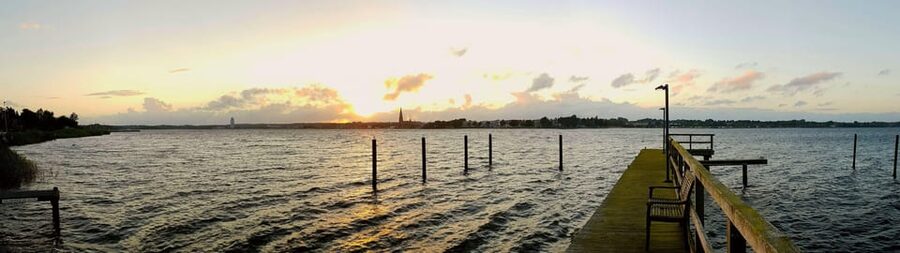
After the cathedral, the tour shifts into Schleswig’s picturesque old town. This is where you learn to read the town layout instead of just scanning for pretty corners. The guide points out how the medieval economy shaped the present-day feel of the area, and you start noticing how close key parts of the city still seem to sit to the water.
The harbor stop, described as a cozy city harbor, is one of those moments that can be easy to underappreciate if you rush. Don’t. Take a few minutes to slow down. When you hear about Schleswig as a trading city with active harbor life in the early Middle Ages, the harbor setting becomes more than scenery. It becomes the stage where ships, goods, and people would have moved.
Here’s the value of the old town portion: it bridges the big story. The cathedral represents power and meaning. The town lanes show daily life. And the harbor ties both together through shipping along the Schlei.
You’ll also get a sense of why the Schlei mattered so much. The guide frames the Schlei as an important shipping route early on, and then helps explain what happens when a city’s transport role changes. That’s the kind of explanation that makes you understand not just Schleswig, but how towns rise and fall anywhere along waterways.
The tone stays friendly and practical. In the better moments, the guide answers specific questions without losing the thread of the walk. One review note that really stands out in my mind is how guides can integrate your concerns smoothly. That’s the ideal setup for a small group tour.
Holm fishing settlement and the Schleibrief of 1480
Holm is where the tour turns from general medieval trade into specific local rules, and that’s one reason this experience feels more memorable than a standard highlights walk. You explore the Holm fishing settlement, and you learn about the Schlei itself in a way that connects directly to livelihood.
The guide explains the old special rights of the Holm fishermen. In particular, you hear about the Schleibrief issued by King Christian I of Denmark in 1480, which reaffirmed these rights. That single document is the kind of detail that makes medieval history click. Instead of thinking of fishing as a vague occupation, you see it as a structured relationship between a monarch, a waterway, and a community.
The Holm portion also helps answer the bigger question you’ll hear earlier: Why did Schleswig’s importance in the trade network change? When you understand how fishing privileges worked in one area along the Schlei, you start to see that the region had multiple ways of making a living, not only one route of commerce.
What I like most here is that this stop gives you a grounded feel for medieval governance. Rights were written down, confirmed, and enforced. That’s why a city’s waterfront economy could survive even when its role in long-distance trade shifted.
This is also a good moment for photo stops, but do it with intention. Look for the way the settlement relates to the water. Even if you are not a history nerd, the setting helps your brain connect the written idea of a charter to the physical reality of fishing.
If you’re traveling with family, this portion can be especially engaging because it’s concrete. It’s about people, routines, and rules that shaped daily life.
Same city, a different way to spend the afternoon:
- Berlin: TV Tower Standard Entrance Ticket
★ 4.4 · 15,883 reviews - From Munich: Neuschwanstein & Linderhof Castle Full-Day Trip
★ 4.6 · 14,646 reviews - Hamburg: 1.5-Hour Harbor and Speicherstadt Day Cruise
★ 4.6 · 14,200 reviews - Dresden: Semperoper Tickets and Guided Tour
★ 4.7 · 12,102 reviews
St. John’s Monastery, best preserved, and the mystery of reputations
The final major highlight is St. John’s Monastery, sometimes referenced as Johanniskloster. It’s presented as the best preserved medieval monastery in Schleswig-Holstein. Even if you only see it from outside as part of the walking route, the guide uses it to talk about how monastic life fit into medieval society.
I like monastery stops when they come with interpretation, not just location. Here, you hear why not all Schleswig monks had a good reputation. That line is playful on purpose, because it reminds you that even medieval institutions were made of people with flaws, conflicts, and reputations.
You get a sense of continuity too. The tour’s structure moves from early medieval trade and authority, into town life, then into Holm fishing privileges, and finally to the monastery. That flow is what keeps the walk from feeling like random sightseeing.
The St. John’s Monastery stop also closes the loop. After discussing trade routes and shifting power, you land on a place that symbolizes stability. Monasteries often outlast the economic systems around them. So, it makes sense as an ending, especially in a short 1.5-hour experience.
If you’re someone who loves seeing how a city’s past still shapes how it feels now, this part helps you tie everything together. You’re leaving with more than landmarks, you’re leaving with a mental map of medieval roles in the same space.
Price and logistics for a $17, 1.5-hour history hit
Let’s talk value, because $17 for a guided, living history walk can be a bargain if the pacing works for you. The duration is 1.5 hours, and that length is key. You get enough time for context at each stop, without losing attention to a long day schedule.
You also get a guided tour of Schleswig with an outdoor visit to highlights. That means you should think of it as an efficient “shape of the city” experience, not a deep museum program. The cathedral interior is not included, but it can be booked for an additional charge depending on the time of day. So, if your top priority is interior viewing, plan extra time or treat this as your outdoor planning session.
The tour is guided in German, and it’s a live tour with a real guide. In the reviews, the most repeated praise is the guide’s ability to make the tour both informative and fun, while still being flexible with questions. One review also flagged that the guide adjusted well to specific needs, which is exactly what you want at this price point.
For logistics, the main practical points are easy:
- Meet at Rathausmarkt in front of Alte Apotheke.
- Expect mostly walking and outdoor viewpoints.
- Wheelchair accessible.
Also, it’s worth noting that this is best for people who like history explanations while walking. If you prefer audio-only or silent self-guided wandering, you might feel this is too guided.
Should you book this medieval Schleswig tour?
I’d book it if you want a compact, high-signal tour that connects cathedral symbolism, medieval trade, and real local rules around fishing on the Schlei. It’s the kind of experience that helps you understand why Schleswig looks the way it does, and why the water matters to the story.
It’s especially worth it if you like guides who can explain big themes without turning them into a lecture. The overall feedback strongly points to that: guides were described as informative, very good, and able to handle questions without derailing the plan.
I’d think twice if your main goal is cathedral interiors, because this tour is outdoor-focused, and inside access is optional for an extra charge. I’d also adjust expectations with young kids. One review suggested it might not be the best fit for children, so if you’re bringing children, aim for older ones who can follow a story about kings, monasteries, and fishing privileges.
If you want a peaceful, hygge-styled way to get your bearings in northern Germany, this is a smart pick.
FAQ
How long is the Medieval Schleswig tour?
The tour lasts 1.5 hours.
What will we see during the tour?
You’ll visit the historic Schleswig Cathedral exterior, explore Schleswig’s old town, tour the Holm fishing settlement, see the cozy city harbor area, and visit St. John’s Monastery.
Is the cathedral interior included?
No, the cathedral interior is not included. You may be able to book an interior tour for an additional charge depending on the time of day.
What language is the tour guide?
The live tour guide is German.
Where is the meeting point?
You meet on Rathausmarkt in the heart of Schleswig, in front of the local place called Alte Apotheke.
Is there free cancellation?
Yes, you can cancel up to 24 hours in advance for a full refund. You can also reserve now and pay later.
Newest Germany reviews on the site
- Private day trip from Munich to Eagle’s Nest, Salzburg and back★ 4.5 · 15 reviews
- Private Tour from Munich to Salzburg with English Speaking Driver★ 4.5 · 10 reviews
- Private day trip: Munich to Neuschwanstein Castle, local driver★ 4.5 · 3 reviews
- Private day trip from Munich to Salzburg and Hallstatt★ 4.5 · 17 reviews
- Private Day Trip Munich to Harburg, Dinkelsbuhl & Rothenburg★ 4.5 · 24 reviews
- Private Day Trip from Munich to Eagle’s Nest and Hallstatt★ 4.5 · 9 reviews
- Munich Lake Konigssee and Berchtesgaden Salt Mine Private Tour with Lake Cruise★ 4.5 · 7 reviews
- Private day trip from Munich to Eagle’s Nest and Salzburg★ 4.5 · 9 reviews