
Reviewed · FRANKFURT TOURS
21-Day Extensive European Highlights tour from Frankfurt: Germany, Czech Republic, Slovakia, Hungary, Austria, Switzerland, Italy, France, Netherlands, Belgium and Luxembourg
This is Europe, at full throttle. Starting at Frankfurt (Main) Central Station, you travel across 11 countries with a guide, stay in comfortable 3-star (minimum) hotels, and get daily continental breakfasts. I really like how the trip kicks off with Prague Castle and the Royal Route style walk, so you get orientation on day one instead of playing catch-up.
I also love the Swiss mountain moment built into the schedule. The option to ride up to Mount Titlis using the Titlis Rotair is the kind of payoff that makes a long coach route feel worth it. One possible drawback to plan for is the pace: this is a “see the main things” highlights tour, so you will not spend long, slow afternoons in every city.
In This Review
- Key things that make this tour worth your time
- Price and logistics, what you are really paying for
- Day-by-day feel: the “highlights” rhythm across 11 countries
- Prague Castle and the Old Town, why the first morning matters
- Budapest on the Danube, two sides of one city
- Vienna, palaces plus practical city orientation
- Mondsee to Munich, using smaller stops to break the big-city load
- Swiss Alps and Lucerne, the part that makes the whole route feel worth it
- Zurich, Rhine Falls, and the Black Forest stop for cake breaks
- Bonn and Cologne, two UNESCO-class moments on the German stretch
- Zaanse Schans to Amsterdam, windmills and then city energy
- Brussels and Paris, big monuments with guided context
- Louvre and Seine cruise, how to get the most from limited time
- Back to Switzerland through Basel, then Milan and Venice
- Rome and Florence, where the big names are actually useful
- Monaco to Cannes and Nice, a coastal shift without overcommitting
- Champagne countryside, Reims Cathedral, and Luxembourg after the Riviera reset
- Trier, Porta Nigra, and the Rhine-Mosel finish back in Frankfurt
- Group size, language, and what it means for your day
- Should you book this 21-day highlights tour
- FAQ
- Where does the tour start?
- Does the price include hotels and breakfast?
- What is the mandatory tip?
- Are attraction tickets included?
- What about city entrance fees and taxes?
- Are meals included?
- How much luggage can I bring?
- What is the maximum group size?
- Can I cancel and still get a full refund?
Key things that make this tour worth your time
- A single coach base from Frankfurt, with round-trip transport starting at Am Hauptbahnhof
- Guided time on major sights, from Prague Castle to the Louvre, instead of only drop-offs
- Swiss Alps with a true summit option (Engelberg and Titlis)
- Big city windows are timed well, often giving you a mix of guided blocks and free time
- Group size capped at 30, which usually keeps the pace manageable
- You get plenty of variety, from Danube views in Budapest to Roman landmarks and Champagne country
Price and logistics, what you are really paying for
At $2,798.05 per person for about 21 days, the headline value is not just “we go to lots of places.” You are paying for the parts that are usually the hardest to organize across borders: modern air-conditioned coach transportation, an experienced coach driver, and an experienced tour manager, plus hotel rooms with private facilities in 3-star or better properties. Daily continental breakfast is included, which matters because you otherwise start each day hunting for food and wasting time.
Now for the reality check. Meals are not included, and many attraction admissions are also not included. The tour does set aside a maximum city entrance-fees and taxes budget of €100 total for specific cities (listed for Paris, Czech Republic, Vienna, Venice, and Rome), but you should still expect to pay for some sights out of pocket. Also, a mandatory tip of €10 per person per day is collected in cash by the tour manager while you are on tour. If you like having everything booked and priced upfront, this is worth budgeting carefully.
Finally, accommodation is not provided on the last day of the tour. That is a big detail people miss until they are packing, so build one extra night in your plan if you will need it.
A few more Frankfurt walks and trips to compare
- Frankfurt: River Main Sightseeing Cruise with Commentary
★ 4.3 · 5,127 reviews - Frankfurt: Hop-On, Hop-Off Grand or Express Bus Ticket
★ 3.9 · 2,088 reviews - Frankfurt: 1-Hour Panorama Boat Cruise on the river Main
★ 4.4 · 1,822 reviews
Day-by-day feel: the “highlights” rhythm across 11 countries
This tour is designed to move efficiently and cover major stops without making you spend 3 or 4 days per city. You will get guided orientation bursts, then usually some free time. That works well if your goal is a strong overview, fast context, and a stack of first-time memories.
It can feel like long travel days, especially as you bounce between multiple countries in a single week. One key thing to know is that several attractions are listed as guided walks with admission not included, so your enjoyment depends on whether you budget time and money to buy tickets or join optional experiences.
If you prefer slow travel, this is not that. If you prefer to see Europe’s “greatest hits” while someone handles the route and hotel changes, it is a solid fit.
Prague Castle and the Old Town, why the first morning matters
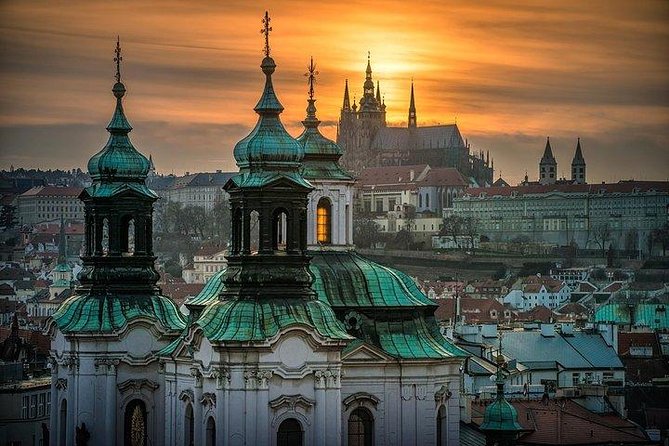
You arrive in Prague in the evening, then your first full day focuses on the historic core. The big moment is the Prague Castle area along the Royal Route. You start up on Castle Hill in the Hradcany district, then tour the complex with stops around St. Vitus Cathedral, the Old Royal Palace, St. George’s Basilica, and Golden Lane.
What makes this valuable is sequencing. Instead of jumping into random viewpoints, you get the story in place, walking from coronation-road vibes toward the city’s most iconic Gothic setting. St. Vitus Cathedral is impressive even if you do not consider yourself a cathedral person, because it is the visual anchor for the whole Castle area.
Later, you connect the dots with the Old Town Square and the Astronomical Clock, then move toward the Charles Bridge area for those classic postcard angles. This is exactly the kind of day that turns a first-time city from confusing to familiar.
Practical note: several of these stops are listed with admission not included, so plan for a bit of ticket spending if you want full access.
Budapest on the Danube, two sides of one city
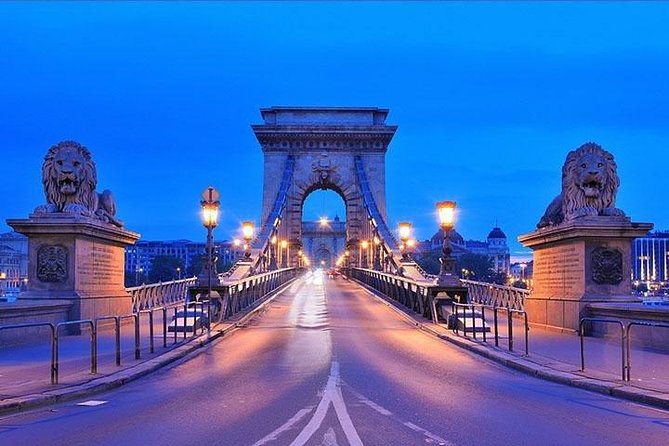
From Prague, the route pushes east. You spend a day in Budapest with a strong mix of viewpoints and museums. The Danube River segment sets the stage for how Budapest is really two cities: Buda and Pest. If you have ever seen Budapest photos from river vantage points, this day is where you learn why those angles are so common.
On the Buda side, you get a focused historic circuit: the castle area museum time, then highlights like Fisherman’s Bastion and the walk up toward Gellért Hill for panoramic views. On the Pest side, you cover the big civic spaces like Heroes’ Square, plus the sightlines toward Parliament.
This is also one of the days where optional dinner choices are mentioned, including Hungarian dishes and folk music or dance. Even if you do not do the optional show, the guided structure helps you know where to go next for a proper meal without wasting time.
Same city, a different way to spend the afternoon:
- From Frankfurt: Rhine Valley Day Trip
★ 4.4 · 1,317 reviews - Frankfurt: New Old Town and Highlights German-Language Tour
★ 4.7 · 1,316 reviews - Frankfurt Highlights English Walking Tour
★ 5.0 · 1,203 reviews - Rhine Valley Trip from Frankfurt including Rhine River Cruise
★ 4.0 · 1,179 reviews
Vienna, palaces plus practical city orientation
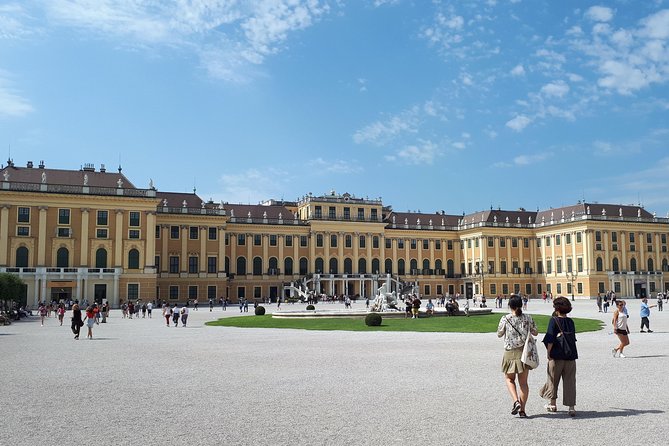
Vienna days are built like a greatest-hits reel, and it works. You start with Schönbrunn Palace, the Rococo summer residence of the Habsburg dynasty. Then you shift into Hofburg area sightseeing with passes and orientation around major buildings.
Shopping time and major landmarks show up in the middle of the day, including time near the Wiener Staatsoper and the grand scale around St. Stephen’s Cathedral. You also get into Stadtpark, with the Johann Strauss II statue serving as a cultural bookmark. If you like connecting a city’s music to its buildings, this is one of those subtle but satisfying ties.
The optional idea here is a Viennese waltz concert. Whether you take it or not, the payoff is the same: by the end of the day, Vienna does not feel like a theme. It feels like a place with rhythms you can recognize.
Mondsee to Munich, using smaller stops to break the big-city load
This day is a nice break from the capital-heavy rhythm. You visit Basilika St. Michael in Mondsee, a church known for being used in the wedding scene for The Sound of Music. After that, you cross into Munich for Marienplatz and the New Town Hall.
This is a great example of how the tour keeps you engaged even when you are not in a huge museum. You get a recognizable pop-cultural stop that is still physically real, then you land in a main square setting where you can grab a beer in a beer garden or just wander.
If you are traveling with limited time in Germany and want at least one taste of Bavarian pacing, this works.
Swiss Alps and Lucerne, the part that makes the whole route feel worth it
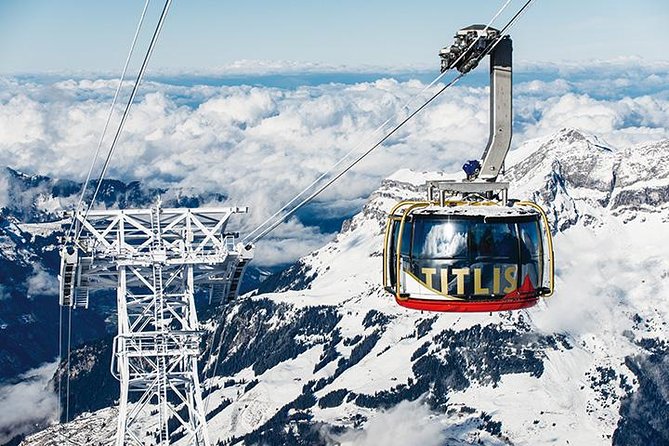
In Engelberg, you go up toward Mount Titlis. The optional cable car ride is built around the famous rotating gondola experience, the Titlis Rotair, with multi-stage ascent. At the top, you are promised big 360-degree mountain views, plus time on a sun terrace.
That is the core idea: you are not just traveling through Switzerland, you are doing the “why people come here” moment.
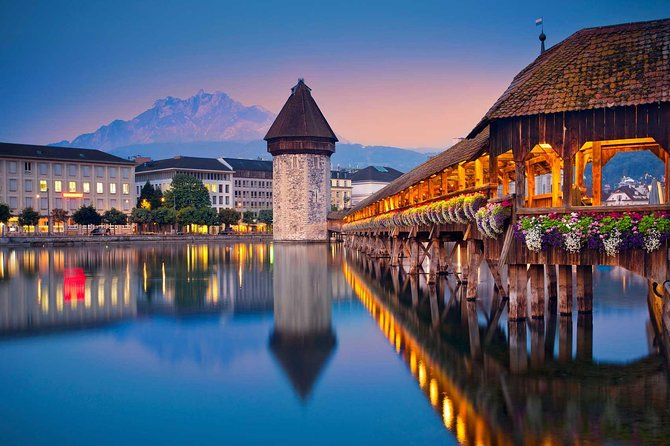
Then you shift to Lucerne. The emphasis is classic postcard Switzerland, with time around the Lion Monument and the Chapel Bridge area. You also get Water Tower and preserved architecture, plus free time to shop and take pictures. If weather and traffic allow, there is even mention of a photo stop in Liechtenstein, which is one of those quick “extra credit” moments you can appreciate if it happens.
Worth knowing: you already have Swiss time earlier in the week via Zurich and other stops later. Still, Lucerne is the kind of place that feels good twice because it is walkable and photogenic in any season.
Zurich, Rhine Falls, and the Black Forest stop for cake breaks
Zurich is introduced with a photo stop at Lake Zurich, then you move to Rhine Falls, described as Europe’s biggest waterfall. Even a quick look is usually enough to reset your head after city days.
After that, you cross back into Germany for the Black Forest and the lake stop at Titisee. This is the day where local treats matter. You can stop at lakeside cafés, try Black Forest cherry gateaux, and pick up souvenirs like cuckoo clocks. There is also a demonstration showing how the clock mechanisms work, which is small but fun if you like seeing craft up close.
You then return toward Frankfurt, and you get a farewell point for people who are ending their route early. If you are continuing, it is a reminder that the tour is staged, almost like two big loops connected into one long highlight arc.
Bonn and Cologne, two UNESCO-class moments on the German stretch
You head toward Bonn, the former West German capital, where you get an orientation stroll and an external pass by key sights including the town hall and the Beethoven-related museum area. Then you move to Cologne for the big cathedral visit.
The Cologne Cathedral stop is a UNESCO World Heritage Site and you go inside. That matters because so many cathedral visits are just photo stops. Here you get to experience it as space, not just as architecture from the street.
Then the route transitions into the Netherlands, so the day ends with momentum rather than wrapping up in a single city bubble.
Zaanse Schans to Amsterdam, windmills and then city energy
The Netherlands day starts in the countryside at Zaanse Schans, a model town where you see Dutch classics like clogs, cheese, and windmills. It is a good way to understand what people mean when they talk about Dutch design and landscape habits, because you are not just looking at a photo.
Then you move to Amsterdam for canal-ring views and city landmarks. You visit a diamond factory to see how cutting techniques have been practiced since the 16th century. That is an interesting contrast to the rest of the trip, because it is one of the more “hands-on” cultural industries you will see.
You can also add an optional pre-dinner canal cruise for an hour, which is a simple upgrade if you want a different way to see the city without walking until your shoes hate you.
The day ends with the Dam Square area, and there is mention of the Royal Palace nearby plus time for shopping or further sightseeing. If you are traveling when the season matches, you might also see Keukenhof (more on timing in the FAQ).
Brussels and Paris, big monuments with guided context
In Brussels, you stop at the Atomium, then take an orientation tour that includes Grand Place and Manneken Pis. You also get free time to try Belgian food, which is practical advice for travelers who want to eat local without turning the day into a guessing game.
Then it is on to Paris.
Paris days follow a classic structure: major exterior passes and landmark area time, plus a guided Louvre highlight and optional sightseeing like the Seine cruise. You see the Champs Élysées and Place de la Concorde, then you hit the Arc de Triomphe area. There is also a stop by the Eiffel Tower without climbing.
You then visit the Invalides complex with Napoleon’s tomb area and move to Versailles as part of the day program. Versailles can be a time sink anywhere else, so getting it in during a structured day helps you avoid the scramble of “how do we fit this in?”
Louvre and Seine cruise, how to get the most from limited time
The Louvre stop is framed around major works like the Venus de Milo, the Winged Victory of Samothrace, and Leonardo da Vinci’s Mona Lisa. You can opt for a guided gallery tour, which is the smartest way to do it if you only have limited hours in the museum. With a guide, you spend less time in random hallways and more time in the galleries that match the masterpieces on your wish list.
The Seine cruise option is a great complement. The Louvre teaches you about art. The river teaches you about city geography. Seeing landmarks along the water often makes Paris feel less like a checklist and more like a place with sightline logic.
There is also a Palais Garnier area visit and time around Galeries Lafayette. That is where the tour becomes useful even if you are not obsessed with museums, because it gives you a mix of shopping, architecture, and optional evening ideas.
Back to Switzerland through Basel, then Milan and Venice
The tour brings you back to Switzerland from Paris with a scenic coach journey. You pass through Basel, then arrive in Lucerne for Chapel Bridge and the Water Tower area again. Basel and Lucerne together are a practical win. Basel gives you border-region context, and Lucerne gives you the walkable old-town feel that makes a rest day feel real.
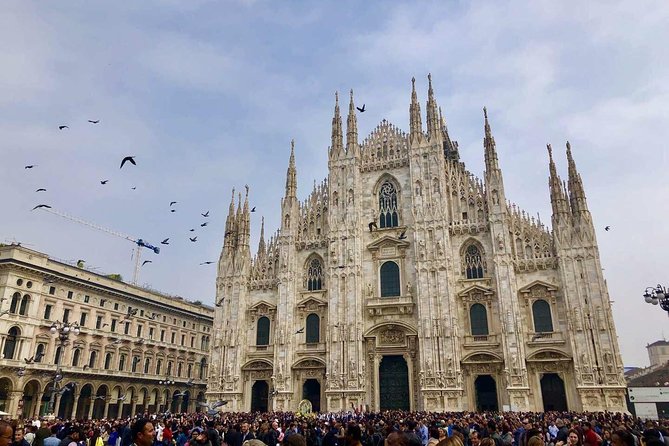
Then you go into Italy for Milan. The focus is on orientation at Milano Centrale and the big icons: Duomo di Milano and the Galleria Vittorio Emanuele II. This is an easy day for fashion capital sightseeing, because even if you do not shop, you still get the “wow” factor in architecture and shopping arcade design.
Next comes Venice. You get a water bus ride to San Marco Island, then a guided walk for the Basilica di San Marco and Doge’s Palace area highlights, including the Bridge of Sighs. You also get to see Murano glasswork with a demonstration, plus optional gondola time.
If you have ever felt overwhelmed in Venice, this is one of the tours that helps you start with the places that actually anchor the city.
Rome and Florence, where the big names are actually useful
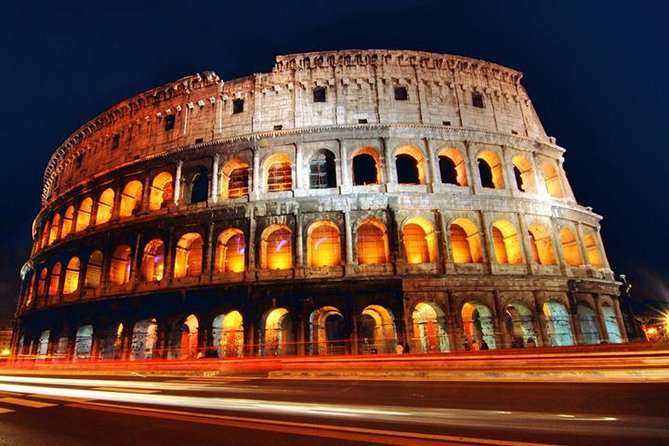
Rome begins with Vatican City, including St. Peter’s Basilica, and there is an optional Sistine Chapel tour. Then you move into the Colosseum and the Arch of Constantine. This is one of those day patterns where you want guidance because the sites are famous, but the surrounding context can turn your photos into meaning.
Florence follows with a panoramic start from Piazzale Michelangelo, then a walk that includes the Ponte Vecchio area. You also get a leather craft demonstration, plus time around Piazza del Duomo and Campanile di Giotto. The Uffizi Gallery gets a passing note and there is free time afterward, which means you can choose how museum-heavy you want to be.
You then get a Pisa stop with the Leaning Tower in the Square of Miracles. It is brief, but it is a classic “camera ready” moment built into the route. The rest of your evening is positioned for the next leg toward the French Riviera.
Monaco to Cannes and Nice, a coastal shift without overcommitting
The route shifts from Italy to the French Riviera with a drive along the Mediterranean coastline toward Monaco. You see the setting connected to the Formula 1 Grand Prix, and there is a visit idea that includes the Oceanographic Museum area and Prince’s Palace surroundings. The Cathedral is mentioned as the burial site of Grace Kelly, which gives the stop a human connection beyond the luxury postcard.
Then you head to the Cannes area for the Palais des Festivals et des Congrès and a stop at the Fragonard Perfume Factory for a guided tour. Nice comes next for lunch and free time.
This is a good segment if you want scenery and photo moments without committing to a beach vacation. Just remember you are still on coach timing, so build energy and leave space for the schedule.
Champagne countryside, Reims Cathedral, and Luxembourg after the Riviera reset
After a day of coastal visiting, you get a rest-style travel day north. Then the Champagne region arrives with Reims and the cathedral, highlighted as a national heritage site where coronations of French kings took place from the 11th century onwards.
From there, you shift into Luxembourg. You have an introduction on foot around Place de Constitution and Pont Adolphe, plus time to explore on your own afterward.
Luxembourg works well at this point because it is compact. You are not fighting huge transit grids after several major cities. It lets you slow slightly and absorb streets and squares without feeling like you are losing momentum.
Trier, Porta Nigra, and the Rhine-Mosel finish back in Frankfurt
The final day brings you back into Germany with Trier, Germany’s oldest city and Karl Marx’s birthplace. You have a chance to see from the outside the house where he was born, now used as the Karl Marx Haus museum. Then your walking tour continues into the center with the Porta Nigra, described as the best-preserved Roman city gate north of the Alps.
After Trier, you drive toward Koblenz at the confluence of the Rhine and Mosel rivers. There is an option for lunch by the water and an optional scenic Rhine boat cruise. Then you head through Rüdesheim, a wine-making town, and finish back in Frankfurt at Römerberg, centered around the medieval town hall.
If you want a satisfying ending that feels like a loop back to where you started, this finish works.
Group size, language, and what it means for your day
The tour holds a maximum of 30 travelers. That helps keep logistics smoother on walking stops and in the coach. If your group is smaller, the operator can combine English and Chinese speaking participants, with a tour leader who can speak both, or combine English and Vietnamese with two tour leaders. In both cases, they serve the customers in the preferred language.
That matters because it can reduce the “lost in translation” frustration on guided walks. It does not guarantee a private experience, but it does mean you should not feel stranded if you travel with English needs.
Should you book this 21-day highlights tour
Book it if you want an efficient, coached route that covers the big-name cities and monuments across Central and Western Europe, with 3-star+ hotels and daily breakfast included. It is especially a good fit if you like having guided context for the first-time heavy hitters like Prague Castle, the Louvre, St. Peter’s Basilica, and the Colosseum, then mixing in your own choices for food and shopping.
Think twice if you know you get irritated by rushing between cities. This is a high-coverage itinerary, and many admissions are not included, so your free time can disappear quickly if you prefer last-minute ticket hunting instead of planning a budget ahead of time. Also remember the last day hotel is not included, so you will need to sort out that final night on your own.
FAQ
Where does the tour start?
The tour starts at Frankfurt (Main) Central Station, Am Hauptbahnhof, 60329 Frankfurt am Main, Germany, with a start time of 8:30 am.
Does the price include hotels and breakfast?
Yes. Accommodation in comfortable 3-star (minimum) hotels is included with twin rooms that have private facilities, plus daily continental breakfast. Accommodation on the last night is not included.
What is the mandatory tip?
The mandatory tip is €10 per person per day, collected by the tour manager in cash while you are on tour.
Are attraction tickets included?
Not generally. The tour notes that tickets for sights are not included for many stops, and optional activities and tickets are also not included.
What about city entrance fees and taxes?
City entrance fees + taxes in Paris, Czech Republic, Vienna, Venice, and Rome are covered with a maximum of €100 for the entire tour.
Are meals included?
No. Meals (including tips) and drinks are not included in the itinerary.
How much luggage can I bring?
You are allowed one luggage item up to 30 kg and one small hand carry on (like a purse, backpack, or camera bag).
What is the maximum group size?
The tour has a maximum of 30 travelers.
Can I cancel and still get a full refund?
You can cancel up to 3 days in advance of the experience for a full refund. If you cancel less than 3 full days before the start time, the amount paid is not refunded.
Newest Frankfurt reviews on the site
- from Frankfurt: historic treasure Rothenburg, private 1 day Tour★ 5.0 · 9 reviews
- magnificent historic Heidelberg, private Tour, from Frankfurt★ 4.5 · 15 reviews
- from Frankfurt: Heidelberg, Mercedes Museum / Schwetzinger Schloß★ 5.0 · 35 reviews
- The Tales of Frankfurt’s New Old Town: A Self-Guided Audio Tour★ 5.0 · 7 reviews
- from Frankfurt – romantic Black Forest & brewery, private tour★ 5.0 · 13 reviews
- Fairytale Rüdesheim and Monastery Eberbach Tour★ 5.0 · 9 reviews
- Frankfurt PubCrawl Weekend Pass (Fri + Sat) – Shots & Party★ 5.0 · 5 reviews
- Private German Beer Tasting Experience in Frankfurt Old Town★ 5.0 · 14 reviews
Frankfurt Tours, compared.
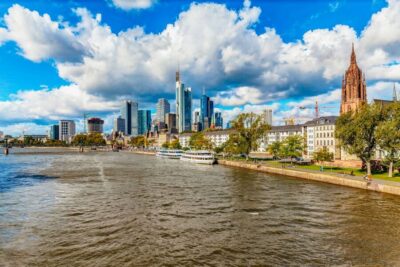
River Main Sightseeing Cruise with Commentary
Read our review →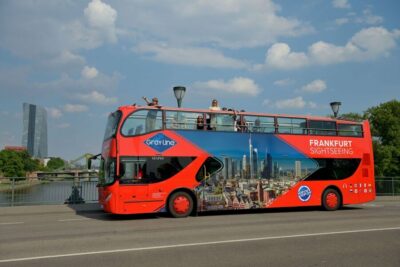
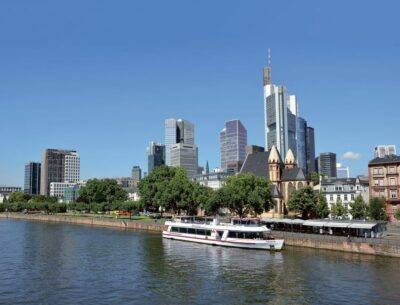
1-Hour Panorama Boat Cruise on the river Main
Read our review →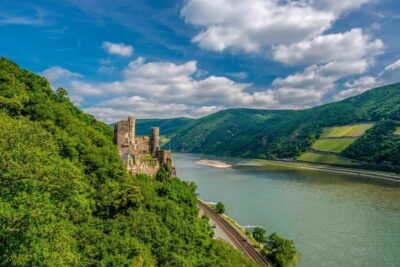
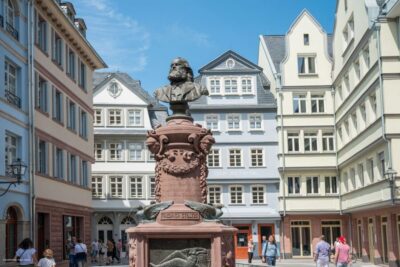
New Old Town and Highlights German-Language Tour
Read our review →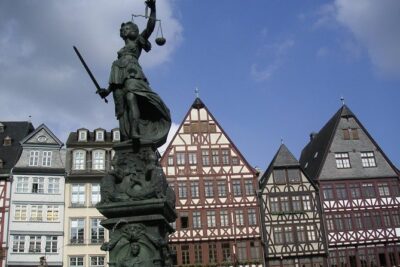
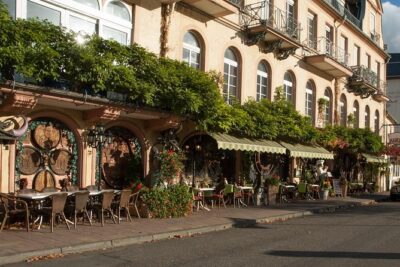
Rhine Valley Trip from Frankfurt including Rhine River Cruise
Read our review →
Browse the lists this tour appears in